Question · Conservation rooflights
Can Old Rooflight Glass Be Reused in a Listed Building?
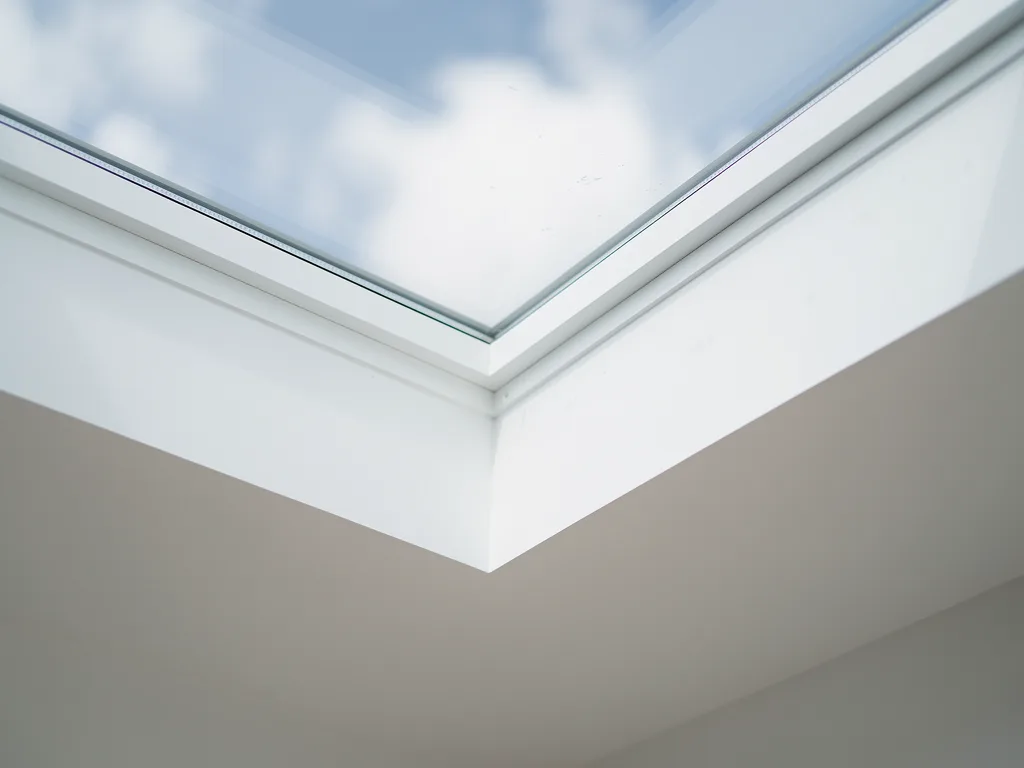
What "reuse" actually means for a pane of glass
Reuse is not lifting a pane straight from a rotten frame and dropping it into a shop-bought unit. Old cylinder or crown glass was hand-made, so its thickness varies across the pane and its surface carries the faint waves and bubbles that give historic glazing its particular look from underneath. A modern float-glass pane, however carefully chosen, does not read the same way against the sky. Where an officer or owner wants to keep that look, the actual old glass, not a replica of it, is what has to go back in, and that limits the job to careful removal, cleaning and resetting rather than substitution.
This only makes sense where the frame is being rebuilt or renewed around the existing opening, since a genuinely new frame changes the rebate and puzzles the fit of glass sized to the old one. Our guide to when the original cast iron rooflight has had its day sets out the point at which the frame itself, not the glass, is the part that has to be renewed, and reused glass is really only an option short of that point.
What the glass is checked for before anything is decided
A pane earns a place back in the roof by passing a plain physical check, not by being old. We look for cracks that run to the edge, chips deep enough to have started a crack, and the fine crazing that shows a pane has been thermally stressed over decades of sun and cold. Any of these mean the pane is a liability sealed into a roof, whatever its history. Flatness matters too: a pane that has sagged or bowed with age will not sit correctly in a new rebate and can crack the first time the frame moves in the wind.
- Surface pitting shallow enough not to hold standing water or algae
- No cracks reaching the edge, even hairline ones
- Reasonably flat, without a visible bow across the pane
- Enough surviving thickness at the thinnest point to carry a modern rebate depth
A pane that fails any one of these is not a candidate for reuse, and pressing ahead regardless is a false economy: a failed pane found leaking three winters later means the roof comes apart again to fix it.
Single glazing does not become double glazing by resetting it
Reused old glass goes back in as single glazing, because it is a single, hand-made pane rather than a sealed double unit, and there is no way to turn it into one without discarding the very thing that made it worth keeping. That has real consequences for the room below: a single pane loses far more heat than a modern sealed unit, and it is far more prone to condensation forming on its inner face on a cold night. Condensation on conservation rooflights covers what causes that and what can be done about it without touching the glass itself, such as improving ventilation in the room or fitting secondary glazing on the inside face where the room and the officer both allow it.
Where the room needs to perform to modern comfort standards, a like-for-like unit with double glazing set behind a slim, historically correct frame is usually the more practical answer, and the case for that route against reuse is set out on replacing a rooflight in a listed building like for like.
Reused glass into a renewed frame, or salvaged glass into a new one
There are two different things people mean by "reuse," and conflating them causes most of the confusion. The first is genuinely resetting the same pane back into its own frame once that frame has been rebuilt, cleaned of old putty or glazing bar corrosion, and made sound. The second is sourcing old glass from elsewhere, a demolished outbuilding on the same site, a pane taken from a window being replaced in another part of the building, and fitting that salvaged glass into a rooflight frame that is otherwise new. Both keep old material in the building, but an officer weighing an application will usually see the first as the stronger case, because it keeps the glass with the opening it has always belonged to.
| Approach | What it keeps | Typical case for consent |
|---|---|---|
| Same pane, renewed frame | Original glass in its original opening | Straightforward, little for the officer to question |
| Salvaged pane, new frame | Old glass, but not from this opening | Needs the source and match explained |
| New replica glass | Nothing original | Judged as a full replacement |
Where salvaged glass is proposed, it helps the application to say plainly where it came from and why its texture and thickness match what the roof would have had, rather than leaving the officer to assume it is simply old glass bought in from a reclamation yard with no connection to the building.
Where this sits in the wider application
Glass reuse is one detail inside a listed building consent application, not a separate process, and it belongs in the drawings and supporting text alongside the frame and glazing bar decisions rather than as an afterthought raised on site. Our walk-through of preparing a listed building consent application for a rooflight covers what the drawings need to show, and when a rooflight application needs a heritage statement explains when the reasoning for keeping or losing the original glass needs to be written up in more depth than a drawing alone can carry.
The glazing pattern itself, whether the roof has always had a central bar dividing the pane, also affects what reuse looks like in practice, since a barred original may yield two or four smaller panes rather than one. The central glazing bar: keep it or leave it out sets out how that pattern is read by an officer and what it means for the glass sitting either side of it.
What this means for the view from inside
Reused glass carries its own faint waviness into the room, and from a bed or a desk underneath it that shows as a soft distortion at the edge of the pane rather than a sharp one, which some owners want kept precisely because it marks the glass as original. A sightline sketch drawn before the frame comes apart shows where that pane sits against the eye position that matters in the room, so the decision to keep it, rebuild around it or let it go is made against the actual view rather than in the abstract. Every quote for a conservation rooflight in Peterborough comes with a sightline sketch, and where old glass is a live question we mark it up so it can be discussed against the picture rather than the description.
Questions people also ask
Can the same putty and glazing bar be reused along with the glass?
The bar can often be renewed and reused if the metal underneath its corrosion is sound, but old putty is generally raked out and replaced, since decades-old putty has usually lost the flexibility that keeps a pane weathertight. A renewed bar bedded on fresh putty, holding the original pane, is a common combination.
Does reused glass cost less than new glass?
Not necessarily. Carefully removing, cleaning and resetting an old pane without cracking it, and rebuilding the frame it sits in, is skilled, slow work, and it is not automatically cheaper than fitting a new sealed unit. The reasoning behind conservation rooflight pricing generally is set out on why do conservation rooflights cost more.
Will the conservation officer always prefer reuse over replacement?
Not always. Where the glass has genuinely failed, an officer is usually satisfied by a matched replacement rather than glass kept for its own sake at the expense of a leaking roof. Reuse is one option among several, and the application should set out honestly which one the glass's actual condition supports.
Does reused glass need to meet current Building Regulations?
The rooflight as a whole is still installed to current Building Regulations, and we handle the Building Control notification where the work is notifiable. Single, reused glazing is one of the factors the overall specification has to account for, alongside ventilation and the frame it sits in.
Book a home visit
Tell us which room
- No obligation
- Sightline sketch included
- 10-year guarantee
Or call 01733 736163