Question · Conservation rooflights
Will a Conservation Rooflight Make a Room Darker?
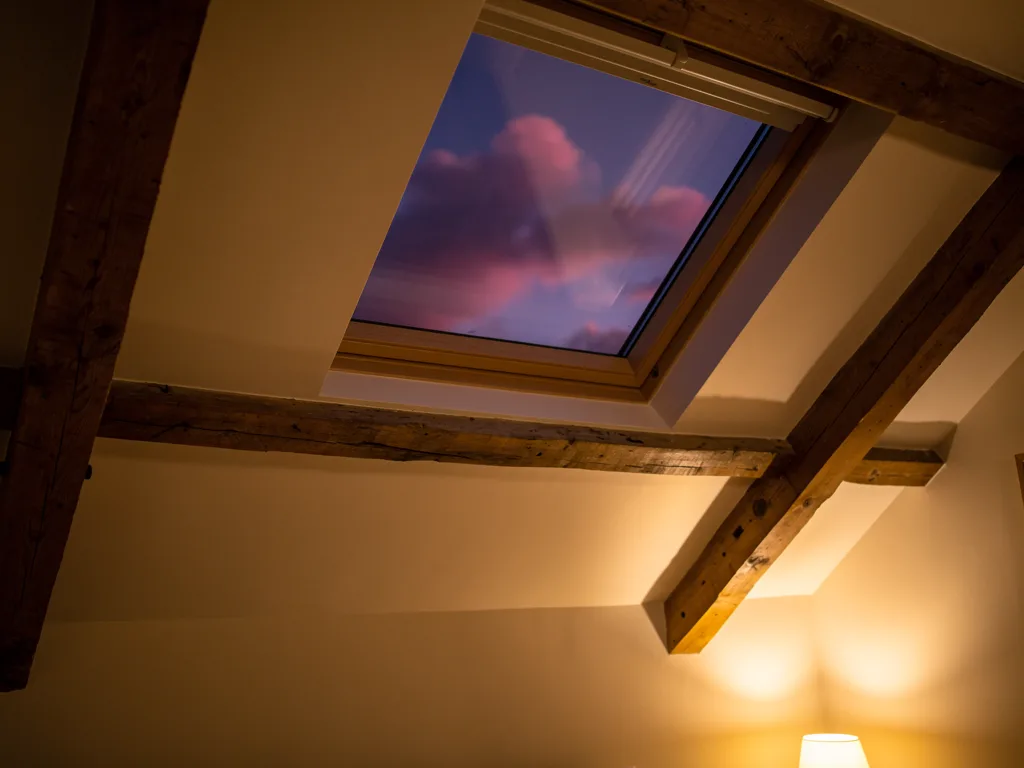
What actually stops light reaching the room
Three things stand between the sky and the ceiling below it: the frame, the bar, and the depth of the reveal. Only the first two touch the glass area. The frame on a conservation rooflight is set slim by design, closer to the width of an old cast iron glazing bar than to a chunky modern casement, so it takes surprisingly little sky with it.
- Frame: a narrow perimeter, usually the smallest share of the total loss.
- Bar: where a central bar is expected on the roof, it removes a strip down the middle of the view, not the light either side of it.
- Reveal: a deep, square-cut reveal can shade the glass and darken the room more than the frame ever does.
Read Slim, Flush and Barred: The Conservation Rooflight Defined for how those features come together on the roof, and The Central Glazing Bar: Keep It or Leave It Out for when a bar is required and where it falls in the room.
Set against a frameless rooflight, the difference is smaller than people expect
Homeowners comparing a conservation unit to a large frameless flat rooflight often assume the framed version must be markedly darker. On a like-for-like opening, it usually is not: the perimeter a slim conservation frame takes up is a small fraction of the total glass area on most domestic sizes. The more meaningful difference is usually the size of the opening itself. Conservation areas and listed buildings tend to accept a rooflight that sits within the existing pattern of openings on that roof slope, which can mean a smaller aperture than an unrestricted modern extension would get away with. How big a conservation rooflight will the planners accept? covers how officers judge size against the roof it sits in.
Glass specification changes the light more than the frame does
Modern conservation glazing is double glazed as standard, and that in itself lets in more usable, comfortable light than the single glazing it replaces, because it holds warmth without needing to be shaded or curtained off on a cold morning. Where the choice affects brightness is in the coatings. A self-cleaning outer pane, useful on a low pitch where dirt would otherwise sit and shade the glass over the years, has a very slight tint when you look closely, though it is not something anyone tends to notice once the unit is installed. Low-E coatings that hold heat in during winter also take a small share of light with them, which is a fair trade against a cold room under the glass. Glazing in a Conservation Rooflight sets out how the heritage look and the double glazing sit together, and Can a conservation rooflight have self-cleaning glass? answers the coating question on its own.
The reveal and the room decide how bright it feels
Two identical rooflights can leave two rooms feeling completely different, because the reveal beneath the glass and the room's own surfaces do most of the work. A square-cut reveal, straight down from roof to ceiling, shades its own sides and narrows the patch of sky visible from below. A splayed reveal, opened out at an angle, catches and bounces light down the sloped sides so the same glass feels brighter in the room. Pale walls and a pale ceiling around the opening reflect that light further into the room; dark timber or a deep box reveal will swallow some of it. None of this is unique to conservation rooflights, but because their openings are often smaller than an unrestricted modern one, the reveal has more relative influence over how the light reads. See What view does a conservation rooflight give from inside? for how the same reveal shapes what you see, not just how bright it is.
| Factor | Effect on light in the room |
|---|---|
| Frame width | Small; a slim conservation frame takes little glass area |
| Central bar | Removes a strip of sky, not the light beside it |
| Opening size | The biggest single factor, set by what the roof and area allow |
| Reveal shape | Splayed reveals bounce more light in than square ones |
| Wall and ceiling colour | Pale surfaces reflect more of the light that arrives |
Fitting it flush and clear keeps every bit of the light you are entitled to
A conservation rooflight loses more light to a poor fit than to its own design. Set proud of the slates or tiles, or lined with a reveal that has not been squared up properly, a unit throws its own shadow across part of the glass. Fitted flush, as a conservation rooflight should be, the frame sits within the depth of the roof covering and casts almost no shadow of its own. Fitting a Conservation Rooflight Flush goes through how that flush line is achieved on slate, tile and stone. Steel frames, chosen for their slim profile, need their coating kept sound to avoid rust bleeding onto the glass over time; Will a steel conservation rooflight rust on a damp slope? covers that upkeep.
Planning the room, not just the rooflight
Because the opening size is usually the deciding factor, the useful question is not "will this specific rooflight be dark" but "where should the light land in this room, given what the roof and the area will accept". That is what a sightline sketch is for: a drawing of the view from the bed, the desk or the sink, showing exactly how much sky the chosen size and position will actually give you before the roof is opened, alongside a general guide to what changes the cost of getting there. Start with The Sightline Sketch: How We Plan the View and What Affects the Cost of a Rooflight, or read the full Conservation Rooflight Installation in Peterborough service page for how the whole job is planned and carried out.
Questions people also ask
Does a central glazing bar cut much light?
It removes the sky directly behind it, a strip down the middle of the view, but not the light reaching either side of it. It reads as a line across the sky rather than a shadow in the room, and it stops registering within days of living under it.
Do darker frames make a room feel darker?
A dark frame reads as a narrow, sharp edge against the sky rather than a shadow across the room. Colour has far less effect on brightness than the width of the frame and the depth of the reveal below it.
Will double glazing let in less light than the single glazing it replaces?
Very little. Modern double glazed units are specified for high light transmission as standard, so the room gains far more from losing the draught and cold radiating off old single glass than it loses in transmitted light.
Does the size of the room change how bright a conservation rooflight feels?
Yes. The same rooflight over a small landing looks and feels far brighter than it would in a large open room, simply because the same amount of sky is being shared across less floor and fewer pale surfaces to bounce it around.
Book a home visit
Tell us which room
- No obligation
- Sightline sketch included
- 10-year guarantee
Or call 01733 736163