Question · Conservation rooflights
Can a Conservation Rooflight Have Self-Cleaning Glass?
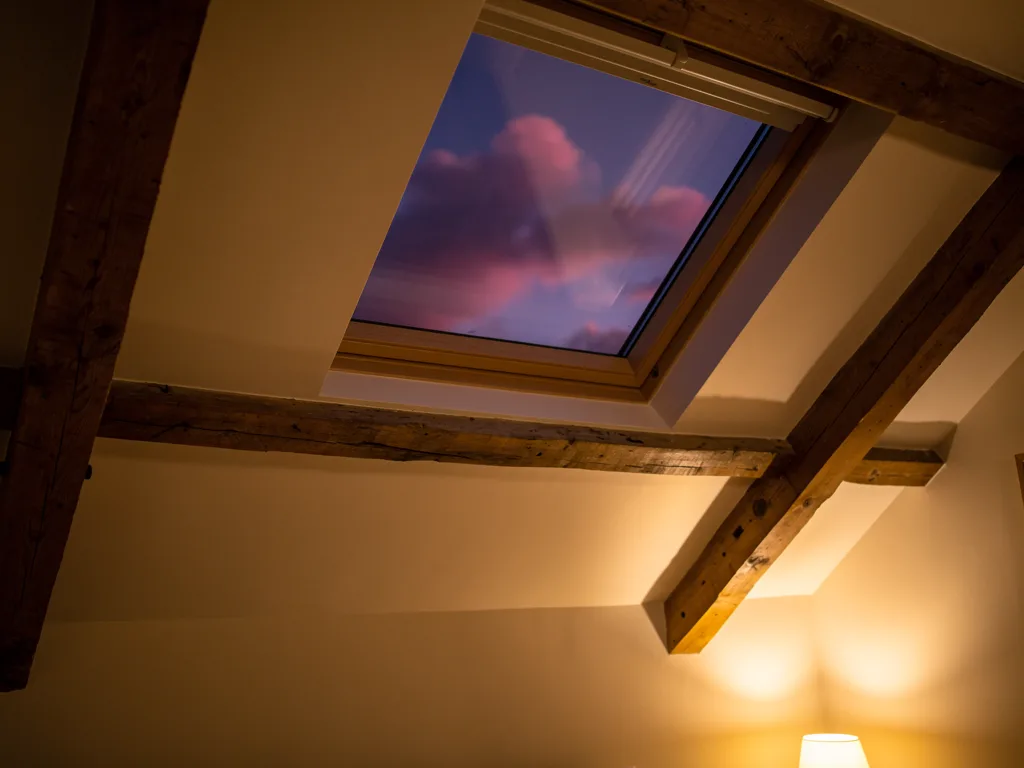
How the coating actually works
A self-cleaning pane does two jobs at once, and both need weather rather than a cloth. Daylight breaks down organic dirt sitting on the glass, the pollen, algae and bird droppings that build up on any roof over a season, loosening it from the surface. The same coating is hydrophilic, so rain does not bead and run in streaks the way it does on untreated glass. Instead it spreads into a thin sheet and slides off, carrying the loosened dirt with it rather than drying into a smear across the pane.
Both stages matter. A run of bright, dry days does the breaking down; the next shower does the rinsing. Neither stage does much on its own, which is worth knowing before you judge the glass by how it looks after a fortnight without rain.
Why a low, flat pane needs the help more than a steep slate roof does
A conservation rooflight sits close to the plane of the roof, often on a pitch shallow enough that rain moves across the glass slowly rather than sheeting straight off a steep slate or pantile slope. Dust, pollen and fine grit have longer to settle before a shower clears them, and on an extension roof or a flat-conversion loft the pitch can be shallow enough that this matters within a single season, not a decade.
That is where the coating earns its place in Peterborough. Fenland dust and pollen settle on the flatter roofs of the new-town townships as readily as anywhere, and the whole point of a conservation rooflight is the crisp view it gives from inside. A grimed outer pane turns open Fenland sky into a soft grey smear from the bed or the sofa well before the glass itself needs replacing.
Does the coating change how the rooflight looks
No. The coating sits on the outer face of the glass, a layer measured in nanometres with no visible tint or texture of its own. From below, coated glass reads exactly as clear glass would; from the ground or a neighbouring window, a coated pane cannot be told apart from an untreated one, no sheen, no colour shift, nothing a passer-by or a conservation officer would notice on the elevation.
The parts that define a conservation rooflight, its slim, flush profile and central bar, the frame material, the finish, sit entirely separate from the glass specification. A steel-framed unit keeps its traditional dark finish and its narrow sightline whether the outer pane is coated or not.
Where the coating sits in the glass build-up
A conservation rooflight is glazed as a sealed double or triple unit, and each pane in that stack has its own job. The self-cleaning coating goes on the outer face of the outer pane, where weather reaches it; a low-E coating usually sits on an inner face to hold warmth in the room; the cavity between panes, often argon-filled, does the insulating.
| Layer | Where it sits | What it does |
|---|---|---|
| Outer pane | Faces the weather | Carries the self-cleaning coating |
| Cavity | Between the panes | Insulates, often gas-filled |
| Inner pane | Faces the room | Usually carries the low-E coating |
Read more on how these layers are chosen for a conservation unit in Glazing in a Conservation Rooflight.
What the coating will not do
- It cleans the glass, not the frame, the gutter or the lead around the kerb, which still needs an occasional look.
- It will not produce a spotless pane through a long dry spell; without rain to rinse the loosened dirt, some residue stays until the next shower.
- It will not lift mortar splash, limescale or old paint already baked onto existing glass, only keep a new pane from building up fresh grime.
- It is not a fix for condensation on the room-facing side of the unit, which is a separate part of the specification, covered in Do Conservation Rooflights Get Condensation?
Specifying it without unsettling a conservation application
Because the coating changes nothing that shows on the outside, it sits outside what a conservation officer is judging. Applications for a rooflight in a conservation area or on a listed building turn on proportion, position on the slope, frame material and finish, matters covered in Preparing a Listed Building Consent Application for a Rooflight, not the coating on the outer pane. It is still sensible to list the full glazing specification, coating included, alongside the frame details, so the paperwork matches the unit that gets fitted.
Steel, aluminium and a coated pane together
A conservation rooflight's frame material is its own decision, weighed against sightline and long-term care in Steel Frames Against Aluminium in a Conservation Rooflight, and a steel frame's own weathering is addressed separately in Will a Steel Conservation Rooflight Rust on a Damp Slope? A self-cleaning pane pairs with either frame without altering that choice; it simply keeps one more surface, the glass itself, from needing attention between visits. Every quote for a conservation rooflight in Peterborough includes a sightline sketch showing the view the finished unit will give, coating and all, from the seat or bed that matters in that room.
Questions people also ask
Does the coating wear off over time?
It is baked into the surface of the glass during manufacture rather than applied afterwards, so it is expected to last for the working life of the unit. Abrasive scrubbing or a scraper can scratch any glass surface, coated or not, so a hose and a soft cloth is all a coated pane should ever need.
Can an existing conservation rooflight be coated after it is fitted?
Not on site. The coating is applied to the glass before it is sealed into the unit, so adding it to an older rooflight means replacing the glazing unit within the existing frame, not treating the surface in place.
Does a self-cleaning coating change how much sky I see?
No. Sightline is set by the frame width, the bar position and the depth and shape of the reveal, none of which the glass coating touches. A coated pane looks the same from a pillow or a sofa as an untreated one, only cleaner over time.
Is the coating worth it on a north-facing slope?
The daylight side of the coating works more slowly without direct sun, which a north slope gets less of. The hydrophilic side still helps rain sheet off rather than streak, so a shaded slope still gains from the coating, just with more of the work done by rain than by sunlight.
Book a home visit
Tell us which room
- No obligation
- Sightline sketch included
- 10-year guarantee
Or call 01733 736163