Guide · Conservation rooflights
Glazing in a Conservation Rooflight
The frame gives a conservation rooflight its slim sightline. The glass behind it decides how warm, clear and safe that view stays.

Why the glass matters as much as the frame
A conservation rooflight earns its look from a slim frame, a fine sightline and a bar that sits where an old cast iron glazing bar would have sat. The glass carries just as much of that job. Fit the right frame with the wrong glazing build-up and the finished unit can still look heavy, glint where an old rooflight never would, or read as a modern product dressed in a period profile.
Glazing is where warmth, safety and the view from inside all meet in a space a few millimetres deep. Get the pane build-up right and a conservation rooflight keeps the proportions a conservation officer expects while performing like any other current double glazed unit. Get it wrong and the compromises show up later: condensation at the edge, a washed out sightline, or a spacer bar that catches the eye every time you look up from the bed or the sofa.
The historic look, built from a modern sandwich
Original conservation rooflights were single glazed: one pane of glass sitting in a cast iron or steel frame, with a narrow putty or bead line holding it in place. A modern conservation rooflight keeps that narrow sightline on the outside while the glass itself does a different job entirely.
Behind the slim external bar sits a sealed double glazed unit: an outer pane, a cavity filled with air or an inert gas, and an inner pane, bonded together at the edge by a spacer. From below, in a room with a warm ceiling and a cool roof outside, that build-up is what keeps the glass from streaming with condensation on a January morning. From the roof slope, it is the slim external glazing bar and the narrow sightline of the frame, not the glass behind it, that reads as old.
The result is a unit that looks single glazed from the street and performs like a well specified double glazed rooflight from inside. Getting that balance right is most of what separates a good conservation rooflight from a poor one, and it is worth reading alongside our guide to the features that define a conservation rooflight before you choose a glazing specification.
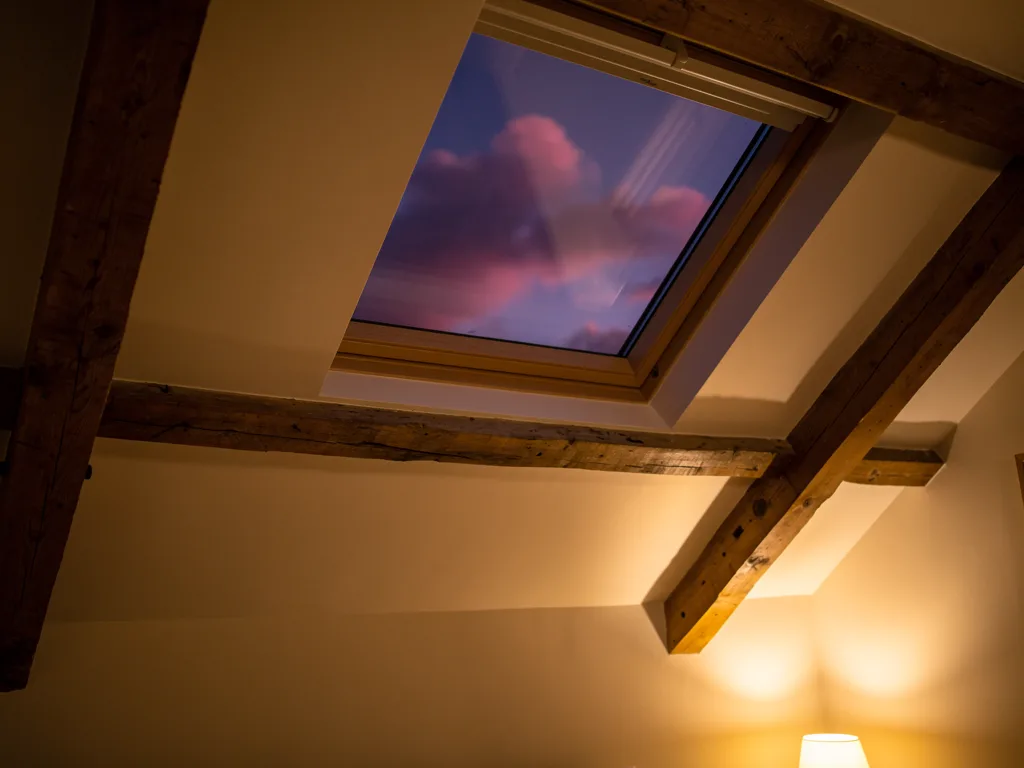
Spacer bars: the thin dark line that decides the sightline
The spacer sits between the two panes at the edge of the unit, holding the cavity gap and carrying the seal. It is one of the smallest parts of a rooflight and one of the easiest to get wrong, because it sits directly in the line of sight from a bed, a sofa or a desk under the glass.
Standard double glazing has used a bright aluminium spacer for decades: a thin silver line visible at the edge of every pane in a typical modern window. In a conservation rooflight, that bright line breaks the illusion the frame and bar are working to create. A conservation specification calls for a warm edge spacer, usually finished black or matched to the frame colour, sitting far enough back in the sightline that it reads as a shadow line rather than a strip of metal.
The spacer also has a thermal job. A warm edge spacer conducts less heat than aluminium at the edge of the unit, which keeps that edge closer to room temperature and cuts down the cold strip where condensation forms first. Choosing it for the sightline and choosing it for performance turn out to be the same decision.
Low-E coatings and where the warmth goes
A low-emissivity, or low-E, coating is a coating a few atoms thick, applied to one face of the glass inside the sealed unit. It lets daylight through largely unchanged while reflecting long-wave heat back into the room rather than letting it pass out through the pane. In practice that means the inner face of the glass stays warmer to the touch on a cold night, and the room loses less heat through the roof.
The coating is close to invisible in normal light. Look at the glass from an angle in low sun and some coatings show a faint colour cast, usually a light blue or neutral grey, which is worth seeing in a sample before it goes fifteen feet above a bed you look up at every night. Ask to see the actual pane build-up proposed for your rooflight rather than a photograph of one, because coatings vary between manufacturers and the cast is easiest to judge in person.
Solar control on south and west slopes
Solar control coatings work alongside a low-E coating rather than instead of it. Where a low-E coating is mostly concerned with keeping heat in, a solar control coating is concerned with keeping some of the sun's heat out before it reaches the room, without darkening the glass to the point where the sky above looks grey rather than blue.
This matters most on south and west-facing slopes, and on loft conversions where the rooflight sits close to head height and the room heats quickly on a bright afternoon. A well chosen solar control specification takes the edge off summer heat gain while leaving the glass close to its natural colour when you look up from the room. A specification pushed too far the other way, chasing the lowest possible heat gain figure, can leave the pane with a faint mirror tint that flattens the sky from below and a stronger reflection from outside than a conservation officer will accept on a street-facing elevation.
Solar control is a different coating to the self-cleaning coating some rooflights carry on the outer face of the glass, which is about keeping the pane clear of dirt rather than managing heat; our guide to self-cleaning glass in a conservation rooflight covers that separately. Coatings and cavity fill also affect how a unit behaves in cold weather, which our guide to condensation in a conservation rooflight sets out in full.

Laminated glass: safety first, quiet second
A rooflight sits over people's heads, which is why current safety glazing rules call for laminated glass, or another glass that behaves safely if it breaks, in an overhead position. Laminated glass is two panes bonded to a clear interlayer, so if the glass is struck hard enough to break it, the interlayer holds the fragments together rather than letting them fall into the room below. That is the reason the inner pane of a conservation rooflight is almost always laminated, whatever finish the outer pane carries.
The interlayer has a second effect that has nothing to do with safety: it damps sound. A laminated inner pane takes the edge off rain noise on a low-pitched conservation rooflight and off traffic or aircraft noise passing overhead, more than an equivalent unlaminated pane of the same thickness. Neither of these is a reason to choose laminated glass on its own, since current regulations require it in this position regardless, but it is worth knowing what the requirement is buying beyond compliance.
Choosing the build-up: standard double glazing against a conservation specification
The table below sets out where a standard double glazed unit and a conservation-specified double glazed unit typically part company. The glass itself can be similar; the differences that matter to the finished look and to a planning application sit in the detail around it.
| Feature | Standard double glazing | Conservation specification |
|---|---|---|
| Spacer bar | Bright aluminium, visible edge | Warm edge, dark or frame-matched |
| External sightline | Wide, glazing bead visible | Slim, close to a period bar width |
| Coating cast | Any available stock coating | Chosen and sampled for neutral colour |
| Cavity fill | Air or argon, either accepted | Usually argon, for a thinner overall unit |
Argon fill lets the same thermal performance be reached with a narrower cavity than air alone, which keeps the overall pane thickness closer to what a slim conservation frame and bar were designed to hold. That narrow build-up is central to the flush, slim look our guide to fitting a conservation rooflight flush describes for the frame itself.
Matching glazing to a steel or timber frame
The frame material a conservation rooflight is built in has its own effect on how the glazing reads. A steel frame holds a narrower sightline than an equivalent timber or aluminium frame, which means the glass build-up has to be kept as slim and as free of a bright edge as possible to make the most of that narrow frame; a wide spacer bar undoes a slim steel sightline faster than it undoes a wider timber one. Our guide comparing steel frames against aluminium in a conservation rooflight sets out how the two materials differ before glazing is even considered.
Where a rooflight keeps a central glazing bar rather than a single sheet of glass, the bar itself, not the glazing either side of it, becomes the strongest line in the view from below. Whether to keep that bar or specify a single unglazed run is covered on its own in the central glazing bar: keep it or leave it out, and the glazing build-up either side of that decision follows everything above.
Where glazing choices go wrong
Most of the problems that turn up on site trace back to a glazing decision made on price or on habit rather than on what the rooflight is meant to look and feel like from the room below it.
- A reflective solar coating chosen for its heat gain figure alone, which turns the outer pane into a mirror on a street-facing slope and draws attention rather than sitting quietly in the roof.
- A bright aluminium spacer bar fitted because it was the stock item on the shelf, glinting at the edge of every pane and undoing a carefully specified slim frame.
- A cavity fill and pane thickness chosen without checking the frame it has to sit in, leaving a unit too deep for a slim conservation rebate and forcing a wider bead than intended.
- A coating cast never seen in a sample before the roof was opened, discovered only once the unit is fitted fifteen feet up and impossible to judge from ground level beforehand.
- Laminated glass treated as a box to tick rather than a chance to cut down rain noise on a low pitch, when the choice of interlayer thickness affects both.
Every one of these is avoidable at the point the glazing is specified, before the roof is opened, which is why the sightline sketch that comes with every quote shows the pane build-up as well as the frame and bar. See our page on the sightline sketch and how we plan the view for how that drawing is put together, and our guide to what affects the cost of a rooflight for how glazing specification fits into the wider cost of the job.
Living with the glazing after the roof is closed
A conservation rooflight fitted to current Building Regulations, with a laminated inner pane, a warm edge spacer and a coating chosen for the slope it sits on, should need nothing beyond ordinary cleaning for a long working life. The edge seal is the part most likely to fail over time in any double glazed unit, showing up as misting between the panes rather than on the surfaces, and it is a sign the sealed unit itself needs renewing rather than the frame around it.
We install to current Building Regulations, handle the Building Control notification where the work is notifiable, and back the completed installation with a 10-year workmanship guarantee. If you are weighing up glazing options for a conservation rooflight on your own roof, book a home visit and we will bring samples of the glass build-up alongside the sightline sketch, so you can see the coating cast and the spacer line for yourself before anything is agreed.
Questions about conservation glazing, answered plainly
Can I choose the glazing separately from the frame?
The frame profile and the glazing build-up are specified together, because the depth of the sealed unit has to fit the rebate the frame provides. Within that constraint there is real choice over spacer colour, coating and cavity fill, and that choice is where most of the look and the performance of the finished rooflight is decided.
Does triple glazing suit a conservation rooflight?
A conservation rooflight can take a triple glazed unit, but the extra pane adds depth that a slim, historically proportioned frame was not designed to hold, and the added weight changes what the opening gear and hinges need to carry. On most conservation projects a well specified double glazed unit, with a warm edge spacer and a suitable coating, meets current performance requirements without pushing the frame beyond its intended proportions.
Will the glazing need replacing before the frame does?
The sealed glazing unit is the part most likely to need renewing first, because the edge seal is where a double glazed unit eventually fails, long before a well finished steel or timber frame reaches the end of its life. A frame built to take a standard sealed unit size makes that later replacement straightforward without disturbing the surrounding roof covering.
Does listed building consent cover the glass as well as the frame?
An application for a rooflight on a listed building is judged on the whole unit as it will appear from outside, which includes the glass as much as the frame: reflectivity, sightline width and colour all form part of what a case officer is looking at. Our guide to choosing a rooflight for a listed building sets out how that judgement is usually made.
Keep reading
 GuideWhen the Original Cast Iron Rooflight Has Had Its DayHow to tell when an original cast iron rooflight is beyond saving, and what a modern conservation unit changes.
 GuideConservation Rooflights That Open, by Hand or MotorHow a conservation rooflight opens for ventilation, by hand or by a hidden electric motor, without disturbing its slim, flush profile.
 GuideConservation Rooflights in Barn ConversionsHow a conservation rooflight is fitted around a barn's trusses, long roof slopes and stone or pantile coverings.
Book a home visit
Tell us which room
- No obligation
- Sightline sketch included
- 10-year guarantee
Or call 01733 736163