Question · Sun tunnels
Will a small sun tunnel light a walk-in wardrobe?
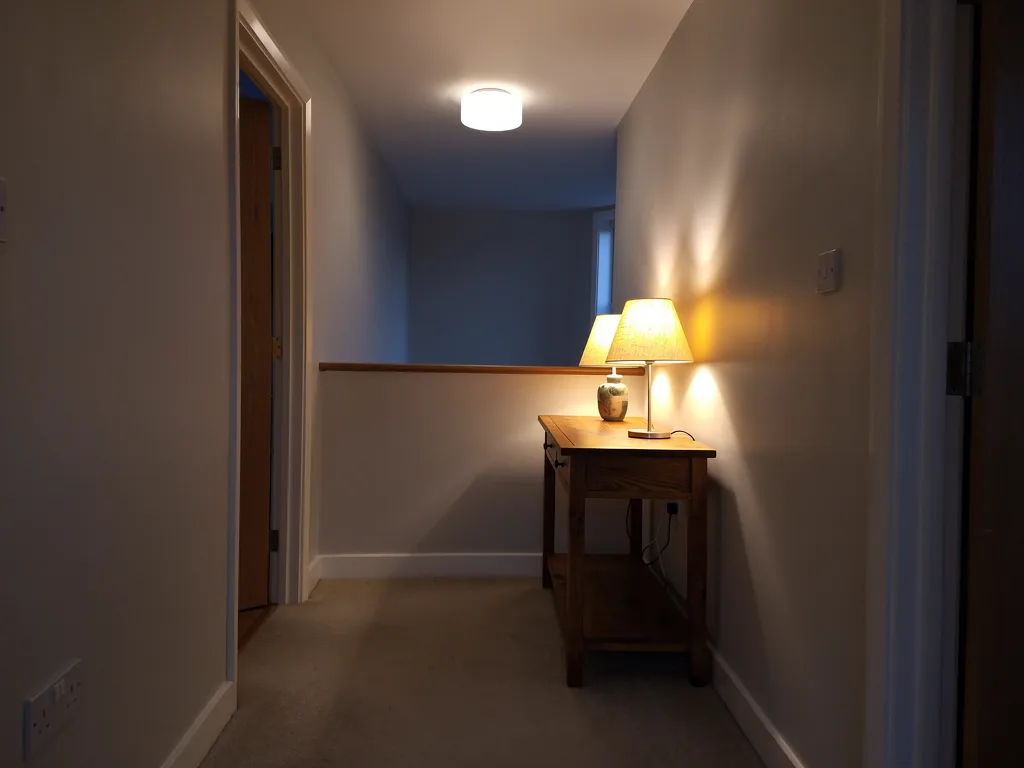
What "small" means for a wardrobe or cupboard
A walk-in wardrobe is typically one to four square metres, often narrower than it is deep, and it sits under a sloped ceiling in a loft conversion or tucked behind a landing wall in an older house. That is a fraction of the floor area of the bedroom next to it, which is exactly why a tube sized for a bedroom is rarely needed here.
Most wardrobes and cupboards have no window at all. Before a sun tunnel, the only light source is a switch by the door, and the space stays dark through the day even with the door open. In Peterborough's new-town semis around Orton, Bretton and Werrington, a box room off the landing is often fitted out this way, rails on both walls and a single low-wattage bulb overhead. Adding daylight from above changes how the space is actually used, not just how it looks.
Diameter versus floor area, not diameter versus daylight need
Sun tunnels are sold in a handful of set diameters, and the smallest on the market lights a small room comfortably because output scales with the area of the dome, not with some fixed idea of "enough". A 230mm tube through a short, straight run into a one to two square metre wardrobe gives a bright, even wash of daylight; the same tube into a 15 square metre bedroom would read as a modest pool of light in one spot.
Choosing between the diameters on offer, and matching one to a room this size, is covered properly on sun tunnel sizes and diameters, and the general question of how many tubes a given floor area needs is answered on how many sun tunnels does a room need. For a wardrobe the answer is almost always one, at the smallest diameter available.
The tube run matters more than the diameter
What actually limits brightness in a small cupboard is rarely the diameter, it is the length and the number of bends between the roof and the ceiling. A wardrobe tucked in the middle of a house, away from the roofline, needs a longer run with more offsets around joists and rafters than one directly under a slope, and every extra bend takes a little more light off the total.
Where the run is short and close to straight, a rigid tube keeps the most light; where it has to step sideways around timbers, a flexible section earns its place even though it costs a little brightness. That trade-off, and when each type suits, is set out on rigid tube or flexible tube, and the planning of the route itself, joist by joist, is covered on sun tunnel routes through lofts.
A walk-in wardrobe built into a loft conversion under a flat roof extension is often the easiest case of all, since the dome can sit almost directly above the diffuser with barely any horizontal run. Taking a tube through that kind of roof, upstand and falls included, is explained on taking a sun tunnel up through a flat roof.
Diffuser and finish in an enclosed space
A wardrobe ceiling is usually flat, low and close to the eye, which makes the diffuser more noticeable than it would be in a taller bedroom. A flush, round diffuser that sits nearly level with the plasterboard reads as a neat, deliberate feature rather than a fitting bolted on afterwards, and it is easier to keep clean above hanging rails than a projecting fitting would be.
The range of diffuser types, from plain frosted to prismatic finishes that spread light further sideways, and how each looks once the ceiling is skimmed and painted, is set out on sun tunnel diffusers and ceiling finishes. In a room this small, an even spread across the whole ceiling matters more than throw distance, since there is little distance to throw light across.
Daylight only, or usable after dark too
| Need | Fitting added | Effect |
|---|---|---|
| Daylight hours only | Tube and diffuser alone | No electrics added |
| Evening use | Integrated light kit | Same diffuser doubles as a light fitting |
| Softer output | Dimmer or shutter add-on | Daylight or bulb output turned down |
A sun tunnel on its own only works while there is daylight outside, which suits a wardrobe used mainly in the morning and early evening but leaves it dark on a winter night. Because a wardrobe already needs a switched light for the parts of the year when it is dark before you dress, an integrated light kit alongside the tube is worth considering, so the same diffuser gives daylight by day and a normal bulb by night.
Add-on kits covering exactly this, plus small extractor options for a similar-sized en-suite off the same landing, are described on add-on kits for sun tunnels, and a dimmer or closing shutter for a room that does not always want full brightness is covered on can a sun tunnel be dimmed or closed off.
Keeping stored clothes out of direct light
Daylight through a diffuser is scattered, not a beam, which is gentler on stored fabric than a rooflight with a clear pane would be, but strong colours can still fade over time if a rail sits directly under the fitting through a sunny part of the day. Positioning the diffuser over the floor space or a seat rather than directly above a rail of dark or bright garments avoids the issue at no extra cost, and it is worth deciding before the tube position is fixed rather than after.
A wardrobe is one of the clearest cases where the room genuinely has no other source of daylight at all, which is the situation covered more broadly on can a sun tunnel light a windowless room. The answer for a wardrobe follows the same logic as an internal bathroom or store: no window, no view out, but daylight brought down from the roof regardless.
What the survey checks before the smallest tube is confirmed
A survey for a wardrobe-sized tunnel still needs the same three things any sun tunnel needs: a clear line, or close to one, from the roof to the ceiling void; roof timbers close enough together to plan a route between rather than through them; and a covering on the roof, tile, slate or flat felt, that takes the dome and flashing kit properly. None of that changes because the room at the bottom is small.
Sizing and fitting still sit under the same sun tunnel installation service as any other room, and what the specification actually costs to fit is set out generally, not room by room, on what affects the cost of a rooflight. Whatever the diameter chosen, the job is quoted with a sightline sketch showing where the diffuser sits over the floor below, part of the standard sightline sketch process for every quote.
Questions people also ask
Can one small tunnel serve both a wardrobe and the landing outside it?
Not from a single diffuser if a wall and door separate the two spaces; each enclosed room needs its own tube and its own point of light. Where a wardrobe is open to a landing with no door, a single tunnel positioned between the two can sometimes work, but that depends on the layout and is a question for the survey rather than a general rule.
Does a smaller diameter mean a smaller hole in the roof?
Yes, the opening cut through the roof covering and the ceiling below is sized to the tube diameter chosen, so the smallest tunnel leaves the smallest opening of any of the standard sizes. That is one reason a wardrobe-sized tunnel is often a straightforward fit even on a roof covering that needs care, since less of it is disturbed.
Will the tube fit around a water tank or beam above a wardrobe?
Often, yes. A flexible section can step sideways around a cold water tank, a structural beam or a run of pipework in the loft above, at some cost to brightness, which is why the route is planned on a loft visit rather than assumed from a photograph. Where no route at all can clear an obstruction, that is confirmed before any quote is given, not after work starts.
Is a wardrobe tunnel quicker to fit than one for a full bedroom?
The roof work and the tube run take a similar amount of care regardless of the room below, since the survey and the route through the loft are what set the timescale, not the size of the diffuser opening in the ceiling. A short, straight run into a wardrobe close to the roofline can be quicker than a longer run into a room further from it, but that is about the route, not the diameter.
Book a home visit
Tell us which room
- No obligation
- Sightline sketch included
- 10-year guarantee
Or call 01733 736163