Guide · Sun tunnels
Sun Tunnel Diffusers and Ceiling Finishes
The diffuser is the one part of a sun tunnel you see from the room. Its shape, finish and size decide how the light reads, and how the finished ceiling looks.
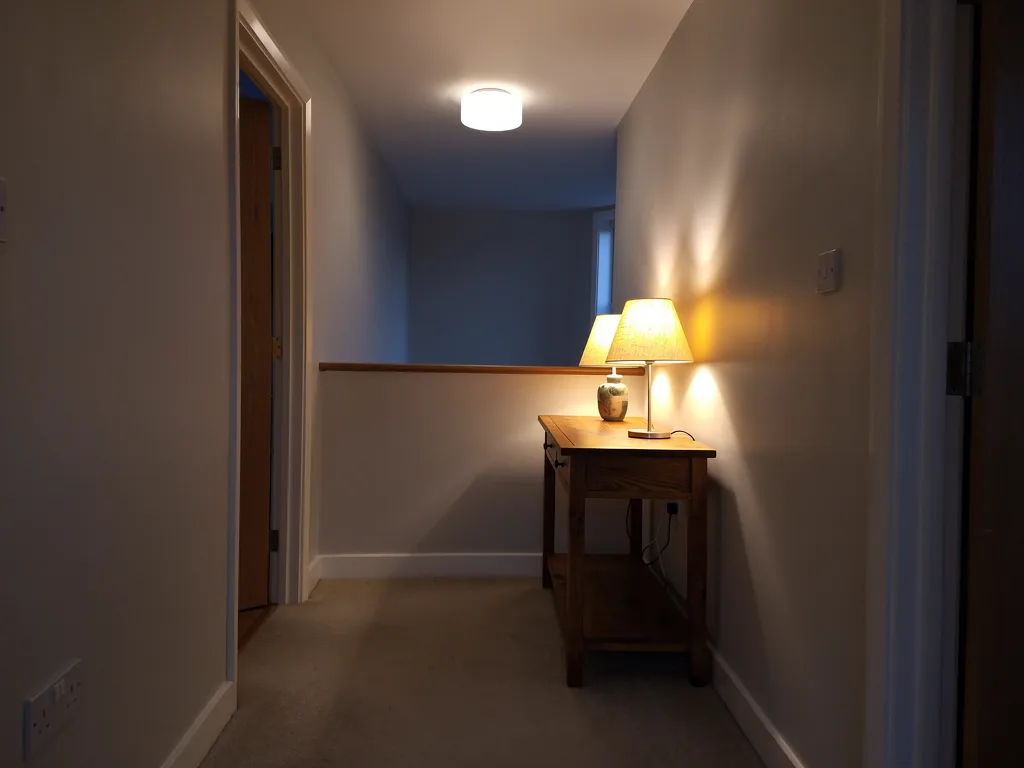
The diffuser is the only part of a sun tunnel anyone standing in the room ever sees
Everything above the ceiling, the dome on the roof, the reflective tube through the loft, the offsets around a joist or a water tank, is out of sight the moment the plaster goes back up. What is left, looking up from a landing floor or a bathroom mirror, is a disc or a dome of glowing plastic set flush into the ceiling, and that single fitting has to do two jobs at once: spread the daylight coming down the tube evenly across the room, and look like it belongs on that ceiling rather than like an afterthought bolted through it.
This guide works through the diffuser choices that actually change what a finished job looks like from below: shape, finish, size against the tube, how the opening gets cut and made good, and the add-on kits that fit at this end of the run rather than at the roof. For how the dome and tube above it are built, see our guide to dome, tube and diffuser, and for the full range of fittings we cover, start at sun tunnel installation.
Two shapes on the market, and they read very differently on a ceiling
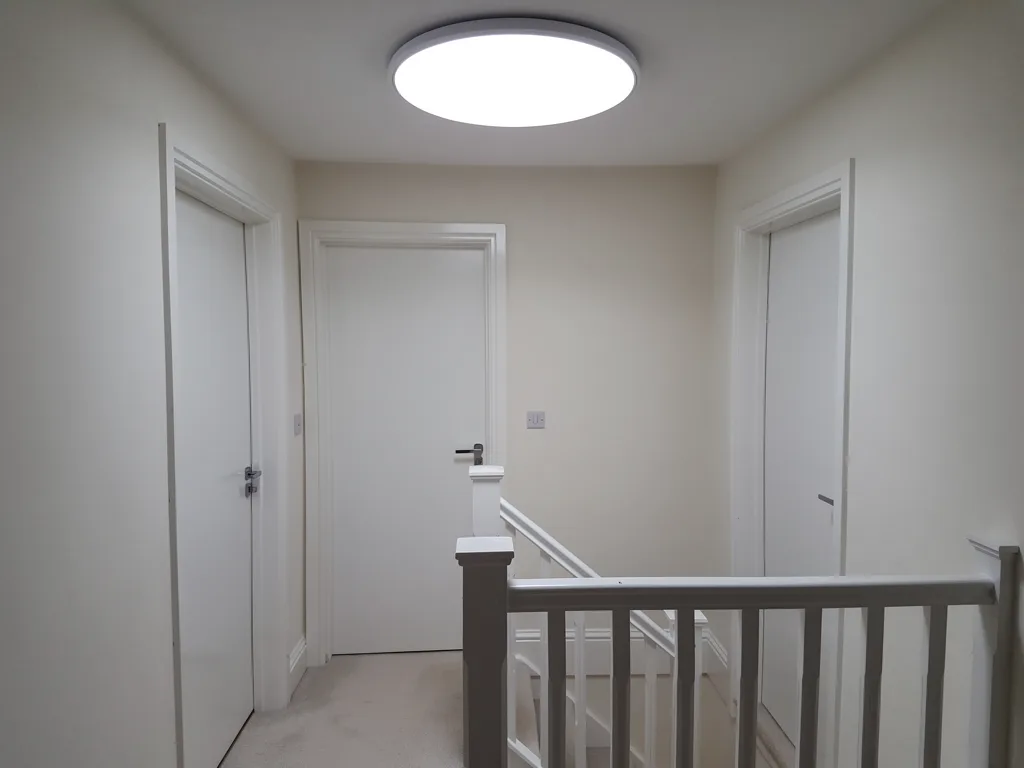
A diffuser is either flat or domed, and the difference is not just cosmetic. A flat diffuser sits close to the plasterboard, almost like a large ceiling rose, and gives a soft, even glow with very little of the fitting itself standing proud of the surface. A domed diffuser projects a few centimetres into the room and scatters light wider across the walls as well as the floor, at the cost of a fitting you can see the shape of from an angle, not just the glow of.
Neither is the wrong answer as a rule. A flat diffuser suits a low ceiling, a room with a sloped section close to the fitting, or a spot where a proud dome would sit too near a light fitting or a beam. A domed diffuser earns its place where the ceiling is plain and open and the room benefits from light thrown further across the walls rather than pooled in one patch of plaster. The choice sits alongside tube diameter as one of the few decisions made at survey rather than off a brochure page.
Frosted, prismatic or clear: the finish decides how hard the diffuser has to work
Underneath the shape sits a second choice: the texture of the plastic itself, and it changes how visible the light source is once it is switched on, in this case by the sky rather than a bulb.
- A frosted finish scatters the beam thoroughly, giving the most even wash of light and hiding any hint of a bright disc even under a strong midsummer sun.
- A prismatic finish, ridged on the inner face, bends light sideways as well as down, spreading it further across a room but sometimes leaving a faint pattern visible in the plastic on close inspection.
- A clear or lightly tinted finish passes the most raw brightness through, at the cost of a more concentrated, torch-like beam directly underneath it on a bright day.
Most rooms are better served by a frosted or lightly prismatic finish, since the point of a diffuser is to turn a beam into daylight rather than to keep it looking like a beam. A clear finish is worth considering only where a room genuinely wants a stronger patch of light in one place, a reading corner or a worktop, over an even wash across the whole ceiling.
What actually gets cut from the ceiling, and how it is made good
The diffuser sits inside a flange, and the flange is what actually meets the plasterboard, so the size of the hole cut into the ceiling follows the flange, not the visible glass or plastic disc alone.
A neat job trims the plasterboard cleanly around the opening, fits the flange flush against it rather than proud or recessed, and skims the joint so the edge disappears into the surrounding ceiling paint rather than reading as a ring around the fitting. Where a ceiling already has an artex texture, a cornice nearby or a step in level, matching that finish around the new opening is as much a plastering skill as a glazing one, and it is worth raising on survey rather than assuming it will simply blend in afterwards.
On a lath-and-plaster ceiling in an older Fletton-brick terrace, the surrounding material is more brittle than the plasterboard found in a new-town semi across Bretton, Orton or Werrington, and the opening needs a steadier hand to avoid cracking further than the cut itself. Neither is a reason to avoid a sun tunnel; it simply changes how the ceiling is prepared and made good once the tube is in.
Sizing the diffuser to the tube sitting above it, not the other way round
The diffuser is not chosen on its own. Its diameter follows the tube it sits on top of, so a narrow tunnel through a wardrobe or a small store room carries a correspondingly small diffuser, and a wide tunnel through a hallway or a landing needs a proportionately larger one, with a larger flange and a larger cut in the plasterboard to match.
Our guide to sun tunnel sizes and diameters sets out how the tube diameter is chosen for a room in the first place. What matters here is the knock-on effect: once that diameter is set, the diffuser's size and the ceiling opening are fixed with it, and changing diameter later means reopening both the roof flashing and the ceiling cut rather than swapping one part in isolation.
| Tube band | Typical diffuser size | Ceiling impact |
|---|---|---|
| Narrow | Small disc or dome | Modest cut, sits easily near a beam or slope |
| Mid-size | Medium disc or dome | Usual choice on a plain bedroom or bathroom ceiling |
| Wide | Large disc or dome | Needs clear plasterboard around it, away from fittings |
Working the diffuser in around what is already on the ceiling
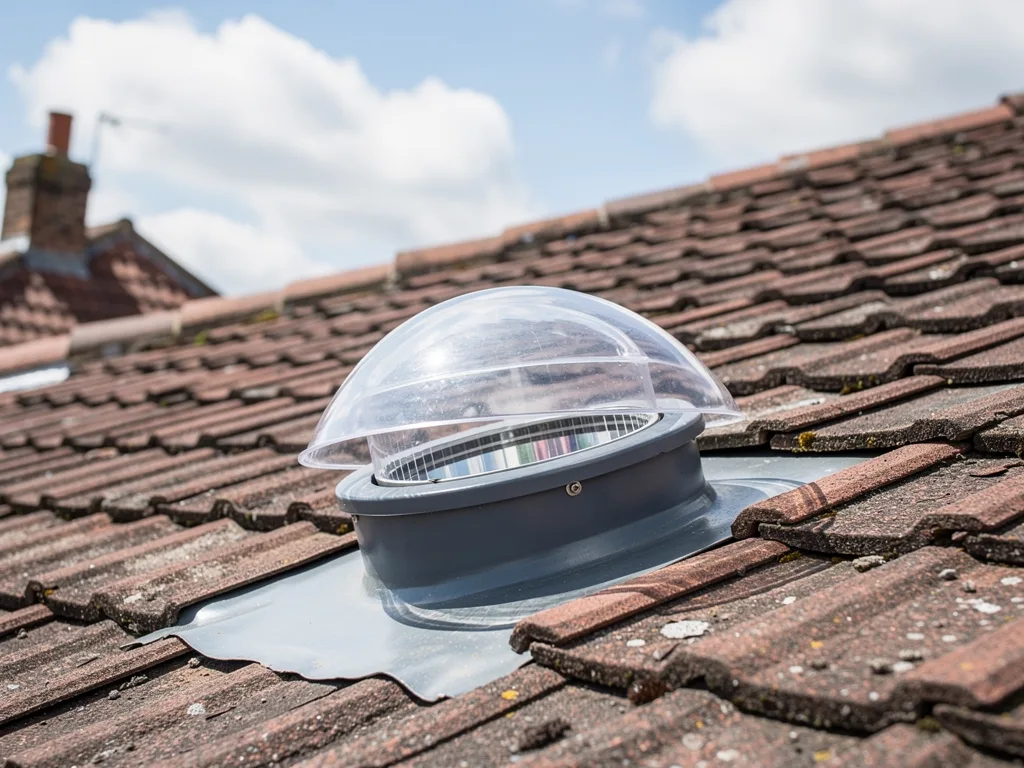
Few ceilings are a blank sheet of plasterboard. A downlight circuit, a mains-wired smoke alarm, a loft hatch or a run of joists at an awkward spacing all narrow down where a diffuser of a given size can actually go, and the wider the diffuser, the less room there is to work around any one of them.
A smoke alarm is usually the fixture that decides position outright, since building guidance on alarm placement generally wants clear ceiling space around the sensor, and a wide diffuser dropped too close to it can fall foul of that spacing before anything else is considered. A downlight is more a matter of appearance than regulation, but two glowing fittings crowded into the same patch of ceiling rarely reads as considered design, so spacing them apart is usually the better call even where it would technically fit.
A loft hatch changes the question from the room side of the ceiling to the loft side of it: the tube has to route around the hatch opening as well as any trusses or tanks nearby, which is a routing question our guide to sun tunnel routes through lofts covers on its own. A survey walks both sides of the ceiling together, the room below and the loft above, before a position is agreed rather than assumed from a floor plan.
Add-on kits that live at the diffuser, not the roof
A handful of accessories fit at the ceiling end of a sun tunnel rather than at the dome, and they change how the room can control the light rather than how much of it arrives in the first place.
A dimmer kit fits a manual shutter or a rotating baffle inside the diffuser housing, closing down or reducing the amount of daylight passing through without touching the tube or the dome above it. It is a mechanical fitting, not an electrical one, and it is covered in full on can a sun tunnel be dimmed or closed off. Some diffuser housings also carry a mounting ring for an integrated night light, so the same fitting that carries daylight by day can hold a small electric light for after dark, without a second hole cut anywhere near it. Our guide to add-on kits for sun tunnels sets out that option alongside the extractor fan kits fitted the same way in a bathroom run.
Where a bathroom or en-suite is the room in question, an add-on kit can combine a sun tunnel's diffuser housing with an extractor fan, so the two fittings share one opening rather than competing for ceiling space, which our guide to sun tunnels in bathrooms and en-suites covers against tiling and steam more generally.
Keeping a diffuser clear once it is fitted
A diffuser sits inside the house, away from weather and roof-level grime, so it needs far less looking after than the dome above it, but it is not entirely maintenance-free either.
Dust settles on the inner face over time, the same way it settles on any ceiling fitting, and a light wipe with a dry or barely damp cloth restores most of the brightness a dusty diffuser loses. A sealed system keeps insects and debris out of the tube itself, which our answer on do insects get inside sun tunnels covers directly, and the practical routine for both ends of the fitting is set out on how do you clean a sun tunnel.
Where a diffuser sits above a shower or a bath, condensation on the room side of the fitting is occasionally mistaken for a leak from the roof, when it is usually no different to condensation forming on any cold surface in a steamy bathroom. A well-insulated tube keeps the diffuser closer to room temperature and reduces how often this happens, which is a separate subject to the ceiling finish itself.
Does a diffuser age the way a dome does
A dome sits outside, exposed to UV and weather, and can cloud or yellow over years of that exposure, a subject covered fully on does a sun tunnel dome turn yellow over time. A diffuser sits inside, shielded from direct sun and rain alike, so it ages far more slowly, and most of the change a diffuser does show over time is a light haze from dust rather than a genuine change in the plastic itself.
Where a diffuser has genuinely discoloured, usually after many years, it can generally be swapped on its own without disturbing the tube, the dome or the flashing sealed into the roof above it, since the three parts are joined together rather than fused into one unit.
What a diffuser gives the room, and what it was never built to give
A diffuser is built to scatter a beam of daylight evenly across a ceiling, and it does that job well, but it is deliberately opaque enough that there is no sky, no cloud and no sense of the world outside visible through it. Our answer on can you see the sky through a sun tunnel covers that trade-off directly, and our guide to sun tunnel or rooflight: light or view sets out when each answer suits the room in question.
For a windowless landing, an internal bathroom or a hallway with no view to protect in the first place, that trade-off costs nothing: the room only ever wanted daylight, and the diffuser delivers exactly that, finished flush into the ceiling rather than sitting as a visible fixture.
Getting the finish agreed before the roof is opened
The diffuser and the ceiling opening are the last thing fitted on a sun tunnel job, but the shape, finish and size are all agreed at survey, alongside the tube diameter and the roof flashing, because changing any one of them once the plasterboard is cut means reopening work that was already finished.
A home visit looks at the ceiling from the room side as carefully as it looks at the loft and the roof covering, checking what fittings already sit nearby, what the ceiling material is, and what finish will actually sit flush once the ring is skimmed in. We install to current Building Regulations and handle the Building Control notification where the work is notifiable, and every quote carries the same Building Control position as any other rooflight or roof window we fit. Whatever diffuser suits the room, it comes with the same 10-year workmanship guarantee as the rest of the job, and the same general factors set out in our guide to what affects the cost of a rooflight apply to a sun tunnel as much as to any other fitting we cover.
Diffuser and finish questions worth settling on survey
Can I choose a domed diffuser instead of a flat one after the tube is already fitted?
Only as a separate piece of work. The flange, the ceiling opening and sometimes the fixing method differ between flat and domed diffusers, so swapping shape later usually means reopening the ceiling rather than exchanging one part for another.
Does a bigger diffuser always throw more light into the room?
Not on its own. Diffuser size follows tube diameter, and a wider tube genuinely does carry more daylight, but a large diffuser fitted to a narrow tube simply spreads the same amount of light over a bigger disc rather than adding to it.
Can the diffuser be painted or covered to match a decorative ceiling?
Painting the diffuser itself works against its own job, since a coating over the plastic dulls the very light it is there to spread. The flange and the surrounding plasterboard, by contrast, are finished and painted as part of the normal ceiling, so the fitting sits within the room's own decoration rather than against it.
Is a flat diffuser ever too flat to give even light?
Not in practice. A flat diffuser is shaped and finished specifically to scatter light evenly despite sitting close to the ceiling, and the flatness affects how far the fitting projects into the room rather than how evenly it glows.
Keep reading
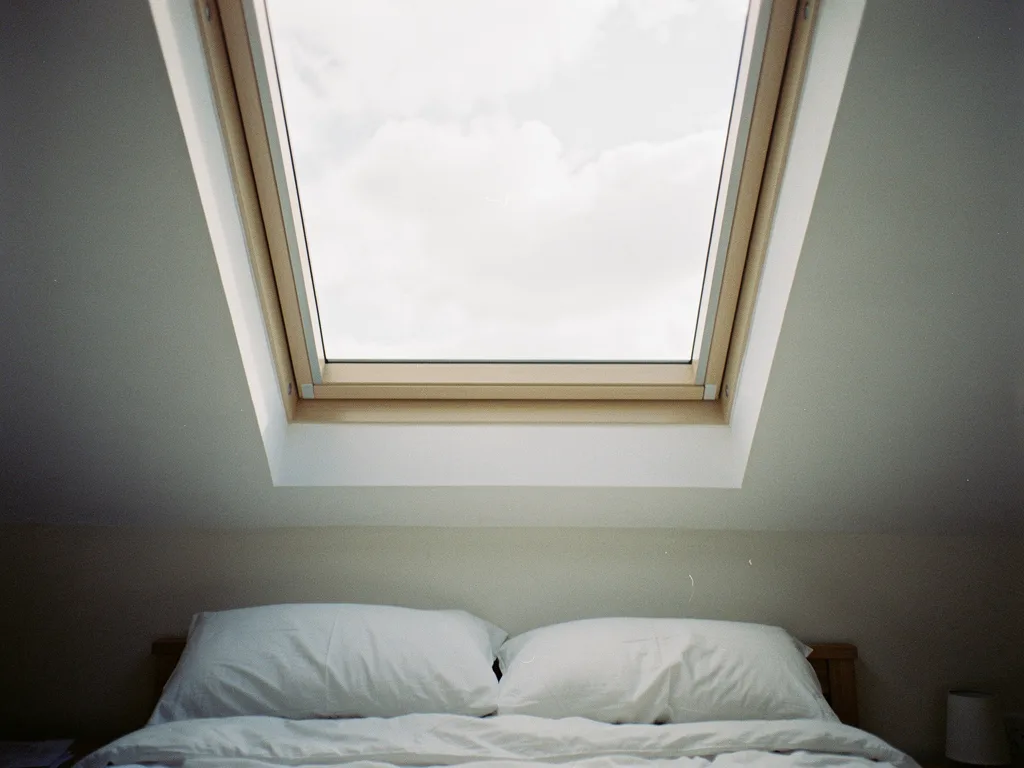 GuideSun Tunnel or Rooflight: Light or the ViewA sun tunnel gives a room daylight with no view; a rooflight gives you the sky itself, and the right choice depends on the room.
 GuidePlanning a Sun Tunnel's Route Through a LoftTrusses, purlins, tanks and a chimney breast all move a sun tunnel's route. Here is how we plan the line before any tile is lifted.
 GuideAdd-On Kits for Sun Tunnels: Extractor Fans and Night LightsExtractor fan and night light kits let one sun tunnel do more than carry daylight, and here is what each one needs to work.
Book a home visit
Tell us which room
- No obligation
- Sightline sketch included
- 10-year guarantee
Or call 01733 736163