Question · Sun tunnels
How Do You Clean a Sun Tunnel?
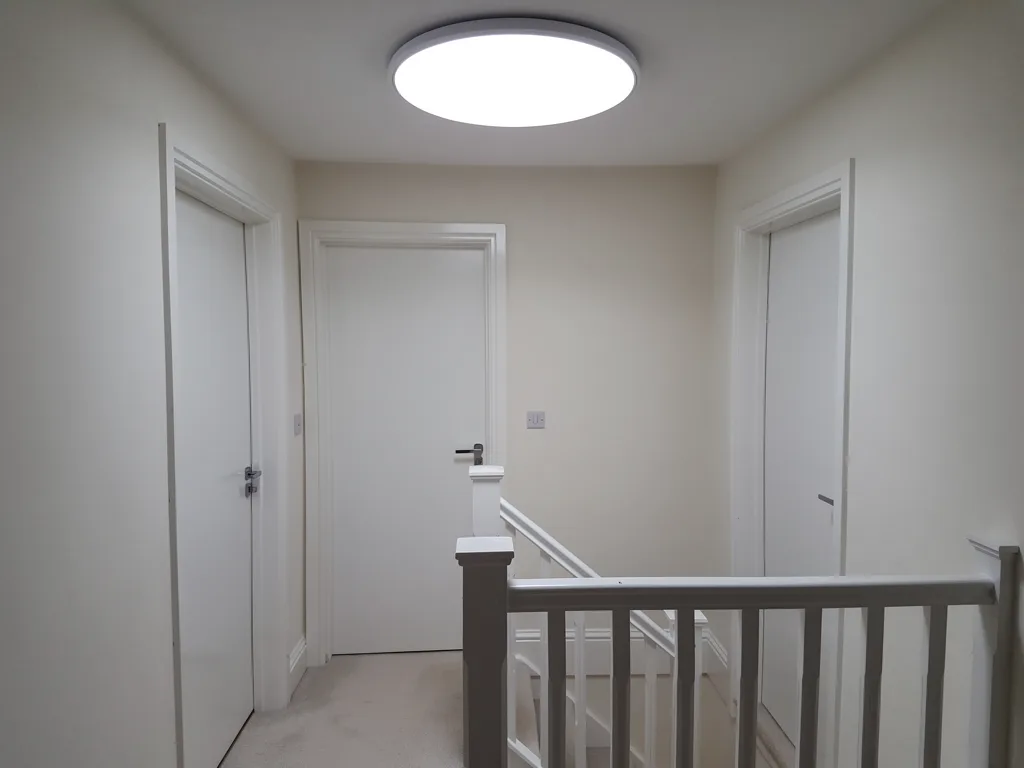
Two different jobs, two different risks
A sun tunnel has two pieces of clear plastic that face different problems. The diffuser sits flush in the ceiling, protected from weather, and it only ever collects household dust and the odd cobweb. The dome sits on the roof, exposed to rain, wind-blown grit, algae and bird droppings, and it is the part that actually decides how much daylight gets into the tube in the first place. Treat them as one job and you will either under-clean the dome or over-clean the diffuser with something too strong for it.
The two also carry different risks to you, not just to the plastic. The diffuser is a five-minute task from a stepladder on a landing. The dome means going up to roof level, and that changes what a sensible clean looks like far more than it changes what product you use.
The diffuser: the job at ceiling height
Most diffusers are moulded from a frosted or prismatic acrylic, chosen to spread light evenly rather than show a sharp beam. That same texture holds a little dust over time, usually visible as a faint grey bloom rather than dirt you would notice from across the room.
Wipe it with a soft, lint-free cloth dampened with warm water and a small amount of washing-up liquid, then go over it again with a dry cloth to stop streaks drying into the frosted surface. Avoid glass cleaners with ammonia or alcohol in them: on some acrylics they leave a hazy film rather than lifting one off, and they can craze the surface with repeated use. A duster on a long handle keeps the job off a chair altogether if the ceiling height allows it. Some diffusers unclip for a proper clean on both sides; check sun tunnel diffusers and ceiling finishes for which finish you have before you try to remove one, since not every style is meant to come down easily.
The dome: the job access decides
The dome is almost always a clear or lightly tinted polycarbonate or acrylic, set into a kerb or upstand with a flashing collar sealing it to the roof covering. Left alone, it collects the same grime as any other roof-mounted glazing: rain-borne dirt, algae in shaded or north-facing spots, and moss debris from nearby trees or a neighbouring pitch. None of that is unusual, and none of it is a sign anything has gone wrong with the fitting.
Cleaning it is straightforward in principle. Use plain water with a soft brush, a sponge, or a microfibre mop on an extension pole, and rinse off loose grit before wiping so you are not dragging grit across the surface. A mild, non-abrasive cleaner is fine for ingrained dirt; anything gritty, a scouring pad, or a solvent-based cleaner is not, because these domes scratch more easily than glass and a scratched dome scatters light rather than passing it cleanly. Skip the pressure washer altogether: the jet can force water past the flashing seal or crack a dome that is otherwise sound.
The part that actually needs judgement is getting up there. A single-storey flat-roofed extension, common across Peterborough's newer township homes, may put the dome within easy reach of a proper roof ladder or a scaffold tower for the afternoon. A dome two storeys up, over a steep pitch, or close to a chimney or party wall is a different proposition, and the sensible move is to have it cleaned at the same time as a gutter clear or a roof check, rather than balancing on an unsuitable ladder to save the trip up.
Haze, algae and yellowing are not the same problem
It helps to know what a clean will actually fix. Surface dirt, pollen and light algae film wash off with water and a soft brush, and the dome comes back close to clear. A permanent yellow or milky cast that does not shift with cleaning is something else: it is the plastic itself ageing under UV exposure, which is a material question rather than a cleaning one, covered fully in does a sun tunnel dome turn yellow over time. Fine surface scratching from an old pressure-washing or an abrasive pad shows up the same way: a permanent dulling that no amount of further cleaning will remove, because the damage is in the plastic, not on it.
Staining right at the edge of the dome, rather than across its face, usually points somewhere else again: a flashing or seal starting to let moisture track in rather than the dome itself being dirty. That is worth a look from someone who knows what a sound flashing detail should look like against your roof covering; see sun tunnel brands and flashings for how the common kits are meant to sit.
Cleaning at a glance
| Part | Where | Use | Avoid |
|---|---|---|---|
| Diffuser | Ceiling, from a step | Damp soft cloth, mild soap | Ammonia or alcohol cleaners |
| Dome | Roof, from a ladder | Water, soft brush or sponge | Pressure washers, abrasive pads |
| Tube interior | Sealed, not accessed | Nothing routinely needed | Opening a sealed joint |
| Flashing edge | Roof junction | A visual check, not cleaning | Sealant applied over a stain |
How often a sun tunnel actually needs it
There is no fixed schedule that suits every roof, because the dome collects dirt at whatever rate the surrounding trees, birds and weather set. A dome under an open sky with nothing overhanging it might only need a rinse once a year, timed for autumn once leaves have stopped falling. One under trees, near a bird perch, or on a shaded north slope where algae takes hold faster will want checking two or three times a year, with a clean whenever it looks visibly duller than the surrounding roof tiles or membrane.
The diffuser needs far less attention: once or twice a year, or whenever a room feels dimmer than it used to and the dome outside is already clean, is usually enough. Doing both at the same visit, once the ladder or step is already out, is the practical approach rather than treating them as separate errands.
When a clean will not bring it back
If a dome stays hazy after a proper wash, or a diffuser has cracked or gone brittle rather than just dusty, cleaning has done its job and the plastic itself needs attention instead. A crazed or badly yellowed dome is usually a straightforward swap rather than a full re-fit, since the tube, flashing and diffuser below it are often still sound; what affects the cost of a rooflight covers how that kind of part replacement is generally priced against a full new installation. And if what a room actually needs is a view of the sky rather than just brighter daylight, a clean dome will not give you that either, because a diffuser is built to scatter light evenly rather than let you see through it; sun tunnel or rooflight: light or view sets out that choice honestly.
For the mechanics of how the dome, tube and diffuser work together in the first place, inside a sun tunnel: dome, tube and diffuser is the fuller guide. And if a diffuser is misting up rather than just dusty, that is a different question again, answered in do sun tunnels get condensation. We install every sun tunnel to current Building Regulations with a 10-year workmanship guarantee, and if a dome or diffuser needs more than a clean, book a home visit or message us on WhatsApp and we will look at what the roof and the room actually need. See the full range on the sun tunnel installation page.
Questions people also ask
Can I clean a sun tunnel dome from inside the loft?
No. The dome sits above the roofline on the outside of the tube, so it can only be reached from the roof itself. From inside the loft you can see the top of the tube and, on some fittings, the underside of the dome collar, but not the outer surface that actually collects dirt.
Is it safe to use a hosepipe on a sun tunnel dome from ground level?
A gentle rinse from a hose is generally fine if you can reach the dome comfortably and safely, but a jet washer or a hose on full pressure is not, because it can drive water past the flashing seal. If the dome is out of easy reach from the ground, that is a sign it needs proper access equipment rather than a longer hose.
Will cleaning the dome make the room noticeably brighter?
Often yes, more than people expect. A visibly dulled dome can be cutting a meaningful amount of the daylight reaching the diffuser, so a rinse that looks like a small cosmetic job can bring back more brightness in the room than the same effort spent cleaning almost anything else on the roof.
Should I use a specific cleaning product made for sun tunnels?
There is no need for a dedicated product. Warm water with a little washing-up liquid, applied with something soft, cleans both the dome and the diffuser without the risk that a stronger household or automotive cleaner brings to acrylic and polycarbonate.
Book a home visit
Tell us which room
- No obligation
- Sightline sketch included
- 10-year guarantee
Or call 01733 736163