Question · Sun tunnels
Does a sun tunnel work on a north-facing roof?
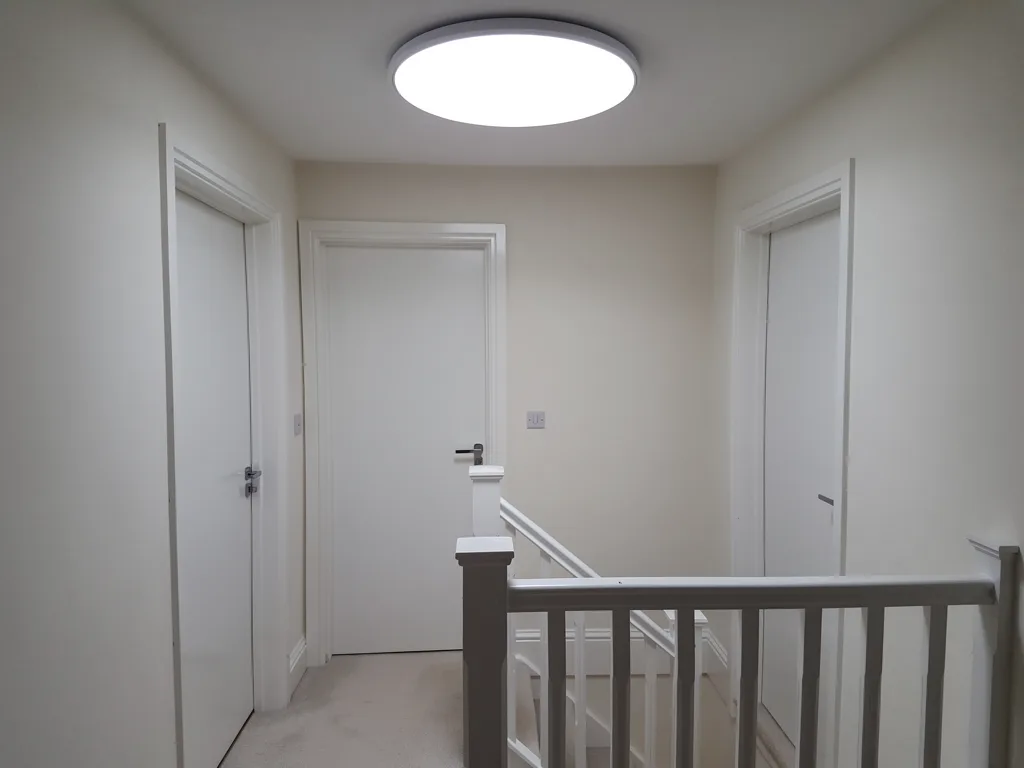
What a north pitch actually takes away
A sun tunnel's dome sits on the roof looking up at the open sky, and most of what falls on it is diffuse skylight: daylight scattered across the whole dome of the sky by the atmosphere, rather than a single beam from the sun's position. A south-facing dome adds direct sun to that on a clear day, which is why a south tunnel can feel brilliant at midday. A north-facing dome never gets that direct component. What it keeps is the diffuse light, and in the UK that diffuse light makes up a large share of daylight on any day with cloud, which is most days.
The practical result: a north tunnel gives a steadier, cooler light through the day rather than one bright peak. There is no shaft of direct sun moving across the ceiling, and no risk of the room overheating on a hot afternoon the way a south-facing dome can. For a bathroom, landing or hallway, that evenness usually suits the room better than a single strong beam would.
Diameter and tube run matter more than which way the roof faces
Orientation is one factor among several, and not the largest one. Tube diameter, tube length and the number of bends between roof and ceiling all affect how much light reaches the diffuser, often by more than aspect does. A short, straight run in a 350mm tube outperforms a long, bent run in a 250mm tube on any aspect, north included. On a north roof, it is worth going up a size or keeping the run as direct as possible to offset the light you are not getting from direct sun. See sun tunnel sizes and diameters and sun tunnel routes through lofts for how a route is planned.
Tube type counts too. A rigid tube with a reflective inner surface carries light more efficiently than a flexible tube of the same diameter, because a flexible tube's ridged wall scatters some light at every bend. On a north roof, where you are not banking on a direct-sun boost to make up the difference, a rigid tube is usually the better specification. Rigid tube or flexible tube: choosing a sun tunnel sets out the trade-off in full.
| Roof aspect | What the dome collects | What that gives the room |
|---|---|---|
| North | Diffuse skylight only | Steady, even light all day, no direct beam |
| South | Diffuse light plus direct sun | Bright peaks on clear days, more variation |
| East or west | Diffuse light plus a low direct sun for part of the day | A morning or afternoon lift, otherwise steady |
Big Fenland skies help a north tunnel more than a hemmed-in roof does
What sits around the dome matters as much as which way it faces. A dome with a clear run of open sky above it, with no chimney stack, taller neighbour or roofline crowding its view, collects far more light than one tucked into a valley or shaded by an extension wall, whatever the aspect. The Fens run flat to the east and north of Peterborough, and a roof out here often has an open, unbroken run of sky above it in every direction, including north. That open aspect goes some way to compensating for the lack of direct sun, because the dome is seeing a full, unobstructed dome of sky rather than a narrow slot of it.
The city's own roofs vary in ways that affect a north tunnel differently:
- Fletton brick terraces with a rear outrigger, where the outrigger roof often faces north or east and the dome sits low, close to a boundary wall or a neighbour's chimney
- New-town homes in townships like Bretton, Orton and Werrington, many with wide, open plots and few obstructions around the roofline
- Flat-roofed extensions, common across the newer townships and in Hampton, where a north-facing upstand still has a clear run of sky above it
On a terrace with a tight rear outrigger, we check the sky view from the dome position before we commit to size or tube type, because a partly blocked north pitch needs a different answer to an open one.
Where a north tunnel is not the answer
A sun tunnel of any aspect gives light, not a view: the diffuser spreads daylight evenly across the ceiling, but you do not see sky, cloud or a tree moving past through it. If the room is one you want to look up and out from, a rooflight is the better fit, north-facing or not, because it keeps the actual view rather than converting it into flat ceiling light. Sun tunnel or rooflight: light or view sets out that choice properly, and can you see the sky through a sun tunnel? explains why the diffuser rules that out.
A north tunnel also asks more of the specification if the room is large or the loft run is long, since there is no direct-sun boost in reserve for a difficult route. Where a windowless room is bigger than a single tunnel comfortably lights, or the loft run needs several bends to clear joists and services, two smaller tunnels or a well-placed rooflight can outperform one undersized tunnel straining against a north aspect. When is a sun tunnel the right choice, and when is it not? weighs this honestly, and how many sun tunnels does a room need? covers sizing a larger space.
What we check before we quote a north-facing job
Before we specify anything, we look at the roof from inside the loft: the run from the proposed dome position to the ceiling, what the dome will actually see once it is above the tiles or slates, and whether a chimney, party wall or neighbouring roofline will cut into that view. We install to current Building Regulations and handle the Building Control notification ourselves where the work is notifiable, whichever way the roof faces. Every quote comes with a sightline sketch, which for a sun tunnel shows the ceiling diffuser position and the light it will spread rather than a view up through glass, so you know what the room will look like before the roof is opened. See the sightline sketch and what Building Control expects of a sun tunnel for how that works, and what affects the cost of a rooflight for how aspect, diameter and route feed into the price. To arrange a visit, book a home visit or message us on WhatsApp.
Questions people also ask
Do I need a bigger tunnel because my roof faces north?
Not always, but it helps. A north pitch with an open, unobstructed run of sky above the dome can perform well at a standard diameter. Where the sky view is partly blocked by a chimney, wall or neighbouring roofline, going up a size makes up more of the shortfall than it would on an open south pitch.
Will a north-facing sun tunnel look dim compared with the rest of the house?
It will read as cooler and steadier rather than dim. There is no direct-sun peak, so the light does not have the same bright moments a south tunnel gets, but on an overcast day, which is most days, the two aspects are far closer together than people expect.
Is a flexible tube ever fine on a north roof?
Yes, over a short, straight run with few bends. Over a longer or bent run, a rigid tube's reflective surface carries noticeably more light through to the diffuser, which matters more on a north pitch where you have no direct-sun reserve to fall back on.
Should I choose a rooflight instead if my roof faces north?
Only if you want the view, not just the light. A north-facing rooflight still shows sky, cloud and changing weather, which a sun tunnel's diffuser cannot. If the room only needs daylight, a north tunnel remains a straightforward, effective answer.
Book a home visit
Tell us which room
- No obligation
- Sightline sketch included
- 10-year guarantee
Or call 01733 736163