Question · Sun tunnels
Do sun tunnels let heat out?
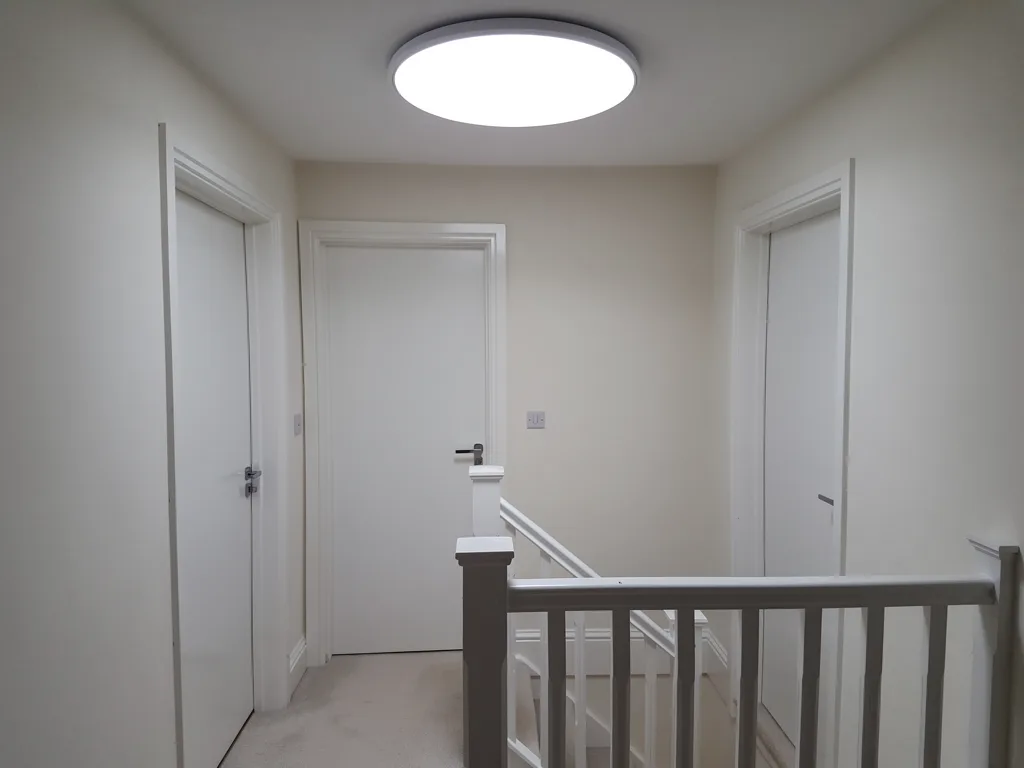
Where a sun tunnel actually loses heat
There are three points along the run where warmth can escape, and each behaves differently. The dome on the roof is the outer skin, sitting in the weather all year. The tube carries daylight down, usually through a cold loft space before it reaches the ceiling. The diffuser is the fitting you see from the room, closing the tunnel off at ceiling level.
None of these points is part of the wall or roof's main insulation, so the tunnel is, by nature, a small break in that layer. What matters is how well each part is sealed and specified, not whether heat loss can be avoided altogether. It cannot; it can only be kept small.
In a Peterborough loft conversion or a new-town bungalow with a straightforward loft above, that middle section, the tube through the cold void, is usually the longest run and the part most worth insulating properly.
Rigid tube against flexible tube
The tube itself makes a real difference, and it is worth reading Rigid Tube or Flexible Tube: Choosing a Sun Tunnel alongside this page, since the same choice affects both light output and heat.
A bare rigid aluminium tube conducts heat readily along its length. Left uninsulated in a cold loft, it will run close to outside temperature for most of its run, and any warm, moist air that reaches it from the room below will meet a cold surface. A flexible tube, usually a foil-faced duct with an air gap built into its structure, resists heat transfer better on its own, though it carries slightly less light than a straight rigid run of the same diameter.
Either type can be wrapped with an insulated sleeve where it crosses the cold loft space. That sleeve is the single change that does the most to cut heat loss through the middle of the tunnel, and it is a normal part of a correctly specified fitting rather than an upgrade.
Domes and diffusers: where the ends matter most
The dome and the diffuser sit at either end of the tunnel, and both come in more than one specification. A single-skin polycarbonate dome is the simplest and least expensive to make, but it has no trapped air layer, so it loses heat faster than a double-skin or triple-skin dome, which work the same way as double or triple glazing: a layer of still air between two or three skins slows the transfer of heat far more than a single sheet of clear plastic on its own.
The diffuser at the ceiling matters just as much. A sealed, insulated diffuser unit closes the tunnel off from the room, so the tube's cold air does not mix directly with warm room air. Read Sun Tunnel Diffusers and Ceiling Finishes for how the different diffuser types affect both the spread of light and this seal.
How this compares with a rooflight or a roof window
A flat rooflight or a pitched roof window has a much larger glazed area than a sun tunnel's small dome, so in plain terms there is more glass for heat to pass through. Modern double and triple-glazed units close a lot of that gap, but a well-specified sun tunnel, with its small opening and insulated tube, will usually lose less heat overall than an equivalent-sized window into the same room.
What a sun tunnel gives up is the view. You get daylight spread through a diffuser, not a clear pane you can see sky or roofline through. Sun Tunnel or Rooflight: Light or View sets that trade-off out properly if heat loss is only one of the things you are weighing up.
| Part | Heat loss risk | What reduces it |
|---|---|---|
| Dome | Higher on a single skin | Double or triple-skin dome |
| Tube | Bare metal conducts readily | Insulated sleeve in the loft run |
| Diffuser | Where tube meets room air | Sealed, insulated diffuser unit |
| Roof and ceiling seals | Air leakage, not just conduction | Tight flashing and a sealed ceiling fitting |
Condensation is usually a bigger worry than heat loss
The two are related. Where insulation around the tube is gapped or squashed, warm, moist air from the room finds a cold surface, and that is where condensation forms, not usually inside the sealed dome itself. Do sun tunnels get condensation? goes into how a correct fit avoids this, but the short version for heat loss is that loft insulation should be dressed up close around the tube, not left with a gap, since a gap is both a cold bridge and a place damp air can sit.
- Loft insulation dressed tight to the tube, not cut back from it
- An insulated sleeve on any length crossing the cold loft void
- A sealed diffuser rather than an open grille
- Flashing at the roof that keeps the opening weathertight and draught-free
Building Regulations and where notification comes in
Read What Building Control Expects of a Sun Tunnel for the fuller picture, but in short, a new opening through a roof is work that can fall under Building Regulations, and where that applies we handle the Building Control notification as part of the job. We install to current Building Regulations as standard, which is one reason the specification detail above, insulated tube, sealed diffuser, proper flashing, is treated as part of a normal fit rather than something to ask for separately.
Choosing a specification against a budget
A single-skin dome on a bare tube with a basic diffuser will always be the cheaper option, and a double or triple-skin dome with an insulated sleeve and sealed diffuser costs more to supply and fit. What Affects the Cost of a Rooflight sets out the general factors that move a job's price, of which the dome and diffuser specification is one. Sun Tunnel Brands and Flashings is worth a look too, since brands differ in what insulation comes as standard against what is an optional upgrade.
Every quote from us includes a sightline sketch, so before any roof is cut you can see how the fitting is planned to sit, not just what it will cost.
For the wider service, including how a route is planned through your loft and what a typical fit involves, see Sun Tunnel Installation in Peterborough.
Questions people also ask
Do I need a special dome to cut heat loss?
Not a special one, but a double or triple-skin dome rather than a single-skin one. The trapped air layer between the skins works in the same way as double glazing, slowing heat transfer more than a single sheet of clear polycarbonate on its own.
Should the tube be insulated along its whole length?
Insulation matters most where the tube crosses a cold loft space. A short run straight through a flat roof into the ceiling below has little cold void to cross, so an insulated sleeve there does less work than on a longer run through an open loft.
Will a sun tunnel make a room feel draughty?
No, not when it is fitted correctly. The roof-side flashing and the ceiling diffuser are both sealed fittings, so air movement through the tunnel stops even though the tube itself sits outside the main insulation layer.
Does a longer tube lose more heat than a short one?
A longer run does have more surface area passing through the cold loft, so it benefits most from an insulated sleeve. Even so, the loss from a properly fitted tunnel of any reasonable length stays small next to what a rooflight of equivalent size would lose from the same room.
Book a home visit
Tell us which room
- No obligation
- Sightline sketch included
- 10-year guarantee
Or call 01733 736163