Question · Sun tunnels
Do Sun Tunnels Get Condensation?
Where the moisture actually shows up
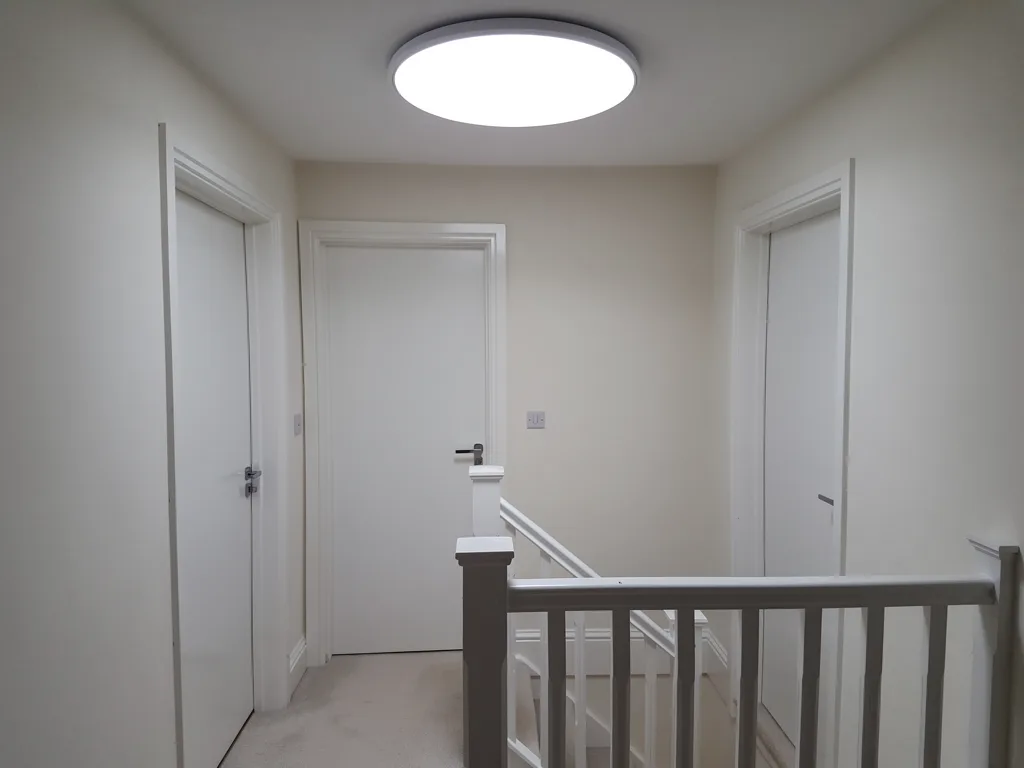
Three surfaces can carry droplets, and they do not mean the same thing. A film on the outside of the dome on a cold, clear morning is ordinary weather, the same as it forms on a car windscreen or a cold window pane, and it clears once the sun is on the roof. Moisture on the inside of the tube, out of sight above the ceiling, is worth knowing about but rarely a problem on its own. A wet ring or drip at the diffuser, the part fixed to the ceiling in the room, is the one to take seriously, because that is where it can mark plaster or drip onto a landing carpet.
The dome, tube and diffuser each sit at a different temperature, and that is the whole story: the dome is outside in the weather, the tube runs through a cold loft, and the diffuser is warmed by the room below. Condensation forms wherever warm, damp air reaches the coldest of those three surfaces.
Why warm air and a cold tube cause it
Warm air holds more moisture than cold air. When it rises into a loft and touches a cold aluminium or plastic tube, it cools suddenly, and the air can no longer hold the water it was carrying, so the water comes out as droplets on the tube wall. This is the same physics that mists a bathroom mirror or beads a cold drink glass on a warm day, nothing more exotic than that.
The rooms that make the most moist air are the ones most likely to show it. A tube run from a bathroom or en suite, where showers and baths put a lot of water vapour into the air quickly, carries more of it than a tube from a landing. A tube feeding a kitchen ceiling sees the same thing at cooking times, which is one reason we weigh the room carefully when someone asks whether a sun tunnel suits a kitchen. A long, cold loft run, or a tube passing close to the eaves where the air is coldest, gives the moisture more cold surface to meet on the way.
How a well-fitted tunnel is built to keep it out
The fix is not to keep moisture out of the loft altogether, which is not realistic in an ordinary house, but to stop it condensing where it can do any harm. A properly specified tube does three things at once:
- An insulated, double-skin rigid tube keeps the inner surface closer to room temperature than a bare metal wall, so there is less cold surface for the air to meet.
- A sealed collar where the tube passes through the ceiling stops warm, moist room air bypassing the diffuser seal and reaching the cold loft section directly.
- A short, direct route through the loft, rather than a long run pressed against cold rafters, keeps less of the tube at loft temperature in the first place.
This is one reason the choice between a rigid tube and a flexible tube matters beyond light output alone. A rigid, insulated tube gives a more consistent inner surface temperature along its length, where a flexible tube's ribbed wall can hold a little more moisture in the folds. Both can be fitted well, but the detail at the ceiling collar and the loft route decides more than the tube type on its own. We install to current Building Regulations and cover the loft penetration, the collar and the flashing as part of the same fit, the same standard we apply to a full sun tunnel installation.
Reducing moisture at the source
Fitting the tube well deals with the cold surface. The other half of the problem is the amount of moisture in the air reaching it, and that can often be reduced without touching the tunnel at all: an extractor fan running during and after a shower, a lid on a pan, drying washing somewhere ventilated rather than on a rack under the tube's ceiling run. Where a bathroom or kitchen has no window fan already, a sun tunnel extractor fan kit fits into the same diffuser fitting and clears the moist air before it reaches the loft section at all.
Condensation or a fault in the flashing
Homeowners often ask us to tell the two apart, and there is a straightforward way to do it. Condensation appears as fine droplets or a light film, usually after a cold night or a long shower, and it is worst first thing and gone by mid-morning. Water getting in around a poorly seated or ageing flashing looks different: it tracks in during or straight after rain, follows a line rather than a general film, and can appear regardless of how warm or cold the house has been. If what you are seeing follows the weather outside rather than the moisture inside, it is worth having the flashing looked at rather than assuming it is condensation, since a flashing that has moved or aged needs renewing rather than living with.
Staining that keeps returning at the diffuser, rather than the odd damp morning, is also worth a second look at the diffuser and ceiling finish itself, since the wrong finish around the fitting can hold moisture against the plaster longer than it needs to sit there.
Questions people also ask
Does condensation mean the sun tunnel was fitted badly?
Not on its own. A little condensation on the outside of the dome on a cold morning is normal weather behaviour, not a fault. Persistent moisture inside the tube or dripping at the diffuser points to the tube's insulation, the ceiling collar or the room's own moisture load, and any of those can be corrected without replacing the whole unit.
Will condensation freeze inside the tube in winter?
On a hard, cold night it can form as a light frost on the inside of an uninsulated tube, the same way it frosts a car windscreen, and this clears once the loft warms slightly during the day. An insulated tube keeps the inner surface further from outside temperature and makes this far less likely.
Can I stop condensation without adding a fan?
Sometimes. Opening a window briefly after a shower, drying laundry somewhere ventilated, and keeping pan lids on while cooking all reduce the moisture reaching the loft. Where the room already runs consistently damp, a fan kit deals with it at the source rather than relying on habits changing.
Does a longer tube make condensation worse?
It can, because a longer run through a cold loft gives moist air more cold surface to meet before it reaches the diffuser. This is one of the things we weigh when planning the route through the loft, alongside light loss over distance.
Book a home visit
Tell us which room
- No obligation
- Sightline sketch included
- 10-year guarantee
Or call 01733 736163