Guide · Sun tunnels
Inside a Sun Tunnel: Dome, Tube and Diffuser
A dome on the roof, a reflective tube through the loft and a diffuser in the ceiling: three parts that turn daylight into a real light source for a room with no window of its own.
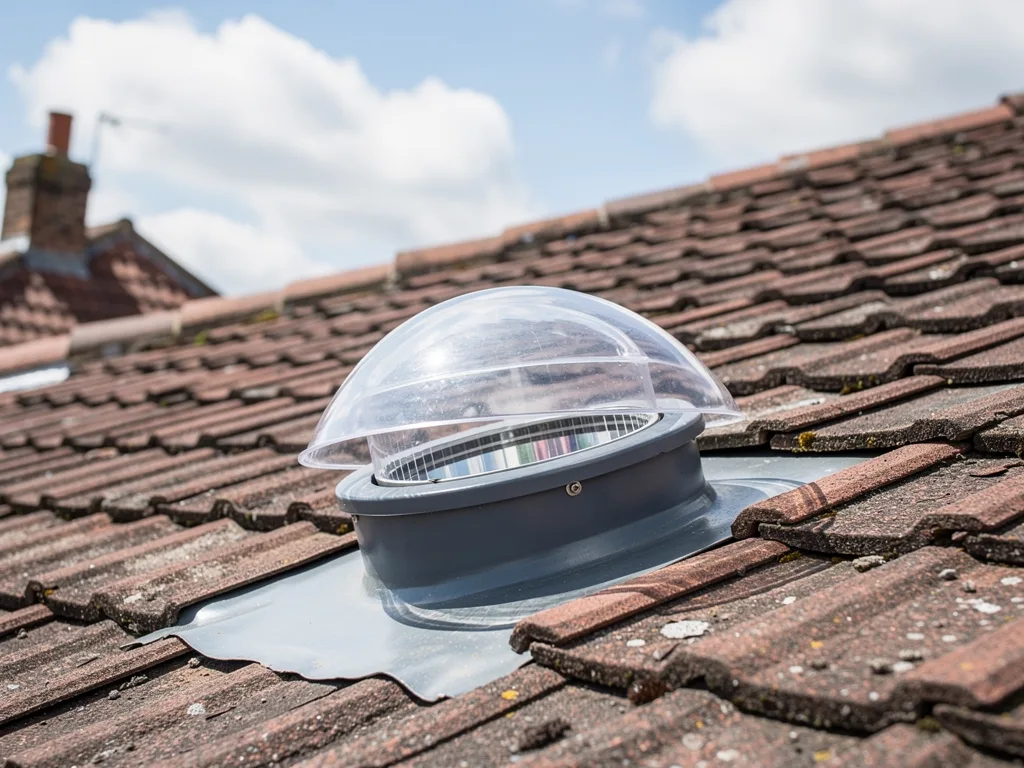
The dome: catching light from a wider slice of sky than a flat pane ever could
A sun tunnel starts with a dome on the roof, and its shape is doing more work than it looks. A flat rooflight only really collects the sky directly above it, but a domed or diamond-profile cap catches low sun from the side as well as light falling straight down, so it keeps gathering light even once the sun has swung well off overhead. That single difference is why a tubular skylight the size of a dinner plate can still light a hallway that has no window of its own.
Most domes are moulded from clear acrylic or polycarbonate, chosen for how well they pass visible light rather than for insulation, which is the tube and the diffuser's job further down the run. Some carry a fine prismatic texture on the inside face, tiny ridges that scatter a low winter sun sideways into the tube instead of letting it glance straight back out again. Others are left smooth, which lets more raw light in on a bright day but gives up some of that low-angle catch. Either way, the dome sits proud of the roof on a short upstand so rain runs off rather than pooling against the glazing, and a slate or tile roof needs a flashing kit shaped to match the pitch, which is worth checking before a diameter is even chosen.
The tube: carrying a shaft of daylight through a cold, dark loft
Between the dome and the ceiling there is usually a run of loft space with no light in it at all, and the tube's whole job is to move sunlight from one end of that gap to the other without losing it to the plasterboard, the joists or the cold roof timbers either side. The inside surface is a bright, almost mirror-finished aluminium, so a ray entering at a steep angle keeps bouncing along the tube's length rather than fading into the material, the way light keeps travelling down a corridor lined with mirrors.
Straight runs lose the least light on the way down. Every bend, and every extra metre of tube, takes a small amount of brightness off what finally reaches the ceiling, which is why the route through the loft is worked out before the first hole is cut, not afterwards. The tube itself also comes in rigid or flexible sections, and the choice between the two changes how much light survives the same run, which is its own subject on rigid tube or flexible tube.
Diameter matters as much as length. A wider tube collects and carries more light for the same run, which is why sizing the diameter to the room comes before anything else on the specification, and why the same tube that lights a landing well may need stepping up a size, or doubling up, once the run to a room further into the roof gets longer or takes a bend.
Bends and offsets: the part of the job that decides what you actually get
Few roofs sit directly above the room that needs light, so most sun tunnels need at least one offset to steer the tube around a joist, a water tank or a chimney breast on the way down. An offset uses two angled elbow sections rather than one sharp turn, which keeps the light moving forward instead of scattering back up the tube it just came down.
- A single gentle offset near the top of the run costs very little brightness.
- A sharp turn low down, close to the ceiling, costs more, because there is less tube left below it for the light to recover its direction in.
- Two offsets in the same run are usually still workable, but the room then needs a wider tube to compensate for what each bend takes off.
This is where a survey earns its keep. Working out the actual loft route on the day, rather than guessing from a photograph or a floor plan, decides whether a bathroom in the middle of a house ends up with a genuinely bright tube or a dim one that disappoints against the brochure photo it was chosen from.
The diffuser: where a beam of daylight becomes daylight in the room
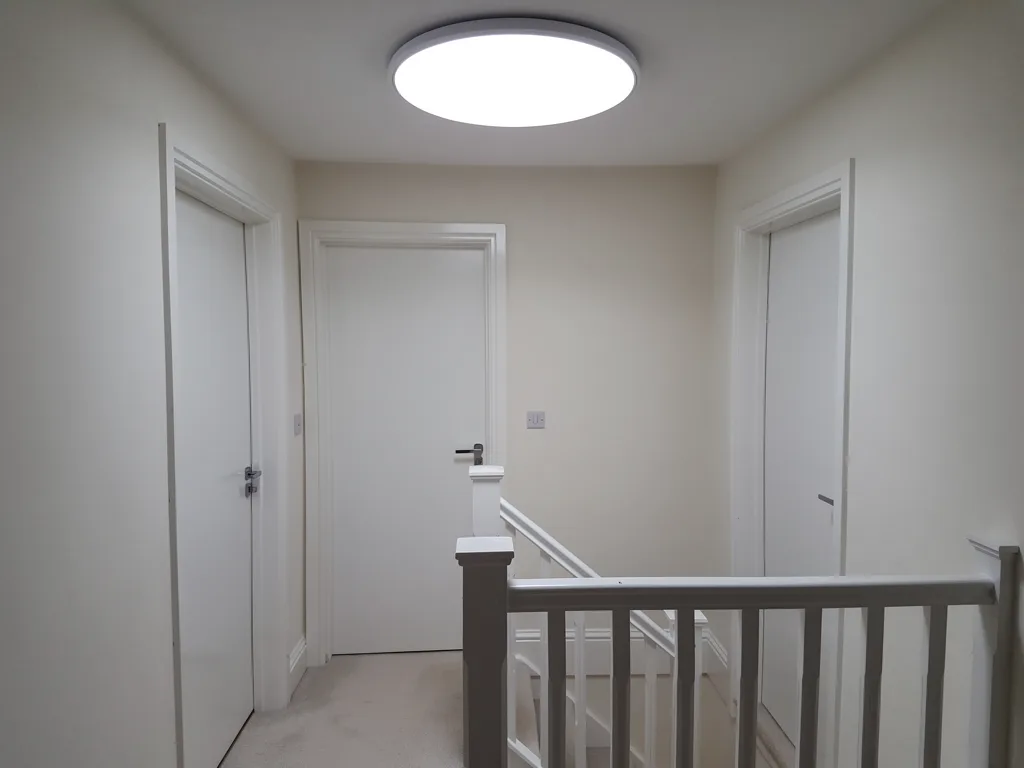
By the time light reaches the bottom of the tube it is still travelling as a fairly directional beam, and the diffuser's job is to spread that beam out across the ceiling so it reads as daylight in the room rather than a torch shining down from above. A flat, frosted diffuser gives a soft, even glow and sits close to the ceiling line. A domed diffuser projects a little further into the room and throws light wider across the walls, at the cost of standing slightly proud of the plaster.
The finish around the diffuser, and how neatly it trims into the ceiling, is its own subject, covered on sun tunnel diffusers and ceiling finishes. What matters for how the system works as a whole is simpler: the diffuser is the only part of the tunnel visible from inside the room, and it is built deliberately to hide the tube, the bends and the dome above it, so what the room sees is soft daylight with no fixture, no frame and no glare source to look straight into.
Sealing it into the roof: the collar, the flashing and staying weathertight
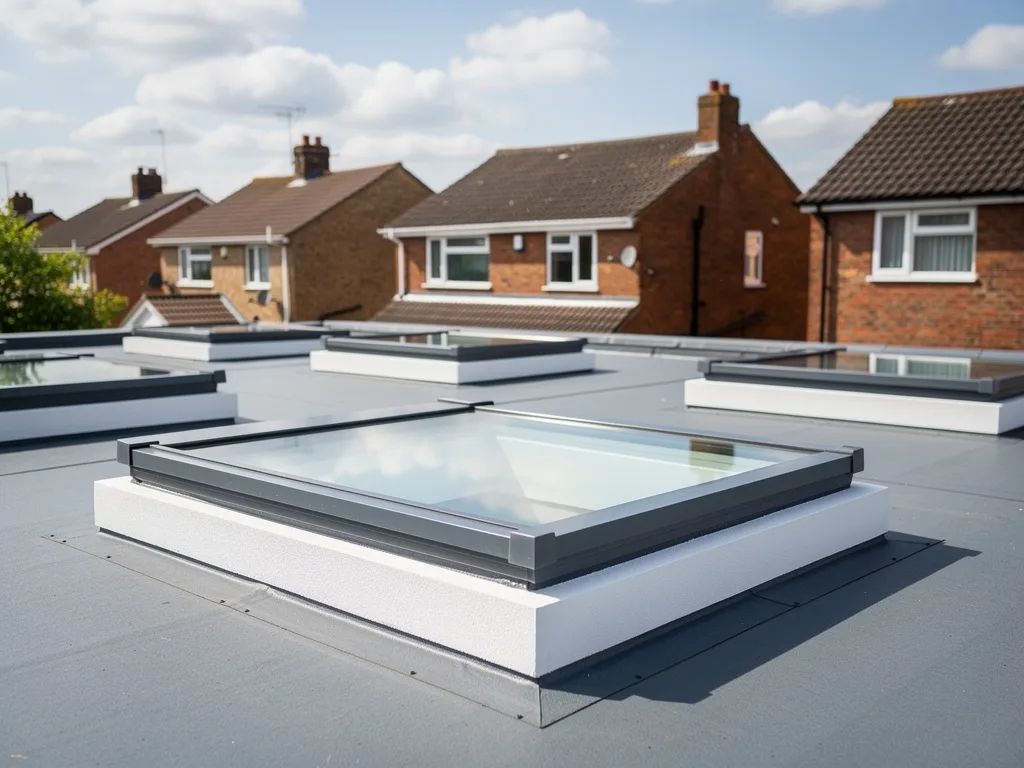
The dome sits on a flashing collar that ties into the roof covering the same way any roof penetration does: an upstand, a flashing skirt dressed into the surrounding tiles or slates, and a seal at the top where the dome clips or screws onto its base. On a flat roof the collar sits on its own short upstand with the roof membrane dressed up and over it, closer in principle to how a flat rooflight is kerbed than to a pitched roof window.
The flashing kit has to match the roof it goes into. A plain tile, an interlocking tile, a natural slate and a flat roof membrane each need a different kit, and getting that wrong is the single most common cause of a sun tunnel that ends up letting water in, which is why the right flashing for a slate roof is worth checking against the actual roof rather than assumed from the product box. Where a sun tunnel goes up through a flat roof rather than a pitched one, the upstand and the fall of the roof around it change the detail again, set out on taking a sun tunnel up through a flat roof.
We install to current Building Regulations and handle the Building Control notification where the work is notifiable, which for most sun tunnel jobs comes down to the roof penetration and the weathertightness of the finished detail rather than anything inside the room itself.
Why the same three parts give different results from house to house
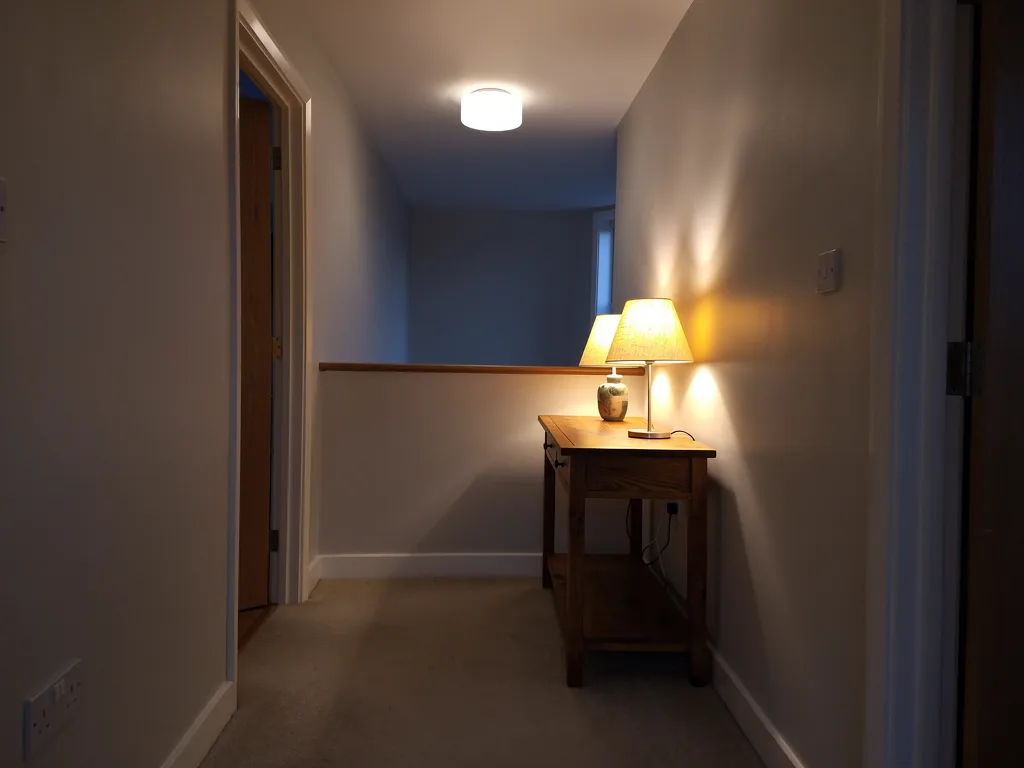
Two homes fitted with the identical dome, tube diameter and diffuser can still end up with a noticeably different result, because the variables that matter sit between the parts rather than in any one of them: how many offsets the run needs, how long the run is, which way the roof faces, and how deep the loft is above the room. That is why how bright a sun tunnel will make a room and how long a tube can run before it stops being worth fitting are both answered by the route through that particular loft, not by a catalogue page for the product.
| Part | Where it sits | What decides its effect |
|---|---|---|
| Dome | On the roof, above the loft | Shape, texture, size |
| Tube | Through the loft to the ceiling | Diameter, length, bends |
| Diffuser | Flush with the ceiling | Shape, size, position |
None of the three works in isolation. A wide, well-finished diffuser on the end of a long, heavily bent tube still gives a dim result underneath it, and a modest diffuser on a short, straight run from a generous dome can outperform it easily.
Keeping the loft's cold on the outside of the tube
A bare metal tube running through a cold loft is, in effect, a cold surface running straight into a warm room, and on its own that would invite the same problem a single-glazed window has: condensation forming where warm, moist room air meets cold metal. Better tubes solve this with a double-skinned wall, an inner reflective layer for carrying the light and an outer insulated layer that keeps the loft's temperature away from it, the way a cavity wall keeps damp brick away from a warm inner leaf.
That insulation does two jobs at once. It cuts down the small amount of heat a tube would otherwise lose from the warm room up into the cold loft, covered fully on do sun tunnels let heat out, and it keeps the tube's inner surface close enough to room temperature that moisture in the air has nowhere cold to condense onto, the detail behind do sun tunnels get condensation. A cheaper single-skin tube can still work perfectly well for carrying light; it is the loft climate around it, not the daylight passing through it, that decides whether insulation is worth specifying for a particular room.
What a tubular skylight gives a room, and what it does not
A sun tunnel is built to deliver daylight, not a view. The diffuser is deliberately opaque enough to scatter the beam evenly, which means there is no sky, no cloud and no sense of the world outside through it, in the way there is through a rooflight or a roof window. That trade-off is exactly right for a windowless landing, a hallway or an internal bathroom, where light is the whole point and there was never a view to protect in the first place.
Where a room already has a view worth keeping, or could reasonably have one, that trade-off runs the other way, and is set out fully on sun tunnel or rooflight: light or view. The two are not really competing products so much as answers to different questions: does this room need daylight, or does it need sky.
Fletton-brick terraces and new-town semis across Bretton, Orton and Werrington share the same problem in different rooms: an inner bathroom, a landing lit only by a door left open, or a hallway with no window at either end. A sun tunnel through a short, straightforward loft run suits exactly that kind of room, which is part of why it sits alongside sun tunnel installation as its own service rather than a variation on a rooflight.
Getting it right, answered
Does a bigger dome always mean more light in the room?
Not on its own. A bigger dome collects more light at roof level, but if the tube that follows it is long, narrow or bent more than once, the room can still end up dimmer than a smaller dome on a short, straight run gives. The dome, tube and diffuser have to be sized together, not chosen one at a time.
Can the tube be extended later if a loft conversion goes in above it?
Sometimes, but not reliably. A loft conversion usually changes the loft space the tube runs through, and the original route may no longer be available once that space is boarded, insulated or built into a room. It is worth mentioning any planned loft work before a sun tunnel goes in, so the route can allow for it from the start.
Does the diffuser need cleaning as often as a window?
Less often, because it sits inside the house, away from weather and outside dirt. The dome on the roof is the part exposed to the elements, and how each part is looked after is covered on how do you clean a sun tunnel.
Is one sun tunnel always enough for a good-sized room?
It depends on the room's size and how far it sits from the roof, which is covered properly on how many sun tunnels does a room need. As a starting point, a single tunnel sized correctly for the run is usually the first thing planned, before doubling up is considered.
Does the dome need to be replaced at the same time as the tube or diffuser?
Not necessarily. The three parts are joined but not fused, so a dome that has clouded or a diffuser that has yellowed can usually be swapped on its own, without disturbing the tube or the flashing already sealed into the roof. Whether a particular dome has reached that point, and why it happens at all, is covered on does a sun tunnel dome turn yellow over time.
Keep reading
 GuideBringing Daylight to the Middle of a Bungalow with a Sun TunnelHow a sun tunnel brings daylight into a bungalow room with no outside wall at all, from utility rooms to walk-in wardrobes.
 GuideWhat Building Control Expects of a Sun TunnelWhat Building Control actually checks on a sun tunnel job, and why we handle the notification for you.
 GuideSun Tunnel Brands and Flashing Kits, ComparedAn even, brand-neutral look at sun tunnel domes, tubes, diffusers and the flashing kits each roof covering needs.
Book a home visit
Tell us which room
- No obligation
- Sightline sketch included
- 10-year guarantee
Or call 01733 736163