Question · Sun tunnels
How Long Can a Sun Tunnel Be?
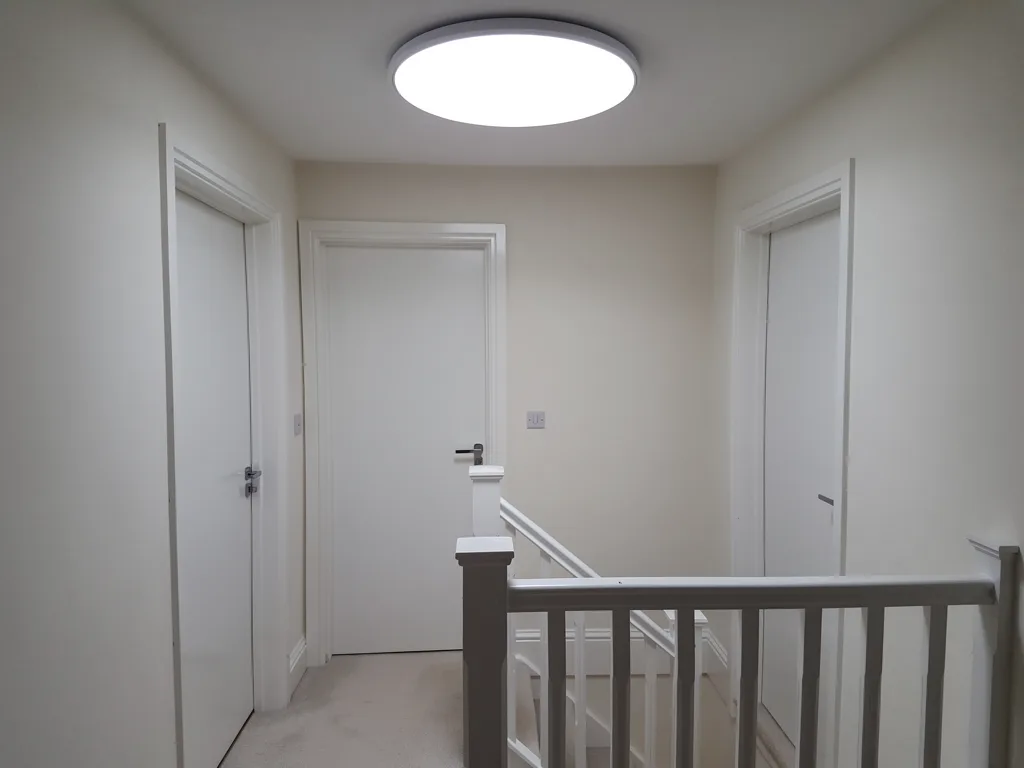
What actually sets the limit on how far a tube can run
A sun tunnel is not limited by strength or by the tube physically failing over distance. The tube itself, whether rigid aluminium sections or a flexible corrugated liner, will happily reach across a loft in one piece. What sets the real limit is daylight itself: every metre of travel and every reflection off the tube's inner surface loses a small amount of the light that entered at the dome, so a tunnel that runs a long way, or turns through several bends to get there, arrives at the ceiling noticeably dimmer than one that drops almost straight down from roof to room.
That is why "how long can it be" is really a question about how much light you are prepared to lose before the tunnel stops earning its place on the ceiling. A short, straight run over a landing keeps almost all of the daylight it collects. A long, bent run into the middle of a bungalow keeps a smaller share of it, and needs a bigger dome or a wider tube to arrive back at a usable brightness.
Rigid tube and flexible tube behave differently over distance
Rigid tube is made from smooth, highly reflective aluminium sections that push together and lock, so light bounces down the inside of the tube off a surface with very little texture to scatter it. That smoothness is what lets a rigid run reach further before the loss becomes obvious, and it is the reason most longer runs, including anything crossing a full loft depth or reaching down through two storeys, are specified in rigid tube rather than flexible.
Flexible tube is a corrugated, reflective liner that bends by hand around joists, purlins and other obstacles without needing cut sections and elbow joints. That flexibility is genuinely useful for a short, awkward final stretch, but the ridges in the corrugated surface scatter more light at every reflection than a smooth rigid wall does, so the same length of flexible tube loses noticeably more daylight than rigid tube covering the same distance. Our guide to rigid tube or flexible tube sets out where each earns its place on a real roof.
| Tube type | Typical practical length | Beyond that point |
|---|---|---|
| Rigid tube, straight or near-straight | Roughly 4m to 6m, as a guide | Light output falls away noticeably |
| Flexible tube | Roughly 1m to 2m, as a guide | Each extra bend or metre scatters more light |
| Either tube, several bends | Shorter than the straight-run figures above | A wider diameter helps recover some brightness |
What a bend actually costs the room
A 90 degree bend in a tube run behaves, for light-loss purposes, much like adding extra length to the run. Where a route has to step around a structural beam, change direction to clear a water tank, or drop through more than one ceiling void, each turn adds to the total loss on top of whatever the straight sections already cost. Two short straight sections joined by a single gentle bend will usually outperform one longer run forced through several tighter turns to reach the same point, even where the total tube length is similar. This is one reason the route through the loft is planned before the tube is ordered rather than worked out after the roof is opened.
Planning the route also affects where the ceiling diffuser can sit. A run with several turns sometimes has to land the diffuser a little off from the spot over a bed or worktop that would otherwise be ideal, trading a small amount of position for a straighter, more efficient path. Sun tunnel routes through lofts covers how that trade-off gets worked out on a typical roof, and taking a sun tunnel up through a flat roof deals with the shorter, more direct routes a flat roof usually allows.
Diameter, not just length, decides what arrives at the ceiling
A wider tube carries more daylight over the same distance than a narrower one, because a bigger dome collects more sky and a bigger tube loses a smaller proportion of it per metre travelled. Where a route genuinely has to run long, stepping up from a small diameter to the next size up is usually a better answer than accepting a dim result, and it is often a smaller change to the roof and ceiling than it sounds. Sun tunnel sizes and diameters sets out the diameters commonly used and which rooms suit which size, and how bright will a sun tunnel make my room covers how diameter and length combine to decide the result on the ceiling.
The longest routes: a ground floor room, or the middle of a bungalow
The runs that push length and bends hardest tend to be the same two cases. The first is bringing daylight down through a two-storey house to a ground-floor hallway, bathroom or landing, where the tube has to cross a full loft, pass through a first-floor ceiling void and continue down to the room below. The second is a bungalow or single-storey extension where the room that needs light sits well back from the roofline, so the run has to travel across the loft rather than simply dropping straight down. Can a sun tunnel reach a ground floor room and bringing daylight to the middle of a bungalow with a sun tunnel both look at these cases in more detail, and both usually call for rigid tube and a step up in diameter rather than a flexible tube pushed to its limit.
When a longer tunnel stops being the right answer
There is a point on some roofs where the route to the room needed is simply too long, too bent, or blocked by too much structure for a tunnel to deliver a result worth having, however wide the tube. Where the roof shape allows it, a small rooflight fitted closer to the room, or a rooflight over a landing that a tunnel would otherwise have to reach across the loft to serve, can be the better answer, with the difference between the two options being light against an actual view of the sky rather than length alone. Sun tunnel or rooflight: light or view sets out that choice properly.
What this means across Peterborough's roofs
Peterborough's new-town townships, Bretton, Orton and Werrington among them, hold a lot of bungalows and single-storey extensions where the room needing light sits close under the roof but well back from the eaves, which is exactly the layout that calls for a longer, straighter run across the loft rather than a short drop. In the older Fletton brick terraces and semis closer to the city centre, a run down to a ground-floor bathroom or hallway more often has to cross two ceiling voids and pick a path around joists and existing pipework, so the diameter and the route matter as much as the raw distance. Either way, the tube length and any bends are worked out on the survey, before the roof is opened, so the room's actual result is known in advance rather than discovered afterwards.
Every quote includes a sightline sketch showing the route the tube will take and what the finished ceiling diffuser will look like from the room, alongside general guidance on what affects the cost of a rooflight or sun tunnel for anyone weighing a longer run against a shorter one, or a tunnel against a rooflight. See our sightline sketch page for how that drawing is put together, or the main sun tunnel installation page for the full range of what we fit.
Questions people also ask
Does a longer sun tunnel run cost more to fit?
Length, diameter and the number of bends all feed into the overall job, alongside the roof type and the ceiling finish chosen. General factors are covered on our costs page rather than a fixed figure here, since every roof and route is different.
Can a rigid tube be extended with extra sections later?
Rigid tube is supplied in sections that join together, so a run can be lengthened, but each added section and any bend introduced adds a further small loss of light, so it is better planned as one run at the survey stage than extended piecemeal afterwards.
Does a wider tube remove the practical length limit altogether?
No. A wider tube carries more light further and pushes the point where loss becomes noticeable a little further out, but it does not remove the limit, and a very long or heavily bent run in any diameter will still end up dimmer than a short, direct one.
Is there a hard maximum on how far a flexible tube can physically stretch?
It can be pulled out considerably further than the practical figures above, but reputable installers stop recommending it well before that point, because the room at the far end ends up grey and disappointing rather than genuinely daylit.
Book a home visit
Tell us which room
- No obligation
- Sightline sketch included
- 10-year guarantee
Or call 01733 736163