Question · Sun tunnels
When Is a Sun Tunnel the Right Choice, and When Is It Not?
The honest case for one
A sun tunnel does one job extremely well: it gets daylight into a room that has no other way of getting any, without the structural opening a rooflight needs.
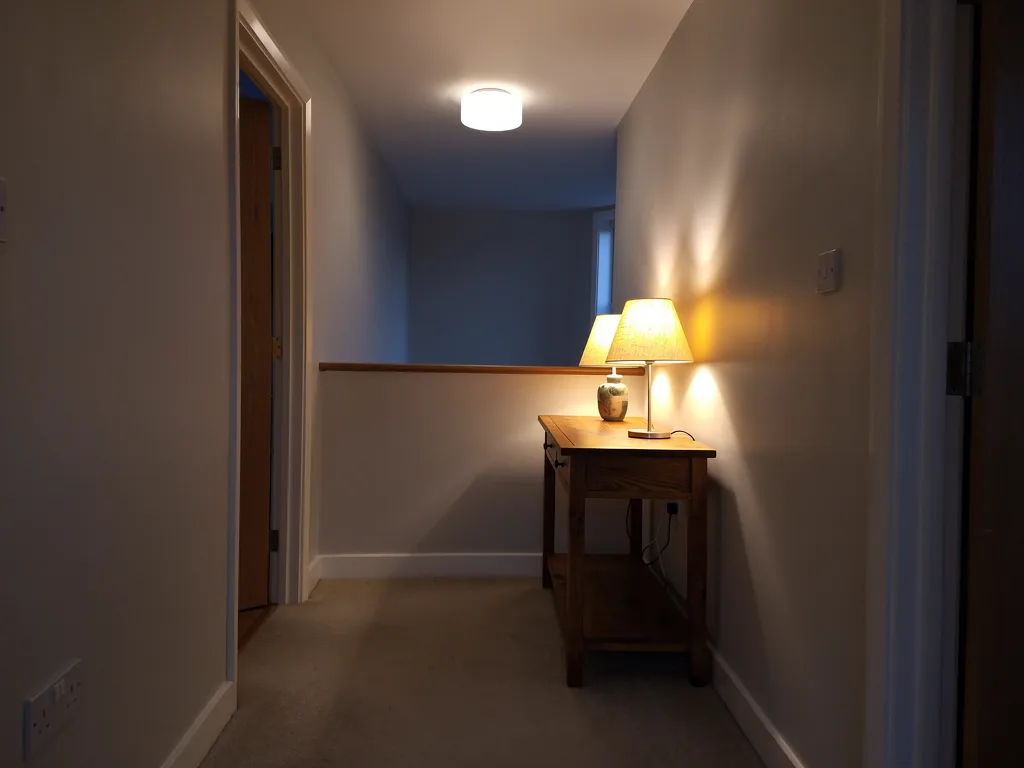
That matters most in rooms with no external wall to speak of, such as an internal bathroom, a landing boxed in by other rooms, or the middle of a bungalow where every wall backs onto another room rather than the outside. A tunnel can be routed through a shallow loft to reach exactly these spaces, covered in full on inside a sun tunnel: dome, tube and diffuser. The dome on the roof is small, the ceiling diffuser is smaller still, and neither needs the lintel, upstand or new frame a rooflight opening involves. For a room used briefly during the day, that trade is close to a straightforward win: daylight arrives, the room stops needing a switch flicked every time someone walks through, and the work barely touches the room below beyond the diffuser itself.
It also suits homes where the roof genuinely cannot take a rooflight where the light is needed. Peterborough's new-town townships, Bretton, Orton and Werrington among them, hold plenty of bungalows and dormer houses with internal rooms that have no gable wall and no roof pitch directly above them. A tunnel reaches across the loft to these rooms in a way a rooflight, which needs to sit directly over the space it lights, simply cannot.
Where it stops making sense
The same tunnel that suits a bathroom or landing is the wrong answer for a room where the sky itself is part of why someone wanted the work done.
A diffuser gives an even, glowing patch of daylight, not a view. There is no cloud passing, no sense of blue sky on a clear afternoon, nothing to look at beyond the general brightness of the glow, which is exactly why sun tunnel or rooflight: light or view treats the two as answering different questions rather than competing products. Fit one into a main bedroom to save the cost of a structural opening and the room will be lit perfectly well, and the person waking up under it will still be looking at a plastic dome rather than the sky. For a room someone spends minutes in each day, that rarely matters. For a room someone lies in every morning, or a kitchen table where the same seat faces the same ceiling for years, it usually does.
Distance and bends work against it too. A short, straight drop from a roof to a ceiling below loses very little daylight along the way. A long run across a loft, or one forced round a chimney breast or a water tank through several turns, arrives noticeably dimmer, which how long can a sun tunnel be sets out in practical terms. Push a tunnel past what a given diameter can carry over that distance and the result is a grey, disappointing patch on the ceiling rather than the daylight the room was fitted for.
Orientation plays a smaller part than people expect but is worth naming honestly. A dome on a north-facing slope still collects usable daylight, just less of it on a clear day than a south-facing one would, and does a sun tunnel work on a north-facing roof covers the difference. It rarely rules a tunnel out on its own, but stacked on top of a long run and a narrow diameter, it can tip a marginal case the wrong way.
| Factor | Favours a tunnel | Favours a rooflight |
|---|---|---|
| Room use | Passed through, not lingered in | Sat, worked or slept in |
| Route to the roof | No wall, short loft run | Roof pitch or flat roof direct above |
| What matters most | Daylight, not a view | The sky itself, as part of the room |
| Disruption tolerance | Wants the smaller job | Accepts a structural opening |
What actually tips a marginal case
Most homes we survey are not as clear-cut as a windowless bathroom or a main bedroom, so a handful of practical questions usually settle it.
- How often is the room used, and for how long each time? A store cupboard or a utility room barely needs a view. A home office used all day, every day, is a different case.
- Is there a wall or roof pitch directly above the space, or would light have to travel a real distance through the loft to reach it? Sun tunnel sizes and diameters sets out which diameter suits which distance once the route is known.
- Would the room benefit from ventilation as well as daylight, since a sun tunnel only opens with an add-on kit, where a rooflight often vents on its own?
- Is the finish underneath already set, such as a plastered, low ceiling that would need to be broken into either way? Where the disruption is similar, the deciding factor tends to come back to light against view rather than the work itself.
The middle ground: using both
A loft conversion or a bungalow refit rarely needs the same answer in every room, and treating the whole floor as one product misses the point. A tunnel over a boxed-in landing or a windowless en suite, covered on can a sun tunnel light a windowless room, sits alongside a rooflight over the new bedroom or the kitchen extension planned around it, each fitting doing the job it is actually good at rather than one product stretched to cover both.
Fitting both at the same time, from the same open roof and the same scaffold, usually costs less disruption overall than booking two separate jobs months apart, because the loft route for the tunnel and the structural opening for the rooflight can be planned together rather than worked around each other afterwards.
What we check before recommending either
A survey settles the marginal cases far better than a general answer can. We look at how the room is actually used, what sits above it in the loft, how far daylight would have to travel, and whether condensation is a realistic risk in a bathroom or kitchen tunnel, set out on do sun tunnels get condensation. Every quote includes a sightline sketch, a drawing of the view, or in a tunnel's case the glow, that the finished job will actually give from the spot in the room that matters, so the decision is made from a picture rather than a guess. General factors that affect cost for both types of work sit on what affects the cost of a rooflight, and the full range of what we fit is on the main sun tunnel installation page. Where the work needs it, we handle the Building Control notification and install to current Building Regulations either way, backed by a 10-year workmanship guarantee. If you would rather talk a specific room through first, message us on WhatsApp or book a home visit.
Questions people also ask
Is a sun tunnel ever the wrong answer even for a windowless bathroom?
Rarely on daylight grounds, but check whether ventilation is also needed. A sun tunnel does not extract moist air on its own, so a bathroom that needs both daylight and an extractor should look at an add-on kit or a separate fan, not assume the tunnel covers both jobs.
Does a low ceiling change the answer?
It changes how the diffuser is finished more than whether a tunnel makes sense at all. A low, sloped ceiling still takes a tunnel perfectly well, but the diffuser style and how flush it sits are worth discussing at survey, since a bulkier fitting reads differently in a tight space.
Is it worth fitting a tunnel now and adding a rooflight later?
Sometimes, particularly where budget or the scope of a wider project rules a structural opening out for now. It is worth saying so at survey stage, because the loft route for the tunnel and any future rooflight opening are easier to plan around each other from the start than to retrofit later.
What single question should decide it, if you only ask one?
Whether you would miss seeing the sky from that exact spot. If the honest answer is no, a sun tunnel is very likely the right call. If the answer is yes, it is worth having a rooflight properly costed before settling for the tunnel on price or disruption alone.
Book a home visit
Tell us which room
- No obligation
- Sightline sketch included
- 10-year guarantee
Or call 01733 736163