Question · Sun tunnels
How Bright Will a Sun Tunnel Make My Room?
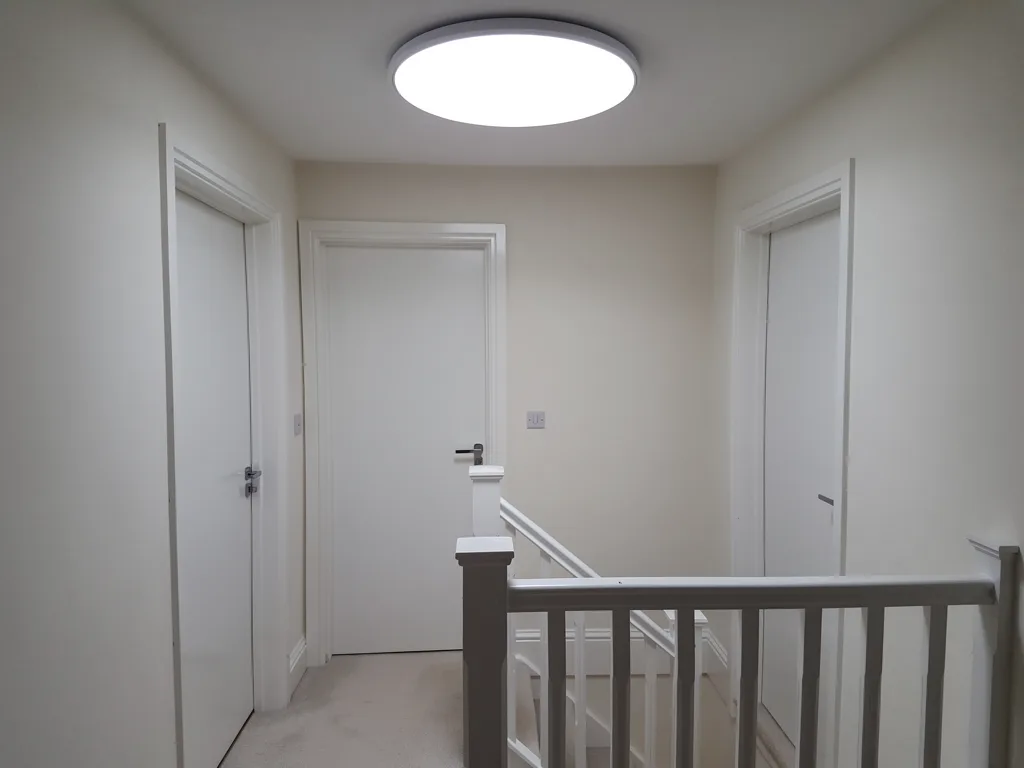
Diameter is the biggest lever, and it is not subtle
The dome on the roof is the tube's mouth, and its width sets a ceiling on how much sky it can ever collect before anything else is considered. Tubular skylights are sold in a small number of standard diameters, and moving up a size is the single change most likely to lift a dim result into a bright one, more so than swapping the diffuser or straightening a bend.
| Tube diameter | Typically suits | What to expect |
|---|---|---|
| 250mm (10 inch) | A small bathroom, an en suite, a walk-in wardrobe | Noticeably brighter than the room's own light fitting on a dull day, not a substitute for a full window |
| 300mm (12 inch) | A landing, a hallway, a mid-sized kitchen | The size most homes settle on; a straightforward daylight lift without an oversized dome on the roof |
| 350mm (14 inch) | An open-plan kitchen or a room with a long tube run | Needed once the run is long or bent enough that a smaller tube would arrive dim |
Our guide to sun tunnel sizes and diameters goes into how we match a diameter to a room at survey, including where two smaller tunnels can outperform one large one spread across a bigger space, covered in full on how many sun tunnels does a room need?
Every metre and every bend costs light on the way down
Once daylight is inside the tube, the job of the reflective lining is to carry as much of it as possible to the diffuser without losing it to the tube wall. A straight, short run between roof and ceiling loses very little; a long run through a loft, or one that has to dogleg around a rafter or a water tank, loses more at every turn and every extra metre of travel.
This is why the same diameter can feel different from one house to the next. A 300mm tube run straight through a single-storey roof void can out-perform a wider tube forced through two right-angle bends to clear an obstruction. Where the run is long or bent, we specify a wider tube from the outset rather than wait for a finished job that arrives duller than expected. Our page on how long can a sun tunnel be? sets out where length starts to matter, and sun tunnel routes through lofts covers how we plan around joists, tanks and existing pipework before the tube goes in.
Tube type plays a part here too. A rigid tube, straight sections joined with sealed collars, carries light more efficiently than a flexible tube, which is corrugated to bend around obstacles and loses more at every fold in that corrugation. Rigid tube or flexible tube: choosing a sun tunnel weighs that trade-off against what the loft space actually allows.
The diffuser sets how hard or soft that light lands
Diameter and tube length decide how much daylight reaches the ceiling; the diffuser decides what it looks like once it gets there. A plain opal diffuser spreads the light evenly across the whole fitting, giving a soft, shadowless glow that reads as gentle rather than dazzling. A clearer or prismatic diffuser lets more raw brightness through in one direction, which suits a room that wants a stronger lift but can throw a harder pool of light directly beneath the fitting rather than spreading it round the ceiling.
Neither is simply "better": a bathroom mirror wants an even wash without hot spots, while a dim inner hallway benefits from as much raw output as the diffuser will pass. Sun tunnel diffusers and ceiling finishes sets out the options in full, including how the ceiling finish around the fitting changes how the light reads in the room.
Orientation, pitch and the time of year move the same tube up or down
A tube on a south-facing slope, angled to catch a high midday sun, gathers more direct light across the year than the same tube on a north-facing slope, which depends more on the general glow of the sky rather than direct sun. That does not make a north-facing tunnel a poor choice: the dome collects diffuse skylight from the whole sky, not only from wherever the sun happens to sit, which is why a sun tunnel keeps working through an overcast Fenland afternoon when a low sun would give a south window very little to work with either way. Does a sun tunnel work on a north-facing roof? and is a sun tunnel any use on a grey day? both go into this in more detail.
Roof pitch changes the picture too. A steep pitch tilts the dome toward the sky at an angle closer to how the sun sits for much of the year, while a shallow or flat roof faces the dome almost straight up, which suits an even, all-day gathering of light rather than a strong seasonal peak. Either way, the effect is smaller than the diameter and the run, but it is worth factoring in when a room sits right on the edge between one tube size and the next.
What this actually looks like in a landing, a bathroom or a kitchen
A dark hallway or landing usually needs the least: there is often no task being done under the fitting beyond seeing where you are walking, so even a smaller tube run straight through a short loft void reads as a big improvement over a single low-wattage bulb. Our page on sun tunnels for hallways and landings covers that case directly.
A bathroom or en suite sits in the middle: enough daylight to stop the room feeling like a windowless box, without needing the full output of the largest tube available, and it is one of the few rooms in a house where a sun tunnel solves a problem no rooflight could, since there is rarely a wall left to put a window in. Sun tunnels in bathrooms and en-suites covers ventilation add-ons for that room too.
A kitchen asks the most of a tunnel, because food preparation wants strong, even light rather than a gentle lift, and kitchens are often the room furthest from the roof, meaning the longest tube run in the house. That combination is exactly where diameter, a straight route and tube choice all matter together rather than any one of them on its own, which our page on is a sun tunnel a good idea in a kitchen? sets out plainly.
A sun tunnel gives light, not the view a rooflight gives
Everything above describes how bright the ceiling gets, not what the room looks like. A diffuser scatters daylight; it does not show sky, clouds or a passing bird the way a pane of glass does, because that is exactly what a diffuser is built to do. Where a room could take either a sun tunnel or a small rooflight, the honest choice is between raw brightness with no view and a smaller daylight gain with a real one, set out fully on sun tunnel or rooflight: light or view. Where there is no wall and no roof void deep enough for a full rooflight upstand, that choice tends to settle itself.
The Sun Tunnel Installation in Peterborough page covers how we work through diameter, run and diffuser together at survey, so the brightness a room gets is decided before the roof is opened rather than discovered afterwards.
Questions people also ask
Does a bigger diffuser always mean a brighter room?
Not on its own. The diffuser shapes how the light spreads once it arrives, but the amount arriving is set upstream by the dome's diameter and how much the tube loses along its run.
Is a sun tunnel bright enough to read by?
On a clear day, yes, in most rooms it suits. On a grey day or in a room with a long, bent tube run, it gives a strong general lift rather than a reliable reading light, which is why we still plan electric lighting alongside it rather than instead of it.
Does a sun tunnel work as well in winter as in summer?
It works through both, but winter output is lower everywhere in the UK because the sky itself carries less light, not because the tunnel changes. A well-specified tube still gives a useful lift on a short winter afternoon.
Can two smaller tunnels beat one large one in the same room?
Often, yes, particularly across a wide or open-plan room, since two smaller domes spread the daylight across more of the ceiling than one large dome in a single spot. We weigh that against roof void space and cost at survey rather than defaulting to either option.
Book a home visit
Tell us which room
- No obligation
- Sightline sketch included
- 10-year guarantee
Or call 01733 736163