Rooflights and skylights in Ketton

Rooflights and skylights for Ketton's stone cottages and later homes, planned around Collyweston slate, Welsh slate and pantile roofs and the conservation area from 1972.

From Peterborough
About 18 miles by road
Planning
Rutland County Council
County
Rutland

Freestone walls, and a spire that already fills the sky

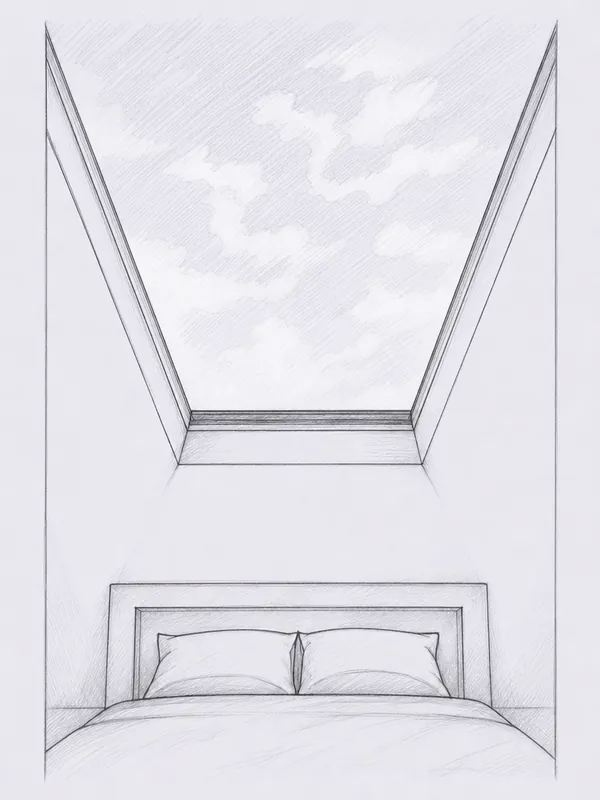
  • A frame edge across a modest opening

    Ketton's conservation area favours modest rooflight sizes, so a wide frame edge takes a larger share of what little sky is on offer.

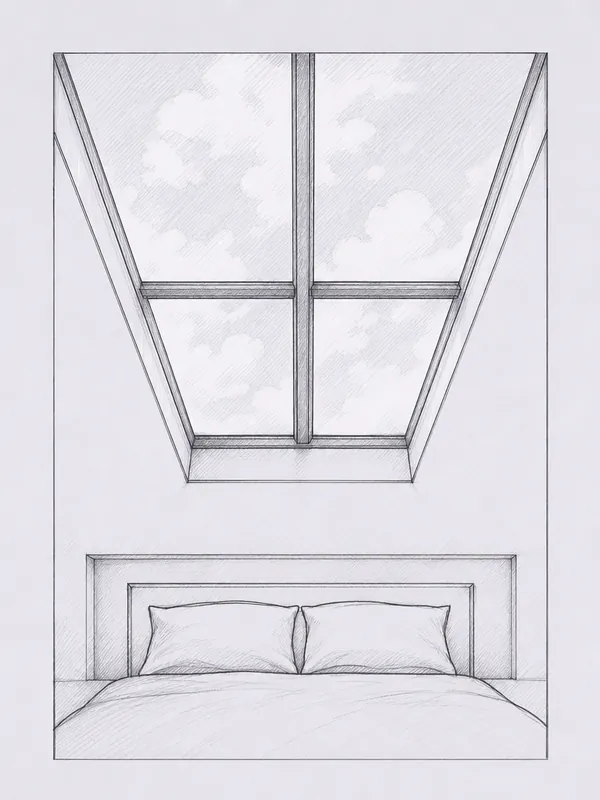
  • A bar through the spire's silhouette

    St Mary's 144-foot spire sits over many rooflines here, and a centre glazing bar has an awkward habit of splitting that shape in two.

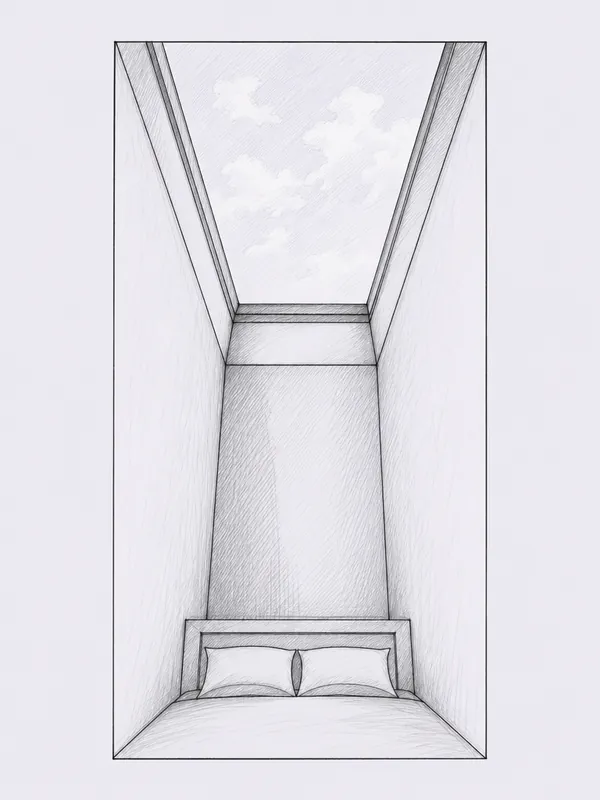
  • Deep reveals in Ketton stone walls

    The village's locally quarried freestone walls run thick, and a square lining through that depth can narrow a wide pane to a slot of sky.

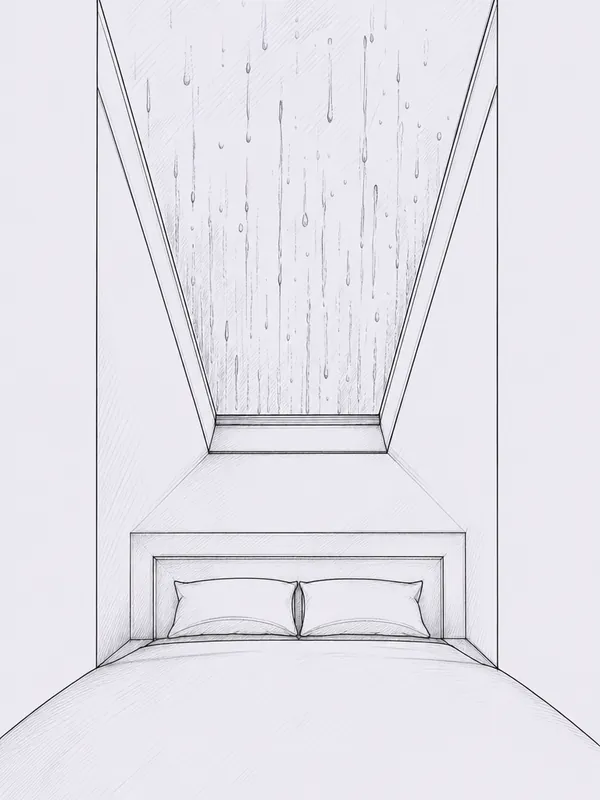
  • Damp air off Rutland Water

    Ketton sits a few minutes from Rutland Water's open reservoir, and damp air finds a tired edge seal fast, turning a clear pane misty within a few winters.

Quarried stone at the centre, open water close by

Ketton's older core sits close around St Mary's spire, with Collyweston slate, Welsh slate and pantile roofs set tight together and freestone walls that leave narrow gaps between eaves. A few minutes away, Rutland Water opens the horizon out over the reservoir and the countryside beyond it. Glass set low on a village roof usually frames a neighbour's ridge; glass turned towards the reservoir side can find open sky with nothing built up against it.

  • The spire's silhouette over a stone gable

  • Open sky beyond a diminishing-course roofline

  • Rutland Water's haze over old quarry workings

Ketton stone walls, slate and pantile roofs: what a rooflight has to sit in

Ketton is a stone village with three kinds of roof covering on show within a few streets of each other, and any rooflight or skylight has to earn its place on whichever one it lands on. That is the starting point for every job here, before a single measurement is taken.

The village sits on locally quarried limestone, and its older houses carry thick freestone walls under roofs finished in Collyweston stone slate, Welsh slate or pantile. Each covering behaves differently under a new opening: the kerb height, the flashing detail and the way the courses close back up around the frame all change depending on what is up there. We look at the actual roof from the loft and from outside on the first visit, rather than assuming one answer fits every house in the village.

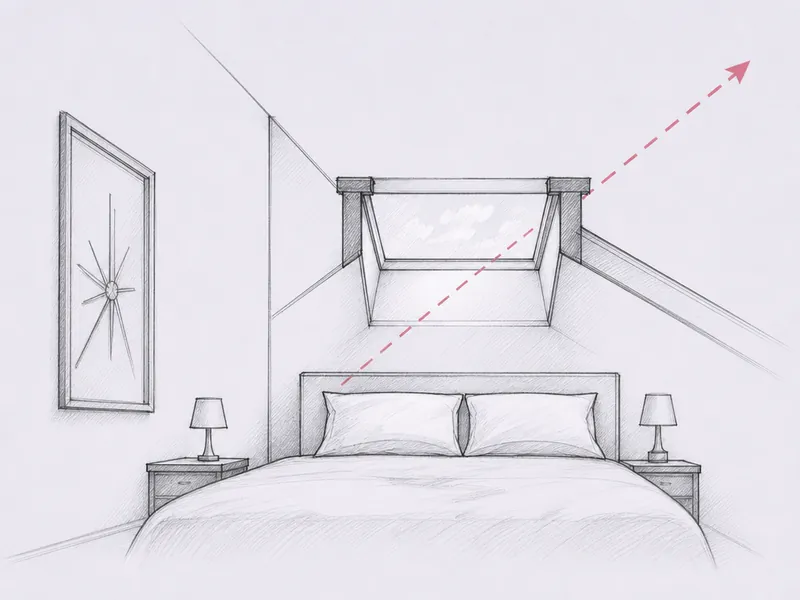
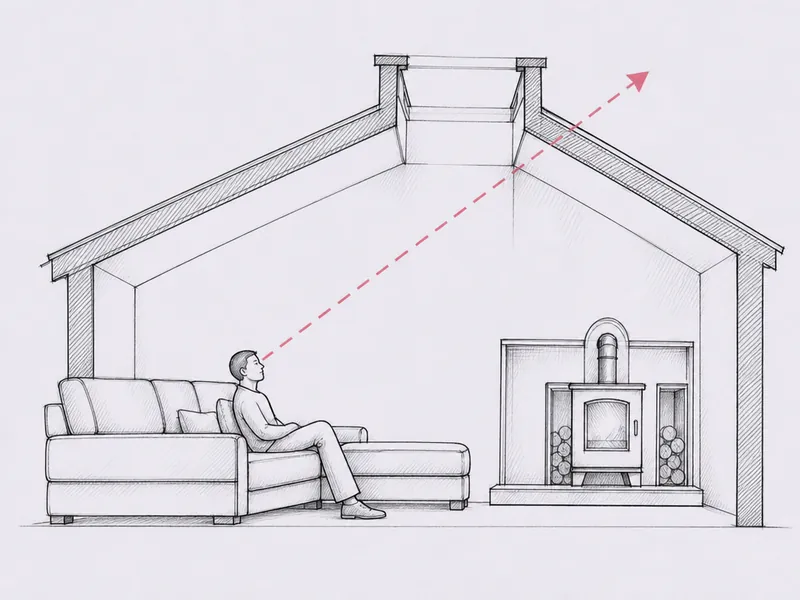
What we are planning for, in every case, is the view: how much open sky you see from the bed, the sofa or the sink, where the frame edge sits, and whether a bar runs through the middle of it. The sightline sketch that comes with every quote draws that from your own eye position, before any stone slate is lifted or any pantile is disturbed.

Peterborough sits around 18 miles away by road, well inside the 30 miles we cover, and Ketton's mix of stone cottages, a Grade I church and later housing gives us a good spread of the roof types we work on across the wider area.

Ketton, Aldgate and Geeston: one village, one conservation area from 1972

The place we now call Ketton grew out of three separate settlements: Ketton itself, Aldgate and Geeston. They merged over time into a single village, and the name also carried on in the old Ketton Rural District, which ran from 1894 to 1974. The village has a long paper trail behind it too: it appears in the Domesday Book of 1086 under the name "Chetene".

Rutland County Council designated the Ketton Conservation Area in 1972, and it holds a Ketton Conservation Area Appraisal, reviewed in 2020, together with a conservation area map that sets the boundary. Rutland County Council is the unitary planning authority for the whole county, so it is the one point of contact for a Ketton address, whatever the question.

Being inside a conservation area does not stop a rooflight going in. It does mean the design gets a closer look, because the appraisal exists to protect the character that the merger of three old settlements and centuries of stone building gave the village. Outside the boundary, roof alterations often go ahead under the national permitted development rules, provided the unit does not project too far above the roof plane and the other conditions are met. Inside it, or on a listed building, that route can narrow or disappear. Whether it applies in full for a particular house, or whether the appraisal's protections change the picture, is a question we check with Rutland County Council before we put a product on a quote.

St Mary's Church, its 144-foot spire, and what it means for a roof nearby

St Mary's Church stands at the centre of Ketton, and it is a building the whole village is arranged around in one sense or another. It is Grade I listed, with parts dating back to the 12th century, a central tower and a spire that reaches 144 feet, and a west front regarded as a strong example of late 12th-century transitional architecture. George Gilbert Scott and Thomas Graham Jackson restored it in the 1860s.

A church of that scale sets the visual register for everything around it. Roofs nearby tend to be modest by comparison, and a conservation appraisal that protects a village like this one is protecting the relationship between the ordinary roofs and the one landmark that towers over them. That matters for a rooflight because it is another reason a slim, flush unit tends to read more quietly on a slope than a bulky, raised one. A quieter unit is also usually the better one for the view from inside: no raised kerb to look past, and a narrow frame that takes less out of the sky.

None of that rules out a good-sized opening. A well-placed unit between the right rafters, with the lining opened out below it, can give more visible sky than a larger unit set awkwardly in a deep ceiling. Our frame profiles and sightlines guide goes into why the width of the frame matters so much when you are looking up at an angle from a bed or a chair, rather than standing directly underneath the glass.

Ketton stone: quarried in the village, and the deep walls it built

Ketton stone is a fine-textured Upper Lincolnshire Limestone freestone that has been quarried here since medieval times. Builders have valued it for its even texture, its "carveability" and its durability, and it has gone into buildings well beyond the village itself. Ketton Quarries, a working covering centuries of extraction about five kilometres west of Stamford, is now partly a Site of Special Scientific Interest, managed by the Leicestershire and Rutland Wildlife Trust.

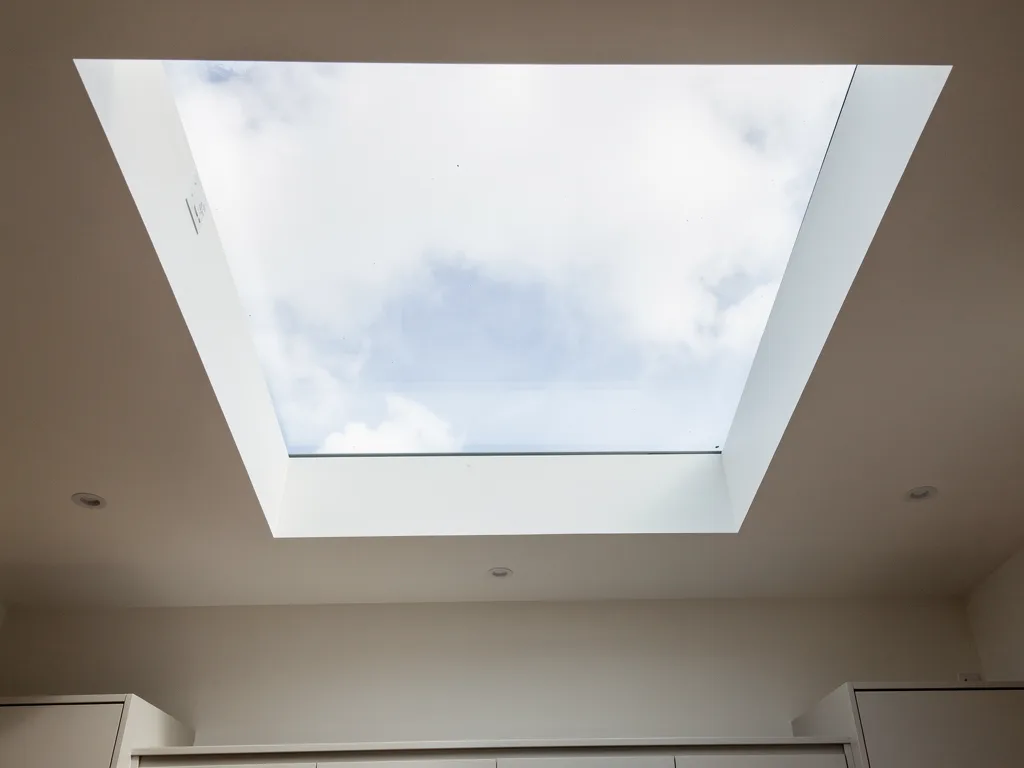
That local stone is also what most of the older village is built from, and freestone walls of this kind tend to be thick. A thick wall means a deep reveal once a rooflight or roof window is cut through it, and a deep, square-sided lining does one thing very reliably: it turns a decent-sized pane of glass into a narrow slot of sky, because the eye is looking down a tunnel of plaster before it reaches the glass at all.

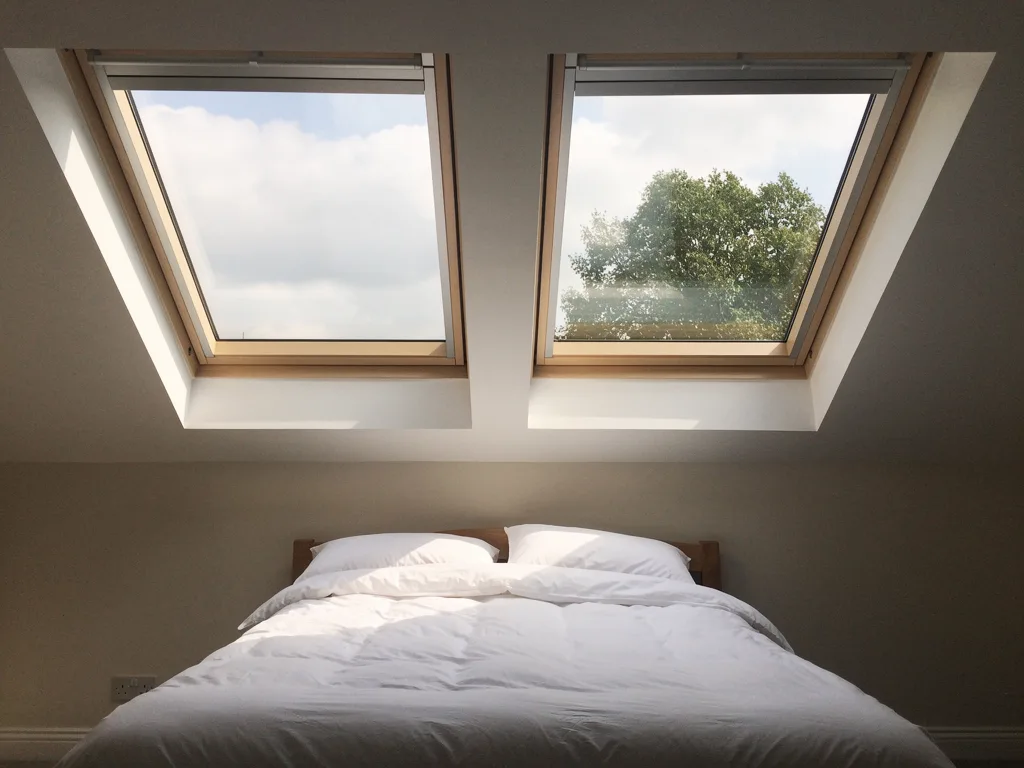
Splaying that lining, angling the top up towards the glass and the bottom down towards the room, opens the same opening out considerably. It widens what you see from further back in the room, and it lets more light travel down into the space rather than stopping at the top of the reveal. Our guide to choosing a reveal shape sets out when a splayed lining earns its keep and when a square one is the better match for the room.

  • A splayed reveal generally suits a low pitch, a shallow ceiling void or a room where the seat is set back from the glass.
  • A square reveal can suit a room where the opening is close to the eye already, such as a small dormer, and where a crisp edge is wanted for its own sake.
  • Either way, the depth of a Ketton stone wall is measured on the survey, not guessed from the outside.

Collyweston slate, Welsh slate and pantile: three roofs, three ways to fit the frame

Rutland County Council's appraisal for Ketton records the roofing across the conservation area as Collyweston stone slate laid in diminishing courses, alongside Welsh slate and pantiles. That is an unusually mixed roofscape for one small village, and it means three different fitting details rather than one.

Collyweston, quarried near the village of the same name on the Rutland, Northamptonshire and Lincolnshire border, is thick and laid by hand in courses that shrink towards the ridge. A flashing kit made for a thin manufactured tile can sit awkwardly on a covering like that, standing proud where a stone slate roof wants it to lie flat. Flashing dressed to a thicker, coursed covering lets the frame sit lower, which is neater from the street and shallower from inside, meaning less lining to look through before you reach the glass.

Welsh slate is thinner and more regular, so it takes a standard flashing kit comfortably, and a rooflight generally sits into it with less adjustment. Pantile is different again: its deep profile means the flashing has to follow the wave of the tile rather than a flat plane, and getting that seal right is what keeps the roof watertight through a wet Fenland winter.

Whichever covering a house has, we lift what comes off carefully, keep it, and dress it back around the new frame so the courses either side of the glass carry on matching the rest of the slope. Our conservation rooflight installation service covers the slim, flush units this kind of roof usually calls for, and our flat roof rooflight installation page covers upstands and falls where a later flat-roofed addition sits behind the original slope, typically laid to a minimum fall of around 1:80 so water clears the glass rather than sitting on it.

The cement works skyline, and open sky towards Rutland Water

Ketton Cement Works opened in 1928 and is still a major local landmark and employer, meeting more than a tenth of UK cement demand on its own. It sits on one side of the village, a working industrial skyline that is part of what Ketton actually looks like, rather than something tucked out of view.

On the other side, the village is only a few minutes' drive from Rutland Water, and that proximity opens the horizon out considerably: views over the reservoir and the countryside beyond it, with far less built up against the sky than in the older streets around the church. A rooflight placed to look that way, rather than towards a neighbour's roof or the cement works itself, tends to find a genuinely open patch of cloud with nothing crossing it.

That open water also has a practical side. Damp air off a large body of water like Rutland Water finds a weak edge seal quickly, and a rooflight that has started to mist between the panes turns a clear view into a grey smear within a few winters. Warm edge spacers, a sound low-E coating and an outer pane that clears quickly in rain all help keep the glass doing its job for years rather than one or two. If a unit in your Ketton home has already gone cloudy, our misted and failed rooflight replacement service covers renewing it to a better specification, and our guide to keeping rooflight glass clear covers the detail behind that choice.

From survey to sign-off: an 18-mile job finished to the same standard

A rooflight job in Ketton starts with checking the address, not with a product. On the first visit we look at the room from where you actually use it, check the roof covering from inside the loft and from outside, and note whether the house sits inside the conservation area boundary or carries a listing of its own. Only then do we draw the sightline sketch and put a product on the quote.

Where planning permission or listed building consent turns out to be needed, that step comes before anything is cut, and the sketch and product details from the visit are useful evidence to include with an application, because they show the size, position and profile of what is proposed rather than leaving it to guesswork.

On the fitting days, whatever covering comes off, whether that is Collyweston slate, Welsh slate or pantile, is lifted, kept and dressed back around the new frame once the opening is formed and the unit is set. Inside, the lining is built to the shape agreed on the sketch, and the room is made good and left tidy. The work is carried out to current Building Regulations, with the Building Control notification handled where it is notifiable, and it carries our 10-year workmanship guarantee.

What a job costs depends on the unit chosen, the roof covering, the lining shape and access on the day, and a stone village with narrow lanes has its own access questions worth talking through early. Our rooflight costs page sets out what generally moves the price, and the Peterborough homepage covers everything we install across the wider area, including the ten services this page has touched on.

These are the questions that come up most from Ketton's own mix of a 1972 conservation area, three roof coverings and a Grade I church at its centre. If yours is not answered here, book a home visit or message us on WhatsApp.

Do I need planning permission for a rooflight inside the Ketton Conservation Area?

It depends on the house and the position of the opening. The conservation area, designated in 1972 and covered by an appraisal reviewed in 2020, means the design gets more scrutiny than it would outside the boundary, and permitted development rights can be narrower for some buildings. We check the position with Rutland County Council for your address before naming a product.

My roof is Collyweston stone slate. Does that limit what I can have?

Not in terms of what is available, but it does change the fitting. Flashing made for a thin manufactured tile does not sit well on a thick, hand-laid stone slate covering, so we use flashing dressed to the coursing, which also lets the frame sit lower and the lining stay shallower from inside.

Is St Mary's Church affected by work on an ordinary house nearby?

No. The church's own Grade I listing covers the church building itself. A nearby house is assessed on its own listing status, if it has one, and on whether it falls inside the conservation area boundary, which we check for the address.

Do you cover villages near Ketton as well?

Yes. Nearby, there are pages for Uppingham and Oakham, each with its own planning position and roof notes, and our areas page lists everywhere else we cover within 30 miles of Peterborough.

Also near Ketton

All the areas we cover

Book a home visit

Tell us which room

  • No obligation
  • Sightline sketch included
  • 10-year guarantee

Or call 01733 736163

Call Book a home visit