Guide · Electric and opening rooflights
Rain Sensors and Automatic Closing on an Electric Rooflight
Every electric rooflight we fit carries a rain sensor that shuts the vent within seconds of the first drops, whether anyone is in the house or not.

The one weather problem an opening rooflight cannot be left to answer by itself
A fixed rooflight has no opinion about the weather: it is glass in a frame, and rain simply runs off it. An opening rooflight is a different proposition, because the moment it is left ajar, a shower has a direct route from the roof to the floor below, and nobody can promise to be home, awake or paying attention every time the sky changes.
That is the gap a rain sensor closes, and it is why almost every electric opening rooflight sold today carries one as standard rather than as an extra. The sensor watches the weather so the household does not have to, and it shuts the vent within seconds of the first drops landing, whether the room below is empty, occupied or three floors down from anyone who could reach a switch in time. Across the flat, open ground north and east of the city, where weather crosses the Fens with little in the way to slow it, a shower can arrive faster than it would in a more sheltered street, which makes automatic closing less of a convenience and more of the reason an opening rooflight can be trusted to sit open unattended at all.
Where the sensor sits, and why it stays out of the view
The rain sensor itself is a small moulded pad set into the outer face of the frame, usually close to the leading edge of the sash, carrying two exposed metal contacts a few millimetres apart. It is not a camera, a weather station or anything that needs aiming; it only has to sit where falling rain reaches it before it reaches the room.
Because it sits on the frame rather than the glass, the pad has no effect on what you see from below. The brand's whole approach to a rooflight starts with the sightline from the bed, the sofa or the worktop that matters, and a sensor bolted onto the visible face of the frame would be a strange thing to add to a piece of glass chosen for a clean run of sky. In practice the pad is tucked to the outer edge of the kerb or upstand, below the sightline that a sightline sketch is drawn from, so it does its job without becoming one more thing crossing the view.
On a flat rooflight the pad usually sits just outside the upstand, where the falls in the roof covering are already carrying water away from the glass, which keeps it clear of standing puddles that could otherwise leave it permanently "wet". On a pitched roof window the same principle applies at a shallower angle, with the pad set where rain first strikes rather than where it collects. Our guide to how electric opening rooflights work sets the sensor in context alongside the motor and the switch, if you want the whole mechanism from the ground up before reading on.

From a wet contact to a closed vent
What happens between the first drop and the sash shutting is a short, simple electrical chain rather than anything that has to think about the weather.
Rain bridges the gap between the two contacts on the pad, completing a small circuit that the control unit is constantly reading. As soon as that circuit closes, the control unit drives the actuator to close the vent, and it keeps driving until the sash reaches its fully shut position, regardless of what stage the rooflight was at when the rain started. A vent open to its full stroke and one cracked open an inch both close on the same signal, because the sensor has no way of judging how far open is too far open; it only knows whether it is raining.
The whole sequence, from the first drop landing to the vent sitting fully closed, typically takes a matter of seconds rather than minutes, which is fast enough to catch all but the very first moment of a sudden downpour. The pad then dries on its own once the rain stops, the circuit opens again, and the sensor is ready for the next shower with nothing to reset by hand. Because the control unit needs power to read the contacts and drive the motor, the sensor's reliability is really the reliability of the rooflight's power supply, which our guide to powering an electric rooflight: mains, solar or battery covers in full.
What can make a sensor slow, or trigger when it shouldn't
A rain sensor is a deliberately simple device, which is most of why it is so dependable, but the same simplicity means a handful of things sitting on the pad can confuse it in either direction.
| What you notice | Likely cause | What we check |
|---|---|---|
| Vent closes on a dry morning | Heavy dew or condensation bridging the contacts | Pad position relative to the falls and any cold bridge nearby |
| Vent closes later than expected | A film of dust, pollen or bird droppings coating the pad | Whether the pad needs a gentle clean at the annual check |
| Vent does not close at all | A leaf or debris sitting across the contacts, or a wiring fault | The pad surface first, then the low-voltage connection back to the control unit |
| Vent closes then reopens | A programmed reopening after a fixed drying-out period | Whether that setting suits the room or should be turned off |
Most of these are a five-minute fix once spotted, rather than a sign of anything wrong with the unit itself. A light film of dirt washes off in the next proper rain in any case, which is one reason a sensor that has gone briefly sluggish over a dry summer often rights itself the first time the weather turns for real. Our answer on whether electric rooflights need maintenance covers the pad alongside the seals and the actuator as part of the same simple annual look.
A rain sensor and a wind sensor do two different jobs
It is easy to assume one sensor covers all weather, but a rain sensor only ever answers rain. It has nothing to say about a gust catching a wide-open sash and straining the hinge or the actuator, which is a separate risk that calls for a separate instrument.
A wind sensor measures air movement rather than moisture, and it earns its place on rooflights that open wide or sit high on an exposed slope, where a fully open pane can act like a sail in a strong gust. It is standard, rather than optional, on smoke vent rooflights on stairwells, where the vent has to be stopped from opening into wind strong enough to push smoke back down the stairs rather than clearing it. Our answer on why a rooflight would need a wind sensor sets out when the extra sensor is worth specifying alongside a rain sensor and when a rain sensor on its own is enough.
Fitted together, the two sensors close the same vent for two different reasons, and neither one locks it. A rooflight shut by either sensor still opens again on the next command from the switch, the remote or the timer, which is worth knowing if the household plans to leave a rooflight on a long, unattended programme rather than checking it by eye.
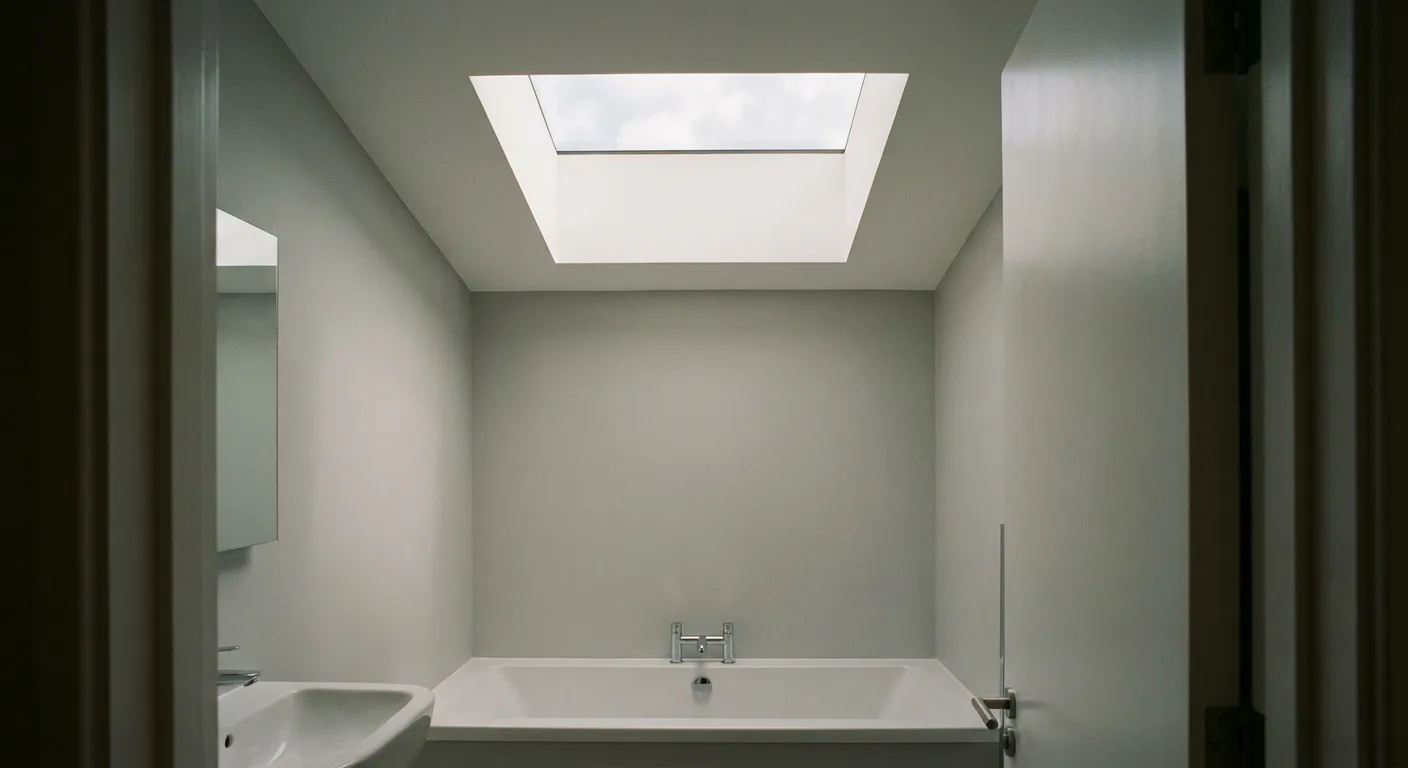
If the power goes, the automatic close goes with it
A rain sensor only works while the control unit reading it has power, so the one situation worth planning for honestly is a rooflight caught open the moment the electricity fails, whether that is a short local cut or a storm taking down a line nearby.
Some control units carry a small battery that keeps the sensor and motor working for a limited period through a cut, closing the vent even without mains power reaching the house. Where that backup is not fitted, an open rooflight stays exactly as it was left until power returns or someone reaches it by hand, which is a fair question to raise before choosing a control unit for a room that is often left unoccupied. Our answer on whether an electric rooflight will close if the power goes off goes through which systems carry a backup and what a manual override looks like on the ones that don't.
This is also where the choice of power source, covered in the guide linked above, matters beyond simple convenience. A solar unit charging its own small battery through the day can often keep enough charge in reserve to close a vent during a short mains cut that would stop a purely mains-fed unit dead, which is one more factor worth weighing against the cable-run convenience of a hardwired supply.
Testing it, and the one job worth doing every year
A rain sensor is not something to trust blindly just because it worked on the day of the install. Like any sensor sitting outside in all weather, it is worth a short, deliberate check now and then rather than waiting for the next downpour to prove it.
- Open the rooflight a short way on its switch or remote, on a dry day;
- Wet the pad with a few drops of water from a cup or a hose, rather than waiting for rain;
- Watch for the vent to start closing within a few seconds;
- Let the pad dry fully and confirm the vent still opens again on the next command.
That simple check, done once a year alongside a look at the seals and the actuator, catches almost everything that could stop a sensor working before the weather does it for you. It is a job that takes minutes and needs no tools, and it sits naturally alongside whatever else is checked when an electric rooflight is looked over each year. Where a household has grouped several rooflights onto one controller through a smart home link, it is worth testing each vent's own sensor individually rather than assuming one working pad means they all are.
Automatic closing alongside the rest of the safety system
A rain sensor closes a vent against weather; it has nothing to do with what happens if a hand, a curtain or a curious child gets in the way of the sash while it is moving, which is a separate safeguard built into the same motor.
Pinch protection senses resistance as the vent closes, whatever has told it to close, and stops and reverses the motor rather than driving through an obstruction, in the same way an electric car window or an automatic gate behaves. That protection applies just as much when the rain sensor triggers the close as when a switch does, so a rooflight closing itself in a sudden shower is no more likely to trap something in its path than one closed deliberately from the wall. Our guide to safety on opening rooflights: pinch protection and restrictors covers that mechanism and the separate question of restrictors, for a fuller picture of how an automatic system stays safe rather than merely convenient.
Where automatic closing earns its place fastest around Peterborough
Automatic closing is standard equipment on almost every electric rooflight regardless of postcode, but where it earns its keep fastest tends to follow the shape of the roof it sits on rather than the calendar.
A flat-roofed kitchen extension in one of the newer townships such as Bretton, Orton or Werrington often has its opening rooflight set into a low-pitched roof with a clear run of open sky above it and nothing tall nearby to break a squall before it arrives. Left open on a warm evening to clear cooking heat, that kind of rooflight has the least warning of a change in the weather and the most to lose from being caught out by it, which makes the sensor doing its job unattended rather than someone remembering to check the sky worth having from day one. A rooflight set into a pitched roof on a Fletton-brick terrace closer to the city centre sits at more of an angle to the weather and often has neighbouring roofs breaking the wind, but the sensor works exactly the same way and closes just as fast; the difference is only in how much warning a household would otherwise have had.
The principle holds further out too. Around Stamford and the stone villages along the Nene valley, where slim, flush conservation units sit on older roofs, an opening rooflight is less common than a fixed pane in the first place, but where one is fitted, the same rain sensor and the same closing sequence apply without any change to the specification. The sensor does not know or care what the roof underneath it is built from; it only knows whether the pad is wet.
What people ask before we fit one
Does a rain sensor still work if the rooflight is only open a little?
Yes. The sensor reads the contacts on the pad, not how far the sash has travelled, so a vent cracked open an inch closes on exactly the same signal as one open to its full stroke. There is no minimum opening below which the sensor stops paying attention.
Can the automatic close be switched off deliberately?
Most control units allow the rain sensor to be disabled through the same app or programmer used to set timers and schedules, usually for a short period rather than permanently, since leaving it off defeats the point of fitting one. It is worth understanding how to turn it back on again before ever turning it off.
Does the sensor need resetting once it has closed the vent?
No. The pad resets itself as soon as it dries, and the vent is free to open again on the next command from the switch, remote or timer with nothing to reset by hand in between showers.
Will a rain sensor close a rooflight that opens manually, by winder or pole?
No. A rain sensor is part of the electric system, wired into a motor and a control unit, so a manually opened rooflight has no motor for it to drive and no automatic close at all. That trade-off is one of the main reasons households choose an electric unit over a manual one for a room they cannot always reach quickly. Our electric and opening rooflight installation page sets that choice out alongside the rest of what an electric system adds over a manual vent.
Keep reading
 GuideElectric Opening Rooflights: How They WorkHow the actuator, sensors and switch on an electric rooflight work together, and what an open sash does to the view of the sky.
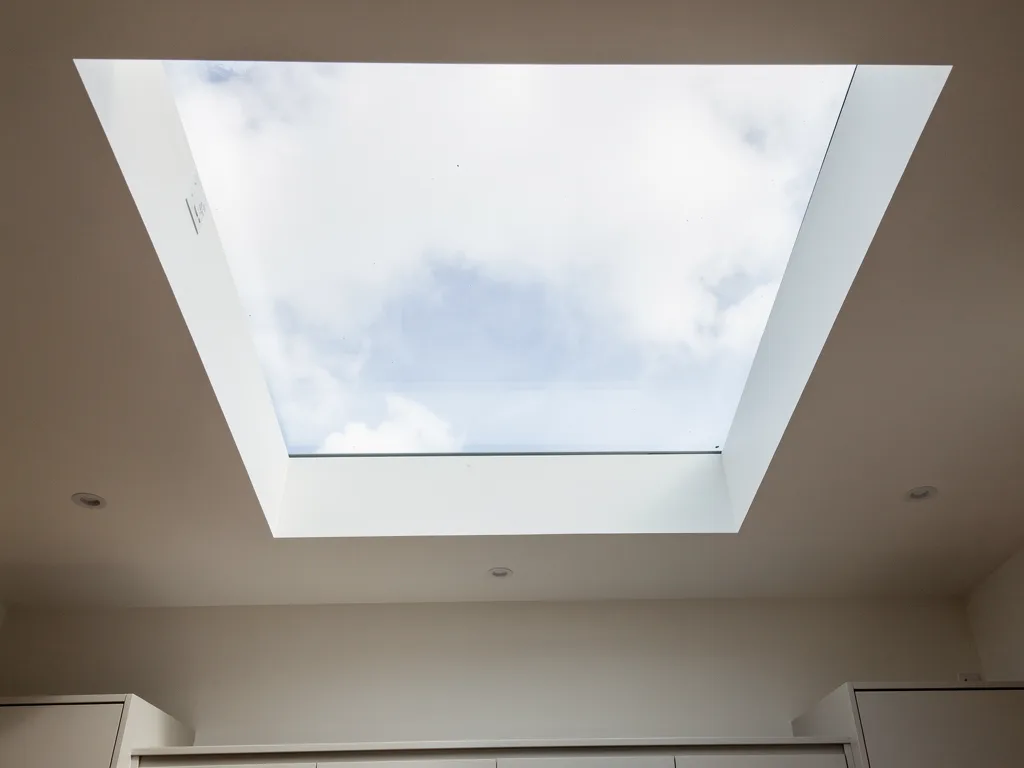 GuidePowering an Electric Rooflight: Mains, Solar or BatteryMains, solar or battery: how each one powers an electric rooflight and what it needs at survey.
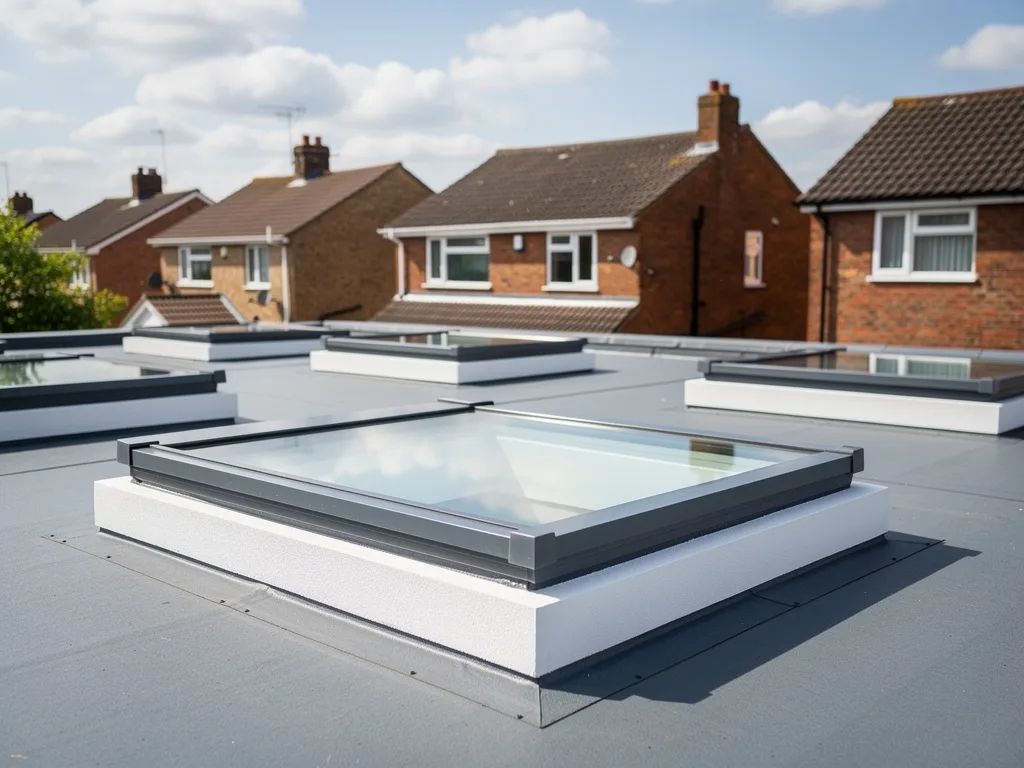 GuideHinged or Sliding Flat RooflightsHinged rooflights lift open at one edge; sliding ones stay flat and run sideways, better suited to a roof terrace.
Book a home visit
Tell us which room
- No obligation
- Sightline sketch included
- 10-year guarantee
Or call 01733 736163