Guide · Electric and opening rooflights
Rooflights for Ventilation: Purge, Trickle and Stack Effect
Warm air rises to the highest point in a room and out through an open rooflight, pulling fresh air in behind it. Here is how purge and trickle ventilation both use that stack effect.
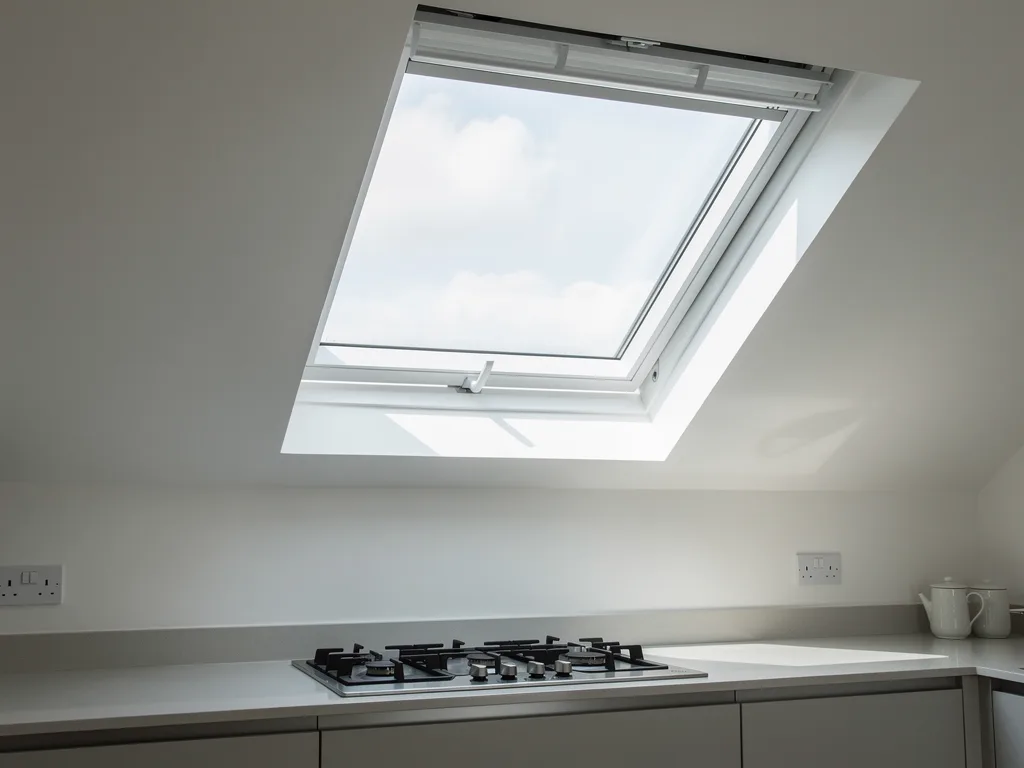
Warm air rises, and a rooflight sits at the top of the room
Heat moves upward through a room whether anyone opens a window or not, and an opening rooflight simply gives that rising air somewhere to go from the highest point in the house.
This is the stack effect: warm air is less dense than cool air, so it climbs to the ceiling and collects there, while cooler air settles near the floor. In a loft room, a kitchen extension or a room built under a flat roof, the ceiling is often the roof itself, and the rooflight sits right where the warmest air gathers. Open it, and that air has a direct route out. Close it, and the same warm layer just sits under the glass, which is one reason a stuffy loft room can feel worse than the rest of the house on a warm afternoon.
What makes the stack effect useful for ventilation is that it does not depend on wind. A side-hung window low in a wall relies partly on a breeze pushing air through it; a rooflight at the top of a room is driven by the temperature difference between inside and out, so it keeps working on a still day when nothing else is moving air. The bigger that temperature difference, the stronger the pull, which is why an opening rooflight often clears a hot loft bedroom faster in the early evening than it does at midday, once the air outside has cooled.
None of this needs to be complicated to plan. It comes down to two questions: how quickly does the room need a full change of air, and how much background movement does it need the rest of the time. Those are purge ventilation and trickle ventilation, and an opening rooflight does both jobs, usually through different settings on the same unit.
Purge ventilation: the quick flush a room needs
Purge ventilation is a short, deliberate flush, the rooflight opened fully for a few minutes so the room's air is properly changed rather than just stirred about.
Building Regulations set out a minimum openable area for purge ventilation in a habitable room, scaled to the size of the room itself, so a larger room needs more openable glass to clear in a reasonable time. In a loft conversion or an extension with a single opening rooflight and little else in the way of windows, that openable area often has to be found through the roof, because there is nowhere else for it to come from. This is one of the plainer reasons a rooflight in this kind of room is specified electric rather than fixed: a fixed pane can light the room but cannot flush it.
Most homes reach for purge ventilation at fairly predictable moments, and knowing them helps with deciding where the control for the rooflight should sit and whether it should be automatic:
- after cooking, to clear steam and cooking smells before they settle into fabric and cupboards
- after a shower or bath, so warm moist air does not sit against cold glass or plaster
- after decorating, to clear the smell of paint, adhesive or varnish while it cures
- when a room has been shut up for hours, so a full change of air happens before anyone spends time in it again
A purge flush is a few minutes, not an all-day setting, and it is deliberately full-width: the point is speed, not comfort while it happens. It is a different job from the steady background trickle a room needs the rest of the time, and it is worth telling the two apart before deciding how a rooflight should be controlled. See does an opening rooflight help clear cooking smells? for how this plays out over a kitchen extension specifically.

Trickle ventilation: the small gap that keeps working
Trickle ventilation is the opposite of a purge: a small, controlled opening that keeps a steady, gentle exchange of air going through the day without anyone noticing a draught.
Many opening rooflights offer a vent-only position that is nothing like the full opening used for a purge, a narrow gap at the edge of the sash, sometimes built into the frame or kerb as a dedicated trickle ventilator rather than the main opening mechanism at all. The idea is to let a small, continuous volume of air move, driven by exactly the same stack effect as a full opening, just at a scale gentle enough to run for hours or overnight without cooling the room down.
The table below sets out how purge, trickle and the stack effect that drives both of them relate to one another.
| Type | Typical use | How it works |
|---|---|---|
| Purge | Quick flush after cooking, bathing or decorating | Rooflight opens fully for a few minutes |
| Trickle | Steady background air change through the day | A small, controlled gap, often built into the frame |
| Stack effect | The force behind both, whenever inside is warmer than out | Any opening at the highest point of the room |
Trickle ventilation is deliberately modest by design. It will not clear a steamed-up bathroom in the way a purge does, and it is not meant to. Its job is to stop a well-sealed, well-insulated room becoming stale between purges, which matters more than it used to now that gaps around doors and windows are tighter than in an older, draughtier house.
Completing the loop: air has to come from somewhere
A rooflight at the top of a room can only push air out as fast as air can come in somewhere lower down, so the outlet is only half the plan.
In a room with a door left open to the rest of the house, or a low-level window with its own trickle vent, that supply route usually exists already and the rooflight does its work without any further thought. In a tightly sealed loft room or a single-storey extension with the door shut, though, an opening rooflight with nowhere for air to enter behind it will pull much less air through than the same unit in a room with a low-level opening to draw from. Where to place the rooflight itself, and what that means for the draw through the room, is covered in full in where an opening rooflight should sit for airflow.
Kitchens, bathrooms and where purge earns its keep
Steam and cooking heat rise fastest in exactly the rooms where an opening rooflight is most often specified, which is why kitchens and bathrooms tend to get the most use out of the purge setting.
A kitchen extension with a run of rooflights over the cooking area lets steam and heat go straight up and out rather than drift across the room to a cooler wall or window, where it is more likely to condense. In a bathroom, the same logic applies to warm, moist air after a bath or shower: a rooflight positioned over or close to the source clears it before it settles on tiles, mirrors or paintwork. Full detail on placement and glass specification for these two room types is in electric rooflights in kitchens and bathrooms.
It is worth being specific about what "clearing" a kitchen actually means here: cooking smell is carried on the same rising warm air as the steam, so a rooflight that clears one clears the other, without an extractor fan running at the same time. That does not replace an extractor over a hob, which pulls air directly at the source, but it does mean the wider room airs out properly once cooking finishes.

Letting the rooflight manage itself
An opening rooflight left to ventilate a room does not need someone standing by it, because the sensors and controls that come with an electric unit are built to close it, throttle it back or hold it steady without asking.
A rain sensor closes the rooflight automatically the moment it detects moisture, so a unit left on trickle or fully open for a purge is not a decision that has to be reversed by hand before the weather turns; see rain sensors and automatic closing. Across the flat, exposed ground around Peterborough, a wind sensor does a similar job in the other direction, closing or limiting the opening in a strong gust rather than leaving a sash working against the wind, covered in why would a rooflight need a wind sensor?. Together, the two sensors mean a rooflight can be left on background ventilation without checking the sky first.
A timer or schedule through the controller or an app handles the more routine pattern: a short purge set to run after the time a shower is usually taken, or a trickle setting that opens once the room warms past a set point and closes again overnight. That side of control is set out in can an electric skylight be put on a timer?, and the wider set of switches, remotes and app options behind all of it is in electric opening rooflights: how they work.
Ventilation without losing the heat you have paid for
Ventilating a room and heating it are pulling in opposite directions, and the way to reconcile them is to match the setting to the job rather than leave a rooflight fully open for longer than it needs to be.
A short purge, even run twice a day, moves far less warm air out of a room over a year than a rooflight left ajar all day on the wrong setting. Trickle ventilation is the setting built for exactly this trade-off: enough movement to keep the air fresh, at an opening small enough that the heat loss stays modest. How a closed, opening rooflight compares with a fixed one for heat loss the rest of the time, when it is not ventilating at all, is answered directly in do opening rooflights lose more heat than fixed ones?.
The view still comes first
None of this changes the reason a rooflight goes into a room in the first place: the sky seen from where someone actually sits, stands or lies underneath it.
An opening mechanism does add depth to a frame that a fixed pane does not need, since there has to be room for a hinge, an actuator and a seal that closes properly against the weather. Planned well, that extra depth sits outside the eyeline that matters from the bed, the sofa or the sink, rather than across it; planned badly, it is the first thing anyone notices looking up. That is covered properly in opening rooflights and the view: frame depth when hinged, and it is exactly why every quote for an opening rooflight, ventilation included, comes with a sightline sketch showing the view before any glass goes in, not after.
An opening rooflight fitted through our electric and opening rooflight service is planned to do both jobs at once: move air properly when the room needs it, and stay out of the way of the sky the rest of the time.
Ventilation in practice: sensors, cost and control
Can trickle ventilation run on a timer?
Yes. Most controllers let a trickle setting be scheduled to open once a room reaches a set temperature during the day and close again overnight, so the background air change happens without anyone adjusting it by hand. See can an electric skylight be put on a timer? for how the scheduling itself works.
Does running a rooflight for ventilation cost much to run?
The actuator itself uses very little power to open, hold and close a rooflight, whether it is doing that once a day for a purge or several times for scheduled trickle ventilation. The detail is in how much does an electric rooflight cost to run?.
What stops a rooflight left open overnight from letting rain in?
A rain sensor closes the unit automatically as soon as it detects moisture on the glass, so a rooflight left ventilating overnight does not need to be checked or reversed by hand if the weather turns. It is explained fully in rain sensors and automatic closing.
Does the stack effect work in a single-storey room without any high windows?
Yes, and it is often the main reason to fit an opening rooflight in that kind of room at all. A single-storey extension or a bungalow has no stairwell or upper floor to carry warm air away, so the ceiling under the roof is the only high point in the room, and a rooflight there is doing a job that no other opening in the room can do on its own.
Keep reading
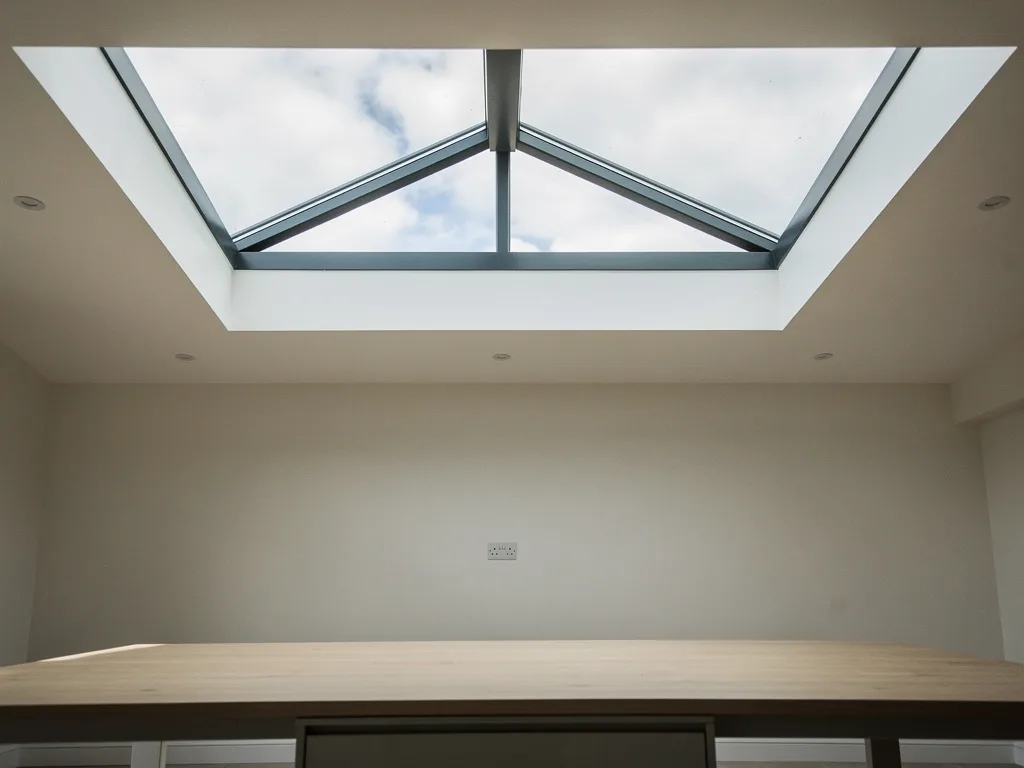 GuideElectric Rooflights in Kitchens and BathroomsWhy electric rooflights over a kitchen or bathroom clear steam and heat, and how siting and control differ from other rooms.
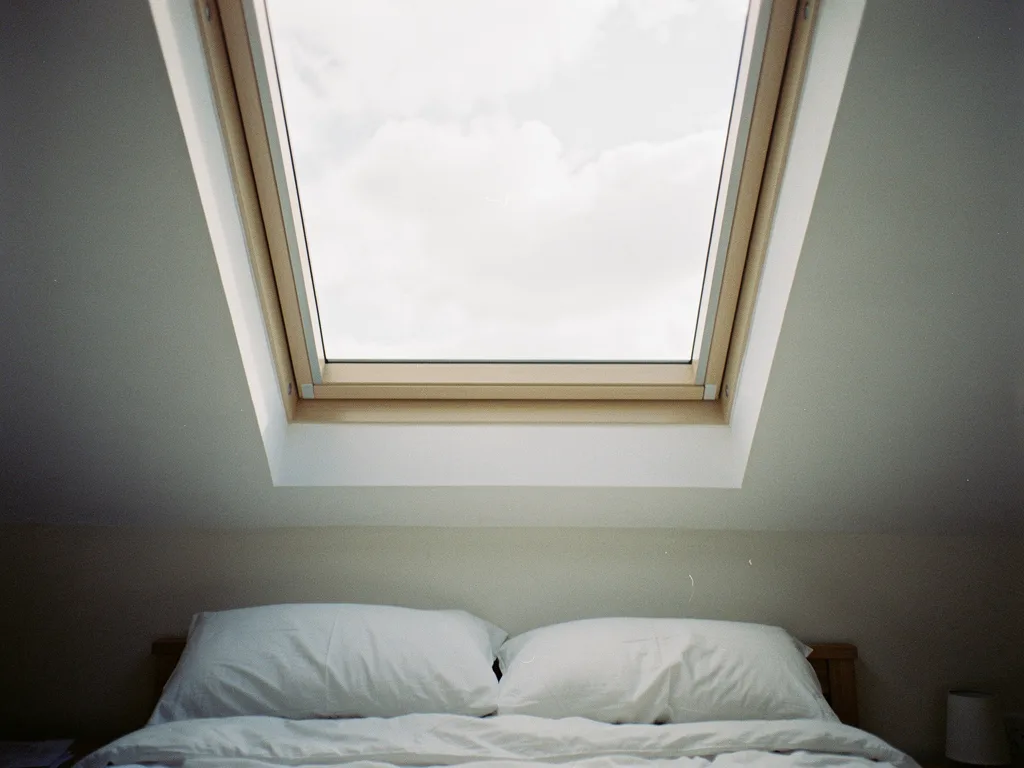 GuideOpening Rooflights and the View: Frame Depth When HingedWhy an opening rooflight needs a deeper frame than a fixed one, and how careful placement keeps that edge out of your view of the sky.
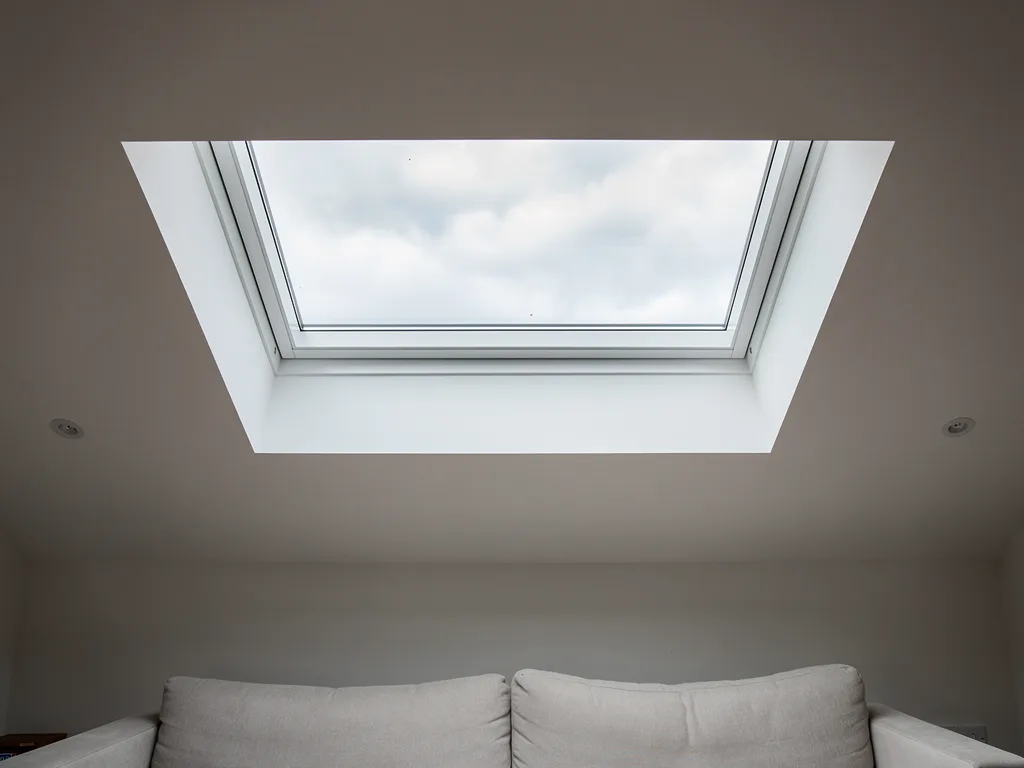 GuideSafety on Opening Rooflights: Pinch Protection and RestrictorsThe pinch protection, restrictors and child safety controls built into opening rooflights and electric skylights.
Book a home visit
Tell us which room
- No obligation
- Sightline sketch included
- 10-year guarantee
Or call 01733 736163