Guide · VELUX windows
VELUX Glazing Options: Warmth, Noise, Safety and Clarity
VELUX offers more than one pane of glass behind its size code. Here is how the options actually compare for warmth, noise, safety and clarity.

One short code, four separate decisions
Every VELUX roof window carries a glazing code alongside its size code, easy to skim past on a spec sheet, but it is really answering four separate questions at once: how much heat the glass holds onto, how much outside noise gets through it, what happens to the pane if it is ever struck hard, and how quickly the outer face collects dirt and stops giving a clear view of the sky.
Those four things do not move together. A glazing option built for warmth is not automatically the quietest one, and the option that stays cleanest longest is not always the one specified for a loud road. Picking well means matching the option to the room, not reaching for whichever code sits at the top of a price list. This guide sets the choices against each other by warmth, noise, safety and clarity, the four things that actually change what living under the window feels like.
Holding the room's heat without dulling the view
Thermal performance in a sealed roof window unit comes from the cavity between the panes as much as from the glass itself, and that is where most of the difference between VELUX glazing options sits.
A low-emissivity coating on one of the inner faces of the sealed unit reflects the room's own heat back inward rather than letting it radiate straight out through the glass on a cold night, and filling the cavity with argon rather than plain air slows how quickly heat crosses that gap, since argon conducts less readily than the air it replaces. Together they cut heat loss through the pane noticeably compared with an older, single-cavity unit with no coating, without changing how much daylight or view comes through the clear glass itself. A warm-edge spacer bar around the rim of the unit does a smaller but related job: it keeps the cold edge of the cavity from becoming a cold bridge, which is also the part of the pane most likely to mist on a cold morning before the rest of the glass does.
None of that is the same specification as VELUX ThermoTechnology, which is a frame and installation system rather than a glazing option, insulating the timber and the collar around the window rather than the pane. The two work together rather than instead of each other: our answer on what VELUX ThermoTechnology actually covers sets out where the frame's job ends and the glass's job begins, which matters most in an older Fletton brick terrace roof being opened up for the first time, where the existing rafters and loft insulation were never built with a warm frame in mind.
Warmer glass also changes how a room behaves in the other direction, holding heat in that a room does not always want to keep. Our answer on why a VELUX window shows condensation explains how a warmer inner pane, ironically, reduces the surface condensation that a colder, older unit would show first on the coldest mornings, since misting starts where the glass is coldest relative to the room air around it.
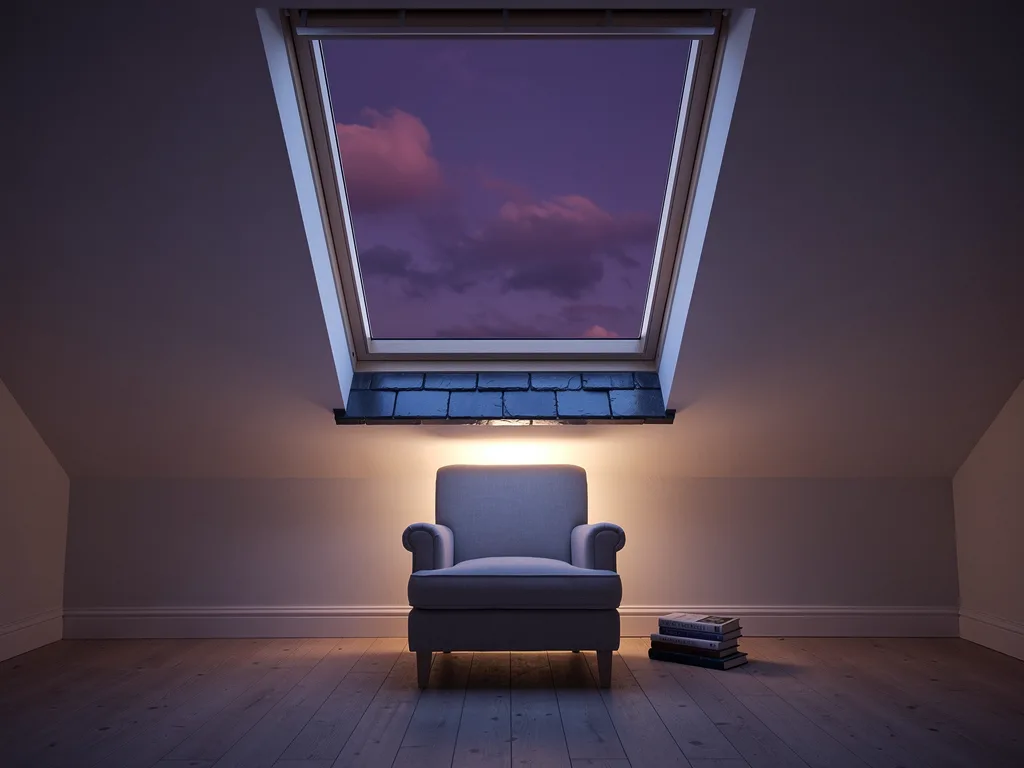
Cutting road and flight noise before it reaches the bed
Sound crosses an ordinary sealed unit surprisingly easily, because a single stiff pane of glass, however thick, tends to resonate at a narrow band of frequencies and pass the rest straight through, and a loft bedroom sits closer to a roof, and to whatever is above it, than any room downstairs.
Some VELUX glazing options build one pane of the unit from a laminated sandwich with an acoustic interlayer between the two sheets of glass, rather than a single sheet the same overall thickness. That layered, uneven structure breaks up the resonance a plain pane would let through, so it damps a wider spread of frequencies rather than blocking one narrow band well and letting the rest through untouched. The difference is most worth paying for under a flight path, close to a dual carriageway or arterial road, or above a room used for sleep during the day, and least worth it on a quiet cul-de-sac roof where the ordinary glazing option already does the job the room needs.
It is worth checking early which acoustic option a given size and range actually offers, since not every VELUX glazing upgrade is available across the whole size chart; our guide to VELUX window sizes covers how the size code and the range letter narrow what is on the table before glazing is even discussed.
What the laminated pane is doing above your head
A rooflight sits over furniture, beds and worktops in a way an ordinary wall window never does, so the question of what happens if the glass is ever broken carries more weight here than it does at ground level.
In most VELUX glazing options the inner pane, the one facing down into the room, is laminated: two sheets of glass bonded around a tough plastic interlayer, so that if it is ever struck hard enough from inside to crack, the fragments stay held to that interlayer rather than falling as loose shards onto whatever is below. The outer pane, facing the weather and the sky, is usually toughened rather than laminated, which fails into small, blunt fragments instead of long, sharp shards if hail, debris or a sharp change in temperature ever takes it past its limit, and simply shrugs off the everyday knocks a roof surface takes over its life. The two jobs are different and the two pane types are chosen to suit them, rather than the same glass doing both.
- A bed, cot or changing table directly under the window: laminated inner glass matters more than in a landing walked through rather than slept under
- A child's bedroom: our answer on whether VELUX windows are safe in a child's bedroom covers restrictors and locks alongside the glass itself
- A flat or very low pitch, where the pane sits closer to horizontal and takes more of whatever lands on the roof: toughened outer glass is doing steady work here, not just occasional work
- A bathroom or en suite: safety glazing and privacy are two separate specifications, covered separately below
The coating that keeps the sky looking clean
Clarity is the one heading on this list that speaks most directly to what Clearview actually promises: not just glass that lets light through today, but glass that still gives a clean, honest view of the sky in three years, not a grey smear.
Some VELUX glazing options add a coating to the outer pane that reacts with ultraviolet light to loosen organic dirt sitting on the surface, then lets rain sheet evenly across the treated glass rather than beading into droplets that dry and leave marks behind. The result is a pane that largely washes itself in ordinary weather rather than one that needs a cloth and a ladder every few months to look the way it did on day one. That matters most on a low pitch or a flat roof window, where the glass sits closer to horizontal and holds dust, pollen and rain residue for longer than a steep pitch ever does, and it matters least on a steep roof that the weather already keeps largely clean on its own.
Even the best coating still needs an occasional hand from inside, since the coating only works with real rain and real UV light reaching the outer face, not through an overhang or a shaded aspect. Our answer on how to clean a VELUX window covers the safe way to reach the outer pane from inside the room, sash rotated, which stays the same whichever glazing option is fitted.
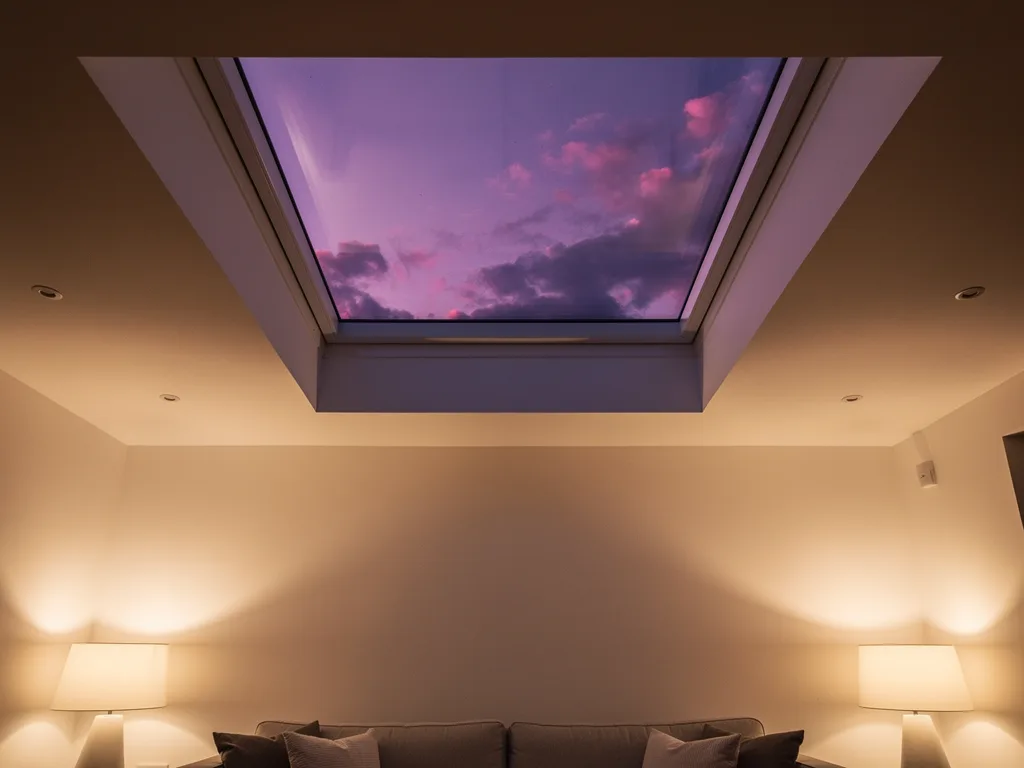
Solar control for the roof that gets the most sky
A large pane facing open sky lets in more solar gain on a bright day than the same glass on a shaded, tree-lined roof, and Peterborough's flat, open horizon to the east and north means a well-aimed window here can catch a very great deal of unobstructed sky with nothing to soften it.
A solar control coating cuts down how much of the sun's heat passes through the glass while still letting the visible light through largely unchanged, so the room brightens without heating up as sharply as it would through untreated glass in the same aspect. It earns its place most on a south-facing loft conversion with a large single pane or a run of combined windows, and least on a north-facing room or a small window shaded for most of the day by a neighbouring ridge or a chimney stack. Our answer on whether a VELUX makes a loft too hot in summer sets solar control glazing against an external awning blind, which cuts heat before it reaches the glass at all rather than after.
Privacy without losing the sky
A bathroom or an en suite usually rules out clear glass on privacy grounds alone, long before glazing performance is even discussed, but obscured VELUX glass is a separate specification from safety or acoustic glazing, not a substitute for either.
Obscuring is applied to one pane as a pattern or a fine texture that scatters the light passing through it, so the room still reads bright and the sky above still shows as a pale, moving field of light and cloud, just without a clear, defined view through the glass. It can be combined with the same laminated and toughened pane structure used elsewhere in the range, so a bathroom window does not have to trade privacy for the same safety specification fitted everywhere else on the roof. Our answer on whether a VELUX window can have obscured glass covers where the obscuring sits within the unit and what it does, and does not, hide.
Matching the option to the room, not the price list
Put together, the four questions this guide opened with map fairly cleanly onto the room the window serves, once the roof, aspect and use of that room are known.
| Room or aspect | What matters most | Worth specifying | Read alongside |
|---|---|---|---|
| Loft bedroom, quiet roof | Warmth over the whole heating season | Standard low-E, argon-filled unit | ThermoTechnology answer |
| Bedroom by a busy road or flight path | Noise reaching the bed | Acoustic laminated option | Window sizes guide |
| South-facing loft, big sky | Heat gain on a bright day | Solar control coating, awning blind | Too hot in summer answer |
| Bathroom or en suite | Privacy without losing daylight | Obscured pane | Obscured glass answer |
| Flat or very low pitch | Keeping the pane clean and clear | Self-cleaning outer coating | Cleaning answer |
| Anywhere above a bed or worktop | What happens if the glass is struck | Laminated inner, toughened outer | Child's bedroom answer |
Some of these stack without conflict, an acoustic laminated inner pane and a self-cleaning outer coating sit on the same unit without one undoing the other, but not every combination is offered on every size and range, and a genuine VELUX window carries these specifications consistently across its range in a way a cheaper copy does not always match. Our answer on whether a genuine VELUX is worth it over another brand weighs that up directly, glazing options included.
Where the glazing gets confirmed
Glazing is one of the choices we settle on the home visit rather than over the phone, alongside the size, the opening type and the flashing, because the right combination depends on the roof's pitch, the room's aspect and what sits nearby, a road, a neighbouring roofline, or open sky with nothing in the way. Book a home visit or message us on WhatsApp and we will talk through warmth, noise, safety and clarity together, then bring back a sightline sketch showing what the finished glass will actually look like from where you sit or lie. Read more about the full VELUX window installation service in Peterborough, see what affects the cost of a rooflight, or find out more about the sightline sketch and how we plan the view before your visit.
Before you specify the glass
Can different glazing options be mixed across windows on the same roof?
Yes. A landing window and a bedroom window on the same roof slope do not have to carry the same glazing option, since each one is chosen against the room it actually serves. The only constraint is that where several windows are joined under one shared flashing as a combination unit, the glazing across that run is usually kept consistent so the finished panel reads as one piece rather than an odd mix of tints.
Does a self-cleaning coating stop the glass misting on the inside?
No, and the two are unrelated. The self-cleaning coating sits on the outer pane and deals with dirt and rain on the outside face; any misting on the inside face is surface condensation, governed by warmth, ventilation and humidity in the room rather than by any coating on the weather side of the glass.
Is acoustic glazing worth the upgrade away from a busy road?
Usually not on its own. Acoustic glazing earns its keep against a specific, identifiable noise source close to the roof, a main road, a railway line or a flight path. On a quiet residential roof with nothing overhead, the standard glazing option already gives a genuinely quiet room, and the upgrade is better spent on warmth or solar control instead.
Can a laminated safety pane still be obscured for a bathroom?
Yes. Obscuring and lamination sit on different aspects of the same unit, a surface texture on one pane and a bonded interlayer within it, so a bathroom window can carry both a laminated safety pane and an obscured finish without either specification being dropped to accommodate the other.
Keep reading
 GuideVELUX GGL or GPL: Centre-Pivot or Top-HungComparing VELUX GGL centre-pivot and GPL top-hung windows by handle position, headroom and cleaning.
 GuideVELUX INTEGRA: Electric and Solar Opening ExplainedHow VELUX INTEGRA electric and solar roof windows open, and what the rain sensor and remote control actually do.
 GuideThe VELUX CABRIO: A Roof Window That Becomes a BalconyHow the VELUX CABRIO turns a roof window into a balcony, and what the pitch and structure underneath it need to allow.
Book a home visit
Tell us which room
- No obligation
- Sightline sketch included
- 10-year guarantee
Or call 01733 736163