Question
What Is the Best Glass for a Skylight?
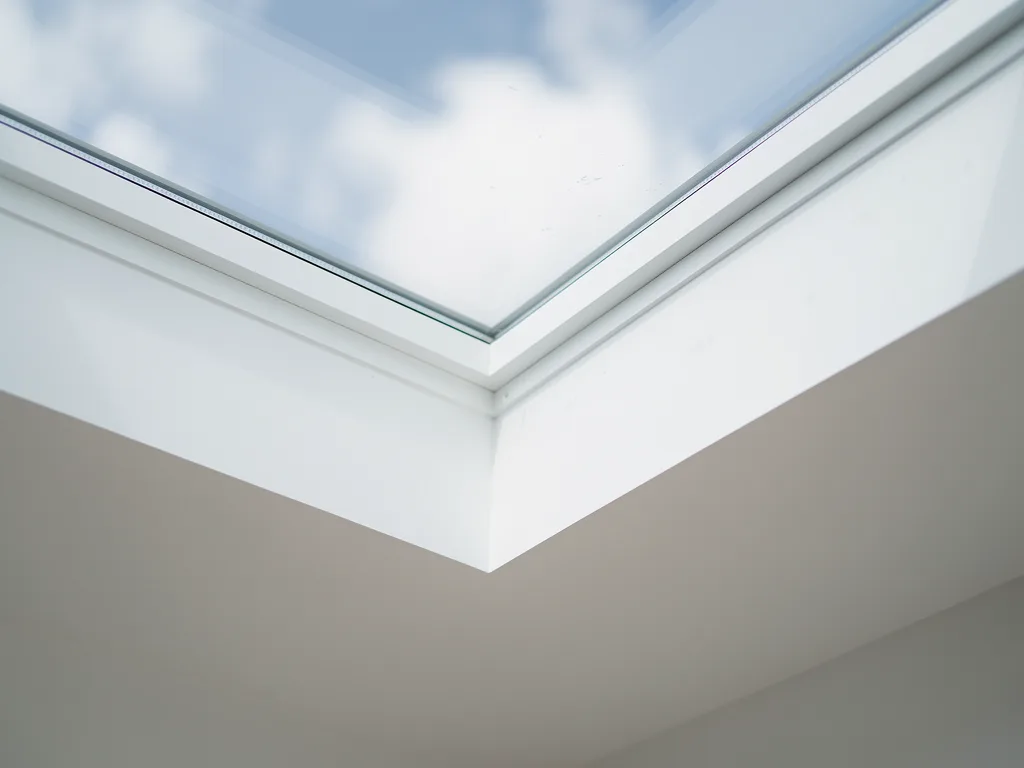
Two panes, two different jobs
A rooflight almost always carries two kinds of safety glass, and each is chosen for a different reason rather than for how it looks from below.
The outer pane, the one facing the weather, is nearly always toughened. Heat treatment leaves it several times stronger than ordinary glass, and if it is ever struck hard enough to fail, it breaks into small, blunt pieces rather than long shards. That matters on a roof, where the outer pane takes wind-blown grit, the odd falling branch and the weight of anyone working above it. The inner pane, the one you actually look through from the room, is often laminated: two sheets of glass bonded around a clear interlayer that holds the pane together even if it cracks. Building Regulations call for laminated glass wherever the rooflight sits above a place someone could fall, which in practice means most bedrooms, landings and living spaces.
From the pillow or the sofa the two panes look identical. Toughened and laminated glass are both clear, and the difference only shows if the glass is ever struck. What does show, over the years, is how well the whole unit has been put together, which is where the rest of this specification comes in.
What double and triple glazing does to the view
Adding a second or third pane, with the gap between them filled with argon rather than plain air, cuts heat loss sharply and barely changes what you see.
A modern sealed unit holds its heat far better than the single panes fitted in lofts decades ago, and a triple unit takes that further again. The trade-off is thickness: each extra pane and gap adds a few millimetres to the overall unit, which the frame has to hold and the reveal has to be lined around. On a rooflight over a bed or a sofa that difference is worth planning for, because frame depth changes how much of the sky the edge takes away. A slightly thicker unit in a well-profiled frame still gives a wide view; a thick unit dropped into a heavy old frame is where the sky starts to shrink.
The coating you cannot see doing the work
A low-E, or low-emissivity, coating is a metallic layer thinner than a human hair, applied to one internal face of the sealed unit, and it is doing real work while staying invisible to the eye.
It lets daylight through much as plain glass does, but reflects long-wave heat back into the room rather than letting it escape through the glass. The same coating keeps the inner pane's surface a little warmer on a cold morning, which is one of the plainest ways to control condensation on the room side of the glass. None of this tints the sky or softens the view; it is chemistry on a surface you never touch.
Self-cleaning outer panes on a shallow pitch
On a flat roof or a shallow-pitched rooflight, dirt settles on the glass rather than washing off it, and a self-cleaning coating on the outer pane does two separate jobs at once.
A hydrophilic coating uses daylight to break down organic dirt, algae and pollen sitting on the glass, then lets rain spread into a thin, even sheet rather than beading into droplets that dry as spots. The result is fewer streak marks and a longer stretch between anyone needing to get up there with a cloth. It earns its place most clearly on flat and low-pitch rooflights, where the alternative is watching the glass dull from below within a season or two.
Solar control tints and the colour of the sky
A solar control coating cuts down how much heat a rooflight lets through on a hot day, and depending on the coating it can shift the colour of the sky you see by a shade.
Neutral coatings stay closest to true; some grey and blue tints are stronger and noticeably change how the sky reads from below, which is the trade-off explored fully on whether tinted glass spoils the view. Orientation decides how much solar control is worth having at all: the big, open skies to the east and north around Peterborough carry cooler morning light than a west-facing kitchen roof catching a low summer sun, and the two rooms rarely want the same glass. Orientation is worth settling before the glass is chosen, not after.
Reading a glass specification, layer by layer
A proper quote should name every layer between the sky and the room, not just the words "double glazed" written once and left unexplained.
Working from outside in: the outer pane takes the weather and, on a shallow pitch, carries the self-cleaning coating; the cavity between the panes is filled with argon and closed at the edge by a spacer; the low-E coating sits on one of the internal faces; and the inner pane is toughened or laminated depending on what is beneath it. Each layer is doing one job, and a good specification names all four rather than leaving one to guesswork.
| Layer | What it does | Matters most where |
|---|---|---|
| Outer pane | Takes the weather, toughened for impact | Every rooflight |
| Low-E coating | Reflects heat back into the room | Cold mornings, all year |
| Argon cavity | Slows heat moving between the panes | Double and triple units |
| Inner pane | Laminated above a place someone could fall | Bedrooms, landings, stairs |
Edge seals and how long the glass stays clear
It is usually the edge seal that fails first, long before the glass itself gives any trouble, and that single detail decides how many years a unit stays clear.
The seal is what keeps the argon in and moist air out of the cavity between the panes. Once it lets go, the gap mists from the inside, in a place no amount of cleaning can reach. A warm edge spacer, made from foam or composite rather than plain aluminium, runs cooler at the perimeter of the unit and delays the point at which condensation forms there in the first place. It is a small, unglamorous part of the specification, and it is the one that determines whether the glass still looks new in ten years or has already gone milky at the edge.
A view-first specification for a bed, a sofa or a sink
Put the layers together and a sensible default emerges for most rooms, adjusted for pitch, orientation and what sits below the glass.
- Toughened glass outside, laminated inside wherever a fall below matters.
- An argon-filled double or triple unit with a low-E coating on a suitable face.
- A self-cleaning outer pane on any flat or shallow-pitched rooflight.
- A solar control tint only where the orientation and room genuinely call for one.
We set out this exact stack, pane by pane, on every quote we write, alongside a sightline sketch showing the view the glass will actually give from the bed, the sofa or the sink in question. We install to current Building Regulations throughout, and where the work is notifiable we handle the Building Control notification as part of the job. You can see the full range of rooflights and skylights we install and replace across Peterborough on the home page, or book a home visit and we will look at the roof and the room together before any glass is chosen.
Questions people also ask
Does laminated glass make a rooflight safer overhead?
Yes. Laminated glass holds together around its interlayer even if the pane cracks, rather than falling as loose pieces, which is why Building Regulations call for it above places people sit, sleep or walk. It looks the same as toughened glass from below; the difference is what happens if it is ever struck.
Do triple-glazed rooflights look any different from inside?
The unit is a little thicker than a double-glazed one, which can add a small amount of depth to the frame and reveal, but the glass itself reads the same: clear, with no extra tint or pattern. The room feeling warmer is usually noticed long before any change in how the glass itself looks.
Can every rooflight take a self-cleaning outer pane?
Most rooflights can, but it earns its keep most clearly on flat and shallow-pitched glass, where dirt has nowhere to slide off to. On a steep pitch, rain already does much of that work, so the coating is a smaller part of the decision there.
Does solar control glass reduce glare as well as heat?
It takes the edge off both, but a coating alone rarely removes glare completely on a sunny day, particularly low in the sky in winter. Blinds still do most of the work for direct glare, with the glass specification handling the heat gain behind it.
Book a home visit
Tell us which room
- No obligation
- Sightline sketch included
- 10-year guarantee
Or call 01733 736163