Guide · Energy efficient rooflights
Reading a Rooflight U-Value: Whole Unit or Centre Pane
A rooflight spec sheet can carry two different U-values, centre-pane and whole-unit. Here is what each one measures, and which one Building Regulations check.

Two figures on one spec sheet
Ask two suppliers for a U-value on rooflights of the same size and you can walk away with two quite different numbers, each one correct on its own terms and neither one describing quite the same thing. The gap is rarely a mistake. It is usually the difference between a centre-pane figure and a whole-unit figure, and only one of those tells you what the finished rooflight will actually do in your roof.
A U-value states how fast heat passes through a material, in watts per square metre of area for every degree of temperature difference either side of it. Lower means slower heat loss, so a smaller number is the better one. What changes between a centre-pane figure and a whole-unit figure is not the units on the page; it is how much of the actual rooflight the test bothers to include.
What the centre-pane figure measures
A centre-pane U-value is taken from the middle of the glass, well away from the frame and the metal or composite spacer running round the edge of the sealed unit. It is a laboratory measurement of the glass build-up alone: the panes, the gas fill between them and any coating on the inner surfaces.
That makes it a genuinely useful number for comparing one glass specification against another. A double-glazed unit with a low-E coating and an argon fill will always beat plain float glass on a centre-pane test, and a triple-glazed equivalent will beat both. Our guide to the invisible layers, low-E coatings and gas-filled glass covers what is actually doing that work between the panes. What a centre-pane figure will never tell you is what happens once that glass is set into a frame and lifted onto a roof, because the test was never designed to include either.

What whole-unit brings into the number
A whole-unit U-value is measured, or calculated to a recognised standard, across the entire rooflight as it will be delivered: the glass, the spacer at the edge of the sealed unit, and the frame that holds the whole thing in the opening. It is a harder number to achieve, because every one of those parts loses heat faster than the middle of the glass does.
The edge of the glazed unit is the first weak point. Heat finds a shorter path to escape at the spacer, and an older aluminium spacer conducts it readily, cooling the glass edge enough to start condensation there before it shows anywhere else. A warm-edge spacer, made from a low-conductivity material, closes down that path and keeps the edge of the unit closer to the temperature of the pane in front of it. Our guide to warm-edge spacers, keeping the glass edge clear sets out the materials involved and what each one buys.
The frame is the second, and often the larger, weak point. An aluminium frame without a thermal break carries cold straight from the outside face to the inside one, so the frame itself becomes the coldest surface in the room regardless of how good the glass is. A thermally broken frame interrupts that path with a strip of low-conductivity material set into the profile, and PVCu and timber frames insulate better by their nature but still need careful detailing at every joint. Our guide to thermally broken frames and cold bridging explains where the break sits and what it changes.
Why the gap between the two figures varies so much
Two rooflights can carry the same glass and post very different whole-unit figures, because the frame and spacer decide how much of the centre-pane performance survives to the edge of the opening. A well-built unit loses relatively little between the two figures; a poorly detailed one can lose most of the advantage the glass was bought to provide.
| Frame and spacer | Centre-pane figure | Typical whole-unit figure |
|---|---|---|
| Thermally broken frame, warm-edge spacer | 0.6 to 0.8 W/m²K | 1.2 to 1.6 W/m²K |
| Thermally broken frame, aluminium spacer | 0.6 to 0.8 W/m²K | 1.6 to 2.0 W/m²K |
| Unbroken aluminium frame, aluminium spacer | 0.6 to 0.8 W/m²K | above 2.2 W/m²K |
The centre-pane figure in that table barely moves. It is describing the same glass in all three rows. What moves is everything the glass is sitting inside, which is exactly why a supplier quoting only the top number can make three quite different rooflights look identical on paper.
Frame material sets a rough ceiling on how close the whole-unit figure can get to the centre-pane one before the spacer is even considered. PVCu insulates well by nature and needs no separate thermal break, so a PVCu rooflight often closes the gap more easily than an aluminium one of the same glass specification. Aluminium is stiffer and slimmer for a given span, which is part of why it is common on larger flat rooflights and lanterns, but it only closes that gap when a genuine thermal break is built into the profile rather than added as an afterthought. Timber sits between the two, insulating well on its own terms but asking for its own weatherproofing to keep performing over time.
The figure Building Regulations actually check
Approved Document L sets a limiting U-value for a new or replacement rooflight in an existing home, and it sets that limit against the whole-unit figure, not the glass alone. A rooflight that meets current Building Regulations has to hit that number once the frame, spacer and glass are all counted together. Our guide to what Part L of the Building Regulations asks of a rooflight sets the current limit out in full, along with the tighter figures that can apply on some new-build and larger-extension projects.
That is the practical reason the whole-unit figure is the one worth asking for on any quote, and the centre-pane figure, on its own, is not something a checker or a Building Control officer will accept as proof of compliance. The same whole-unit figure feeds into other assessments a homeowner may come across without expecting to: whether a new rooflight moves an EPC rating, which our answer on whether a new rooflight can improve an EPC rating covers, and whether there is any cap on how much of a roof can be glazed, which our answer on whether there is a limit on rooflight glazing area in Building Regulations explains.
Reading a real quote
A quote that names a U-value without saying which kind it is leaves the reader guessing, and the guess usually favours the seller. Before comparing two quotes on efficiency at all, it is worth checking a short list of things.
- whether the figure is labelled "centre-pane", "centre of glass" or "whole-unit"; if it is not labelled at all, ask;
- whether the whole-unit figure sits at or below the current Part L limit for the roof in question;
- what the spacer is made from, since an aluminium spacer on an otherwise good glass specification will drag the whole-unit figure well above the centre-pane one;
- whether the frame is described as thermally broken, and on which material;
- and whether the same figure is quoted for the size and shape of rooflight actually going in your roof, since a small unit loses proportionally more through its edges and frame than a large one carrying the same glass.
A supplier who can produce both figures, and explain the gap between them, is describing a rooflight that has been specified as one assembly rather than a glass order with a frame bolted round it afterwards. On a home visit we set out the whole-unit figure for the glass, spacer and frame combination being proposed, alongside the sightline sketch that comes with every quote, so the view and the number are looked at together rather than one after the other.
Double or triple glazing moves both figures, but not by the same amount
Adding a third pane of glass lowers the centre-pane figure by a clear margin, because it adds a second insulating gap of gas between panes. Our guide to two panes or three, glazing a rooflight for warmth and clarity sets that comparison out in full, including the weight and depth that come with the extra pane.
The whole-unit figure moves too, but by a smaller share, because the frame and spacer around the glass do not improve just because the middle of the unit has. A triple-glazed rooflight on a weak frame and an aluminium spacer can still finish with a worse whole-unit figure than a well-detailed double-glazed one, even though its centre-pane number reads lower on the same sheet. Our answer on whether it is worth replacing a double-glazed rooflight with triple works through when the extra pane earns its keep on an existing unit, and our answer on whether triple-glazed rooflights are heavier covers what the added weight means for the frame carrying it.
Why a smaller rooflight is not automatically let off the hook
The proportion of a rooflight taken up by frame and edge, rather than clear glass, grows as the unit gets smaller, because the perimeter shrinks more slowly than the area does. A large lantern or a wide flat rooflight can carry a whole-unit figure fairly close to its centre-pane one, simply because there is proportionally less frame and edge to drag it down. A small rooflight over a landing or an en suite, by contrast, can show a noticeably bigger gap between the two figures on an identical glass specification, purely because the frame makes up a larger share of the whole.
That is one more reason the whole-unit figure, sized for the actual rooflight going in, matters more than a generic number taken from a larger reference size on a manufacturer's brochure. It is also part of what gets weighed up when a rooflight is sized against the room it sits over; our guide to balancing daylight and heat loss when sizing takes that decision through worked examples on typical Peterborough roof shapes, from a single unit over a landing to a run of several over a kitchen extension.
Where this fits into the wider specification
A U-value, whichever way it is measured, is one figure describing one part of how a rooflight performs. It says nothing about how much solar heat the glass admits in summer, which is what the g-value covers instead, and nothing about condensation risk on its own, though a poor whole-unit figure is usually a strong early sign of one. Reading it correctly is the first step in comparing two quotes fairly, not the last word on which rooflight is right for a particular room.
Our wider guide to energy efficient rooflights in Peterborough sets this figure alongside the coatings, gas fills and Building Regulations detail it sits within, and what any of it costs, given the glazing specification and the size and shape of the opening, is set out on our page on what affects the cost of a rooflight.
Questions about the number on your quote
Why would a supplier quote centre-pane rather than whole-unit at all?
Centre-pane figures are simpler to test and easier to compare across a range of glass options, so they turn up on data sheets and in general product literature for that reason. Used honestly, alongside the whole-unit figure rather than instead of it, there is nothing wrong with a centre-pane number; the problem only arises when it is presented as if it already describes the finished rooflight.
Can the whole-unit figure ever be lower than the centre-pane one?
No. The frame and edge of a rooflight always perform worse than the middle of the glass, so the whole-unit figure will always sit at or above the centre-pane figure for the same unit, never below it. Any quote where the two numbers appear reversed has a mislabelled figure somewhere and is worth querying before it is relied on.
Does the gap between the two figures matter more on some roofs than others?
It matters most wherever the rooflight sits over a room used every day and exposed to open weather, since a poor whole-unit figure shows up first as a cold frame and condensation rather than as a number anyone reads. The Fens run flat and open to the east and north of Peterborough, so a roof out that way carries wind with little to slow it, and a rooflight with a wide gap between its two figures loses more of its glass performance to that exposure than the same unit would on a sheltered, built-up street.
Is a single figure ever enough to judge a rooflight by?
Not on its own. The whole-unit U-value is the right figure to check against Building Regulations and against another quote, but it works alongside the glass coating, the g-value, the frame material and how the opening itself is insulated, all of which shape how the finished rooflight actually performs in the room below it.
Where does a whole-unit figure actually come from on a spec sheet?
A reputable manufacturer will either have the whole rooflight tested as a complete assembly by an independent laboratory or calculate it using a recognised method that combines the tested glass performance with the known behaviour of that particular frame and spacer. Either route should be traceable back to a named test standard on request, rather than a single figure with no explanation of how it was reached.
Keep reading
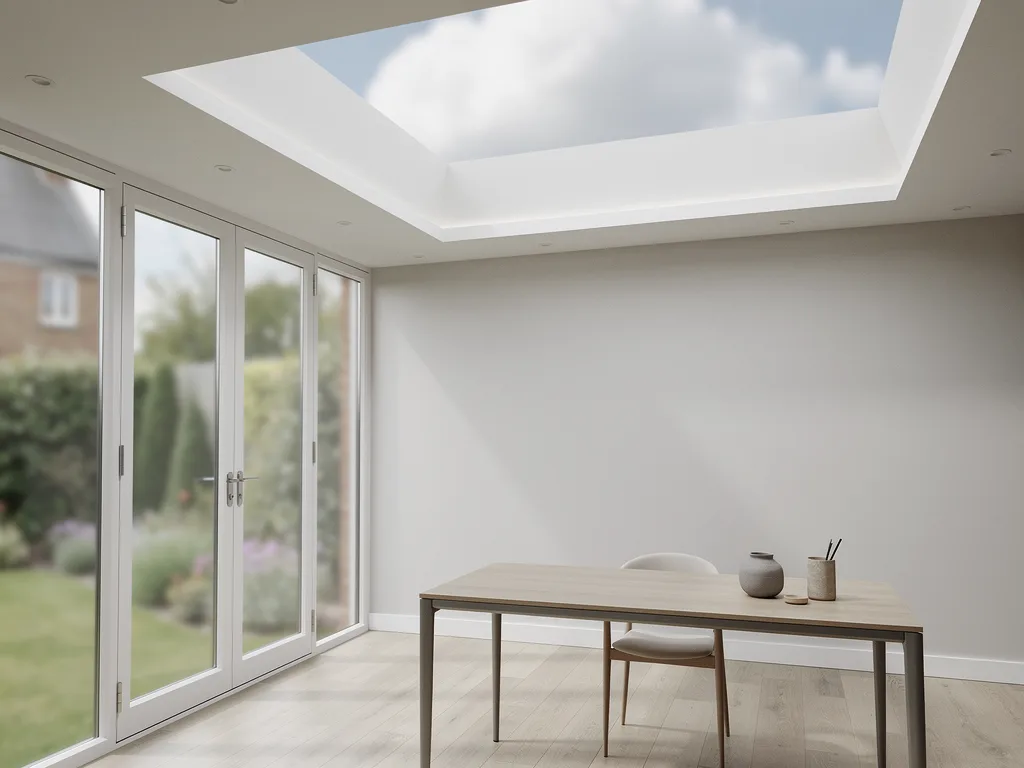 GuideWhat Part L of the Building Regulations Asks of a RooflightThe whole-unit U-value Part L sets for a rooflight, how new builds differ from replacements, and what Building Control actually checks.
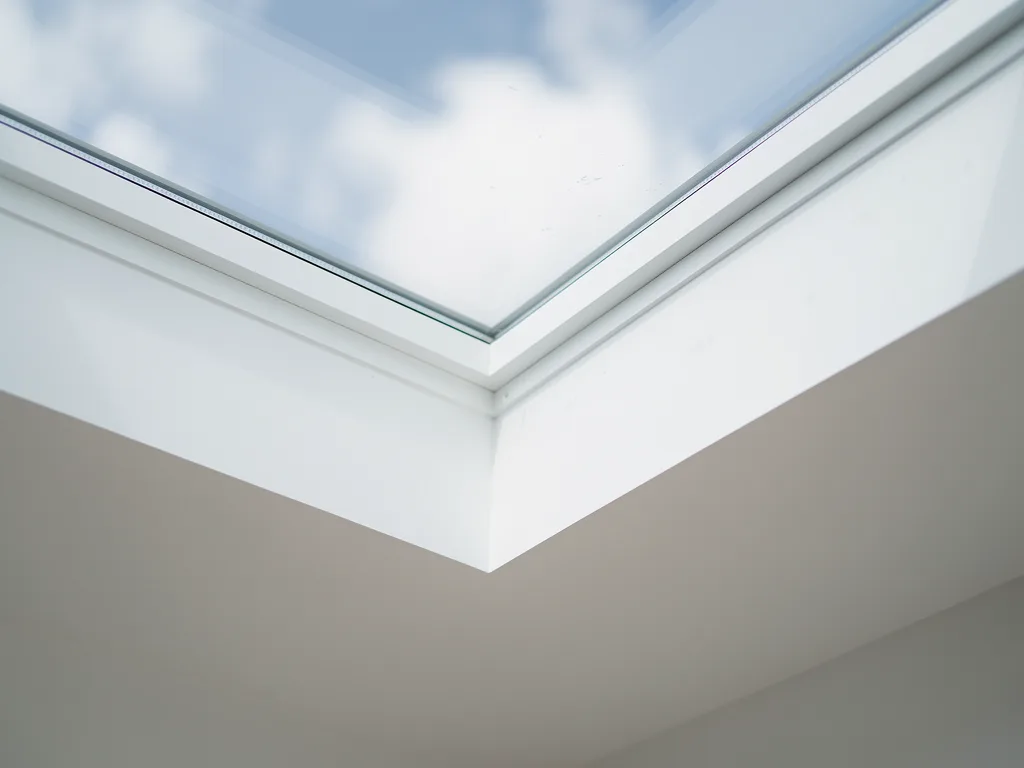 GuideThe Invisible Layers: Low-E Coatings and Gas-Filled GlassHow low-E coatings and argon fill keep a rooflight warm without dimming the clear sky you see from below.
 GuideWarm Edge Spacers: Keeping the Glass Edge ClearWhy the spacer between the panes decides whether the glass edge mists and how it changes the whole unit U-value.
Book a home visit
Tell us which room
- No obligation
- Sightline sketch included
- 10-year guarantee
Or call 01733 736163