Question · Flat roof rooflights
Will My Flat Rooflight Need a Planning Application?
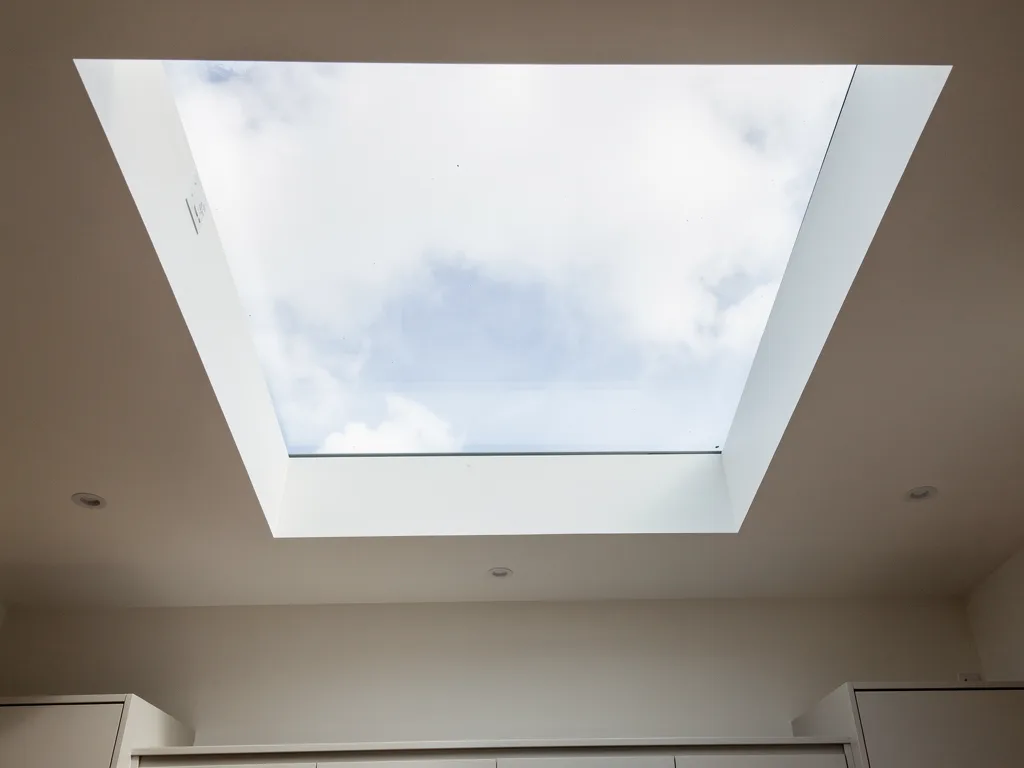
A house and a flat start from different rules
Permitted development, the general planning allowance that lets an owner alter a roof without applying first, is written for houses. A flat, a maisonette, or a house that has been converted into flats does not get that allowance for a rooflight, whatever the roof looks like. Anyone altering the roof of a flat needs a planning application, even for one modest pane sitting flush in an existing flat roof.
This catches people out on streets where every other building is a house. A pair of semis on the same road can start from completely different positions: the ground-floor owner fits a flat rooflight over a kitchen extension under permitted development, while their neighbour upstairs, in a converted flat, has to apply for the same size of glass in the same spot.
What permitted development allows on a house
On a house, permitted development lets an owner fit or replace a flat rooflight without applying, provided the work stays inside a short list of limits. Go outside them and the same rooflight needs an application, even though the building itself is unaffected.
| Condition | Limit |
|---|---|
| Protrusion above the roof plane | No more than 150mm |
| Height | Not higher than the highest part of the existing roof |
| Side-elevation glazing | Obscure glazed and non-opening below 1.7m where it faces a boundary |
A flat rooflight with a shallow upstand and a low kerb sits well inside the first two limits on a typical single-storey extension. The obscure-glazing condition matters more on a side return, where the glass looks down toward next door; it changes the specification of the glass, not the decision to apply.
An extension often decides the position before the rooflight does
Many flat rooflights are fitted into the roof of a single-storey rear extension, not into an older part of the house, so the extension's own planning history is the first thing worth checking. Where an extension was granted permission with a condition removing permitted development rights, or where the approved drawings already show the glazing, the rooflight follows that permission rather than the general rules for roof alterations set out above.
Where the extension carries no such condition, adding a rooflight to an existing flat roof afterwards is usually judged under the ordinary roof-alteration rules. The same applies whether the glass goes in on day one or is added years later, once the household finds the room darker than expected.
Older streets and conservation areas change the starting point
A conservation area does not, on its own, remove permitted development for a flat rooflight. A council can go further and place an Article 4 direction over a conservation area, a street, or a whole estate, taking away rights that would otherwise apply. Where a direction is in place, the same rooflight that would be permitted development elsewhere needs an application.
Article 4 directions of this kind are more often found over long-established streets and conservation areas, such as the stone terraces around Stamford, than over homes in Peterborough's newer townships. Either way, the address decides it, not an assumption drawn from the street.
Listed buildings need consent, not permitted development
Listed building consent is a separate approval that applies whether or not the same work would be permitted development on an unlisted house. Any alteration to a listed building's roof, including a single rooflight, needs consent, and often needs a full planning application alongside it. Fletton-brick terraces across the city are rarely listed, but the older stone buildings around Stamford and the Nene valley are worth checking before any drawing is done.
Building Regulations run whether or not planning does
A flat rooflight is notifiable work under the Building Regulations regardless of the planning route it takes. Permitted development, or a planning permission granted after an application, only answers the planning question: whether the local authority has agreed to the alteration. Neither route touches the structural strength around the opening, the thermal performance of the glass, or safety glazing overhead, all of which Building Control checks separately.
We handle the Building Control notification on every flat rooflight we fit, install to current Building Regulations, and back the finished work with a 10-year workmanship guarantee. Every quote also comes with a sightline sketch, a drawing of the view you will actually get from the room below, so the planning position and the view are settled at the same visit. For a sense of what the work itself involves, our flat roof rooflight installation page covers the full process, and the cost guide sets out what tends to move the price.
If you are not sure which route your roof falls under, book a home visit and we will check the address before any glass is ordered.
Questions people also ask
Does a flat above a shop or a converted house need planning permission for a rooflight?
Yes. A flat is a flat whatever sits below it or around it, so the house rules for permitted development do not apply, and a planning application is the usual route for a rooflight in its roof.
Do I need a new application to replace an old plastic dome with flat glass?
Often not, if the new unit fills the same opening and stays within the roof plane the original occupied. Where the earlier dome already sat outside those limits, or the building is a flat, replacing a domed rooflight with flat glass still needs an application.
Does a rooflight on a garage conversion follow the same rules?
Usually yes, once the garage belongs to a house, though converting the space itself can be a separate planning matter. A flat rooflight on a garage conversion is judged on the roof it sits on, not on the room's earlier use.
What about a rooflight over a dormer's flat roof?
A dormer's own construction is judged under its own rules, with its own limits on size and position. Adding a flat rooflight to a dormer roof once the dormer already exists is generally treated as an alteration to that finished roof, not as a new dormer.
Book a home visit
Tell us which room
- No obligation
- Sightline sketch included
- 10-year guarantee
Or call 01733 736163