Question · Misted and failed rooflight replacement
What Causes Rooflight Glass to Crack?
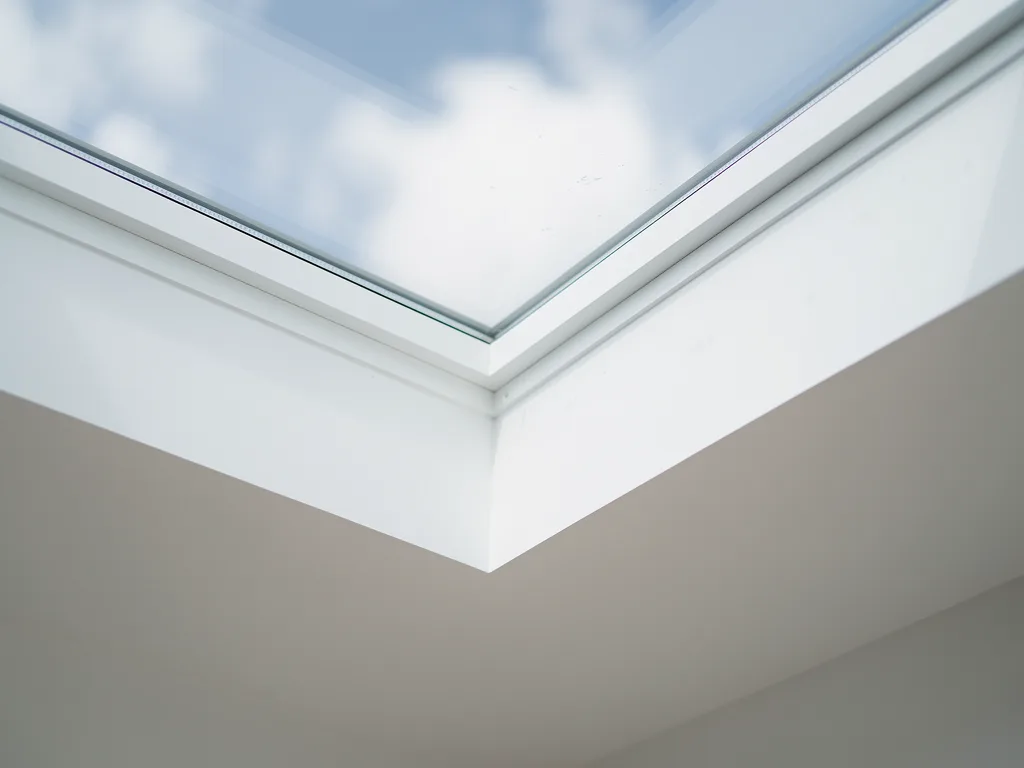
Three different things put a crack in the same pane
A cracked rooflight is usually blamed on the glass itself, but the glass is rarely the whole story. Thermal stress, impact and frame movement each leave a slightly different mark, and telling them apart matters, because the cause decides whether the fix is a new sealed unit on its own or a new frame underneath it too.
This page works through what each of the three actually does to the pane. For what follows once a crack has appeared, our guide to cracked rooflight glass replacement options covers making the opening safe and the routes to new glass. This answer stays with the mechanism: why the glass let go in the first place.
Thermal stress: when one part of the pane is hotter than another
Glass expands as it warms and contracts as it cools, and a pane that heats evenly across its whole surface handles that fine. A crack from thermal stress happens when one part of the pane is noticeably hotter than another part at the same moment, so one area is trying to expand while the area next to it is not, and the glass takes up that difference as tension along the edge.
A rooflight is more exposed to this than a wall window, because the edge of the pane sits shaded under the frame rebate or glazing bead while the centre of the same pane can sit in direct sun for hours. A few conditions make the gap between the two worse:
- a dark blind, film or coating fitted close to the glass, which holds heat against the pane rather than letting it pass through;
- partial shading across only part of the pane, from a chimney, a parapet or a nearby tree, so one half heats while the other stays cool;
- thicker glass, which takes longer to equalise once the sun moves and the shaded edge is left behind the heated centre;
- a sudden change in weather, such as cold rain hitting a pane that has been warmed by direct sun all afternoon.
Untoughened, or annealed, glass is the type most at risk here, since it has no built-in resistance to edge tension. Toughened glass is put under a controlled surface compression during manufacture specifically so it can absorb far more of this kind of stress before it cracks, which is one reason it is the standard specification for rooflight glazing overhead.
Impact: something striking the glass from outside or in
The more obvious cause is something hitting the pane: a slipped roof tile, a branch in a storm, hail, a dropped tool during roof work nearby, or a bird strike. Impact damage tends to start from a single point rather than an edge, spreading outward from wherever the strike landed, and it often shows as a spider's web of short cracks around that point rather than one clean line.
How the glass behaves once struck depends on its specification. Toughened glass is roughly four to five times stronger against impact than ordinary annealed glass of the same thickness, and when it does eventually fail, it fractures into a field of small, blunt fragments rather than long shards, which is why it is required by Building Regulations for glazing that people sit or lie beneath. Laminated glass, which bonds a plastic interlayer between two sheets, goes a step further: even where the glass does crack, the interlayer usually holds the fragments in place rather than letting them fall into the room.
A small edge chip picked up during manufacture, transport or fitting is a quieter version of the same cause. It rarely breaks anything on its own, but it leaves a point where stress concentrates far more than across the rest of the pane, so a chip that has sat unnoticed for months can be exactly where a later thermal or wind-load crack starts from.
Frame movement: when the frame stops leaving the glass to its own devices
Glass is designed to sit within its frame with a small amount of clearance and flexible setting blocks or gaskets around the edge, so the pane can expand, contract and flex slightly without the frame fighting it. A crack from frame movement happens when that clearance has gone, and the frame is gripping or twisting the glass instead of holding it.
A few situations bring this about in practice:
| What moves | Why it happens | Effect on the glass |
|---|---|---|
| Glazing bead | Over-tightened at fitting, or swollen with damp over time | Grips the pane edge with no clearance to flex |
| Timber frame or lining | Seasonal movement as timber dries and swells | Twists the rebate the glass sits in |
| Kerb or upstand | Settles unevenly on a flat roof over years | Puts the whole unit slightly out of square |
| Roof structure | New rafters or trusses settling after a loft conversion | Loads one corner of the frame more than the rest |
A crack from frame movement often runs close to and roughly parallel with one edge of the pane, rather than starting from a point of impact or reaching diagonally from a shaded corner. It is also the cause most likely to keep recurring: replace the glass alone without addressing what is gripping it, and a new pane set into the same rebate can crack again in time. Our guide to when a failed frame means full replacement sets out how a survey tells a sound frame from one that needs to come out with the glass.
What the crack itself tells a surveyor
Because the three causes leave different marks, a straightforward look at how a crack sits on the pane already narrows down what happened before anyone touches the frame. A single line running from a shaded edge toward the centre points toward thermal stress. A spreading, point-centred web points toward impact, and is worth checking against any recent roof work, weather or fallen debris. A crack running parallel to one edge, especially on a rooflight that has cracked before in the same spot, points toward the frame gripping the glass rather than the glass failing on its own.
None of that is a substitute for a proper survey, since more than one cause can be at work together, a thermally stressed pane that then takes a knock from hail being one common combination. What it does mean is that the pattern is rarely a mystery by the time someone experienced looks at it.
Choosing glass that resists the causes above
Whichever cause is behind a crack, the replacement is a chance to specify glass that resists it better than what failed. Toughened outer panes and laminated inner panes, set with proper clearance and modern setting blocks, address impact and thermal stress together, and a frame checked and corrected at the same time removes the third cause rather than leaving new glass to fight the same fight as the old. Our guide to choosing glass for a replacement unit covers that specification in full, and our page on replacing the glass unit or the whole rooflight covers the decision between the two routes once a survey has confirmed which cause applies.
Whatever is behind a crack overhead, it sits under our wider misted and failed rooflight replacement service, which treats cracked, misted and discoloured glass as one job rather than three separate calls. What actually drives the cost of putting it right, once the cause is known, is set out on our page about what affects the cost of a rooflight, and every quote comes with a sightline sketch showing the view the new glass will give back, not just the fault it is replacing.
We cover Peterborough and 30 miles around, from Fletton brick terraces in the city itself to the newer townships of Bretton, Orton, Werrington and Hampton, out to the stone roofs around Stamford and the flat Fen skies beyond. Book a home visit if a pane overhead has cracked, or message us on WhatsApp with a photograph and we can usually say which of the three causes is most likely before anyone comes out.
Questions people also ask
Can cold weather alone crack rooflight glass?
On its own, rarely. Cold sitting evenly across the whole pane behaves the same way heat does: no crack results from an even temperature, whatever that temperature is. The risk comes from a sudden difference, such as cold rain striking glass that direct sun has just warmed, rather than cold weather by itself.
Does a small crack always mean the whole pane will fail straight away?
Not always. A stable hairline crack in toughened glass can sit for some time without spreading, particularly if it has not reached the edge of the pane. It should still be treated as a priority rather than left, since it can also let go with no further warning.
Is a cracked rooflight always the fault of the glass itself?
No. A survey often finds the glass performed exactly as specified and the real cause sits in the frame, the fitting or an outside impact, which is why the frame is always checked alongside the pane rather than assumed to be blameless.
Does the pitch of the roof make cracking more or less likely?
A low-pitch or flat rooflight sits closer to overhead sun for more of the day than a steep roof window angled away from it, so uneven heating across the pane can be more pronounced. Frame and kerb movement, by contrast, depends more on what the rooflight sits on than the pitch itself.
Book a home visit
Tell us which room
- No obligation
- Sightline sketch included
- 10-year guarantee
Or call 01733 736163