Guide · Misted and failed rooflight replacement
Cracked Rooflight Glass: Replacement Options
From your bed or sofa a cracked pane is the one fault that cannot wait. Here is how the opening is made safe and which replacement route follows.
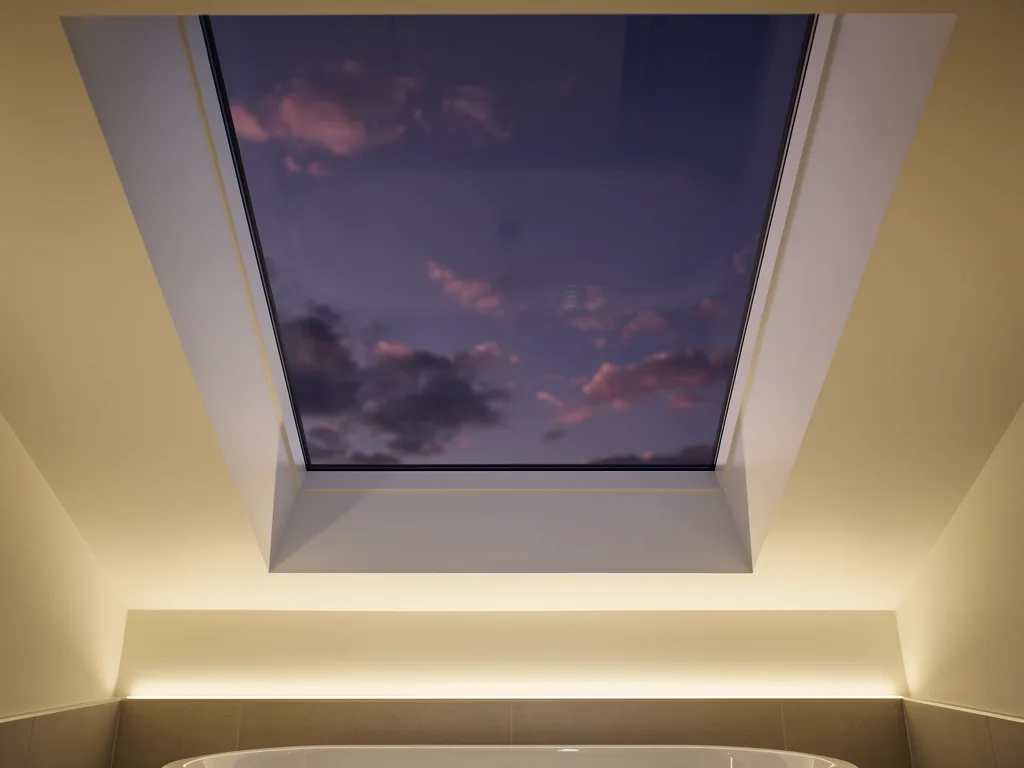
A cracked pane asks a different question than a misted one
A misted rooflight can usually wait for a convenient date. A cracked one cannot, because the glass overhead is no longer doing the one job it has: staying in one piece between the room and the weather. The question stops being "when is it worth sorting" and becomes "how soon can new glass go in, and what goes in its place."
This guide sets out what actually happens once a crack is confirmed: how the opening is made safe in the meantime, the two replacement routes available depending on the frame underneath, how the type of rooflight changes the visit, and what glass specification makes a repeat crack less likely. For the mechanism behind why glass cracks in the first place, our answer on what causes rooflight glass to crack covers thermal stress, impact and frame movement in detail. This page starts from the crack already being there and works through what follows. It sits under our wider misted and failed rooflight replacement service, which covers cracked, misted and discoloured glass together.
What a crack actually risks, and what it usually does not
Most rooflight glass fitted in the last twenty years or so is toughened on at least one pane, and toughened glass behaves in a particular way once it fails: rather than splitting into long shards, it tends to fracture into a field of small, blunt fragments held roughly in place by the frame and by the other pane in the sealed unit. A hairline crack in a toughened pane can sit stable for weeks. The same crack can also let go all at once, usually with no warning, and drop that fragment field into the room below.
What a crack does not usually mean is that the roof itself has failed, or that water is already coming in. A crack in the outer pane of a sealed unit can sit for a while without any leak at all, since the seal around the unit and the frame beneath it are separate from the glass itself. That is worth knowing before assuming the worst, and it is also why a crack still needs a proper look rather than a guess from a description over the phone: only a survey confirms whether the fracture has reached the edge seal, whether the frame is still holding its line, and whether the room below needs protecting today or can wait a short while for a fitting date.
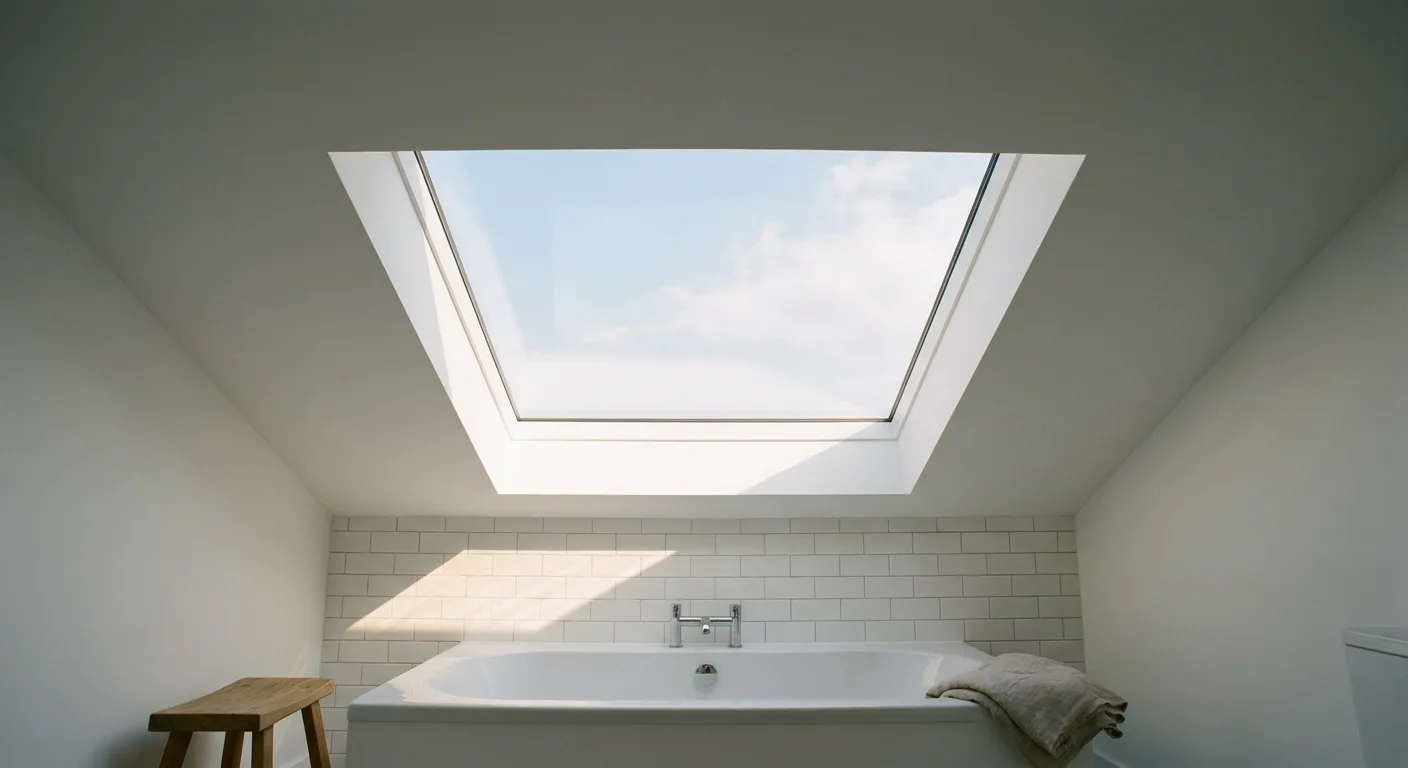
Making the opening safe until new glass goes in
Where a crack is confirmed and new glass cannot go in the same day, the priority is keeping the room below usable and the opening weathertight in between.
A cracked pane that is still holding together in its frame is usually left in place rather than removed early, since the fragments are doing more good staying put than coming out before a replacement is ready. Where the crack has reached the point of separating, or where wind or standing water is a real risk before the visit, the practical step is a temporary board or sheet fixed over the opening from above, sized to the kerb or frame rather than resting loose on the glass itself. The room below stays usable underneath a temporary cover; what changes is that the sky disappears from view until the new unit is in, which is the trade-off for keeping the space dry and safe in the meantime.
None of this is a fix in itself. It buys the time between the crack being confirmed and the new glass being fitted, and that gap is usually short rather than long, covered later in this guide.
Two routes once the crack is confirmed
A cracked pane raises the same fork in the road as a misted one: does the glass alone need to change, or does the frame around it need to come out too? A crack does not automatically point to one answer over the other; what decides it is the frame, not the fracture.
Where the frame is still square, still weathertight against the kerb or roof, and still a size and rebate depth that a current sealed unit can be made to fit, the cracked unit is lifted out and a new one glazed in on fresh seals, with the frame, kerb and lining around it left untouched. Where the frame has warped, corroded or is an old profile no current unit is made to match, the whole rooflight is renewed as one job rather than pressing new glass into a frame that will only shorten its life. Our guide to replacing the glass unit or the whole rooflight works through that decision in full; a crack simply moves the timeline, it does not change the logic.
What a crack does add to the survey, that a misted pane does not, is a check on how the fracture happened. A crack caused by an impact, a slipped roof tile or a dropped tool, tells the surveyor nothing about the frame. A crack that has appeared with no obvious impact, particularly one running along a straight line close to the frame's edge, is more often a sign the frame itself is gripping the glass too tightly somewhere, which points toward the whole-rooflight route rather than a straight pane swap.
How the type of rooflight changes the visit
The same crack means a different job depending on what it sits in, because the four common rooflight types hold their glass in different ways.
| Type | How the glass sits | What usually follows a crack |
|---|---|---|
| VELUX-style roof window | Sealed unit glazed into a factory sash | Pane or whole sash swap; see our guide on replacing misted VELUX glazing for how the sash is handled |
| Roof lantern | Individual panes set between glazing bars | Single pane lifted from its bar without disturbing the rest, as our guide to misted roof lantern panes sets out |
| Flat rooflight | Sealed unit set into an upstand or kerb | Unit lifted from the kerb; kerb itself usually reused, as covered in misted flat rooflights |
| Conservation or steel unit | Slim glazing bars set to a heritage profile | Matched to the existing bar spacing; see misted conservation and steel rooflights |
A roof lantern is worth a specific word here, because a crack in one pane of a lantern does not mean the whole roof comes off. Each pane sits in its own set of glazing bars, so a cracked pane on one hip or one flat can, in most designs, be lifted and replaced on its own while the rest of the lantern stays exactly as it was, sightlines and bar positions included.
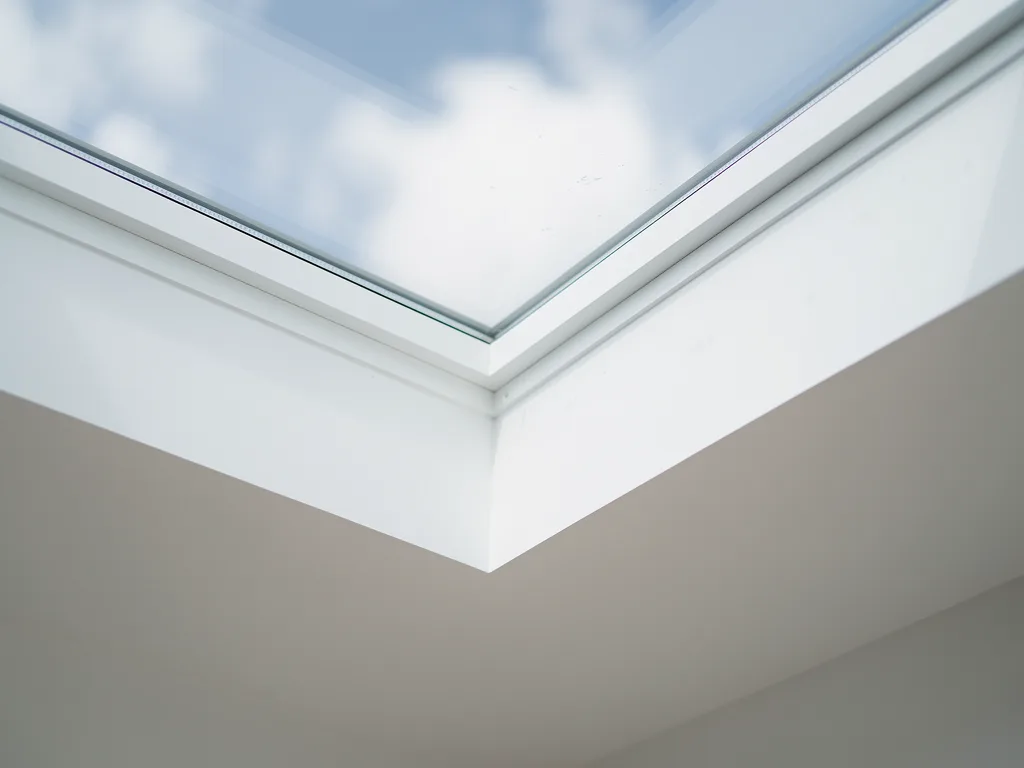
Choosing glass so the next crack is less likely
A cracked pane is also the moment to check that what goes back up is specified to resist whatever caused the first one, rather than simply matching the glass that failed.
Toughened glass is the standard choice for the outer pane of a rooflight sealed unit, since it is roughly four to five times stronger than ordinary annealed glass of the same thickness against impact, and it is required by Building Regulations for glazing overhead in most domestic situations regardless of what caused the last pane to fail. Laminated glass, which bonds a plastic interlayer between two sheets, adds a further property that matters most on rooflights people sit or lie directly under: if it does fracture, the interlayer holds the fragments together rather than letting them fall as a loose field into the room. Many replacement units now specify laminated glass on the inner pane for exactly that reason, toughened outer and laminated inner, so the two are working against different risks rather than duplicating each other.
Frame movement is the other half of the picture. Where the survey has found the frame gripping the glass too tightly at a fixing point, or a kerb that has settled unevenly, the new unit is set with fresh setting blocks and clearance around the edge, so the glass is carrying weather and wind load rather than load from a frame that has shifted underneath it. Our guide to choosing glass for a replacement unit covers the wider specification, including low-E coatings and how warmer glass affects the view from below, alongside the toughened and laminated question covered here.
How quickly it can actually be done
A cracked pane is treated as a priority booking rather than joining a general list, since the survey confirms whether the room needs protecting today. The survey itself, and any temporary cover it calls for, can usually happen within a day or two of the first call. The new glass takes longer, because a sealed unit made to the exact size and specification the frame needs is ordered rather than taken off a shelf, and that lead time is the main variable in how long the gap lasts. Our answer on how quickly a failed rooflight can be replaced sets out the typical stages from survey to fitting in more detail.
A frame that turns out to need full replacement rather than a glass-only swap generally adds to that timeline, since a whole rooflight, kerb and adaptor permitting, is a longer lead item than a pane on its own. That is one more reason the frame is checked properly at survey rather than assumed from the glass fault alone; ordering the wrong item because the frame was never looked at only stretches the wait further.
Building Control still applies to a cracked pane
Whether the job ends up as a glass-only swap or a full rooflight replacement, the new glazing is checked against the same standard either way: a limiting U-value under Approved Document L, assessed for the whole unit rather than the glass in isolation. A crack does not exempt the work from that notification simply because it started as an unplanned fault rather than a planned upgrade.
We handle the Building Control notification as part of the job in either case, so there is a proper record of the work rather than a gap that only shows up if the house is sold later. Our answer on whether Building Control is needed to replace a misted glass unit explains the notification itself; the same position applies whether the original fault was a cracked pane or a misted one.
What actually drives the cost of putting it right
The glass specification chosen, whether the frame needs replacing alongside it, and access for scaffold or a hoist on a steep or high roof are what move the price on the day, more than the fact that the original fault was a crack rather than mist. Our page on what affects the cost of a rooflight sets those factors out in general terms. Whichever route the survey confirms, every quote comes with a sightline sketch showing the view you will get back from the bed, sofa or worktop that matters, so the outcome is something you can see before any glass is ordered, not something taken on trust.
Questions that come up once a crack has been spotted
Is it safe to sleep in the room underneath a cracked rooflight?
Where the pane is toughened and the crack is stable, with no separating fragments and no pieces already loose, the room can usually stay in use until the survey. Where the crack runs edge to edge, or fragments are visibly lifting from the frame, the safer course is to keep the immediate area clear and get a temporary cover fitted rather than wait it out.
Does a cracked pane always mean the sealed unit has failed completely?
Not immediately. A crack in one pane of a sealed unit can sit for a while without the seal itself letting go, so the unit is not automatically misting yet. It will fail eventually, since a cracked pane is no longer sound glass, but the two faults, a crack and a failed seal, are checked separately rather than assumed to be the same problem.
Can just the cracked pane be replaced, or does the whole sealed unit have to change?
In almost every case the whole sealed unit changes, not just the cracked sheet within it. A sealed unit is built and bonded as one piece at the factory, spacer, seal and both panes together, so a crack in one sheet is a fault in the unit as a whole rather than something that can be swapped out on its own.
Will a replacement unit look different from what was there before?
Only if you choose it to. A replacement can be ordered to match the existing frame, bar spacing and appearance closely, or specified with a slimmer profile or clearer glass if the crack is being treated as a chance to improve the view rather than simply restore it. The sightline sketch that comes with the quote shows which you are getting before the glass is ordered.
We cover Peterborough and 30 miles around, from the Fletton brick terraces of the city itself, through the newer townships of Bretton, Orton, Werrington and Hampton, out to the stone roofs around Stamford and the flat Fen horizons beyond. Book a home visit if you have a cracked pane overhead, or message us on WhatsApp with a photograph of the crack and we will tell you, before anyone comes out, what it is likely to need.
Keep reading
 GuideMisted Flat RooflightsWhy a flat rooflight's low pitch and sun exposure mist the seal faster, and how the glass is replaced on the kerb.
 GuideWhen a Failed Frame Means Full ReplacementHow we tell whether a failed rooflight needs new glass or the whole frame replaced.
 GuideCondensation or Misting: Telling the Two ApartEveryday condensation clears on its own; a failed rooflight unit never does. Here is how to tell them apart.
Book a home visit
Tell us which room
- No obligation
- Sightline sketch included
- 10-year guarantee
Or call 01733 736163