Guide · Misted and failed rooflight replacement
Choosing Glass for a Replacement Unit
A failed unit is a chance to choose the glass afresh, not just match what is coming out. This guide works through the coatings, build-up and tints that change the view.
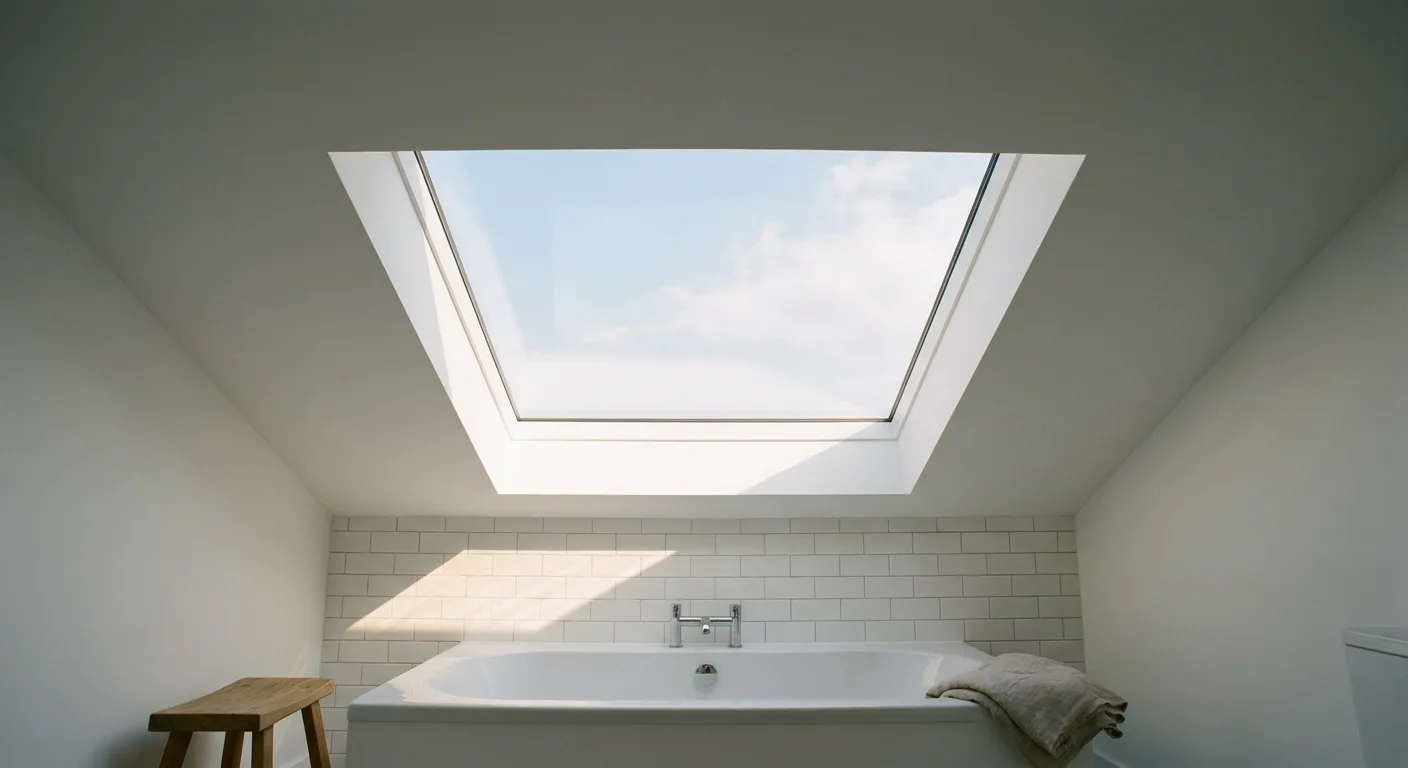
A replacement is a chance to specify, not just match
When a sealed unit has failed, the easiest instruction is "same again": order a pane the same size as the one coming out and move on. That gets a rooflight or skylight working again, but it skips the one moment in the life of a roof where the glass can be upgraded without opening anything else up. The kerb, the frame and the opening are already there; the only thing changing is what sits inside them, so the specification is worth thinking through properly rather than defaulting to whatever the original supplier happened to fit years ago.
The choices that matter fall into a short list: how many panes and what fills the gap between them, which panes are toughened or laminated, what coatings sit on which face, whether the outer surface should clean itself, and whether the new unit should read the same colour as its neighbours. None of that changes the size of the hole in the roof or the visit needed to fit it; it changes what the sky looks like once the new glass is in, and how long it goes on looking that way. Misted and failed rooflight replacement covers the wider decision of whether the glass alone or the whole rooflight needs to change; this guide assumes the frame is staying and works through what goes into the glass itself. Where the frame is also due for replacement, a slimmer profile is worth the same amount of thought: see Choosing Slimmer Frames When You Replace.
Double or triple: what sits behind the sightline
Every current sealed unit is built the same way in principle: two or three panes of glass held apart by a spacer bar around the edge, with the gap between them filled and sealed shut. What varies is how many panes, how wide the gap is, and what sits in it, and that build-up decides both the thermal performance and how deep a bar or rebate the unit needs to sit in.
A double-glazed unit is the standard specification for most replacement rooflights and skylights: two panes with a single sealed gap, usually 16 to 20 millimetres wide, filled with argon rather than ordinary air because the heavier gas conducts less heat across the gap. A triple-glazed unit adds a third pane and a second gap, which improves the thermal result again but adds real thickness and weight to the unit, sometimes enough that an older bar or glazing rebate cannot take it without alteration. That is worth checking against the frame before triple glazing is chosen for a replacement, rather than after the unit has already been ordered.
- An outer pane facing the weather, almost always toughened for safety and impact resistance
- One or two sealed gaps filled with argon, held apart by a warm-edge spacer rather than an older aluminium bar
- An inner pane, laminated where the unit sits over a room people use, so a break holds together rather than falling
- A desiccant inside the spacer bar, keeping the sealed gap dry for as long as the seal itself holds
The warm-edge spacer is a small detail that matters more than its size suggests. An older aluminium spacer bar conducts heat straight across the shortest route between the panes, which is exactly where condensation and mould are most likely to start on the inside face near the frame. A current warm-edge spacer, usually a composite or stainless steel section, cuts that cold bridge and keeps the edge of the glass closer in temperature to the centre of the pane. Mist Between the Panes: How a Rooflight Unit Fails goes through what happens once a spacer and its seal do eventually give way.
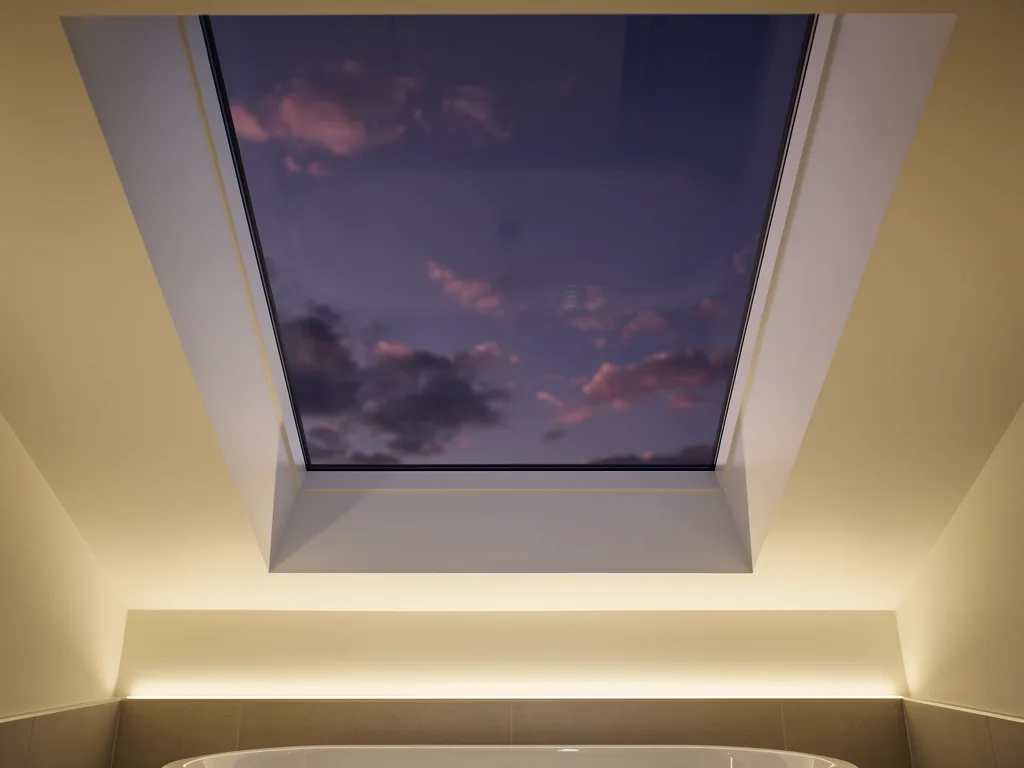
Toughened outer, laminated inner: the layer that has to be there
Glass fitted over a room people stand, sit or lie under is not the same specification as a window in a wall, and a replacement has to meet that standard even where the unit it is replacing did not.
The outer pane is toughened, meaning it has been heat treated so that an impact, from hail, a branch or debris in a storm, causes it to break into small, blunt fragments rather than long shards. The inner pane, facing into the room, is laminated: two thinner sheets of glass bonded either side of a clear interlayer, so that if it is ever struck or cracked it stays in one piece held by the interlayer rather than falling into the room below. Together they meet the standard expected of glazing installed at height over an occupied space, and a current replacement unit is built this way as a matter of course, whatever the original rooflight carried.
This is a specification point rather than a visible one. Toughened and laminated glass both look exactly like ordinary float glass from below; the difference is what happens if the pane is ever broken, not what the sky looks like on an ordinary day. It sits alongside, rather than instead of, the coatings and tints covered below, which are what actually change the view and the room's comfort.
Low-E coatings and where the heat actually goes
A pane of glass loses heat mostly by radiation, a warm room inside sending its heat out through the glass toward a cold sky, and a low-emissivity coating is what slows that down without changing what the glass looks like.
The coating itself is a microscopically thin metallic layer, applied to one face inside the sealed gap, so it never touches a cloth or the weather and cannot be cleaned off. It reflects long-wave heat back into the room while still letting the visible light of the sky through, which is why a low-E unit looks no different from an uncoated one from below but performs very differently in a cold roof space. A current replacement sealed unit carries a low-E coating as standard; the choice left is which face it sits on, and whether a second, solar-control layer is added alongside it.
| Coating | What it does | Effect on the view |
|---|---|---|
| Low-E (standard) | Reflects room heat back in | None, glass reads clear |
| Solar control tint | Cuts summer heat gain | A faint blue or bronze cast |
| Self-cleaning outer | Breaks down and sheds dirt | None once rinsed by rain |
| Acoustic laminate | Dampens sound transmission | None |
Where a room below a rooflight is heated and used through a Peterborough winter, whether a Fletton-brick terrace in the city or a converted loft in one of the newer townships, the low-E coating is doing real, continuous work even though nobody looking up ever sees it.
Solar control and tint: keeping the sky its own colour
A second coating, separate from low-E, can be added to cut down how much of the sun's heat comes through the glass on a hot day, and this is the one specification choice that does change what the sky looks like from below.
Solar control glass works by reflecting or absorbing part of the solar spectrum before it reaches the room, which matters most on a large flat rooflight or a lantern facing low, direct sun for long stretches of a summer afternoon. The trade-off is colour: a solar control coating can leave a faint blue, green or bronze tint across the pane, more visible on a bright day than a grey one, and stronger with some coatings than others. Neutral, low-reflectance coatings exist and cost more to specify, but they keep the sky reading as its own colour rather than through a filter, which matters on a rooflight far more than on a vertical window, because the sky itself is what is being framed.
Where glare rather than heat is the concern, a lighter specification such as a fritted or ceramic-printed pattern on part of the pane can cut direct sun without tinting the whole sheet, though that is a less common choice on a domestic replacement than a straightforward solar control coating.
A self-cleaning outer face for a low pitch
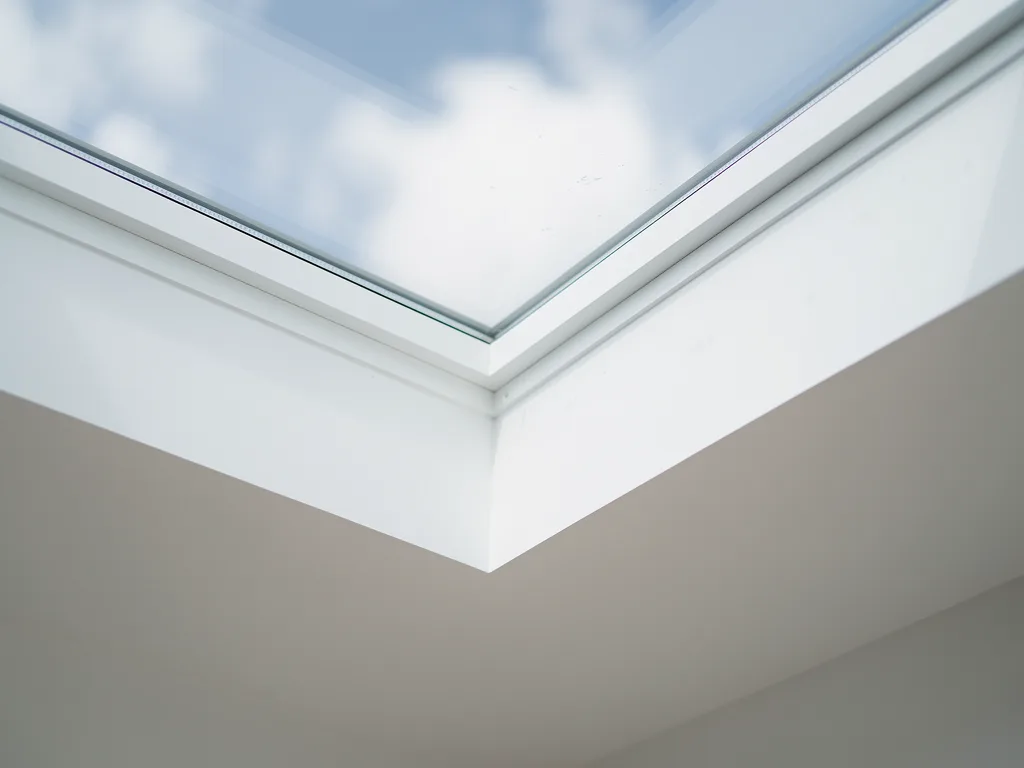
The flatter a rooflight sits, the more directly rain lands on it rather than running off, and the more dirt, algae and the mineral residue left by evaporating rainwater tend to build up on the outer pane.
A self-cleaning coating on the outer face works in two ways at once: a photocatalytic layer uses daylight to break down organic dirt sitting on the glass, and a hydrophilic surface makes rainwater spread into a thin sheet rather than forming beads, so it rinses the loosened dirt away in a wash rather than leaving droplet marks to dry. On a flat rooflight built to the usual minimum fall of 1:80, or on a lantern's shallower outer pitches, that coating does real work between cleans that a plain outer pane cannot. On a steep roof window, where rain already runs off quickly and a person can reach the glass more easily, the coating matters less.
Discoloured and Yellowed Plastic Skylights covers what happens to an old polycarbonate dome that never had this option at all; moving to a coated glass unit is one of the clearest upgrades available on that kind of extension roof.
Matching a new pane to the ones beside it
Where the failed unit is one of several, in a lantern, a run of rooflights on the same extension roof, or a pair of roof windows either side of a chimney, the new glass is judged against its neighbours, not on its own.
A tint, a coating or even a different glass thickness can leave a new pane reading as a slightly different colour of sky from the panes fitted years earlier alongside it, especially under flat daylight rather than bright sun. Matching means checking the existing panes' specification at survey stage wherever it can be established, from the original order, a visible edge marking on the spacer bar, or simply comparing colour and reflectivity by eye, and then choosing a like specification for the new unit rather than whatever happens to be the current standard product.
Misted Roof Lantern Panes covers this in more detail for a lantern specifically, where every pane sits under the same eye and a mismatch is compared pane to pane. On a slim conservation-style rooflight, the profile itself, not only the glass, is part of what has to match; Misted Conservation and Steel Rooflights covers ordering a slim replacement to the original's rebate around Stamford and the stone villages toward the Nene valley.
Obscure and acoustic glass for a particular room
Not every replacement is about clarity. A rooflight over a bathroom, an en-suite or a stairwell close to a neighbour's window sometimes needs privacy more than an unbroken view of the sky, and a rooflight near a busy road sometimes needs to cut noise more than heat.
Obscure glass for a rooflight is usually a textured or acid-etched inner pane, which scatters the view without blocking the light, so the room still reads as bright while the detail of anything below or above it is broken up. It is chosen at the same specification stage as everything else, since it changes only one pane of the build-up and does not affect toughening, lamination or the low-E coating. Acoustic glass works differently, through a thicker laminated interlayer or an asymmetric arrangement of pane thicknesses either side of the gap, which disrupts the way sound waves pass through the unit rather than dulling the light. Both are less common requests than a plain replacement, but either can be specified into a like-for-like sized unit without any change to the frame or the kerb.
Meeting current Building Regulations when you reglaze
A replacement sealed unit has to clear a thermal standard even where nothing else about the rooflight is changing, and that standard is one of the few numbers worth knowing before a specification is agreed.
Approved Document L sets a limiting U-value of 2.2 W/m²K for a replacement rooflight in an existing home, measured for the whole unit rather than the glass in isolation. A current double-glazed unit with a low-E coating, argon fill and a warm-edge spacer clears that figure comfortably in most cases, which is one reason a straightforward like-for-like glass swap still counts as notifiable work: the pane going in has to meet today's standard, not simply match the one coming out. Do I need Building Control to replace a misted glass unit? sets this out for a glass-only job specifically.
We handle the Building Control notification on every job where the work is notifiable, so the specification chosen and the paperwork confirming it match up, rather than leaving a gap that only surfaces if the house is sold on. That sits alongside a 10-year workmanship guarantee on the fitting itself, regardless of which glass specification is chosen.
Getting the specification onto the order, not left to the day
None of these choices are things to decide once the fitter is already on the roof; a sealed unit is made to order, to an exact size and a fixed specification, so the decision has to happen before it goes to the manufacturer.
A home visit measures the opening, the bar depth and the pane shape, and it is also where the specification questions above get answered against the actual room: how much sun the pitch gets, whether the pane sits beside others that need matching, whether privacy or noise matters more than an open view, and whether the existing frame can take a thicker triple-glazed build-up if that is wanted. Every quote comes with a sightline sketch, a drawn view from the bed, sofa or worktop that matters in that room, so the specification chosen can be seen against the actual sky it will frame before anything is ordered, not discovered for the first time once the new glass is in.
What moves the price of a like-for-like glass swap up or down, from double to triple glazing, a solar control coating or a self-cleaning outer face, is set out on What Affects the Cost of a Rooflight. Can an opening rooflight be replaced with a fixed one? covers a related decision worth raising at the same visit, where an old vent has become the weak point in the seal. Get in touch to book a home visit, or message us on WhatsApp with the make and size of the rooflight if you have it, and the specification can be worked through from there.
Questions before you commit to a specification
Can I choose a different specification from the one that failed?
Yes. A replacement does not have to match the original build-up; it has to fit the same opening and bar depth. Moving from a plain double-glazed unit to one with a solar control or self-cleaning coating, or from double to triple glazing where the frame allows it, is a specification decision made fresh at survey stage.
Does triple glazing always fit an existing frame?
Not always. A triple-glazed unit is thicker than a double-glazed one, and an older bar or glazing rebate built for a thinner pane may not take it without alteration to the frame itself. That is checked against the actual bar depth before triple glazing is specified, rather than assumed.
Does a tinted or solar control pane change how the room feels?
It can. A solar control coating cuts heat gain, but some coatings leave a visible blue, green or bronze cast on the glass, more obvious on a bright day, which changes the colour the sky reads as from below. A neutral, low-reflectance coating avoids that at extra cost, and it is worth seeing a sample before choosing.
Do obscure or acoustic glass options add time to the fitting?
No. Both are specified into the same sealed unit as everything else and made to the same size, so the fitting visit itself is unaffected. The difference is in what is ordered from the manufacturer, not in how the job is carried out on the day.
Keep reading
 GuideChoosing a Slimmer Frame When You Replace a RooflightA failed rooflight is the moment to choose a slimmer frame, fewer bars and a wider view of the sky.
 GuideMisted Flat RooflightsWhy a flat rooflight's low pitch and sun exposure mist the seal faster, and how the glass is replaced on the kerb.
 GuideWhen a Failed Frame Means Full ReplacementHow we tell whether a failed rooflight needs new glass or the whole frame replaced.
Book a home visit
Tell us which room
- No obligation
- Sightline sketch included
- 10-year guarantee
Or call 01733 736163