Guide · Misted and failed rooflight replacement
Misted Flat Rooflights
Flat rooflights sit almost horizontal, so sun and standing water wear the seal faster than on a pitched window. Here is why, and how the glass is replaced on the kerb beneath it.
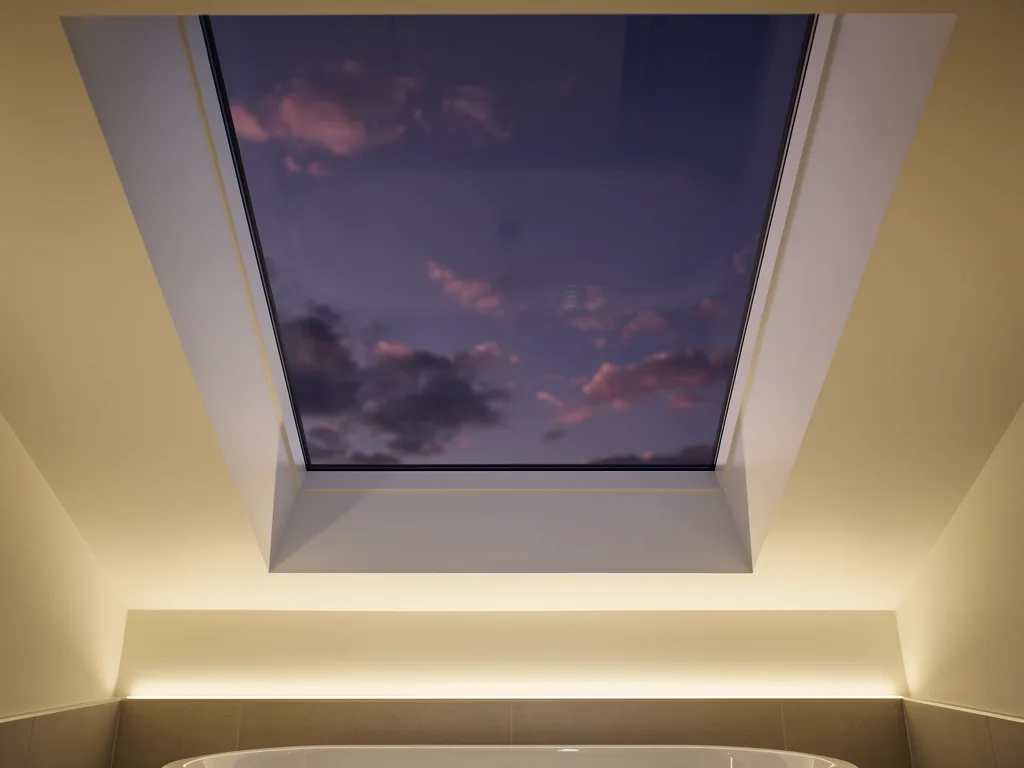
A rooflight built almost flat, and what that does to its working life
A flat rooflight sits close to horizontal rather than propped into a roof slope, and that single fact about its geometry decides most of what goes wrong with it later. Rain lies on the glass longer than it does on a pitched roof window, the sun hits the pane square on for most of the day rather than glancing across it, and the whole unit is exposed to the sky in a way nothing else in the house is.
Most flat rooflights sit above a single-storey extension, a garage conversion or a dormer that has been built out flat rather than pitched, and the glass is usually the newer, bar-free flush style: one continuous sheet across the opening rather than a grid of aluminium bars, which is what the older generation of flat rooflights tended to use. That change in style has not changed the physics underneath it. Whatever the frame looks like from below, the sealed unit itself is still asked to survive standing water, direct overhead sun and, in winter, some of the coldest radiant nights any glass in the house sees, since a flat pane loses heat straight up to a clear sky with nothing to shield it.
The kerb underneath: the part that outlasts the glass
Below the frame and the glass sits a part rarely thought about until a replacement is being planned: the kerb, an insulated upstand built on the roof deck that raises the rooflight clear of the flat roof covering and gives the glazing something square and weathertight to sit on.
A kerb is usually timber, built up and boxed in, or a factory-made GRP unit, either fixed directly to the joists or bedded onto the existing roof structure with the felt or single-ply membrane dressed up and over it. The rooflight's frame then sits on top, clipped, screwed or bonded to the kerb depending on the make, with a weathering skirt carrying the roof covering up to meet it. Done properly, that kerb has almost nothing that can wear out: no seal exposed to the weather, no moving part, just an insulated box doing a structural job.
That is why, on the great majority of flat rooflight jobs, the kerb is still perfectly sound when the glass on top of it has failed. The two parts age at completely different rates, which is the single most useful thing to know before assuming a misted pane means a bigger job than it is.
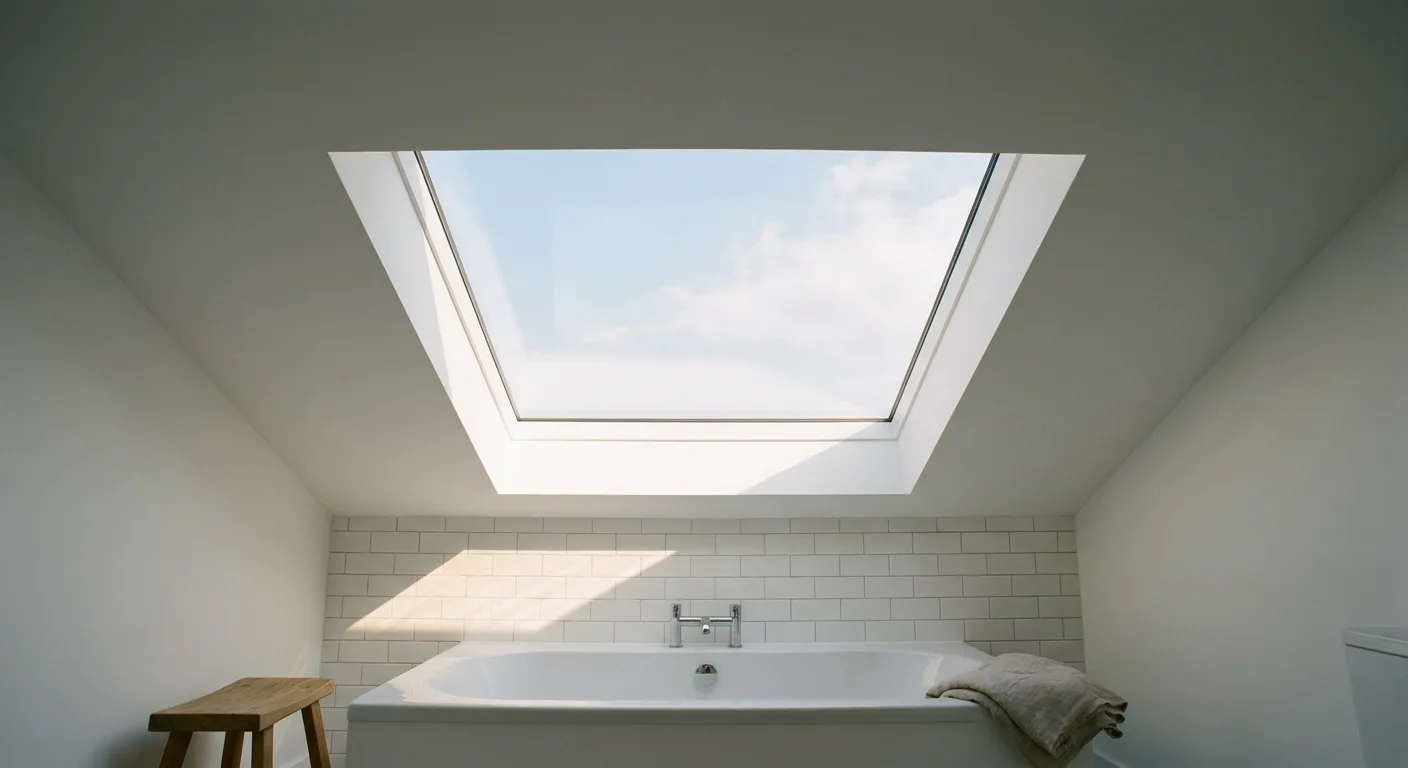
Why the seal usually goes here before it goes on a pitched window
The edge seal inside a sealed unit is a ring of spacer bar and sealant holding two or three panes of glass apart and dry. How that seal fails and lets mist between the panes is the same mechanism whatever the rooflight's shape, but a flat rooflight puts more strain on it, faster.
Facing straight up rather than out to a side elevation, the outer pane heats hard through the middle of the day and cools fast the moment cloud crosses the sun, cycling the spacer bar and the glass through more expansion and contraction than a vertical window ever sees. Any standing water sitting on a shallow fall adds a further load: damp held against the frame and the edge of the glazing for longer after every shower, working at the same joint the sun has already been stressing. Neither of those things causes a sudden failure. Both simply use up the seal's working life faster than a steeper pitch would, which is why flat rooflights are so often the first in a house to show a misted pane.
Reading the signs correctly before anything is booked
Not every mark on a flat rooflight means the sealed unit has failed, and it is worth checking which part is actually at fault before assuming the worst.
- A haze that sits inside the glass and never lifts, whatever the weather: the sealed unit itself, covered by the early signs of a failing edge seal.
- A film on the room-side face of the glass on a cold morning that clears by lunchtime: ordinary surface condensation, not a fault in the unit at all.
- A damp line or a soft patch in the plaster around the base of the kerb, rather than on the glass: the kerb or its weathering, not the glass above it.
- A crack that appeared after a storm or a fallen branch, rather than a haze that has built up over months: covered separately as broken glass, not a misted seal.
Getting this right before anything is ordered matters, because a misted pane calls for a new sealed unit on the existing kerb, while a damp patch at the kerb line usually calls for the weathering to be renewed instead, and ordering the wrong one wastes a visit and the cost of the wrong part.
What decides whether the kerb is touched at all
Whether a job is glass-only or a full replacement comes down almost entirely to the kerb's own condition on a flat rooflight, rather than to the frame the way it might on a lantern or a roof window.
A kerb that is still square, still dry inside its insulation and still carrying its weathering skirt correctly can usually take a new sealed unit straight onto it, with the frame simply reset or exchanged for a matching one from the same maker. Where the timber has swollen, split or rotted, where the insulation inside a boxed kerb has settled or gone damp, or where the kerb's top dimension no longer matches anything currently made, the kerb itself is part of the job, either rebuilt in the same position or replaced with a current insulated unit sized to take a new rooflight. The checks that decide a full replacement on any rooflight apply here too, with the kerb standing in for the frame as the part being assessed.
| What we find | Kerb | What happens |
|---|---|---|
| Misted seal, sound kerb | Dry, square, correct height | New sealed unit on existing kerb |
| Misted seal, settled kerb | Insulation damp or timber soft | Kerb rebuilt, new glass on top |
| Damp at kerb base, clear glass | Weathering skirt has failed | Weathering renewed, glass untouched |
| Old bar-grid unit, kerb sound | Dry, correct height | Bar-free glass fitted to same kerb |

Ordering a pane to fit a kerb that was built years ago
Flat rooflight kerb sizes have never followed one single national standard the way, say, a brick is sized, so a kerb built for an extension years ago will not always match a current maker's stock rooflight size exactly.
Where the kerb's top measurement is close to a size still made, the new unit is ordered to match it directly. Where it sits between sizes, or the upstand height has changed since the roof covering was last renewed, an adaptor kerb, a shallow timber or GRP ring built to bridge the difference, lets a current rooflight sit correctly on an older opening without disturbing the roof deck itself. Either way, the kerb's exact top dimension, its height above the finished roof surface and the direction of its fall are all taken on the home visit itself, because a sealed unit ordered even a few millimetres out will not weather correctly once it is bedded down.
Where the existing rooflight is one of the older bar-grid designs, moving to a current flush, bar-free unit on the same kerb is usually straightforward, and it is worth asking about at the same time as a misted pane is being replaced, since a slimmer current frame profile often opens up more sky than the original ever gave, without any change to the kerb below it.
Choosing glass for a pane that faces the sky flat-on
A flat rooflight's glass has a harder job than a pitched window's, so the specification is worth thinking through properly rather than simply matching what failed.
Choosing glass for a replacement unit covers the full range, but two things matter more on a flat rooflight than anywhere else on the roof. A self-cleaning outer coating, which uses daylight and rain together to break down and rinse off surface dirt, earns its keep here because a shallow fall leaves grime sitting on the glass longer between washes than a steep pitch would. And a neutral, warm-edge low-emissivity coating keeps the sky reading as its own colour from below; some solar control coatings, more often specified on flat glazing to manage heat gain, cast a blue or bronze tint across the view that is worth seeing described, or seeing a sample of, before it goes on the roof.
Toughened glass on the outer pane and a laminated inner pane are the baseline for any overhead glazing, flat rooflights included, since the glass sits directly above a room people use every day. None of that changes because the roof is flat rather than pitched; it simply matters more, because the glass is doing more work over its life than the equivalent pane in a roof slope.
The fall that keeps the next pane clear for longer
Building Regulations set a minimum fall of 1:80 for a flat rooflight so water runs off the glass rather than pooling on it, and that fall is worth checking rather than assuming, particularly on an older extension roof.
A rooflight built to a shallower fall than that, or one that has settled slightly over the years so water now gathers at one edge, will hold standing water against the frame and the edge seal for longer after every shower, which is exactly the load that shortens a seal's life in the first place. Where a kerb is being rebuilt anyway because of a failed unit, correcting the fall with a tapered insulation layer or a reset upstand is a small addition to the job that reduces the same strain on the next sealed unit. Where the kerb is sound and only the glass is moving, the existing fall stays as it is, and the new unit is simply set to match it.
Building Control and the standard the new pane has to meet
Whether Building Control needs telling about a glass-only replacement comes up on almost every flat rooflight job, because the answer is usually yes even where nothing about the kerb or the opening changes.
A replacement rooflight, glass-only or whole unit, has to meet a current limiting U-value under Approved Document L, measured across the whole assembly rather than the glass alone, so a straight swap still counts as notifiable work even on a job that looks routine from the ground. We handle that notification on every job where it applies, so there is a proper record of the work rather than a gap that only surfaces if the house is sold later. We install to current Building Regulations throughout, and every installation carries a 10-year workmanship guarantee from the date it goes in.
From a misted pane to a clear one, without disturbing the roof around it
Most flat rooflight replacements are quick precisely because the kerb has already done its job for years and needs nothing more than a check.
- A home visit to look at the glass, the kerb and its weathering, and take exact measurements of the kerb top, its height and its fall.
- Confirming whether the kerb needs any attention at all, or whether the job is glass-only.
- Ordering the sealed unit, made to the kerb's actual size rather than a stock assumption, which carries a lead time from the maker.
- Fitting day: the old unit and frame come off, the kerb and its weathering are checked and made good, and the new glass and frame are set and sealed.
Where the kerb is sound, the roof covering around it is barely disturbed, and the room below usually needs nothing more than dust sheets for the day. Every quote comes with a sightline sketch showing the sky you will see from the sofa, the desk or the bed once the new glass is in, and what tends to affect the cost of a rooflight sets out how kerb condition, glass specification and access on the day change the figure. For a new flat rooflight fitted where there is not one already, our flat roof rooflight installation page covers that as a first fitting rather than a replacement, and the full picture on misted and failed glass across every type of rooflight sits on our misted and failed rooflight replacement page.
Before a flat rooflight glazier comes out to a misted pane
Does a misted flat rooflight always mean the kerb has failed too?
No. The kerb and the sealed unit on top of it age at very different rates, and the kerb is typically still sound when the glass has misted. It is checked on every visit precisely because it is hidden under the frame, not because it is usually the cause.
Can a flush, bar-free pane be fitted to an older kerb that had a bar-grid rooflight on it?
Generally yes, provided the kerb's top dimension and height are confirmed on the visit. The kerb is what carries the load and sets the size; the style of frame and glass sitting on it can usually change without touching the kerb underneath.
Why does standing water on the glass matter if the seal is what actually fails?
Standing water sits against the frame and the edge of the sealed unit for longer after rain, adding damp exposure on top of the heat cycling the glass already goes through in direct sun. Neither is the sole cause of a failed seal, but together they explain why flat rooflights tend to mist sooner than pitched roof windows of the same age.
Is a self-cleaning coating worth it on a flat rooflight specifically?
It tends to matter more here than on a steep roof window, since a shallow fall leaves dirt and residue on the glass for longer between rinses from rain. It changes how clean the pane stays between washes, not the life of the seal underneath it.
Keep reading
 GuideReplacing Misted VELUX GlazingHow a misted VELUX-style roof window is reglazed, or the sash renewed, without disturbing the flashing.
 GuideMisted Roof Lantern PanesWhy a single misted pane in a roof lantern can be replaced on its own, without disturbing the glass around it.
 GuideCracked Rooflight Glass: Replacement OptionsWhat to do when rooflight glass cracks, and the replacement options once the frame has been checked.
Book a home visit
Tell us which room
- No obligation
- Sightline sketch included
- 10-year guarantee
Or call 01733 736163