Guide · Misted and failed rooflight replacement
Failed Edge Seals: How to Spot Them Early
Before a rooflight mists over for good, the seal usually gives some early tells: a haze that comes and goes, a smear that will not wipe off, a faint colour at the edge. Here is what to look for, and when to act.
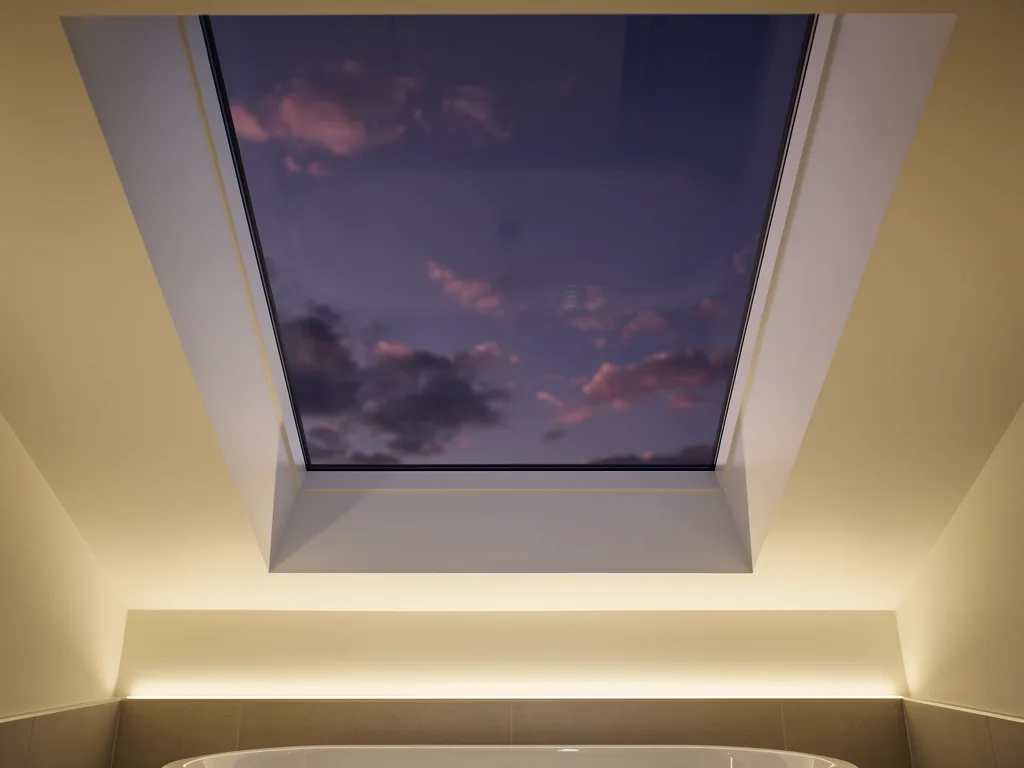
The haze that isn't there by noon
A failed edge seal on a rooflight rarely turns a pane properly grey overnight. In its first months it behaves more like the weather than a fault: a faint haze low in one corner on a cold, still morning, gone by the time the room has warmed, and back again the next time the temperature drops. That coming and going is itself the tell. A pane that is permanently clouded has already finished failing. A pane that clouds and clears is still in the early stage, and that is the stage worth catching.
The reason it clears is the same reason it appears in the first place. Every sealed unit has a strip of desiccant, a moisture-absorbing granule, packed into the spacer bar that separates the panes. While the seal around that spacer is intact, no water vapour gets near the desiccant and the space between the panes stays bone dry. Once the seal starts to let vapour through, small amounts cross overnight, especially on a rooflight, which loses heat to a clear sky faster than a wall window ever does. The desiccant mops that vapour up and the haze disappears as the day warms. It can keep coping for a long time before it cannot cope any more, and that is exactly why the early sign looks so unremarkable: a slightly misty corner at breakfast that has gone by the time you clear the plates.
It is easy to notice it two or three times before mentioning it to anyone, because by mid-morning the room looks completely normal. That delay is understandable, but it is worth acting on the first pattern rather than the tenth, because the options at this stage are still wide. See Replacing the Glass Unit or the Whole Rooflight for what changes once the desiccant is exhausted for good.
Where the seal actually lives
The part that fails is a manufactured strip running round the inside edge of the glass, not a smear of sealant dabbed on afterwards. An aluminium or foam spacer bar sits between the two panes, holds them the right distance apart, and carries the desiccant inside it. A primary seal, usually a butyl compound, bonds that spacer to the glass and stops vapour crossing at the join. A secondary seal, often silicone or polysulphide, sits outside that and takes the weight of the wind and the sun. Between them, these seals are what makes a "sealed unit" sealed.
The weakest point is not the middle of a long edge. It is the corner, where the spacer bar is mitred and joined, and where the seal has to turn a right angle rather than run in a straight line. That joint does more work than any other part of the perimeter, which is why the first sign nearly always shows in a corner rather than spread evenly across the pane. If you are checking a rooflight for early signs, start at the four corners and work inward, not the other way round.
On a flat rooflight the corner nearest the lowest point of the fall is worth extra attention, since that is where any standing moisture on the roof covering sits longest against the kerb. On a pitched roof window, the bottom two corners of the pane, closest to the eaves side of the frame, tend to show it first.
A triple-glazed unit has two spacer assemblies rather than one, one between the outer and middle panes and another between the middle and inner pane, and each has its own pair of seals. One can fail before the other, so a corner that looks slightly different in colour from the rest of that same corner on a triple unit is worth a second look rather than being dismissed as a trick of the light.
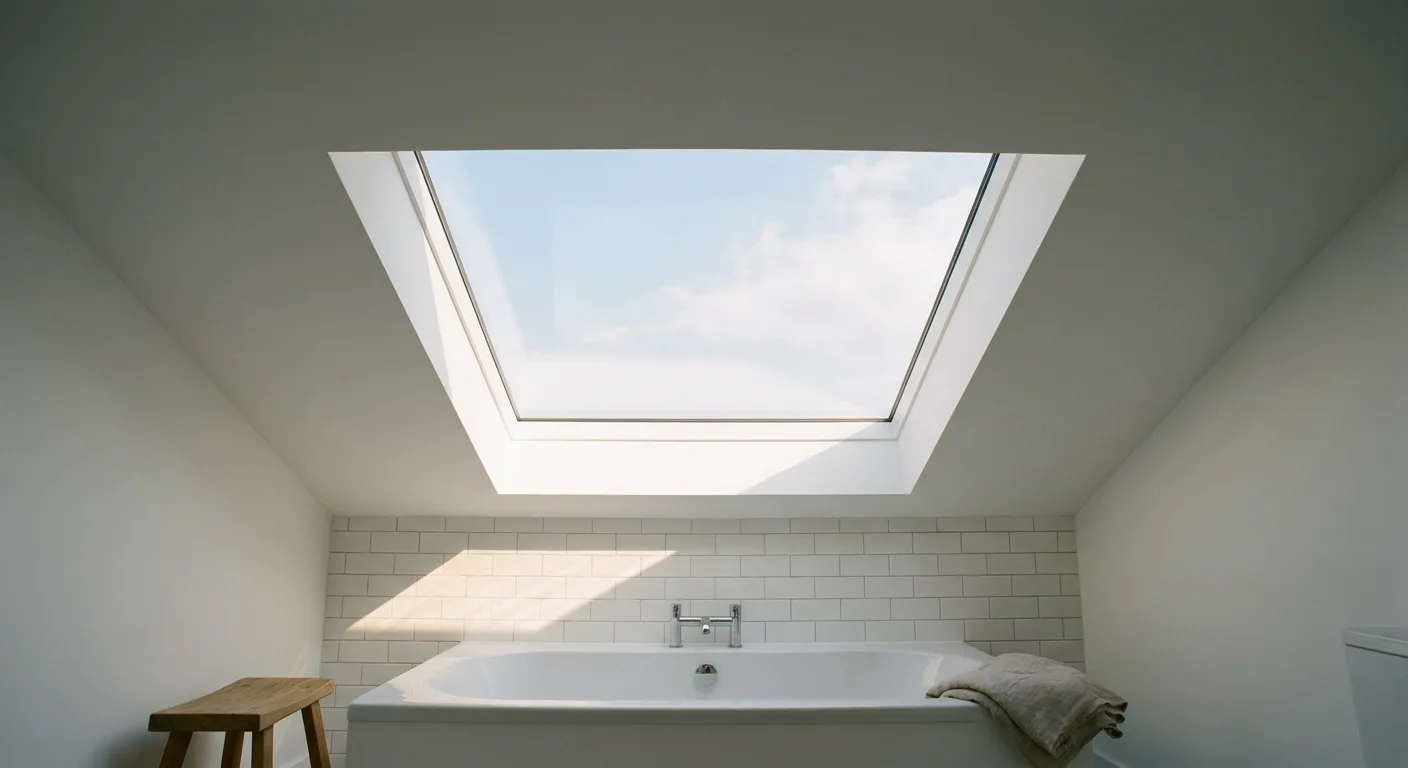
The wipe test that tells you which side
A misted-looking pane is not always a failed seal. Surface condensation on the room-side face, caused by a warm, damp room meeting cold glass, looks similar from a distance and clears completely with a cloth. A failed seal does not, because the moisture is inside the unit, not on either surface. A short test settles the question before you decide whether it needs a survey or just better ventilation.
- Notice the haze when it is at its worst, usually first thing on a cold morning, before touching the glass.
- Wipe the inside, room-side face with a dry cloth, using a pole if the rooflight is out of reach.
- If the outside face is safely visible, from a loft hatch or from ground level with a good torch, check whether it clears there too once the surface warms.
- If the film wipes away on the inside face, it was surface condensation. If it sits exactly where it was on both attempts, it is between the panes.
For the fuller version of this distinction, including what it means for insulation and heat loss, see Condensation or Misting: Telling the Two Apart.
A faint colour at the edge, not a rainbow across the whole pane
Before a unit clouds evenly, the first trace of moisture sitting inside the glass can show as a thin band of colour rather than grey haze: a pale straw tint, or a faint blue or violet sheen, running along one edge where the spacer sits. It happens because a very thin film of moisture between two close surfaces bends light unevenly, the same effect that makes a puddle with a trace of oil on it show colour. Look for it in low, angled sun, early or late in the day, when it catches the light rather than being washed out by it.
This is a different thing from the rainbow-like sheen some rooflight glass shows across its whole surface all the time, caused by coatings applied at manufacture rather than by failure. That effect does not move, does not grow, and is present in every light. A seal failure's colour band sits only at the edge, and if you check again in a few weeks it will usually have crept a little further toward the centre of the pane. If you are unsure which you are looking at, Why is my rooflight glass rainbow-coloured? covers the harmless version in more detail.
Beads instead of haze
Further along, the pattern changes from an even mist to a line of tiny individual droplets, usually strung along the inside edge nearest the spacer bar rather than scattered across the whole pane. This is what it looks like once the desiccant's capacity is used up: instead of soaking up vapour overnight and releasing it as the day warms, moisture is now condensing as visible water directly onto the coldest part of the inner pane surface, which is the strip closest to the aluminium spacer.
Once beading has appeared, the interval before the whole pane is permanently misted is usually short. It is still worth booking a survey at this stage rather than waiting for full misting, since a glass-only replacement remains the likely answer as long as the frame itself has stayed dry underneath.

Why cold, clear mornings show it first
A rooflight faces the open sky, and on a clear night it radiates heat upward far faster than a vertical wall window does, which is why its outer surface can sit several degrees colder than the air around it by dawn. That is also why every one of these signs, from the earliest corner haze to a full line of beads, shows up hardest on a cold, still, clear morning and can be almost invisible on a mild, cloudy afternoon. If you want to check your own rooflights, pick a frosty morning rather than a warm one, and look before the heating has been on long enough to warm the room.
In Peterborough this shows up more sharply than it might somewhere more built up. The Fens run flat to the east and north of the city, and a rooflight with a clear, unbroken run of open sky above it, rather than neighbouring roofs or rising ground cutting into that view, loses heat to the night sky faster and can sit colder by dawn than one tucked between taller buildings.
| Sign | Best time to see it | What it usually means |
|---|---|---|
| Corner haze that clears by mid-morning | Cold, still, clear morning | Early failure, desiccant still coping |
| Faint colour band at one edge | Low, angled sun | Moisture beginning to sit in the unit |
| Line of beads near the spacer | Cold mornings, most of the year | Desiccant capacity used up |
| Even grey haze across the pane | All day, every day | Seal has fully failed |
None of this means the glass is dangerous to be under. It means the view is going, and it will keep going until the unit is replaced. Is a misted skylight dangerous? covers the practical side of that question if it is on your mind.
What an early catch is worth
Catching a seal at the haze-that-clears stage, or even at the beading stage, usually means the frame underneath has stayed dry. A pane that has sat fully misted through several winters can let condensation run down inside the frame rebate for long enough that a timber frame swells or a metal one corrodes at the fixing points, and at that point the job stops being a glass-only replacement and becomes a full rooflight replacement, frame included. Catching it earlier keeps that choice open rather than making it for you. When a Failed Frame Means Full Replacement sets out the signs that the frame, not just the glass, has been affected.
A home visit at this stage starts the same way any quote does here: a survey confirms the exact unit and frame, and every quote comes with a sightline sketch, a drawing of the view from where you sit or lie in that room, so you can see what a replacement pane will look like from the bed, the sofa or the sink before anything is ordered. Where the work is notifiable, the Building Control notification is handled as part of the job; a straightforward glass-only swap in an existing frame often is not, and Do I need Building Control to replace a misted glass unit? explains where that line falls. Every rooflight and skylight installed carries a 10-year workmanship guarantee, and it is installed to current Building Regulations either way.
If the whole unit has already gone, the earlier stages described here are behind you rather than ahead, and Misted and Failed Rooflight Replacement in Peterborough covers the fuller replacement picture, including what affects the cost of a rooflight and how the sightline sketch is used to plan the new one.
A few things worth knowing before you book
Do all the rooflights in a house fail at the same time?
Not necessarily. Units fitted at the same time, from the same batch, facing the same aspect, tend to age at a similar rate, so if one is showing an early sign it is worth glancing at the others rather than assuming they are unaffected. Each seal still fails on its own, and one showing beads does not mean the rest will follow next month.
Is a small haze in one corner worth booking a survey for?
Yes. A survey at this stage costs no more than one booked after full misting, and catching it while it is still intermittent is what keeps a glass-only replacement on the table rather than a full frame job.
Can I check for this without going up a ladder?
Mostly, yes. The corner and colour-band checks work from inside the room with a torch held at an angle, or through a loft hatch for a flat rooflight from below. A ladder is only useful for a closer look at the outside face, and is not needed to spot the early signs described here.
Does the pattern tell you how old the unit is?
No. It tells you roughly how far the failure has progressed, not the age of the glass, since exposure, aspect and the original quality of the seal all affect the timeline differently on every roof. A survey settles the rest once you have flagged the early sign.
Does a flat rooflight show these signs differently to a pitched roof window?
The corners matter most on both, but a flat rooflight sits on a kerb with falls built into the roof beneath it, so check the corner nearest the lowest point of those falls first, where any standing moisture on the roof covering sits longest against the glass. A pitched roof window more often shows it first at the bottom two corners, nearest the eaves.
Keep reading
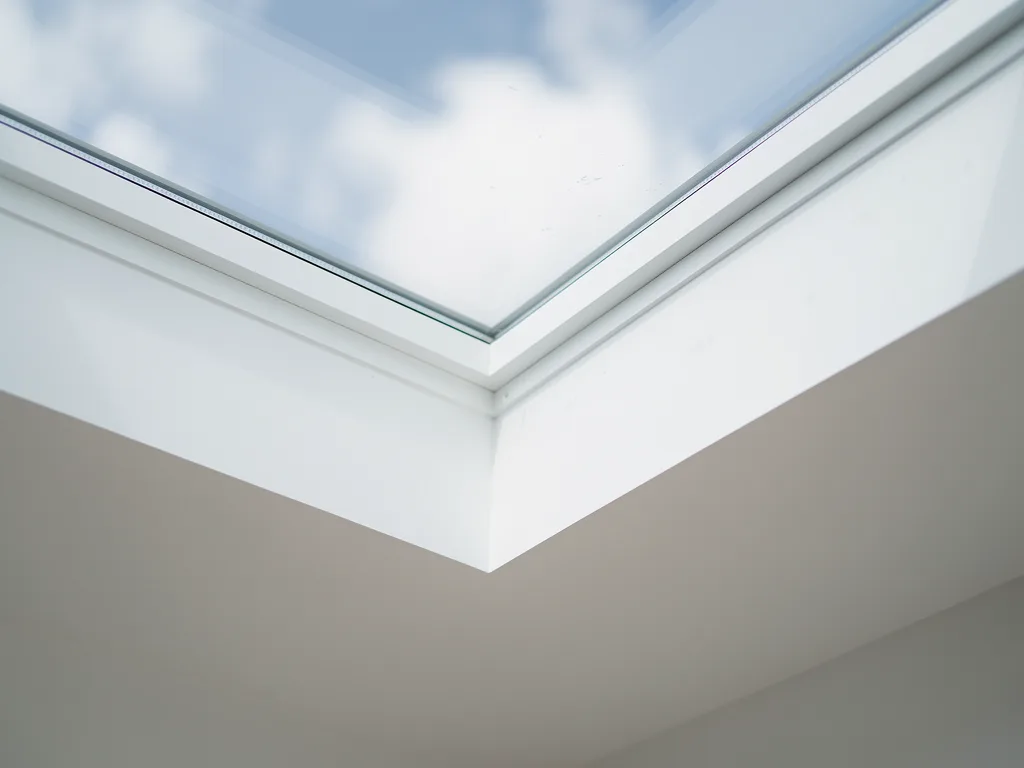 GuideChoosing Glass for a Replacement UnitHow to specify double or triple glazing, coatings and tints for a replacement rooflight or skylight unit.
 GuideMisted Conservation and Steel RooflightsHow misted glass in a slim steel conservation rooflight is replaced without losing the flush profile or narrow bar.
Book a home visit
Tell us which room
- No obligation
- Sightline sketch included
- 10-year guarantee
Or call 01733 736163