Guide · Misted and failed rooflight replacement
Misted Conservation and Steel Rooflights
A misted steel-framed rooflight in a conservation setting needs the glass replaced without losing the slim bar or flush profile that keeps the view. Here is how that reglaze is done.
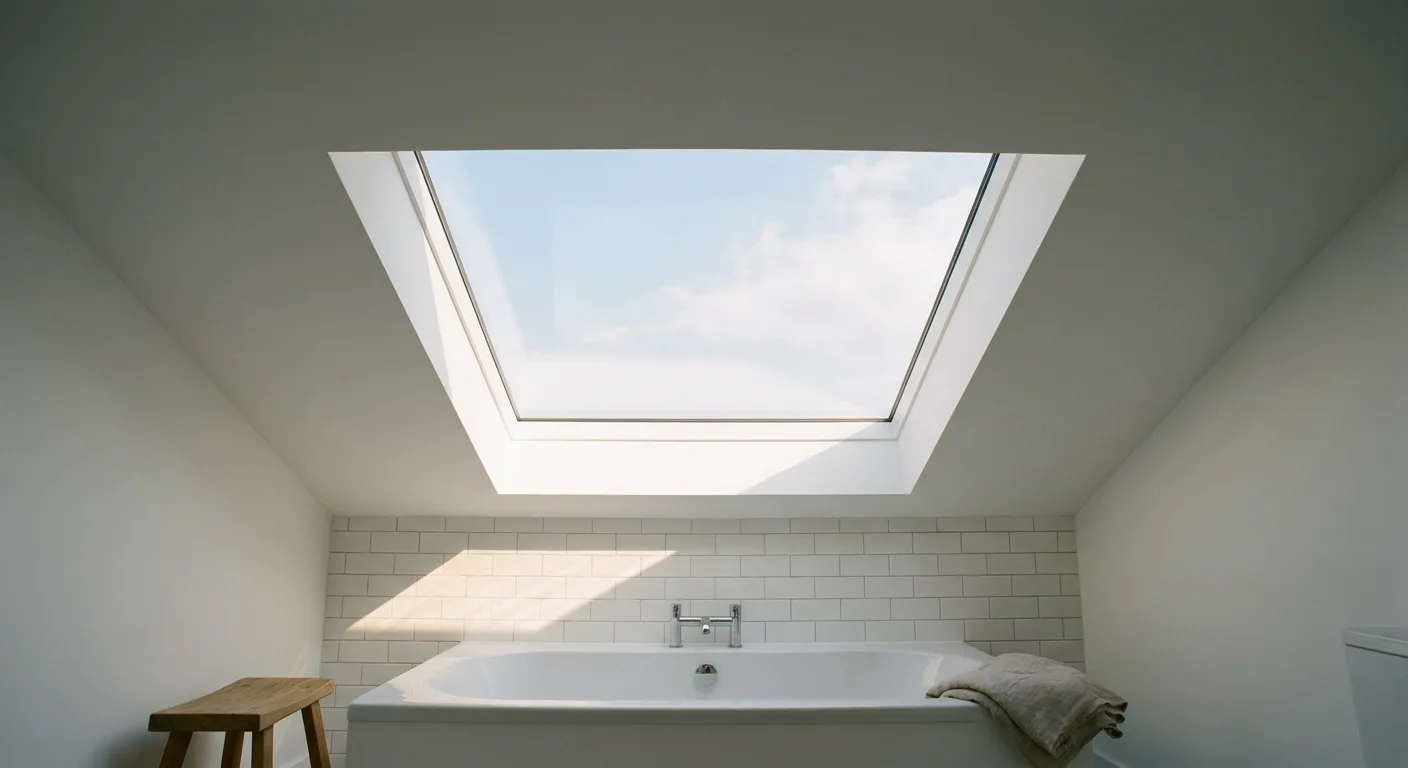
A misted pane that isn't a simple swap
A misted rooflight in a slim steel frame raises a question a bulk plastic dome never does: whether the frame itself is worth keeping. In a conservation setting it usually is, and the job becomes replacing the glass unit inside a frame that has to look exactly as it did before, not choosing a new rooflight off a shelf.
Steel-framed rooflights and roof windows turn up across older Peterborough roofs for a reason that has nothing to do with fashion. Slim rolled-steel sections carry narrow glazing bars that a thicker uPVC or timber section cannot match, and on a stone slate roof or a Fletton brick terrace where the roofline is part of the street's character, that narrowness is often the whole point. When the sealed unit inside one of these frames mists, replacing the rooflight with a standard modern equivalent throws that narrowness away along with the fault.
The good news is that in the great majority of cases the steel itself has done nothing wrong. It is the sealed glass unit sitting inside it that has failed, in exactly the way any sealed unit fails: a spacer bar seal has let moisture past, and the desiccant packed inside it can no longer keep the cavity dry. Mist Between the Panes: How a Rooflight Unit Fails covers that mechanism in full. What differs here is everything that has to happen around that fact.
Why steel earns its place on a conservation roof
A steel glazing bar can be a fraction of the width of an equivalent uPVC or box-section aluminium bar and still carry the load, because rolled steel is stiffer for its size than either material. On a Collyweston stone slate roof around Stamford, or on a limestone cottage in one of the Nene valley villages, a rooflight has to sit among small, close-set slates and a shallow pitch, where a chunky modern frame reads as a foreign object the moment you look up at it. A slim steel section, painted or powder-coated to match the existing ironmongery, keeps the roof reading as it always has.
The same logic applies lower down the roof hierarchy. Fletton brick terraces and semis from earlier phases of the city, and some of the older buildings absorbed into the new-town townships, sometimes carry the same slim steel rooflights and roof windows, often original to a Victorian or Edwardian extension, a later conservatory roof, or a mid-century flat-roof addition built when steel sections were the standard choice before uPVC became common. The frame is not always old for its own sake. It is old because it was the right specification then, and in many cases it still is.
None of this is only about appearance. A narrower bar sitting between you and the sky is a narrower interruption in the view from wherever you are looking up from, whether that is a pillow, a sofa or a kitchen sink. Swapping a slim steel bar for a bulkier standard replacement trades a heritage detail for a wider stripe across the sky, and that trade shows up every day the room is used, not just on the day the roofline is judged from the street.
What actually fails inside the frame
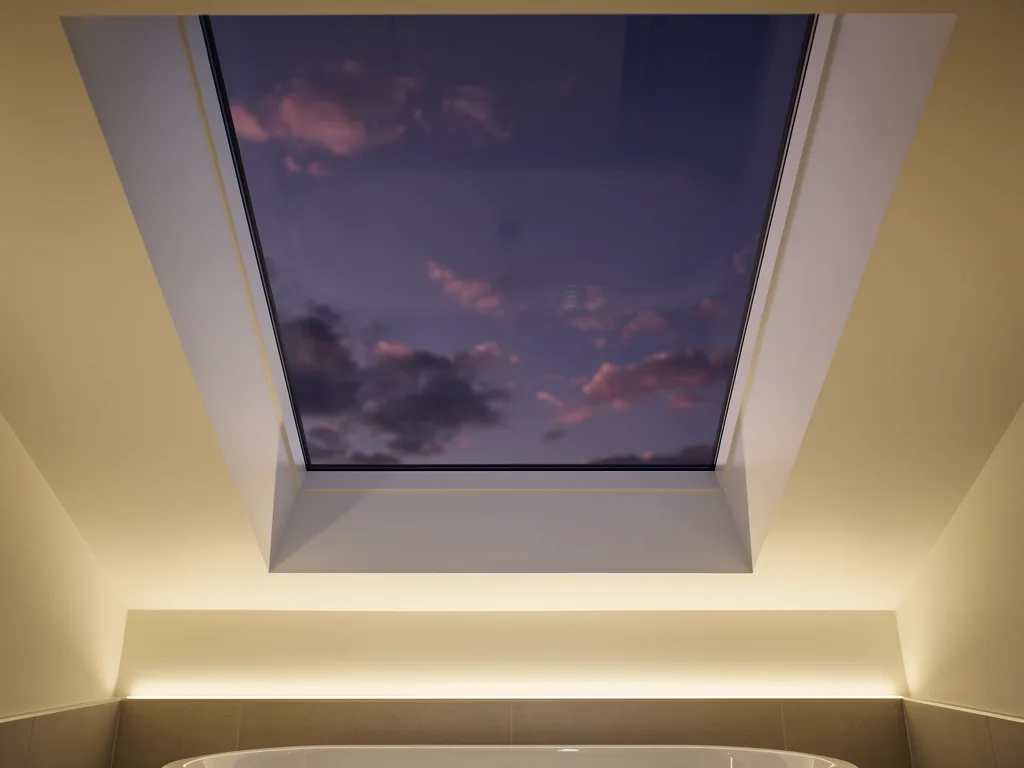
Steel does not corrode from ordinary condensation the way an untreated timber frame can soften, and it does not yellow the way an ageing plastic dome does, so when a steel-framed rooflight mists over, the fault is almost always the sealed unit rather than the frame around it. The glass is held by a glazing bead screwed or clipped into the steel section, with the sealed unit sitting on setting blocks inside that rebate, and it is the seal running round that unit's edge that has broken down.
Steel is, however, a colder material to sit a frame in than uPVC, and that has one real consequence worth knowing. A steel bar conducts heat away from the room faster than a plastic or timber equivalent, so on a cold, still night the inner face of the glass nearest the bar can sit a degree or two colder than the rest of the pane. That makes surface condensation on the room side more likely to show first along the bar lines, which can look, at a glance, like the beginning of a failed seal. Condensation or Misting: Telling the Two Apart sets out the wipe test that tells the two apart, and it matters more here than on a warmer-framed rooflight, because acting on the wrong diagnosis means disturbing an original frame for a problem that a trickle vent or better ventilation would have solved.
Where the unit really has failed, the pattern is the same corner haze and edge colour described in Failed Edge Seals: How to Spot Them Early. The steel frame changes what happens next, not how the fault first shows itself.
Replacing the glass without replacing the look
The aim on a conservation-grade steel rooflight is to take the frame back to bare steel and beading, lift the failed sealed unit out, and fit a new one into the same rebate, using the same bead profile and the same fixing pattern, so that from the room the rooflight looks exactly as it did the day it was first glazed. That depends on the frame's rebate depth and the bead detail being measured accurately before anything is ordered, since a modern sealed unit is very often thicker than the single glass or early double unit it is replacing, and a unit that will not sit flush in the rebate forces a choice nobody wants to make on site.
A flush-fit conservation glazing unit is built specifically to solve that problem: a slimmer cavity and a bead profile designed to match a traditional steel or timber section, rather than the deeper standard unit built for a modern uPVC frame. It costs the unit a small amount of thermal performance compared with a full-depth double or triple pane, and in a conservation setting that trade is usually the right one, because the alternative, a standard-depth unit forced into a rebate it was never designed for, either proud beading that catches the eye from below or a wider bar built up to hide it, undoes the exact detail the frame was kept for.
| Route | What stays | Where it suits |
|---|---|---|
| Reglaze in the original steel | Frame, bar width, bead profile | Frame sound, rebate can take a flush conservation unit |
| New steel to the same profile | Bar width, sightline, appearance | Frame corroded or distorted at fixings |
| Standard replacement rooflight | Nothing of the original detail | Frame too far gone to save and no conservation constraint applies |
Where the steel itself has corroded, usually at a weld or a fixing point rather than along a flat run of the section, a like-for-like replacement in the same gauge steel and the same bar spacing keeps the appearance even though the original metal is gone. When a Failed Frame Means Full Replacement sets out the wider signs that point to the frame, not just the glass, needing attention, and they apply to a steel frame exactly as they do to any other.
What a wider frame costs the view
Every one of these decisions comes back to the same test: what you see from where you actually spend time in the room. A rooflight fitted over a bed shows its bar and frame edge every time you lie back and look up, and a rooflight over a kitchen sink or a dining table does the same at a different angle, all day, every day. A slim steel bar sitting where it has always sat keeps that view exactly as it was. A wider standard bar, even fitted well, sits further into the line of sight and takes a visible bite out of the sky.
This is why the sightline sketch matters as much on a conservation steel rooflight as on any new installation. Before glass is ordered, the sketch shows where the existing bar falls in the view from the bed, the sofa or the sink in that specific room, and confirms that a flush conservation unit in the original frame keeps that line exactly where it is. Where a home owner is weighing whether to widen the opening or fit an additional slim rooflight elsewhere on the same roof rather than simply reglaze, Choosing Slimmer Frames When You Replace and Choosing Glass for a Replacement Unit cover those choices for a standard frame; the same reasoning applies here, with the constraint that the frame's own profile is usually the one thing that should not change.

Where the roof's setting changes the job
Not every steel-framed rooflight in Peterborough sits on a listed building or inside a conservation area, and it would be wrong to assume one does simply because the frame is old. What does hold everywhere is that the planning position for a particular address, including whether any conservation area designation or an Article 4 direction removes the usual permitted development rights for roof glazing, is checked for that address before work is specified, not assumed from the age of the frame or the look of the street.
Building Regulations sit alongside planning as a separate question. A straightforward glass-only reglaze in a sound existing frame is often not notifiable in the way a full rooflight replacement can be, and Do I need Building Control to replace a misted glass unit? explains where that line falls. Where the work does need a Building Control notification, that is handled as part of the job either way.
Matching what is already there, without guessing
Getting a conservation reglaze right depends on measurements and comparisons, not judgement calls made on the day. The rebate depth, the bead section, the exact bar spacing and the paint or powder-coat colour of the existing frame all need recording before a replacement unit or any new steel is ordered, because a unit built to a slightly wrong depth, or steel painted a shade off the original, is exactly the kind of detail a conservation-area roof gets noticed for.
- The rebate depth and bead profile, measured at more than one point along the frame in case of any historic movement.
- The bar width and spacing, so a replacement pane sits behind bars in the same position as before.
- The frame's finish, whether original paint, a later powder coat, or bare galvanised steel, matched rather than defaulted to a standard colour.
- The condition of the steel itself at every weld and fixing point, since a small area of corrosion now is cheaper to address than the frame failing later.
A survey is where all of this gets confirmed rather than estimated, and it is also where the sightline sketch for that room is drawn up, so the view from the bed, the sofa or the sink is agreed before any steel is disturbed or any glass ordered. Every rooflight and skylight fitted, steel-framed or otherwise, is installed to current Building Regulations and carries a 10-year workmanship guarantee, and the same applies to a conservation reglaze as to a straightforward replacement.
Before you book a survey for a steel conservation rooflight
Can a misted steel rooflight always be reglazed rather than replaced?
Not always, but it is the starting assumption on a sound frame. If the steel itself has corroded at a weld or fixing point, or has distorted enough that the rebate no longer holds a unit flush, a like-for-like frame becomes the better route, and a survey is what settles which applies.
Will a flush conservation unit look any different from the original glass?
From the room, no. It sits at the same depth in the same bead, behind the same bar spacing. The difference is in performance rather than appearance: a flush conservation unit gives up a little thermal efficiency compared with a full-depth modern double or triple unit, in exchange for fitting the original, narrower rebate.
Does a steel frame need painting every time the glass is replaced?
Not necessarily, but a reglaze is a natural point to check the paint or coating, since the beads are removed anyway to lift the old unit out. Where the finish has worn at the weather-facing edges, matching and touching it in at the same time avoids a second visit to the same rooflight.
Does the conservation area status of a street affect a glass-only reglaze?
It can affect what consent is needed, though a reglaze that keeps the frame, the bar spacing and the external appearance unchanged is usually the least affected option. The position for a specific address is confirmed before work is specified rather than assumed either way.
For the fuller picture of misted and failed rooflights across every frame type, see Misted and Failed Rooflight Replacement in Peterborough, including what affects the cost of a rooflight and how the sightline sketch is drawn up for a room like this one.
Keep reading
 GuideMisted Flat RooflightsWhy a flat rooflight's low pitch and sun exposure mist the seal faster, and how the glass is replaced on the kerb.
 GuideWhen a Failed Frame Means Full ReplacementHow we tell whether a failed rooflight needs new glass or the whole frame replaced.
 GuideCondensation or Misting: Telling the Two ApartEveryday condensation clears on its own; a failed rooflight unit never does. Here is how to tell them apart.
Book a home visit
Tell us which room
- No obligation
- Sightline sketch included
- 10-year guarantee
Or call 01733 736163