Guide · Misted and failed rooflight replacement
Mist Between the Panes: How a Rooflight Unit Fails
When a rooflight pane clouds from the inside, cleaning will not help. The seal between the panes has failed, and the moisture is now trapped where no cloth can reach it.
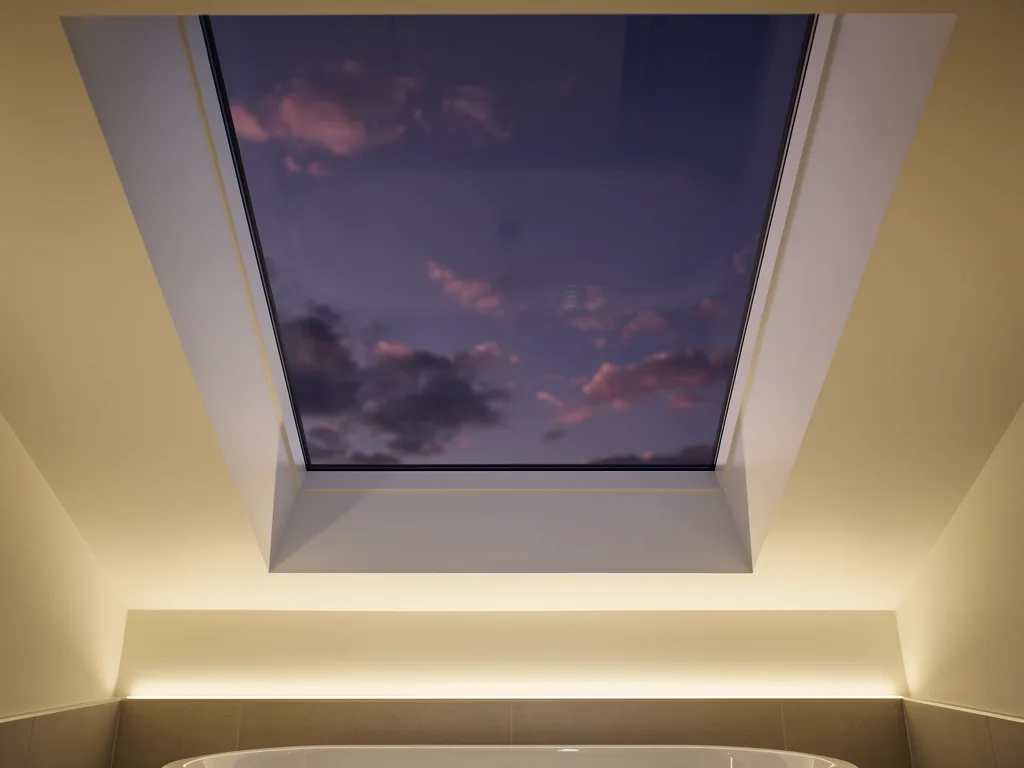
What "misted" actually means inside a sealed unit
A misted rooflight pane is not dirt, and it is not condensation sitting on the surface. It is moisture trapped inside the glass itself, between two or three panes that were sealed together at the factory, and it will not wipe off because it is not on a surface you can reach.
A rooflight pane is built as a sealed unit: two sheets of glass, or three for a triple-glazed unit, held apart by a spacer bar around the edge and sealed shut with argon or another inert gas trapped in the gap. A strip of desiccant sits inside the spacer, drawing up any last trace of moisture before the unit ever leaves the factory. As long as that seal holds, the space between the panes stays dry and clear for years. Once it fails, air carrying water vapour finds a way in, and the desiccant that is meant to absorb it eventually gives up.
What you see from the room below is a pane that stays cloudy in one corner on a cold morning and never quite clears, or a haze across the whole sheet that gets worse as the seasons turn. From a bed, a sofa or a kitchen table, that haze sits exactly where the view of the sky used to be. It is the one part of the rooflight you cannot get at with a cloth, a ladder or a squeegee, because the fault is inside the glass, not on it.
The edge seal: the part that actually fails
Almost every sealed-unit failure starts at the edge seal, the ring of sealant and spacer that joins the two panes together, and it is worth understanding why that one narrow strip is doing all the work.
The spacer bar sits between the panes and is bonded to each sheet of glass with a primary seal, usually a butyl compound, and backed by a secondary structural seal that holds the whole unit rigid. Butyl does the job of keeping gas and moisture out; the secondary seal does the job of keeping the unit square and strong enough to sit in a frame on a roof. Both are working against sun, cold, rain and the constant small movement of a roof structure, and both are asked to do it from an angle no vertical window ever sees.
Heat is the seal's main enemy. Glass facing the sky heats up fast in direct sun and cools just as fast once cloud crosses it, and the spacer bar and the glass expand and contract at slightly different rates every time that happens. Over enough cycles the bond between spacer and glass works loose at a microscopic level, long before there is any visible sign, and that is the point at which the seal stops being airtight even though it still looks intact.
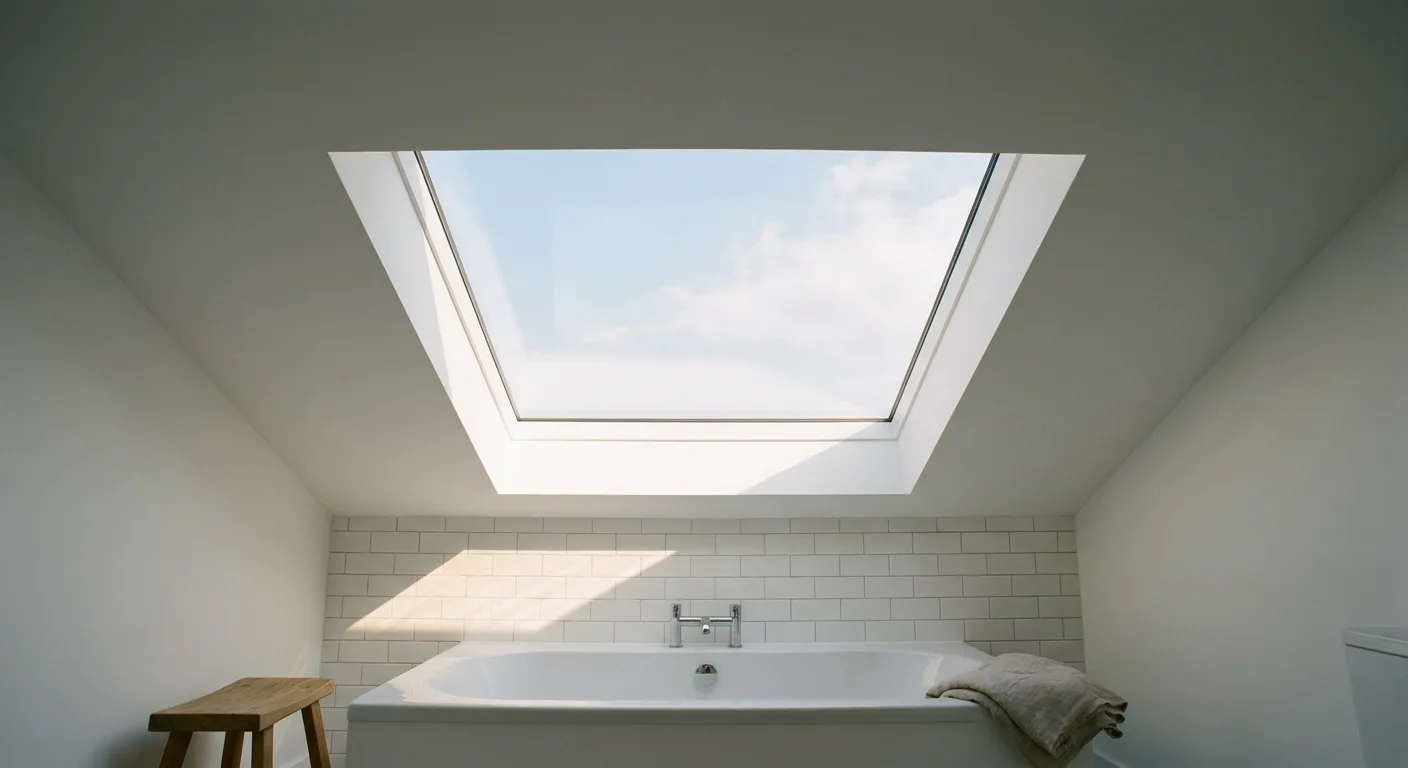
Why the moisture never dries out on its own
Once outside air can reach the desiccant inside the spacer, the clock is already running, and nothing done from inside the room will reverse it. The desiccant absorbs whatever moisture gets in until it is saturated, and after that point, water vapour simply sits in the gap.
A sealed unit has no vent, no drain and no way to exchange air with the room, by design: that gap is meant to stay closed for the life of the unit. So when moisture gets in through a failed seal, it has no way back out either. It condenses on the coldest of the internal glass surfaces, usually the inner face on a cold night, and evaporates again as the unit warms through the day, migrating around inside the sealed space rather than disappearing. That is why the same pane can look almost clear at midday and grey with mist again by evening: the water is still in there, just moving.
This is also why nothing applied from inside the room clears it. Cleaning products, dehumidifiers and heaters all work on the room side of the glass, and the fault is sealed on the far side of it. The only way to remove moisture that is already between the panes is to replace the unit that is holding it.
Why a rooflight fails faster than a vertical window
A rooflight and a wall window are built from the same kind of sealed unit, but the rooflight has a much harder working life, and that difference shows up first in how soon the seal gives way.
A vertical window faces one direction and is shaded by its own reveal for part of the day. A rooflight faces the sky directly, gets the full arc of the sun from morning to evening, and on a low-pitched roof also collects standing water after rain, since a shallow fall of 1:80 or so clears slowly compared with a steep roof slope. Warmth, damp and ultraviolet light all reach the seal harder and more often, and the frame itself moves more, flexing slightly with every heating and cooling cycle of the roof around it.
None of this means a rooflight is poorly made. It means the part doing the hardest job, the edge seal, is the part to watch, and why a unit that looked fine for a decade can mist within a season or two once that seal finally lets go.
What the view looks like as the seal goes
Misting rarely arrives as one dramatic morning. It builds in stages, and each stage changes what you actually see from where you sit under the glass.
The first sign is often a faint haze in one corner, most visible early on a cold morning and easy to mistake for a smear on the outer pane. Surface condensation and internal misting look similar at this stage, which is why it is worth checking whether the haze is on the glass or inside it before assuming the worst. As the seal fails further, the haze spreads, and a grey film can sit permanently across part of the pane rather than clearing once the room warms up.
From a bed or a sofa, that grey film sits directly in the patch of sky the rooflight was placed to frame in the first place. The window still lets light through, so the loss is easy to miss day to day, until the moment you look up expecting open sky and get a flat, milky patch instead. That is the real cost of a failed unit: not the light, which mostly still gets through, but the view, which does not.

From first haze to a fully blown pane
The table below sets out the four stages we generally see, from the first faint mark to a pane that has lost the view entirely.
| Stage | What you see | What it means |
|---|---|---|
| Early haze | Faint cloudiness in one corner, worst on cold mornings | Seal has begun to let air through; desiccant still absorbing it |
| Spreading mist | Haze across a third or more of the pane, present most days | Desiccant is close to saturated |
| Standing moisture | Droplets or a visible film between the panes, sometimes with streaking | Desiccant has saturated; moisture is condensing and moving inside the gap |
| Fully blown unit | Permanent grey or milky pane, sky no longer visible | A blown unit: the seal has failed completely and the gas fill is gone |
How long a given unit lasts before reaching this point depends on its pitch, its aspect and how it was built, so two rooflights fitted on the same day can fail years apart.
One pane, or the whole rooflight
A misted unit does not always mean a whole new rooflight. In plenty of cases the frame is sound, the seals around the frame itself are fine, and only the glazed unit sitting inside it has failed. In others, the frame has moved, corroded or weathered enough that a new pane in an old frame is not worth doing.
What decides it is usually one of these:
- How the glass sits in the frame: some designs allow the sealed unit to be lifted out and a new one glazed in on site; others have the glass bonded in during manufacture, so the whole rooflight has to be replaced as one piece.
- The condition of the frame: corrosion, warping or a cracked upstand around a flat rooflight usually means the frame needs replacing whether the glass has failed or not.
- The age and specification of the existing unit against what is available now: a replacement pane is a chance to move to warmer, clearer glass, or a slimmer frame, if that matters more than matching what was there before.
We cover how that decision is made in more detail here, and it is always confirmed at survey rather than guessed from a description over the phone.
Getting the replacement right the second time
A failed unit is also the moment to check that what goes back up is actually placed for the view, not just a like-for-like swap of the glass that misted. We measure from the eye position that matters in that room, the pillow, the sofa or the sink, and confirm frame width, bar position and reveal depth before ordering anything, and every quote comes with a sightline sketch showing what you will see once the new unit is in.
Where the work involves replacing the whole rooflight rather than just the glazed pane, it is installed to current Building Regulations, and we handle the Building Control notification where the work is notifiable. Every installation carries a 10-year workmanship guarantee. None of that changes what caused the original seal to fail, but it does mean the new unit is placed with the same care as a first-time fitting, not treated as a straight swap. More on how the sightline sketch works is here, and what tends to affect the cost of a replacement is set out here.
If a rooflight is already showing an early haze rather than a fully misted pane, it is worth checking the early signs of a failing seal before it reaches the point where the sky disappears altogether. Getting a survey booked at that stage generally means more choice over glass and frame, rather than a forced decision once the view is already gone. For the full picture on the service itself, see misted and failed rooflight replacement in Peterborough.
What people ask before booking a glazier
Can a misted rooflight get worse if I leave it?
Yes. Once the seal has failed, moisture keeps finding its way in and the desiccant inside the spacer has already begun to saturate, so haze that is faint today typically spreads rather than staying the same. It will not clear on its own at any stage.
Does a misted pane mean the rooflight is leaking?
Not necessarily. Misting between the panes is a sealed-unit fault, separate from a leak at the frame or flashing. The two can happen on the same rooflight, but one does not prove the other, which is why a survey checks both.
Why is my rooflight glass showing rainbow colours rather than grey haze?
That is usually an interference pattern, sometimes called an oil-slick effect, caused by two coated surfaces sitting very close together inside the unit, and it can appear before the more familiar grey mist does. We explain the difference here.
Is there any standing water between the panes, or just haze?
On an older or badly failed unit, yes, there can be visible droplets or a thin film of water sitting inside the gap rather than just a haze. We cover what that means here, and it is generally a sign the unit has been failed for some time.
Will a new sealed unit mist again in the same way?
Not for the reason the old one did, provided the new unit is manufactured and glazed correctly. Every sealed unit will eventually reach the end of its working life, since no edge seal lasts forever, but a properly fitted replacement should give many years of clear glass before that point is anywhere close. Choosing a slimmer frame or a different glass specification at the same time does not change how long the seal itself lasts, since that depends on the unit's own construction, its pitch and its exposure to sun and rain rather than on the frame around it.
Keep reading
 GuideChoosing Glass for a Replacement UnitHow to specify double or triple glazing, coatings and tints for a replacement rooflight or skylight unit.
 GuideMisted Conservation and Steel RooflightsHow misted glass in a slim steel conservation rooflight is replaced without losing the flush profile or narrow bar.
Book a home visit
Tell us which room
- No obligation
- Sightline sketch included
- 10-year guarantee
Or call 01733 736163