Guide · Misted and failed rooflight replacement
Misted Roof Lantern Panes
One cloudy pane in a roof lantern rarely means the whole roof needs replacing. Here is how that one pane is identified, matched and swapped without touching the rest.
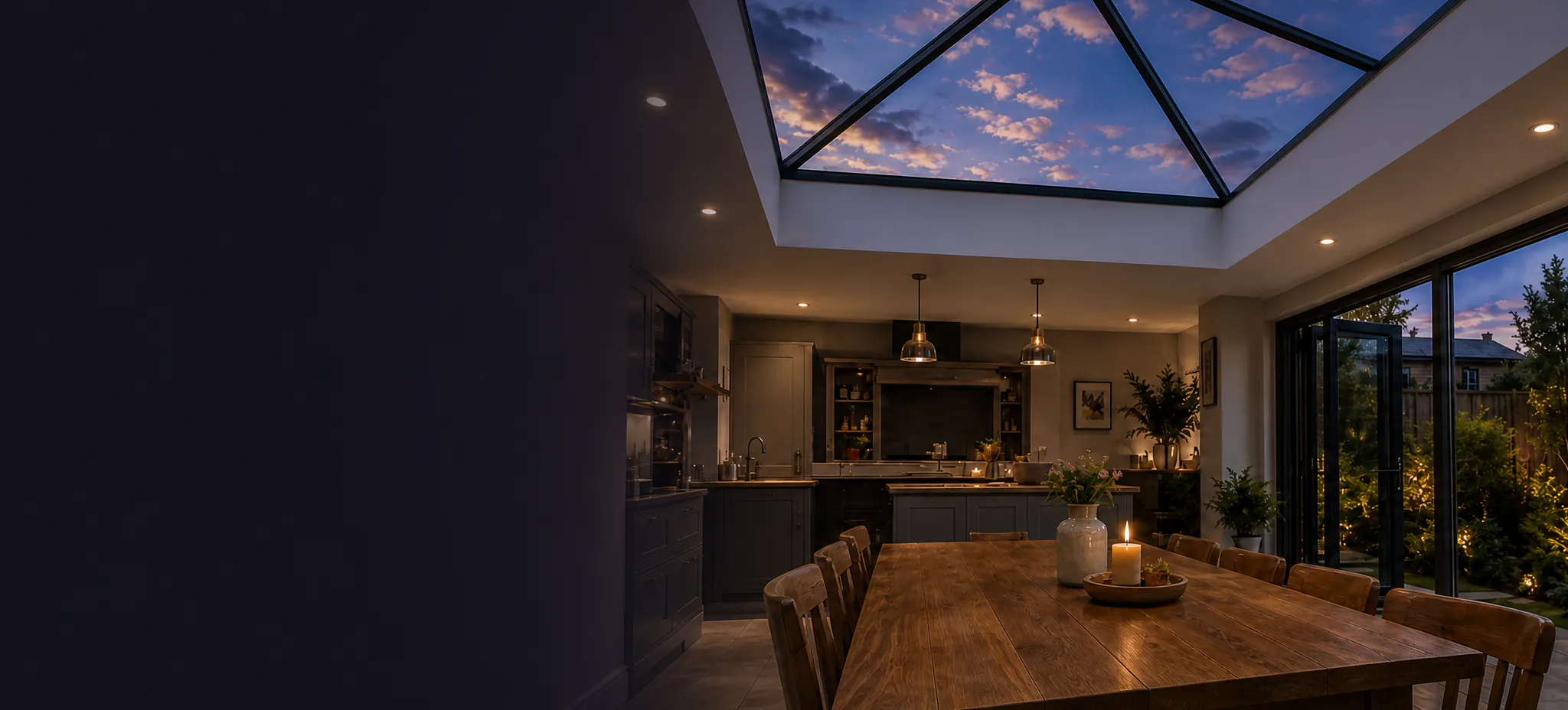
When one pane goes and the rest are fine
A roof lantern is not one sheet of glass. It is a set of panes, one on each face between the hips and the ridge, each sitting in its own bar or bead. When a single pane mists, the fault sits inside that one sealed unit, not in the lantern as a whole, and the sensible job is to change that pane and leave its neighbours alone.
This is the point that catches people out. Someone spots a cloudy patch of sky from the kitchen table, assumes the whole roof needs to come off, and starts pricing a full replacement lantern. Most of the time that is more work and more disruption than the fault calls for. A lantern usually has four, six or eight glazed panes, arranged in pairs down each pitch. One losing its seal says nothing about the condition of the rest; each pane is a separate sealed unit with its own edge seal, its own gas fill, and its own service life. Age and exposure are shared across the roof, so it is common for a second pane to fail a year or two after the first, but that is a reason to check the others, not a reason to change them before they have actually failed.
The frame, bars and upstand are usually the part built to last: aluminium or timber sections rarely fail in the way glass units do, and where the structure is sound there is no reason to disturb it. This is one strand of our wider misted and failed rooflight replacement work; see Replacing the Glass Unit or the Whole Rooflight for the wider version of that decision, and Mist Between the Panes: How a Rooflight Unit Fails for what is actually happening inside the unit once the seal has gone.
Reading a lantern pane by pane
Before anything is ordered, every pane on the lantern gets looked at in turn, from directly underneath and from an angle, in flat daylight rather than bright sun that can mask a light haze.
A single misted pane usually shows itself as a patch of grey or silvery haze that sits between the two sheets of glass, not on the surface. It will not shift when the glass is cleaned, it often has a slightly uneven edge that thickens toward one corner, and on a cold morning it can carry a faint rainbow sheen where light catches the moisture at an angle. Wipe the inside face and the cloud is still there: that is the sign the fault is inside the sealed unit rather than on it.
- A pane on the north-facing pitch that stays cold longer than the rest, and mists first
- A pane nearer the ridge, which takes more of the weather than one low down near the eaves
- A pane that was replaced once before, on a different bar or bead system to the ones either side
- A corner pane, where the bar meets the hip and the seal has more joints to hold
Checking every pane also settles a question that comes up often: whether one going means the rest are close behind. Sometimes they are all the same age and the same batch of sealed units, fitted together when the lantern went in, and a second failure a season or two later is not a surprise. Other times a single pane was swapped years after the rest, on a different specification, and it is that one unit that is the outlier. Either way, the answer comes from looking at each pane, not from assuming the worst about the whole roof. Should I replace all my rooflights if one has failed? sets out how that call gets made.

Bead, bar or whole sash: what actually holds the glass
What holds a lantern pane in place decides how it comes out, and it is not the same on every lantern.
Most modern aluminium lanterns hold each pane with a glazing bead: a slim strip that clips or screws into the bar and can be lifted away without touching the bar itself. Where that is the system, one pane comes out and a new one goes back in with the same bead, gasket and cap, and the rest of the lantern is untouched. Older lanterns, and some steel and timber ones, hold the glass with a wet bed of sealant rather than a dry gasket, and taking a pane out means cutting that sealant carefully and renewing it once the new unit is bedded in.
A smaller number of lanterns, usually the oldest or the ones with slim glazing bars to begin with, hold a pane inside a sash that lifts out as a unit: the glass, the bead and a section of frame together. That is more work than a bead job, but it is still a single-pane job, not a whole-lantern one. Telling which system is in front of us is one of the first things a survey settles, since it changes both the time on site and how the new unit is measured. What happens to the frame when a rooflight unit is replaced? goes through beads, gaskets and sashes in more detail.
Conservation-style lanterns with slim steel sections are handled differently again, since the profile itself is part of what the pane has to keep. Misted Conservation and Steel Rooflights covers that case on its own.
| Where it sits | What usually holds it | What a swap involves |
|---|---|---|
| Modern aluminium lantern | Bead and gasket | Lift bead, swap unit, refit bead |
| Older timber or steel lantern | Wet-bedded sealant | Cut old sealant, bed new unit |
| Slim conservation section | Sash within the bar | Lift the glazed sash as a piece |
Matching the new unit to the old
The replacement pane has to sit in the same rebate the old one came from, which means the build-up, not just the outer size, has to match.
Lanterns are almost always double glazed, sometimes triple on the outer pitches for a slim frame or a colder room below, and the overall thickness of the unit has to fit the bar depth it sits in. That build-up is usually a toughened outer pane for safety on an overhead surface, a cavity filled with an insulating gas, and a laminated inner pane so that if the glass is ever struck from below it holds together rather than falling into the room. Low-E coatings on the inner faces of the cavity cut heat loss through the glass itself, and on the outer pane a self-cleaning coating helps rain do more of the work on a roof that nobody gets up to wash. Choosing Glass for a Replacement Unit goes through the specification choices in full; the point here is that the new pane is built to match the bar it goes into, and to at least the current standard for glass overhead, even where the original unit was simpler.
Where a lantern's panes were fitted with a slight tint or a particular tone of glass to control glare on a low pitch, the replacement should be checked against that too, so the new pane does not read as a different colour of sky from the panes either side of it. That matters more on a lantern than on a single rooflight, since every pane sits under the same eye and any mismatch is compared against the ones next to it, not judged on its own.
Getting at the failed pane without disturbing its neighbours
A lantern sits above a room people are still using, and the aim on the day is to change one pane without leaving marks, gaps or new problems on the ones either side of it.
Where the bead system allows it, the pane is worked on from inside, standing on a tower or steps under the lantern rather than from the roof, which keeps the rest of the glazing bars and the weathering around them untouched. The old pane is supported, the bead eased out, the unit lifted clear and the opening checked and cleaned before the new pane goes in. Where access has to be from outside, on a pitch too shallow or a lantern too high to work from below, the fitting team works off proper access equipment rather than off the roof itself, so no weight or foot traffic goes anywhere near the panes that are not being touched.
Either way, the panes on either side, the ridge cap and the hip bars are masked off before any old sealant is cut, so that solvent, sealant or grit from the job in hand does not end up on glass that was clear before the visit started. Once the new unit is bedded and the bead refitted, that joint is left to cure before covers or masking come off, and the rest of the lantern is checked over before anyone leaves, since the point of a single-pane job is that the roof looks exactly as it did before, minus the one cloudy patch.
Where the frame itself has moved or corroded around the failed pane, rather than the glass simply reaching the end of its life, that is a different job, and the frame problems that point to a full replacement are covered elsewhere in this guide series.
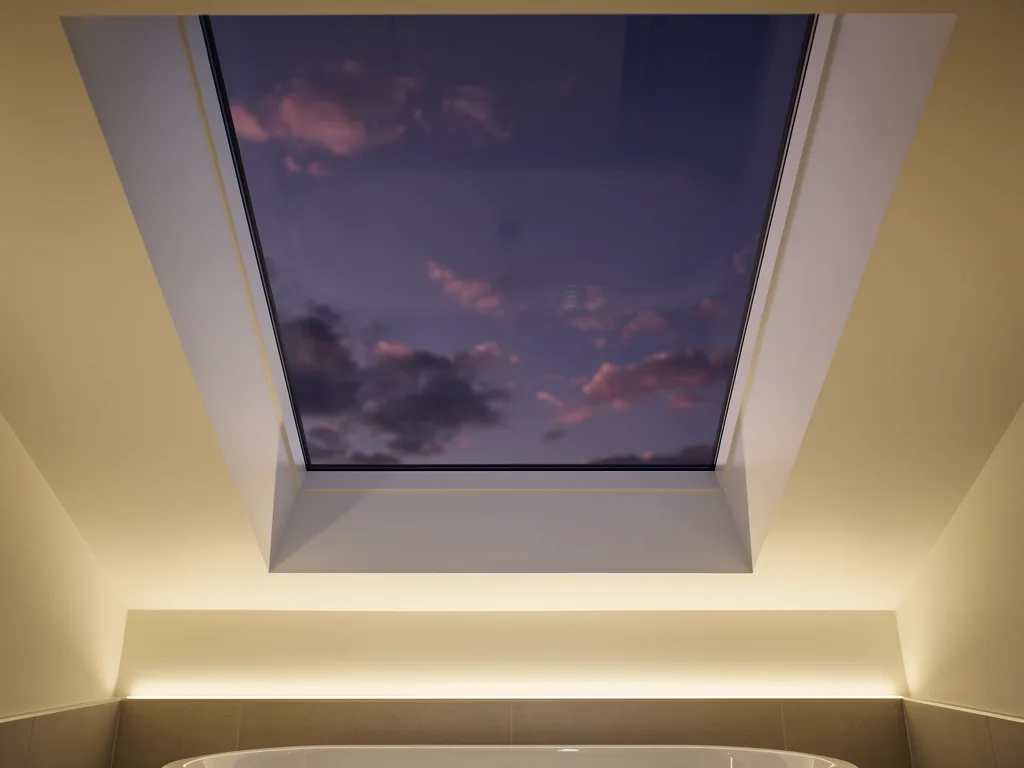
Surface condensation is not the same fault
Not every cloudy pane is a failed seal, and it is worth ruling out the other cause before a new unit is ordered.
Surface condensation forms on the room side of the inner pane, usually on a cold morning, and it wipes away and comes back with the weather rather than sitting there permanently. It is a sign of warm, moist air meeting a cold surface, most often in a kitchen under a lantern where cooking and a kettle put a lot of moisture into the air, and it points to ventilation in the room rather than a fault in the glass. Misting from a failed seal sits between the panes, cannot be reached to wipe, and does not come and go with the weather; once it is there, it stays and usually spreads. Condensation or Misting: Telling the Two Apart sets out the checks in full, but the short version for a lantern is: wipe it, watch it for a day, and see whether it comes back on the glass itself or only on the inside face.
From survey to fitted pane
A single misted pane is still measured properly, since a lantern's bays are not always identical to one another even when they look it from the ground.
The visit starts with checking which pane has failed and confirming the fixing system, then measuring that one bay: width and height at both the rebate and the sightline, the depth of the bar or bead, and the pitch of that particular pane. Bars on the same lantern can vary slightly from bay to bay, especially on an older or hand-built lantern, so the new unit is made to that bay's own measurements rather than to a standard size taken from a catalogue. A sightline sketch is drawn up at the same visit, so what the new pane will look like from the table or the sofa below is settled before anything is ordered, not left to be seen for the first time once it is fitted. See The Sightline Sketch: How We Plan the View for how that drawing is put together.
Once the unit has been made up to those measurements, the fitting visit itself is usually a matter of hours rather than days, since only the one pane is coming out and the frame, bars and the rest of the glazing stay exactly as they were. Where the work is notifiable, the Building Control notification is handled as part of the job; Do I need Building Control to replace a misted glass unit? explains when that applies to a glass-only swap. Every job is carried out to current Building Regulations and comes with a 10-year workmanship guarantee on the fitting itself.
Get in touch to book a home visit, or message us on WhatsApp with a photo of the pane, and we will start with working out which pane it is and how it is held in.
What a single lantern pane costs to put right
Because only one unit and one section of bead or sealant is involved, a single-pane job on a lantern is a smaller undertaking than replacing the whole roof, though the exact figure depends on the pane's size, its glass specification and how it is fixed in. What Affects the Cost of a Rooflight sets out the factors that move a quote up or down; a survey of the actual pane is what turns that into a number for your roof.
Questions about a single misted lantern pane
Can just the affected pane be changed, or does the whole lantern come out?
Where the frame, bars and bead system are sound, only the failed pane needs to be changed. The wider lantern only comes out where the frame itself has failed, moved or corroded, which is a separate check from the glass.
Will the new pane look different from the ones next to it?
Not if the glass specification and any tint are matched to the existing panes at the survey stage. That check is part of ordering the replacement, not an afterthought once it arrives.
Does the room need to be cleared while one pane is changed?
Furniture directly under the lantern is usually moved and dust sheeted for the visit, but the rest of the room stays in use, since the work is contained to the one pane and the small area of ceiling below it.
What is a blown rooflight, and is that what has happened here?
It is the trade term for exactly this fault: a sealed unit that has lost its seal and let moisture between the panes. What is a blown rooflight? explains the term and how it applies to a lantern pane as much as a single rooflight.
Keep reading
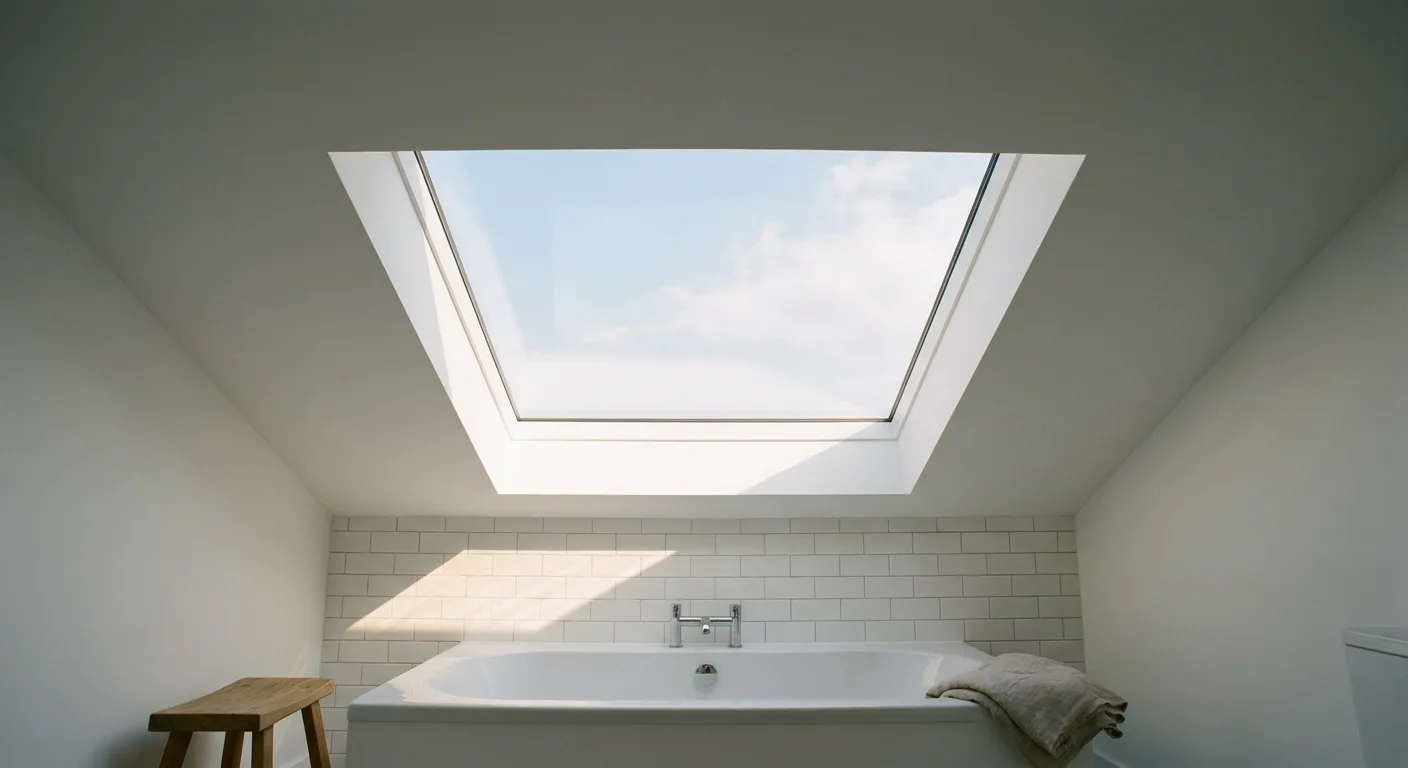 GuideCondensation or Misting: Telling the Two ApartEveryday condensation clears on its own; a failed rooflight unit never does. Here is how to tell them apart.
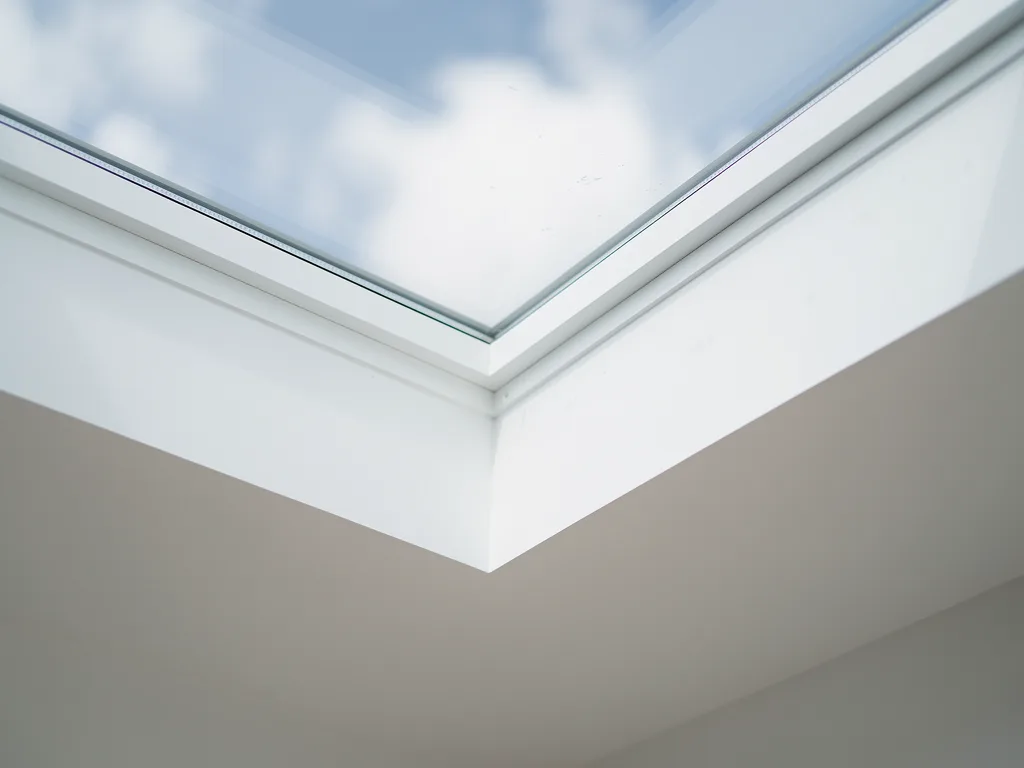 GuideChoosing Glass for a Replacement UnitHow to specify double or triple glazing, coatings and tints for a replacement rooflight or skylight unit.
 GuideMisted Conservation and Steel RooflightsHow misted glass in a slim steel conservation rooflight is replaced without losing the flush profile or narrow bar.
Book a home visit
Tell us which room
- No obligation
- Sightline sketch included
- 10-year guarantee
Or call 01733 736163