Question · Misted and failed rooflight replacement
What Happens to the Frame When a Rooflight Unit Is Replaced?
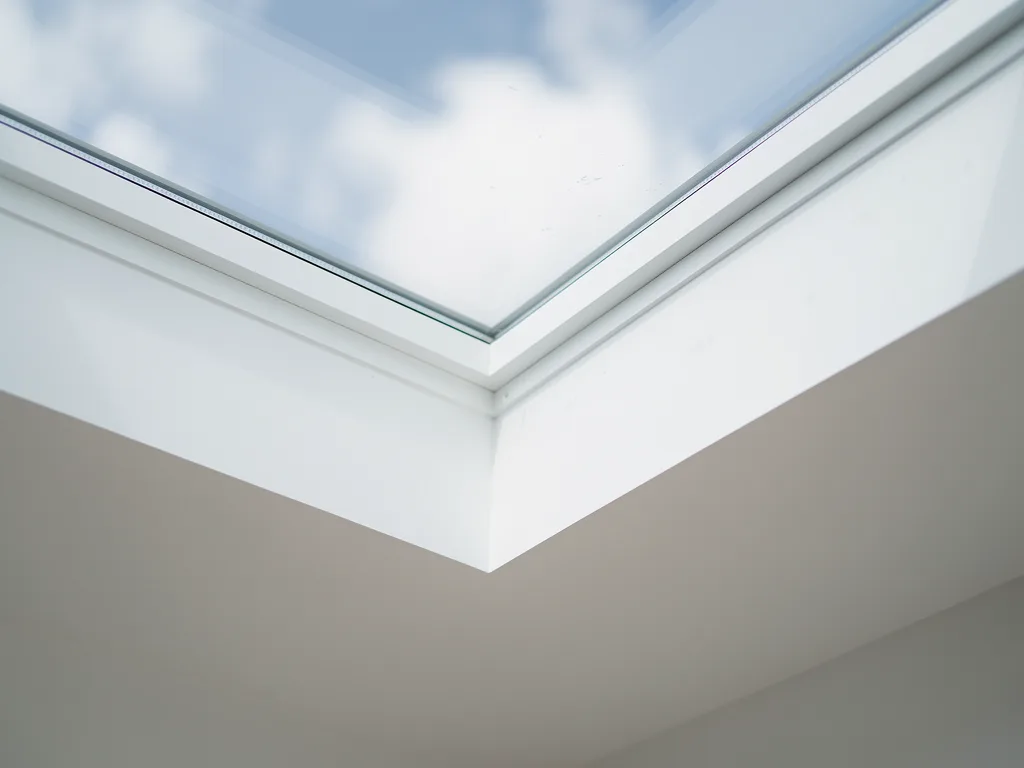
The bead is what comes off, not the frame
The glazing bead is the strip that clamps the glass unit into the frame rebate. On most rooflights and roof windows it is a separate piece, screwed or clipped on, sitting proud of the frame on the outside and sometimes on the inside too. Lifting the beads away is the first job, and it is the beads that get handled, not the frame timber, aluminium or uPVC underneath.
On timber roof windows the beads are usually screwed and painted or stained to match. On aluminium and steel units they often clip into a groove and can be prised free with a flat tool. Either way, the frame rebate itself, the ledge the glass sits on, is not cut, drilled or altered to get the old unit out.
Gaskets and seals around the new unit
A sealed glass unit does not sit directly on bare frame. It rests on setting blocks and against a gasket, usually an EPDM rubber strip, that runs the full perimeter of the rebate. This gasket is what stops rain tracking sideways into the frame joint and what lets the unit expand and contract slightly with heat without cracking.
When a unit is replaced, that gasket is renewed rather than reused. It is cut and fitted to the exact rebate size, then the new unit is bedded onto it before the bead goes back on and compresses everything into place. A wedge gasket, where one is used instead of a flat strip, is measured to the new unit's thickness, since a replacement unit is not always the same depth as the one it replaces.
- The rebate is cleaned back to bare frame before the new gasket goes in.
- Any old, hardened sealant is scraped out rather than painted over.
- The new unit is set on packers so its weight sits evenly, not on the gasket alone.
Why the frame carries on doing its job
The frame is the part fixed into the roof: into the kerb on a flat rooflight, into the rafters and flashings on a pitched roof window, or into the ridge and hips on a lantern. Moving or disturbing that fixing is a bigger job than most glass-only replacements need, so if the frame is sound, square and free of rot or corrosion, it stays exactly where the roofer originally fitted it.
What "sound" means depends on the material. A timber frame is checked for soft or rotten sections around the corners and cill, where water tends to sit. An aluminium or steel frame is checked for corrosion at fixing points and for any distortion that would stop a new unit sealing evenly. Our guide on when a failed frame means full replacement sets out the specific signs that push the job from a glass swap into a full unit change, and the difference between the two jobs is covered in replacing the glass unit or the whole rooflight.
What this means for the view you actually get
Because the frame and its fixings stay put, the sightline you had before misting set in is broadly the sightline you get back afterwards. The edge of the frame still sits where it sat, and any glazing bar across a wider unit stays exactly where it was. What changes is the glass itself: a fresh, clear pane in place of one gone milky or grey.
For anyone who found the old frame too bulky or the bar too central in the view from the bed or the sofa, a glass-only replacement will not move it. That change needs a new frame, not a new pane, and is worth raising before work starts rather than after. Our page on choosing slimmer frames when you replace covers what a frame change can do for the sky you see, and every quote comes with a sightline sketch showing what the finished view will actually look like from where you sit or lie.
Making the frame weathertight again
Once the new unit and gasket are in and the bead is refitted, the outside edge is sealed where the bead meets the frame, so water sheds off the top and sides rather than finding a way behind the bead. On a flat rooflight, the upstand and kerb flashing are checked at the same time, since these carry the water away from the unit rather than the frame itself.
Inside, the plaster reveal or timber lining around the frame is checked for any staining or softness that points to moisture getting in before the unit failed. A misted unit on its own rarely damages the reveal, but a frame that has been letting water past its seals for some time can leave marks worth making good before the new glass goes in, so the finished job looks as clean as the day the roof was first opened up.
When the frame changes too
Some jobs start as a glass replacement and become a frame replacement once the old unit is out and the frame behind it can be seen properly. Persistent condensation that looks like a failed seal can in fact be a frame letting damp air past it, covered in our guide to condensation or misting: telling the two apart. A frame that has moved, twisted or corroded at its fixings cannot always seal a new unit evenly no matter how good the gasket is, and in that case the whole rooflight, frame included, is replaced rather than just the glass.
Replacing the frame as well as the glass can be notifiable work under Building Regulations, where a glass-only swap into an existing, sound frame often is not. Our answer on whether you need Building Control to replace a misted glass unit sets out the distinction, and we handle the notification ourselves wherever the work requires it.
Questions people also ask
Will the beads look any different once they are put back?
Where the original beads are in good condition they are simply cleaned and refitted, so they look the same as before. Where a bead has cracked, corroded or lost its finish it is replaced with a matching profile, chosen to sit flush with the rest of the frame rather than stand out against it.
Does the frame colour or finish need to match after the work?
The frame is not repainted or refinished as a matter of course, since it is not being disturbed. If the beads are replaced, they are matched to the existing frame colour and finish so the join between old frame and new bead is not obvious once the sealant has gone off.
How long is the frame left open during the work?
The old unit is not lifted out until the new one and its gaskets are ready to go straight in, so the frame is only without glass for the working part of a single visit. The roof is not left open overnight as a matter of course.
Can a frame be reused if it is an older, discontinued profile?
Frame rebates for most rooflights, roof windows and lanterns are cut to standard depths, so a current sealed unit and gasket can usually be fitted into an older frame profile without needing a matching replacement bead range. A survey confirms the rebate depth and glass thickness before ordering, which our guide to how a rooflight unit fails touches on from the other direction, looking at what goes wrong inside the sealed unit itself.
Book a home visit
Tell us which room
- No obligation
- Sightline sketch included
- 10-year guarantee
Or call 01733 736163