Question · Misted and failed rooflight replacement
Can you still see through a misted skylight?
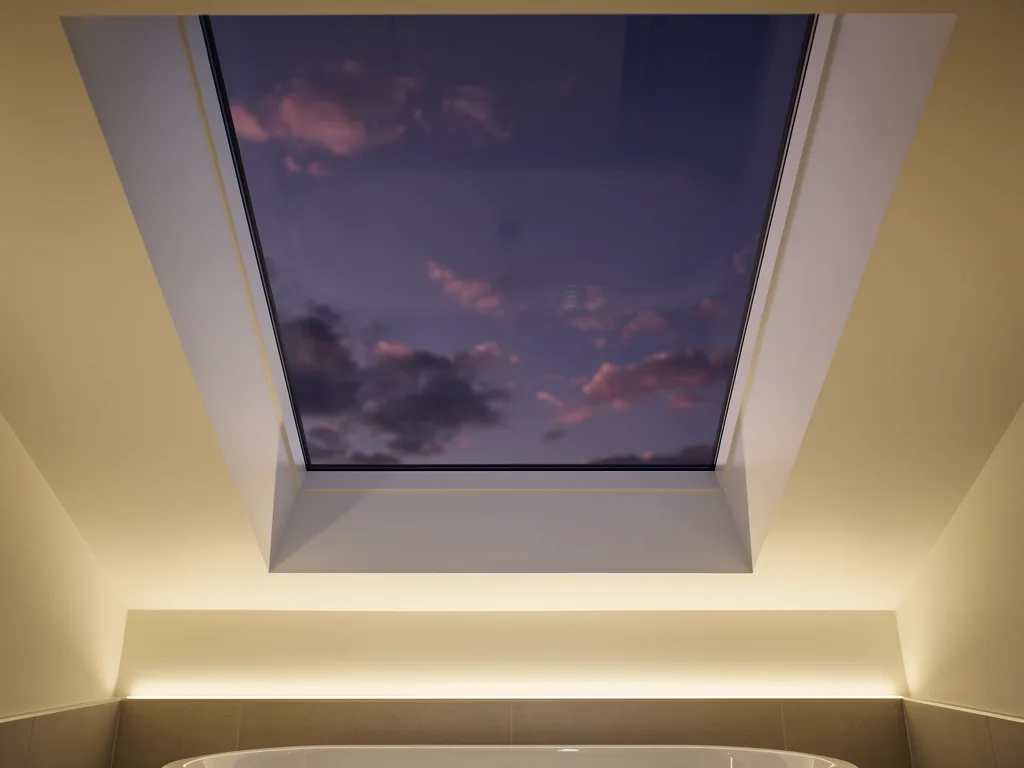
Light still gets in; the picture does not
A failed sealed unit does not go dark, and it does not go opaque in the way a blind does. It scatters light instead of passing it through cleanly, so a room underneath still gets brightness, just brightness with nothing sharp left in it.
Think of the difference between a clean car windscreen and one with a film of condensation across it: both let the same amount of daylight through, but only one lets you read a number plate on the car ahead. A misted rooflight works the same way. The moisture sitting inside the sealed unit bends and diffuses every ray that crosses it, so instead of a clean line between glass and sky, you get an even, milky glow. Colour survives longest, in a faded, washed-out form; edges and outlines go first.
What survives, stage by stage
A newly failed unit and one that has been misted for a couple of years do not look the same from underneath. The pattern below is what most owners describe when we ask what they can still make out.
| Stage | What still comes through | What has gone |
|---|---|---|
| Faint, patchy haze | Bright sky, weather changes, day and night | Crisp roofline, small detail, stars |
| Even fog across the pane | General light and dark | Any shape, colour beyond grey or white |
| Streaked or heavily clouded | A dim glow on a bright day | Most usable daylight, any picture at all |
Most homes we hear from are somewhere in the middle: enough haze that nobody would call the glass clear, not so far gone that the room has gone properly dim. Whether a misted rooflight gets worse covers how a unit moves from one stage to the next, usually over months rather than overnight.
Why the haze rarely sits evenly
Few misted panes cloud the same way all over, and the pattern is a fair clue to how far the fault has gone. A corner near the spacer bar, the strip that holds the two sheets of glass apart, often clouds first, since that is where the failed seal actually let the moisture in. From there it spreads inward, so an early fault often reads as a smudge in one corner with clearer glass still around it, while a longer-standing one reads as an even fog with no clear patch left at all. Some units show faint streaking rather than an even cloud, following lines in the spacer or the coating on the inner faces. Why is my skylight glass cloudy? separates that internal clouding from ordinary surface haze, which looks similar from below but behaves completely differently.
The same fault reads differently from the bed, the sofa and the sink
How much the loss matters depends on where you actually are when you notice it. A rooflight straight above a bed is looked at for minutes at a time, last thing at night and first thing in the morning, so a lost view of stars or an early sky is felt keenly there. The same fault over a sofa is glanced at rather than studied, so a duller patch of light matters more than the missing detail. Over a kitchen sink, brightness at the worktop tends to matter more than the shape of the sky, so a misted pane there can go unnoticed for longer, even as the unit itself is failing just as badly. Planning a rooflight around the eye position that matters in each room, rather than treating every pane the same, is the whole idea behind the sightline sketch we draw with every quote.
Does it clear up on a bright day, or with the seasons
Ordinary surface condensation, the kind that sits on the room-facing pane on a cold morning, dries off within an hour or two and can disappear completely by afternoon. Misting between the panes does not follow the weather in the same way, because nothing about the room or the sky changes the sealed gap where the moisture actually sits. A pane can look just as hazy at midday in July as it did at dawn in January. Condensation or misting: telling the two apart is worth a look if you are trying to work out which one you are dealing with before booking anything.
Nothing brings the view back on its own
Cleaning the glass, running a dehumidifier in the room, or simply waiting it out all leave the pane exactly as hazy as before, because none of them reach the space between the sheets where the moisture actually sits. Is there any way to clear a misted rooflight pane? sets out why, and what the only two real fixes are.
When it stops being worth living with
A light haze in a room you pass through is easy to put off. The same haze over a bed you lie in every night, or a kitchen table where you sit for an hour at breakfast, tends to be the point people book a survey. There is no fixed threshold; it comes down to how much you actually use the room and how much of the view you are used to having. Once the glass is beyond what you want to live with, replacing the glass unit or the whole rooflight restores a clean sightline in most cases without disturbing the rest of the roof, and a new unit is installed to current Building Regulations with a 10-year workmanship guarantee. What affects the cost of a rooflight covers the things that move a job up or down in price before you commit to anything.
For the fuller picture on failed glass and frames across a roof, see misted and failed rooflight replacement in Peterborough, or book a home visit and we will look at the actual pane with you.
Questions people also ask
Can you still tell if it is raining through a misted rooflight?
Mostly, yes. Movement and changes in light still come through a hazy pane even when detail does not, so rain, cloud passing over and a bright spell are usually still obvious, just softer than they would be through clear glass.
Does a light haze block much daylight?
Not a great deal. Scattering light is different from blocking it, so a room usually stays close to as bright as before; what changes is the quality of that light, from a clean beam with shape in it to a flat, even glow.
Will the mist look the same from inside and from the roof?
No. Seen from the room, a failed unit usually looks like an even cloud or a milky patch. Seen from above, the same fault can show as a duller, slightly grey sheen across the outer pane, which is one reason a survey checks both sides before confirming what has failed.
Can you still see through a misted rooflight well enough to read by?
In the early stages, most rooms still get enough general light to read by near the pane, since the haze scatters daylight rather than cutting it off. As the fault spreads and the glass clouds further, that margin narrows, and the room relies more on other windows or artificial light.
Book a home visit
Tell us which room
- No obligation
- Sightline sketch included
- 10-year guarantee
Or call 01733 736163