Guide · Misted and failed rooflight replacement
Discoloured and Yellowed Plastic Skylights
Plastic rooflights do not fail like glass. They change all the way through, turning yellow, hazy or opaque with years of sun, and no amount of cleaning brings the view back.
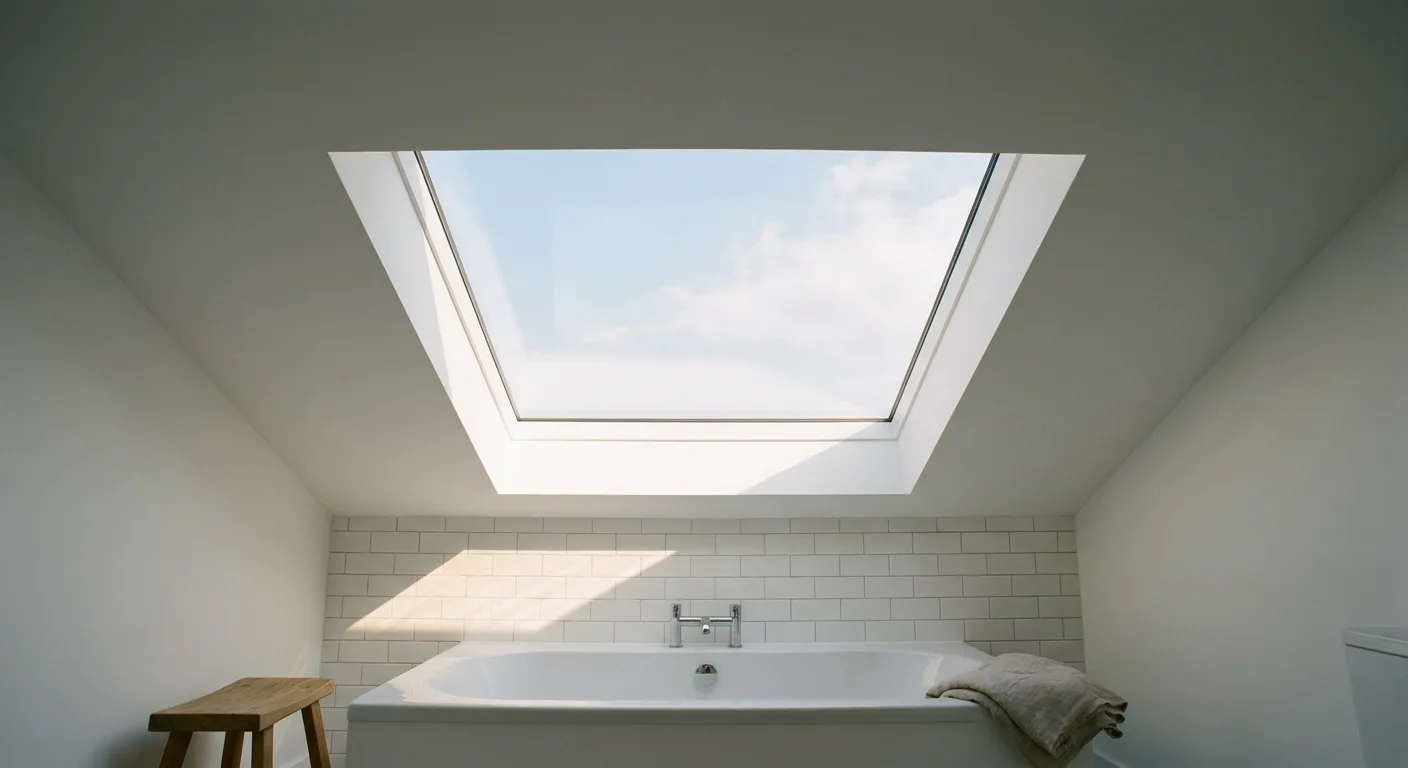
Why plastic goes yellow when glass does not
A plastic rooflight does not fail the way a sealed glass unit fails. There is no seal to break and no gap for moisture to enter; the material itself is changing, all the way through, and once it has changed there is no cleaning it back to clear.
Polycarbonate and acrylic are both plastics, and both are transparent when new, but sunlight is slowly hostile to each of them. Ultraviolet light breaks the polymer chains at the surface of the sheet, a process chemists call photo-oxidation, and the broken chains scatter light instead of passing it straight through. From the room below, that scattering shows up as a haze that thickens over the years into a solid yellow or grey cast. It is the plastic equivalent of a sun-bleached fence: everything exposed to years of daylight fades, and a skylight sits in more direct sun than almost anything else on the house.
Most sheet products carry a UV-stabilised coating on the outer face when they are made, which slows this considerably and is why a ten-year-old dome and a thirty-year-old dome can look very different. But the stabiliser itself is a coating, thin and finite, and once it has been used up by years of sun the bare polymer underneath is exposed to the same process with nothing left to slow it. That is usually the point where yellowing accelerates rather than creeps.
What is actually happening inside the sheet
Three plastics turn up on Peterborough roofs in place of glass, and each ages in its own way, which matters when you are trying to work out how far gone a rooflight really is.
- Acrylic domes, moulded as a single or double skin, craze across the surface in a fine web of hairline marks as the outer face weathers, on top of an even yellow cast underneath. The crazing scatters light in every direction, so even a dome that still looks fairly clear from a distance can be surprisingly poor to look straight up through.
- Multiwall polycarbonate sheet, the ribbed, flat panel used on many conservatory roofs and older flat-roof extensions, discolours on its outer skin first, but the real problem is usually inside the flutes: the hollow channels that give the sheet its strength trap dust, algae and condensation that no amount of surface cleaning reaches, so the sheet dims from within as well as fading on top.
- Corrugated GRP sheet, glass-reinforced plastic used on some older lean-to and outbuilding roofs, tends to go opaque rather than yellow, as the resin binding the glass fibres degrades and the surface turns a chalky, matt white that lets far less light through even where it has not visibly cracked.
All three are usually a decade or two old by the time discolouration is obvious from inside, since the change is gradual rather than sudden. A homeowner rarely notices it happening; they notice, one ordinary afternoon, that the room is dimmer than it used to be and the sky overhead has turned the colour of old paper.
| Material | Common use | How it fails |
|---|---|---|
| Acrylic dome | Bathroom, landing, older extension | Yellow cast, surface crazing |
| Multiwall polycarbonate | Conservatory roof, flat extension | Yellowing, algae inside flutes |
| Corrugated GRP | Lean-to, outbuilding, garage | Chalky, opaque resin |
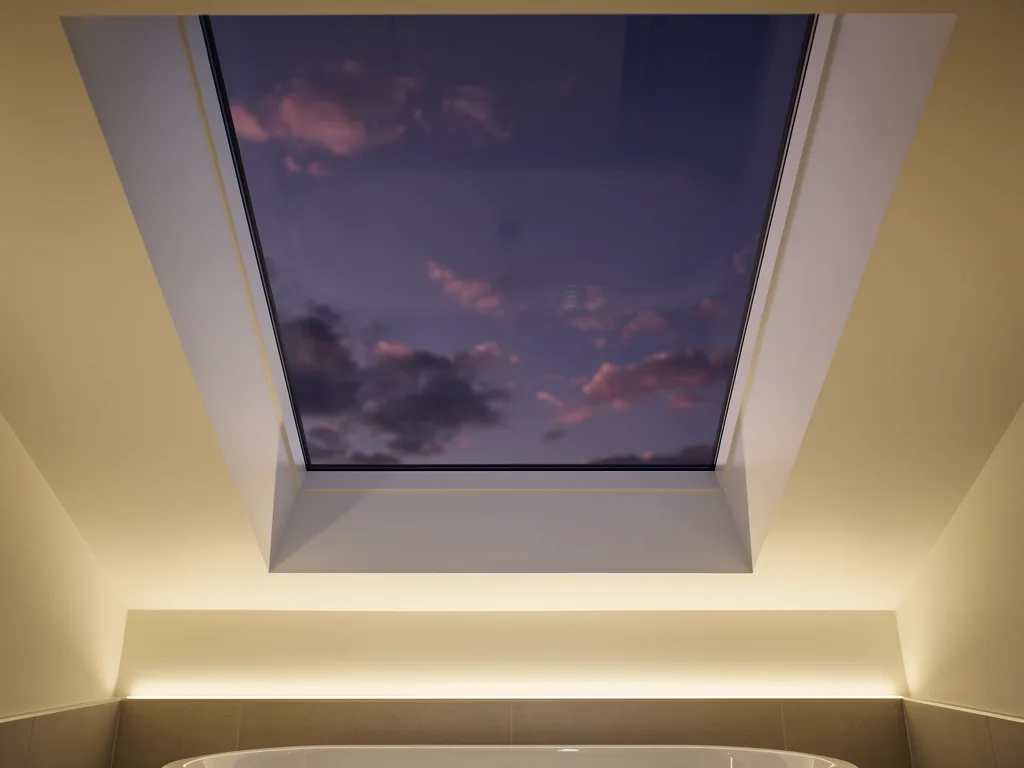
Cleaning gets you nowhere, and that is the tell
If a rooflight is genuinely dirty rather than discoloured, a wash from the outside brings the view straight back. Yellowed plastic does not respond that way, and testing it costs nothing but ten minutes and a bucket.
Surface grime, algae, lichen and the general film that settles on any roof over a season all sit on top of the material and lift off with warm water and a soft brush, the same as they would off a window. If the sheet still looks milky or yellow once it is properly clean and dry, the colour is coming from inside the plastic, not from anything sitting on it. That single check is usually enough to tell a homeowner whether they are looking at a maintenance job or a replacement decision, well before anyone climbs onto the roof.
It is worth separating this from a misted glass unit too, since both show up from the room as a hazy sky. A misted double-glazed pane fails suddenly and stays perfectly clear right up to the point the seal goes, whereas a plastic sheet fades gradually over years and was never as optically clear as glass even new. Our guide to how a rooflight unit fails and mist gets between the panes covers the sealed-unit route, and our page on telling condensation and misting apart covers the other look-alike, ordinary surface condensation that clears within the hour.
Where this turns up across Peterborough roofs
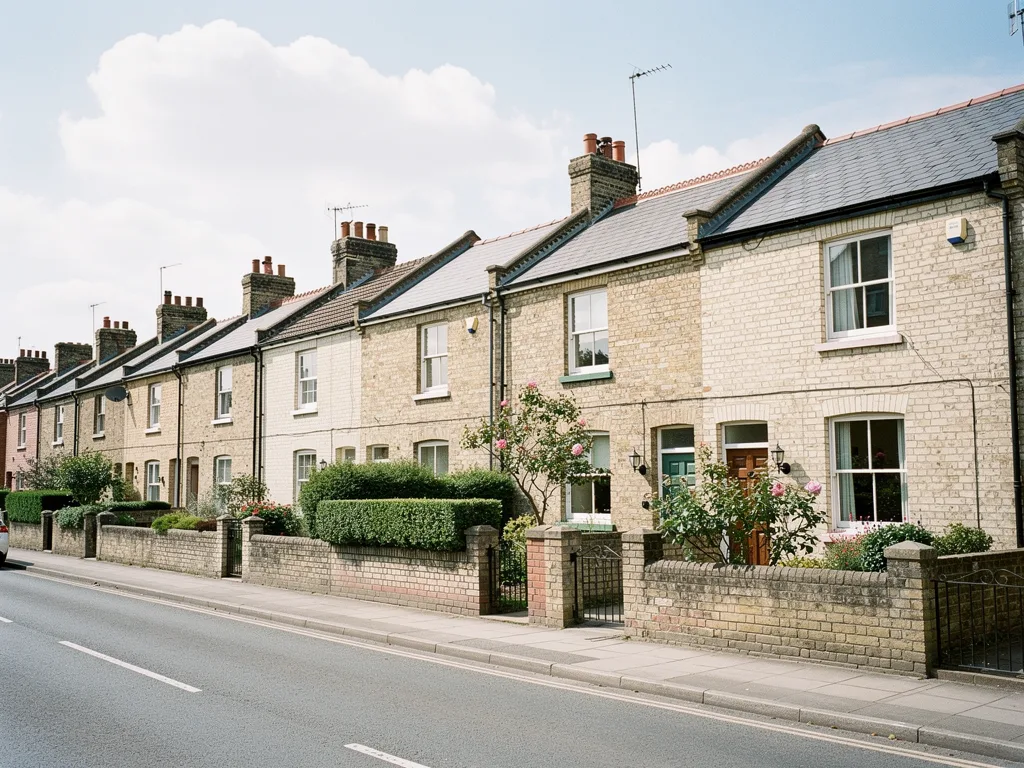
Plastic rooflights are common on exactly the building stock this city has a great deal of: fast-built extensions and conservatories from the last few decades, rather than the older stone and slate roofs further west.
Peterborough's new-town townships, Bretton, Orton, Werrington and the more recent streets around Hampton, were largely built from the late 1960s onward, and a good number of the loft conversions and rear extensions added to those homes over the years used acrylic domes or polycarbonate sheet rather than a glazed unit, since it was the cheaper option at the time of fitting. Many of those original domes are now well past the point where a stabiliser coating is doing any work. In the Fletton brick terraces closer to the city centre, older conservatories and single-storey rear additions carry the same multiwall polycarbonate roofs, often fitted decades ago and rarely revisited since. Around Stamford and the stone villages towards the Nene valley, plastic rooflights are less common on the older cottages themselves, but do turn up on rear extensions and outbuildings added since, where a slim conservation-style glazed unit was not thought necessary at the time.
None of this is a fault particular to any one street or builder; it is simply what happens to a plastic roof material left in the sun for long enough, wherever it sits.
The safety question underneath the appearance one
A yellowed rooflight is usually raised as a looks and light problem, but the same UV exposure that clouds the plastic also makes it more brittle, and that is worth knowing before anyone goes near the roof.
Fresh acrylic and polycarbonate are genuinely tough and will flex under an impact rather than shatter. Years of UV exposure change that: the surface layer that has broken down chemically is also the layer carrying most of the sheet's resistance to a sudden knock, so an old, yellowed dome can crack or puncture under a load that a new one would simply shrug off, a fallen branch, hail, or a foot placed on it during other roof work. Anyone accessing a roof near an aged plastic rooflight should treat it as fragile until it is confirmed otherwise, rather than assuming its original strength still holds. This is a separate issue from the walk-on glass units used deliberately on some flat roofs and terraces, which are engineered and tested for foot traffic from the outset; see our walk-on rooflight installation page for that different product entirely.
What changes when a plastic rooflight is replaced with glass
Moving from an aged dome or sheet to a glazed unit changes more than the colour overhead, and it is worth knowing the full list before committing to one route over another.
The most obvious change is the view itself: a modern sealed glass unit stays optically clear for a very long service life, with only its edge seal, not the glass, eventually at risk of failing, in the way our misted and failed rooflight replacement page covers. Where a single skin of ageing plastic gave a soft, yellowing smear, glass gives back a genuinely clean rectangle or dome of sky, and it stays that way. Beyond appearance, current glass units carry a low-emissivity coating and, on most models, an inert gas fill between the panes, neither of which a single skin of plastic ever had, so the room typically holds its heat better in winter and glare is more even across the day. Our guide to choosing glass for a replacement unit goes through coatings, tints and self-cleaning outer surfaces for anyone weighing up the options in full.
Weight is the change that is easy to overlook. A sealed double-glazed unit is considerably heavier than an equivalent-sized acrylic dome or polycarbonate sheet, so the kerb, frame and any roof structure it sits on need checking against the new load, not assumed capable simply because the old plastic sat there for years without trouble. Where the existing kerb and frame are sound and were built to take a glazed unit in the first place, as most current flat rooflight systems are, this is a straightforward check rather than a barrier. Our guide to replacing the glass unit or the whole rooflight covers how that decision gets made on the day, and where the frame itself needs to change too, our guide to when a failed frame means full replacement sets out the checks involved.
Frame profile: the other upgrade hiding in a plastic swap
An old acrylic dome usually sits in a plastic upstand or a timber kerb built to a much older, boxier standard than a current glazed rooflight needs, which opens up a second improvement that rarely comes up until the visit itself.
Where an old plastic dome had a deep, chunky surround simply to hold its shape and weather it, a current glazed unit in aluminium or slim steel can often sit in a noticeably narrower frame while carrying a heavier, better-performing pane, because the structural material itself is doing more work in less depth. That means the sightline from below, how much sky you actually see once your eye clears the frame edge, can improve substantially on the same size of opening, on top of the plastic-to-glass upgrade itself. Our guide to choosing slimmer frames when you replace compares old and current profiles side by side, and every quote we give includes a sightline sketch showing the view you would get back from wherever you sit, stand or lie in that room, so the improvement is something to look at, not just take on trust.
Flat rooflights, conservatories and lanterns: the same plastic, different jobs
Where the discoloured plastic sits changes what the replacement job actually involves, since a flat extension roof, a conservatory and a pitched dormer window each carry it in a different way.
On a flat extension roof, an old plastic dome usually sits on an insulated upstand or kerb that is often still perfectly sound underneath, so the job is frequently a straightforward swap onto the existing upstand once its size is confirmed, in the same way our misted flat rooflights guide describes for a failed sealed unit. Where the whole roof structure has moved on since the plastic was fitted, our flat roof rooflight installation page covers a full new fitting instead. A conservatory roof carrying multiwall polycarbonate across its full slope is a bigger undertaking, since the sheet is doing structural and weathering work across a large area rather than sitting in one opening, and that is usually planned as its own project rather than a like-for-like swap. A roof lantern with plastic panels in place of glass on one or more slopes can generally have those panels replaced individually, in the way our roof lantern installation page sets out for a full lantern fitting.
Building Control and the notification for a plastic-to-glass swap
Replacing an old plastic rooflight with a new glazed unit still sits within Building Regulations, in the same way any rooflight replacement does, because the finished job has to meet a current thermal standard rather than simply match what it replaces.
Approved Document L sets a limiting U-value of 2.2 W/m²K for a replacement rooflight in an existing home, measured across the whole unit, frame included. A single skin of ageing polycarbonate or acrylic falls well short of that figure on its own, so a plastic-to-glass swap is squarely notifiable work, and it is also one of the more clear-cut upgrades to justify, since the thermal gain from a coated, gas-filled glass unit over a single plastic skin is considerable. We handle the Building Control notification for every job of this kind, so the paperwork is in order from the outset. That sits alongside our 10-year workmanship guarantee, which covers the new fitting once it is in.
From a yellowed dome to a clear pane: how the visit runs
Because a plastic rooflight rarely fails suddenly, there is no rush to the visit itself, but the measuring and checking on the day are much the same as for any replacement.
- A home visit to look at the existing dome or sheet, check the kerb, upstand or frame beneath it, and confirm whether it can carry a glazed unit as it stands.
- Taking exact measurements of the opening and agreeing the new glass specification and frame profile with you.
- Ordering the glazed unit or complete rooflight made to size, which carries a lead time from the maker.
- Fitting day: the old plastic comes off, the kerb or upstand is checked and made good, and the new glass goes on and is sealed.
Where the existing kerb or upstand is sound, the room below usually needs little more than dust sheets for the day, since the opening itself is not made any bigger and no new cutting into the roof deck or joists is needed. What drives the cost on the day, from the glass specification chosen to whether scaffold access is needed to reach the roof, is set out on our page on what affects the cost of a rooflight. We cover Peterborough and 30 miles around, from the new-town townships where so many of these older domes were fitted, through the Fletton brick terraces closer to the centre, out to Stamford and the stone villages beyond. You can see every rooflight and skylight we install and replace on our Peterborough rooflight and skylight installation page, or book a home visit to have the roof looked at properly.
What people ask about a yellowed dome before booking a visit
Can a yellowed acrylic dome be cleaned back to clear?
No, not once the colour comes from inside the plastic rather than from surface dirt. A wash will confirm which one you have: genuine grime lifts off and the view returns; a true yellow or grey cast, from UV breaking down the material itself, stays exactly as it was before the clean.
Does yellowed plastic let less light through, or just look worse?
Both. The scattering caused by UV breakdown does not just tint the view yellow, it also reduces how much daylight actually reaches the room, so a badly discoloured rooflight is dimming the space as well as spoiling the sky above it.
Is a yellowed rooflight safe to leave for now?
Day to day, yes, it is a clarity and comfort issue and nothing more urgent than that. The point to take seriously is that the same ageing that caused the colour change also makes the sheet more brittle than it once was, so it should not be treated as strong enough for anyone to step on or lean a ladder against.
Can a plastic dome be swapped for glass on the same kerb?
Often, yes, provided the existing kerb or upstand is sound and was sized for a standard glazed unit, which is confirmed on the home visit. Where the kerb has also aged out or was never built for the extra weight of glass, that is renewed at the same time as the glazing.
Keep reading
 GuideChoosing a Slimmer Frame When You Replace a RooflightA failed rooflight is the moment to choose a slimmer frame, fewer bars and a wider view of the sky.
 GuideMisted Flat RooflightsWhy a flat rooflight's low pitch and sun exposure mist the seal faster, and how the glass is replaced on the kerb.
 GuideWhen a Failed Frame Means Full ReplacementHow we tell whether a failed rooflight needs new glass or the whole frame replaced.
Book a home visit
Tell us which room
- No obligation
- Sightline sketch included
- 10-year guarantee
Or call 01733 736163