Question · Roof windows
Do Roof Windows Make a Loft Cold?
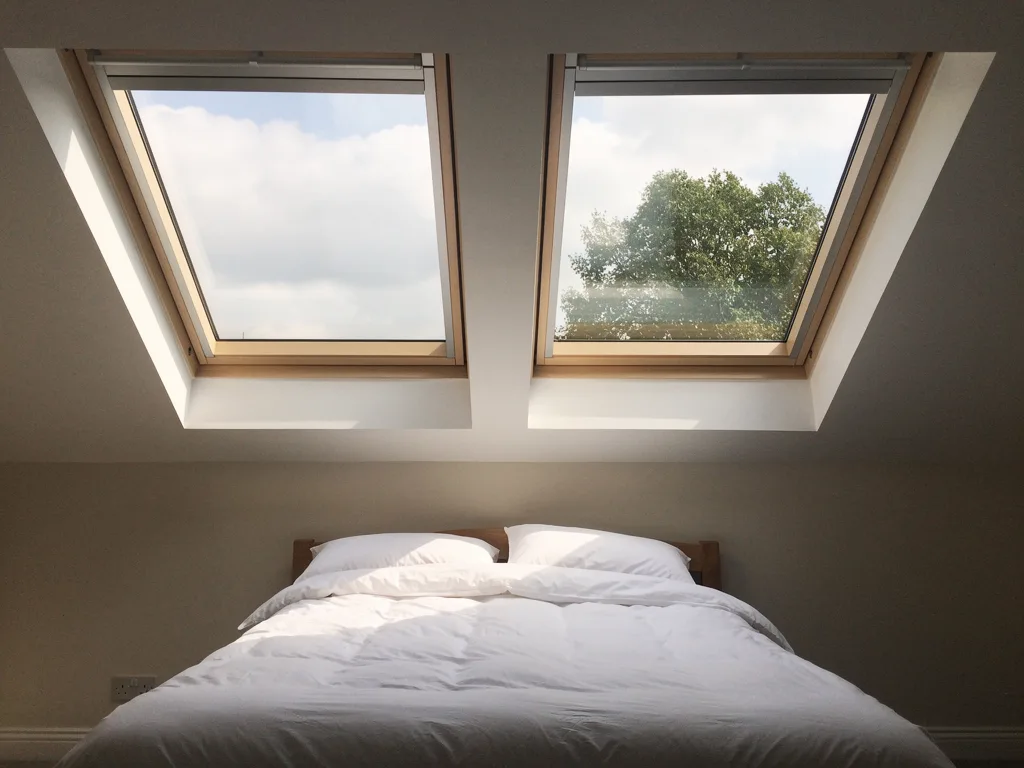
The pane is rarely the problem now
Glass has moved on more than any other part of a roof window, and it carries most of the thermal load, so it is the sensible place to start.
A sealed double-glazed unit with a low-emissivity coating on the inner pane reflects room heat back inward rather than letting it radiate out through the glass, while an argon-filled cavity slows the heat that does try to cross. Triple glazing adds a second cavity and a third pane, and earns its place in a loft bedroom used every evening through winter, on a north-facing slope, or where the room sits directly under the ridge with no floor above to buffer it. On a smaller landing window or a room only used in daytime, a good double-glazed unit usually does the job without the extra weight and cost of a third pane.
Brands differ here in ways that matter more than the marketing suggests: cavity width, spacer type at the pane edge, and coating all vary, and some combinations that look similar on a spec sheet feel very different against your hand on a February morning. Our roof window brands compared guide sets out the differences by frame and glazing rather than by name alone.
Where the frame meets the rafters
Cold rarely gets in through the middle of the glass. It gets in around the edge, at the join between the window frame and the timber it sits in, and that join is sealed by an insulated collar rather than the window itself.
The collar wraps the frame in insulation and carries a vapour barrier on the warm side, so moist room air cannot travel through the loft's insulation and condense against cold timber where it cannot dry out. Fit it badly, or leave a gap where the loft insulation is cut back around the opening, and you get a cold ring around the frame that no amount of glazing upgrade will close. Our piece on the vapour barrier collar covers what it does and why it is fitted on every current install, not just where a survey flags damp.
On a shallow-pitched roof the collar has to work harder, because rain and cold wind sit against the frame for longer than on a steep slope, and the detailing at the head of the window matters more. Our guide on roof windows below the usual pitch covers what changes there.
The lining carries warmth as far as the reveal
The plasterboard lining between the frame and the room is part of the thermal picture too, not just decoration. A splayed lining, widening from frame to ceiling, opens up the sky you see from below and gives the insulation somewhere to sit without a hard cold corner forming where the reveal meets the ceiling.
A square-cut lining fitted tight to the frame with no depth to insulate leaves a thinner, colder edge all the way round, and it is often where the first hint of a draught is actually felt, at the corner rather than against the glass. See lining a roof window so the opening widens towards the room for how the two goals, a wider view and a warmer reveal, are planned together rather than traded off.
| Part | Older fit | Current fit |
|---|---|---|
| Glass | Single glazing, some early double units | Sealed double or triple, low-E coated |
| Frame join | Foam or nothing behind the trim | Insulated collar with a vapour barrier |
| Lining | Square cut, tight to the frame | Splayed, insulated to the ceiling line |
| Loft insulation | Often cut back and left short | Dressed up to meet the collar |
What this looks like across Peterborough lofts
The city's own Fletton brick terraces mostly carry roof windows fitted into a loft conversion some years after the house was built, and the age of that original fit is usually what decides whether the room feels cold today. Out in the new-town townships of Bretton, Orton and Werrington, lofts are more often finished in one go as part of the house design, so the collar and lining tend to be more consistent, though the glazing spec chosen at the time can still be dated. Around the stone cottages near Stamford, a slim conservation-style roof window has less frame to insulate in the first place, but the lining depth through a thicker stone roof build-up needs the same care as anywhere else.
None of that is fixed by the glass alone. It is the frame, the collar and the lining working together that decide whether a bedroom under the roof stays warm through a Fenland winter, when a low, grey sky sits over the flat land for days at a stretch rather than breaking into a sharp, short frost.
Checking whether a window is actually the cause
- Cold felt at head height from a bed placed under or beside the window, rather than a general chill through the whole room.
- A cold band on the ceiling around the opening that shows up under a torch or in cold weather even when the glass itself feels only cool.
- Air moving noticeably at the corners of the lining rather than against the centre of the pane.
- A window fitted before double glazing became standard, or one with a visibly failed seal showing a misted cavity.
Any of these point away from the glass and towards the collar, lining or insulation around it, and a survey will show which before anything is opened up. Where the unit itself is the issue, replacing an old roof window in a tiled roof covers what changes when it is renewed.
Questions people also ask
Does a roof window lose more heat than a normal wall window of the same size?
A roof window faces the sky rather than the horizon, so it loses a little more heat than an equivalent vertical window through the glass alone, on account of the angle it sits at. A current low-E unit with a well-fitted collar still performs well against Building Regulations, and the difference in practice is small next to what a poorly fitted collar or a thin lining costs you.
Will loft insulation alone fix a cold roof window?
Only if the insulation was the actual gap. Thick loft insulation laid everywhere except tight against the window frame leaves the coldest part of the roof exactly where it was, so it needs to be dressed right up to the collar, not just topped up elsewhere.
Is an older single-glazed roof window worth upgrading on its own, without other loft work?
Often yes, since the glass is usually the largest single source of loss in an older fit, and it is a contained job that does not depend on other work in the loft. It is worth a survey first, since a failing collar or thin lining found at the same time is better dealt with in one visit than in two.
Does the direction a roof window faces change how cold it feels?
Orientation changes how much sun a room gets during the day, not how fast the frame and collar lose heat at night, so a north-facing window is not colder on that account alone. Where it does matter is glare and solar gain, which is a separate specification choice from the one that keeps a loft warm.
A sightline sketch that comes with every quote is drawn alongside the glazing, collar and lining specification, so the view from your pillow or desk and the winter performance of the window are planned as one job rather than two. We install every roof window to current Building Regulations and handle the Building Control notification where the work is notifiable. See roof window installation in Peterborough for the full service, flashing kits for slate, tile and plain tile roofs for how the outside is sealed, what affects the cost of a rooflight for the wider picture on specification, and the sightline sketch for what comes with every quote.
Book a home visit
Tell us which room
- No obligation
- Sightline sketch included
- 10-year guarantee
Or call 01733 736163