Guide · Roof windows
Roof Window Brands Compared
VELUX, FAKRO, Keylite and Rooflite each build a similar box of glass. Frame profile, glazing tier and flashing are what actually change the view.

What actually changes from one make to the next
Four names turn up on almost every quote for a pitched roof window in the UK: VELUX, FAKRO, Keylite and Rooflite. All four sell a wooden-framed, factory-glazed unit that sits into a kerb between rafters, with a matching flashing kit for the roof covering. The badge on the corner of the sash is the least useful thing to compare. What actually changes the room, and the view from it, is the frame timber and finish, the size grid, the opening type, the glazing tier and the flashing system underneath.
None of that is a reason to pick a range on reputation alone. A narrow frame and a slim bar on one maker's mid-tier window can leave more sky in view than a wider, cheaper unit from another, and a size code that looks identical on paper can sit a few millimetres differently in the same rafter bay. Reading the spec sheet, not the badge, is what tells you what you will actually see from the bed, the sofa or the sink.
Frame timber, paint and the wet-room finish
All four makers build their standard range from a laminated pine core, either left with a clear lacquer or finished in white paint. The lamination is there to stop a solid section of timber twisting as it dries out over a Peterborough summer and swells back in a wet winter, which matters more than it sounds: a frame that moves even slightly widens the gap the seals have to bridge.
For a bathroom, kitchen or utility room, most ranges also offer a white, moisture-resistant finish over the same pine core, sold as the option for steamy rooms rather than a separate material. It is worth asking for by name rather than assuming the standard lacquered frame is included, because the two are usually priced and stocked as different lines.
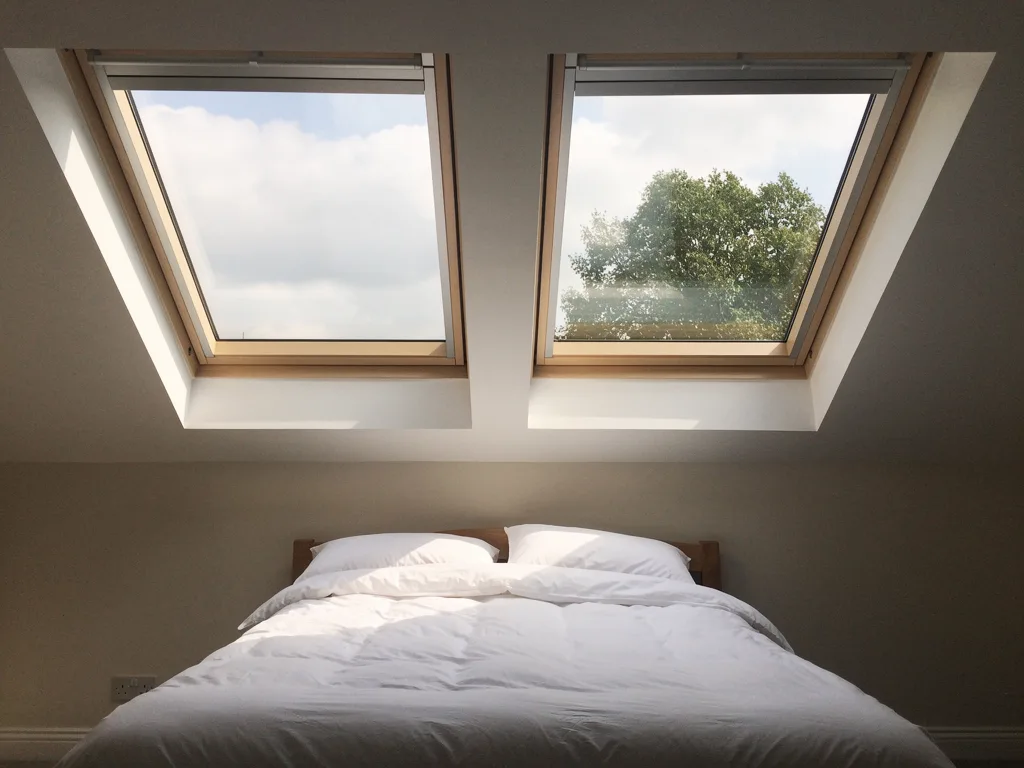
Frame depth is the detail that gets skipped in most comparisons. A deeper frame section sits further into the room on a standard-depth roof, and that depth is part of what forms the reveal, the splayed or square lining between the plasterboard and the glass. Two windows of the same glazed size can leave a noticeably different amount of sky in view once the reveal is built around them, which is one reason we draw a sightline sketch for the actual unit being quoted rather than working from a catalogue photo.
Size grids and how they meet the rafters
Every maker publishes its own size code, a short combination of letters and numbers stamped on the frame, and each code corresponds to a set width and height in millimetres. The grid is built around common UK rafter spacings so that a standard size drops into an unaltered roof without cutting a rafter, and our guide to roof window sizes for loft rooms sets out how that spacing decides what fits.
The trap is assuming the codes translate directly between brands. A size that reads as "standard" in one maker's range is not always the same glazed area as the nearest match in another's, and the kerb, the timber upstand the window sits on, can differ in height by enough to change how the flashing steps over the tiles or slates. If a rafter has to be trimmed to take a wider unit, that is a structural decision, not a shopping one, and it is covered separately in our note on what size roof window fits between rafters.
- Check the exact glazed size, not just the code, when comparing across makers.
- Check the kerb height against the existing upstand if the window is a straight swap.
- Check that a flashing kit exists for the new size and the roof covering together, not just for the size on its own.
Centre-pivot and top-hung, and who makes which
All four of the main brands sell both of the two common opening types in their standard range: a centre-pivot window that rotates on a horizontal axis roughly at its middle, and a top-hung window that hinges along the top edge and swings outward like a hatch. Neither type is exclusive to one maker, so the choice is about the room, not the badge, and it is covered in full in centre-pivot or top-hung roof windows.
The practical difference that carries into a brand comparison is how each type reads from below when it is shut. A centre-pivot sash usually carries a slightly heavier central bar to take the pivot hardware, which sits in the eyeline from a chair or a bed more than the same window's frame does. A top-hung sash keeps that hardware at the top edge, out of the direct sightline for someone sitting or lying below it, which is why we ask where in the room you will actually be looking from before we recommend one over the other, whichever maker's window it turns out to be.
Glazing tiers, coatings and the pane that stays clear
Below the standard entry-level double-glazed unit, every maker sells at least one upgraded tier, and the labels are close enough to cause confusion. A low-E coating on an inner pane reflects heat back into the room rather than letting it escape through the glass, which matters for comfort in an unheated loft as much as for the energy bill. A solar control coating on the outer pane cuts down glare and heat gain on a south-facing slope, which is worth asking about directly if the room already gets hot in summer. Triple glazing adds a third pane and a second gap, trading a small amount of extra frame depth for a warmer, quieter room.
The coating that affects the view most directly is the self-cleaning finish sold as an option on the outer pane, most useful on a shallow pitch where rain runs off slowly and dirt has longer to settle. It works by breaking down organic grime in daylight and letting rain sheet it away rather than beading, so the glass stays clearer for longer between cleans. On a steep pitch it earns its keep less, because rain already does most of that work unaided.
| Glazing tier | What it changes |
|---|---|
| Standard double glazed | Baseline clarity and insulation |
| Low-E double glazed | Warmer room, less heat lost through the pane |
| Solar control coating | Less glare and heat gain on a sunny slope |
| Self-cleaning outer pane | Clearer glass for longer on a shallow pitch |

Flashing kits and the roof covering underneath
A roof window is only as weathertight as the flashing kit fitted around it, and none of the main makers sell a universal one. Each range offers separate kits for plain tiles, interlocking tiles, natural slate and low-profile coverings, stepped and dressed to suit the thickness and lap of that particular material, which our guide to flashing kits for slate, tile and plain tile roofs covers in more depth.
Slate causes the most confusion at replacement stage, because a slate flashing kit steps differently to a tile one to sit under the thinner, overlapping courses, and it is not always sold in every size a maker's window range covers. Our answer on whether a roof window works in a slate roof goes through what changes. The rule that holds across every brand is that the flashing kit has to match the window's size and the roof's actual covering together, not one or the other, and a mismatch is the single most common cause of a roof window that lets water in around the edge rather than through the glass.
Bar width, frame depth and what you actually see
This is the comparison that matters most to us, because it is the one the catalogues do not put front and centre. The width of the outer frame, the depth of the sash and, on larger sizes, the width of any central glazing bar all vary by a matter of millimetres between makers and even between tiers within the same maker's range. From a catalogue page those differences look trivial. From a pillow, looking up at a fixed distance and angle, they are the difference between an open rectangle of sky and one with a visible edge running across it.
The same logic runs into where the window sits and how it is lined. Setting the glass at the right height for the room, whether that is a bed you look up from or a desk you sit at, is covered in roof window height: setting the sightline for sitting and standing, and how the plaster reveal around the frame is splayed to widen the view rather than narrow it is set out in lining a roof window so the opening widens towards the room. Brand and glazing tier decide what light and warmth you get. Position, height and lining decide what you actually see, and that second set of decisions is ours to make with you before any window, whichever maker's, goes in. It is why every quote we give comes with a sightline sketch drawn for the actual unit and position proposed, not a generic diagram from a catalogue.
Vapour collars and how the loft stays warm
Every one of the main ranges sells an insulated collar as a fitting accessory, a factory-made box that wraps the frame on the room side and carries a vapour barrier layer that stops warm, moist air from the room reaching the cold roof timbers and condensing there. The exact shape and fixing method differs slightly by maker, but the job is the same in every range, and our note on whether a roof window needs a vapour barrier collar explains why it is not an optional extra on an insulated loft.
Whether the finished room feels warm depends far more on this collar, the loft's wider insulation and the glazing tier chosen than on which maker's name is on the frame. Our answer on whether roof windows make a loft cold goes through the detail. A well-specified window from any of the four main brands, fitted with its matching collar and set into a properly insulated loft, performs closely in line with the others; a window of any make fitted without one will feel the difference, and it will show up as a cold edge around the frame long before it shows up on a bill.
Blinds, control and the small accessories
Beyond the window itself, every range extends into blinds, insect screens and remote or solar-powered control gear, sold to fit that maker's own size codes rather than as a generic aftermarket part. Pleated and roller blinds are the common options, usually offered in both a manually operated version and a solar-powered version that runs from a small panel built into the top of the blind rather than mains wiring, which avoids running a cable through the roof for a blind alone. Fitted insect screens are a genuinely useful accessory on a window that opens onto a garden or field, and they are sized to that maker's frame, so a screen from one range will not fit another's window even at the same glazed size.
Remote and app control is worth asking about directly if a window will end up out of easy reach, over a stairwell or a high vaulted ceiling, rather than assumed to be standard. It is usually a factory-fitted option on the window itself, added at the point of ordering, rather than something retrofitted afterwards.
Choosing by roof, not by badge
None of the four main brands is the right answer for every roof, and none is consistently ahead of the others across every measure. One maker's mid-tier window might carry the narrowest frame in a size that matters for a particular loft bedroom; another's flashing kit might be the better match for an unusual slate on a Stamford cottage; a third's insulated collar might be the neater fit around an existing kerb on a straight swap. The right choice comes from the roof, the room and the view you actually want, not from picking a name first and working backwards.
Whichever maker's window ends up on the order, the same standards apply on our side: installation to current Building Regulations, the Building Control notification handled for you where the work is notifiable, and a 10-year workmanship guarantee on the fitting itself. You can read what else feeds into the number on a quote in what affects the cost of a rooflight, and see the full range of sizes, openings and roof types we work with on the roof window installation page.
A few things worth asking before you choose a make
Can two different brands of roof window go in on the same roof?
Yes. There is no technical reason a Peterborough loft cannot carry windows from two different ranges, side by side or on separate slopes, provided each is flashed with its own matching kit. It is more common where an existing window is kept and a new one added elsewhere, or where a replacement uses whichever range best matches an unusual size.
Does a more expensive range always give a better view?
Not automatically. Price differences between tiers usually track glazing performance, finish and accessories more than frame width or bar profile. A mid-tier window in the right size, correctly positioned and lined, can leave more open sky in view than a top-tier window of a poorly chosen size in the wrong spot.
Can an old window from one maker be swapped for a different maker's replacement?
Usually, yes, though the existing kerb and opening are measured first to see which range's size grid matches most closely without cutting into the surrounding roof structure. Our guide to replacing an old roof window in a tiled roof covers what that survey looks for.
Do all the brands cover the same range of sizes?
Broadly, yes, for the common sizes that suit standard UK rafter spacings, though the exact glazed dimensions differ slightly between makers even where the marketed size looks the same. The largest and smallest sizes in each range are where the gaps between brands show up most, which is worth checking early if a loft has an unusual rafter spacing.
Keep reading
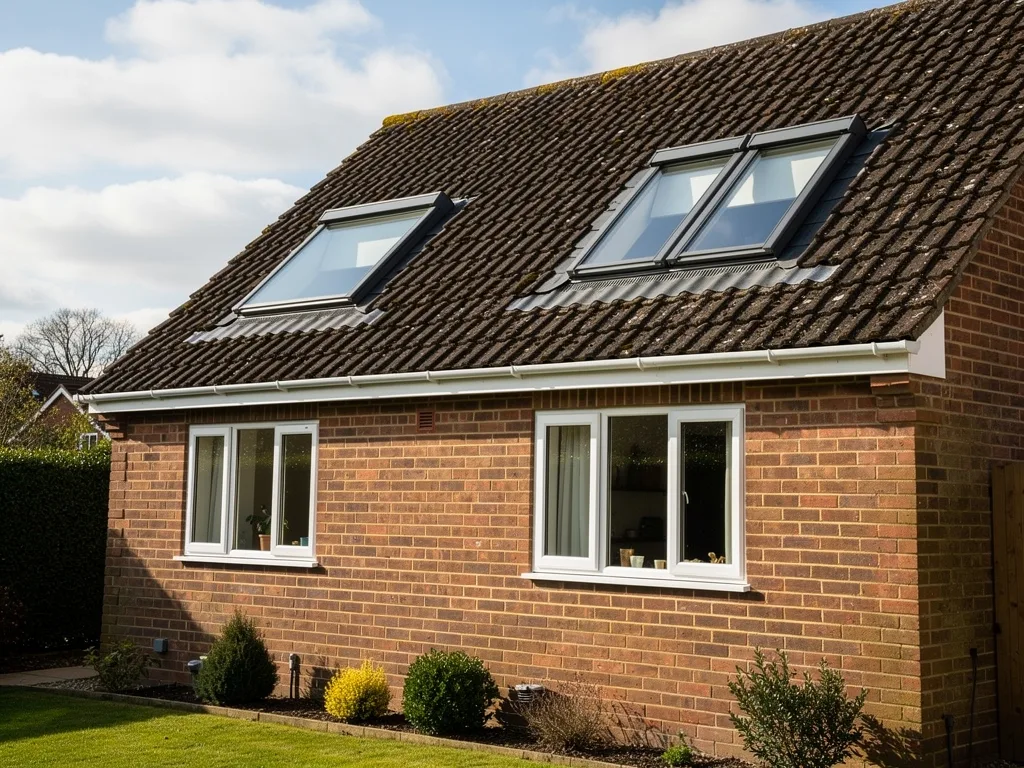 GuideStacking Roof Windows for a Taller Piece of SkyHow stacking two roof windows one above the other gives a taller run of sky than a single window can.
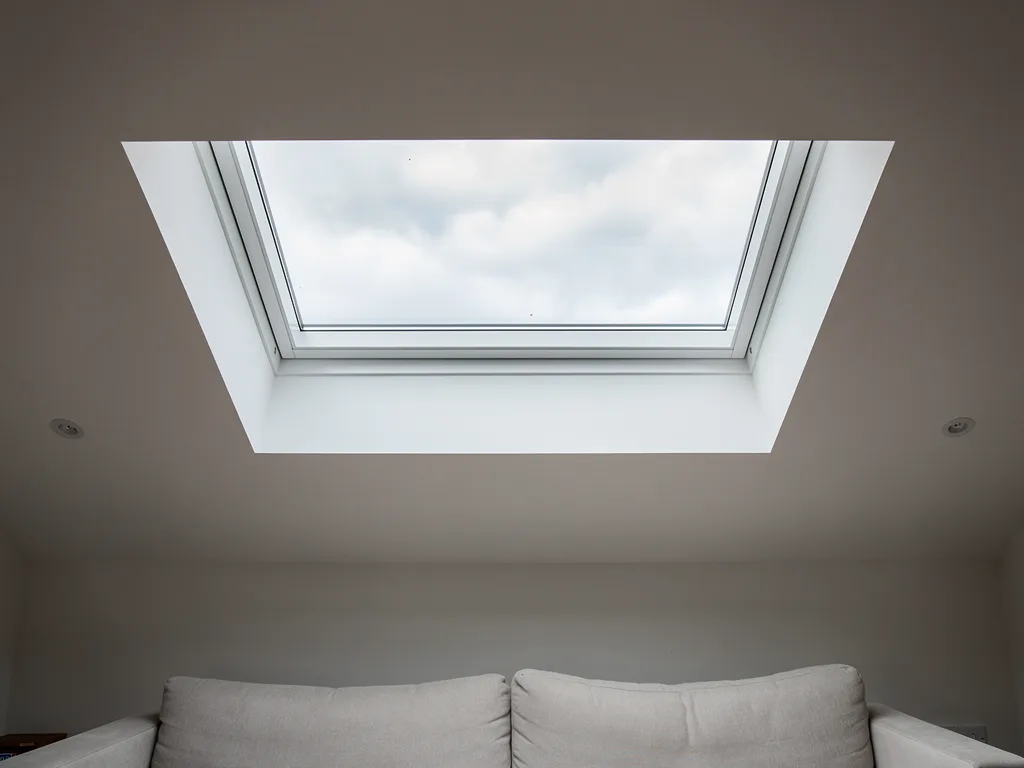 GuideBalcony Roof Windows: Stepping Out Into the ViewA balcony roof window folds open into a small railed platform, but only on roofs steep and strong enough to take one.
 GuideRoof Windows as a Fire EscapeBuilding Regulations set a minimum size and sill height for escape roof windows in loft conversions.
Book a home visit
Tell us which room
- No obligation
- Sightline sketch included
- 10-year guarantee
Or call 01733 736163