Guide · Roof windows
Centre-Pivot or Top-Hung Roof Windows
Centre-pivot and top-hung roof windows look similar shut, but the hinge changes where the handle sits, how you clean the outer pane, and what stays out of view when open.

Centre-pivot and top-hung are the two ways almost every pitched roof window opens, and from the pavement they can look identical: a single sash set into a frame, sitting flush or a little proud of the tiles or slates around it. The difference only shows once you are standing under one with a hand on the fitting, because a centre-pivot sash and a top-hung sash turn on hinges set in completely different places, and that single fact changes where the handle sits, how far the sash travels into the opening when it is used, how you get at the outer pane to clean it, and which part of the sky stays in view while the window is open rather than shut. None of that is a distinction between two makers' ranges; it is the same mechanical choice offered across most roof window lines, worth understanding on its own terms before a brand or a finish enters the conversation.
A pivot through the middle, or a hinge along the top
Every opening light needs a hinge somewhere in the frame, and moving that hinge from the middle of the sash to its top edge changes almost everything that follows. A centre-pivot sash turns on two pins set into the side jambs roughly halfway up the frame, carried on friction stays that let it stop and hold at any angle rather than swinging freely shut. A top-hung sash instead hinges along its top rail, so the whole sash lifts outward and upward from a line that never moves, closer to a flap opening away from the roof than a pane turning on an axis. The two are not different grades of the same window; they are different answers to where in the frame the moving part should sit.
That single difference in hinge position is what the rest of this guide comes back to. Where the pivot or hinge sits decides how far you can safely reach to open the sash, how the sash sits in the opening when it is only part open, and how the two faces of the glass present themselves when it comes to cleaning. It is worth settling early in a room's plan, because it changes daily use of the window more than the frame colour or the make printed on the label.
The centre-pivot sash: a turn through the frame's own middle
Push or pull the handle on a centre-pivot window and the sash rotates around its own centre line rather than swinging clear of the frame: the top edge tips outward and down towards the roof slope, while the bottom edge lifts inward and up towards the room. Because the turning point sits roughly halfway up the frame, the sash never travels far from where it started, which is why centre-pivot windows can be opened safely from a stepladder, or, on a taller window, from the floor with an extendable pole clipped to the handle. It is the type most loft conversions default to for exactly this reason: the same geometry works whether the window sits at eye height on a landing or high up a steep slope above a stair.
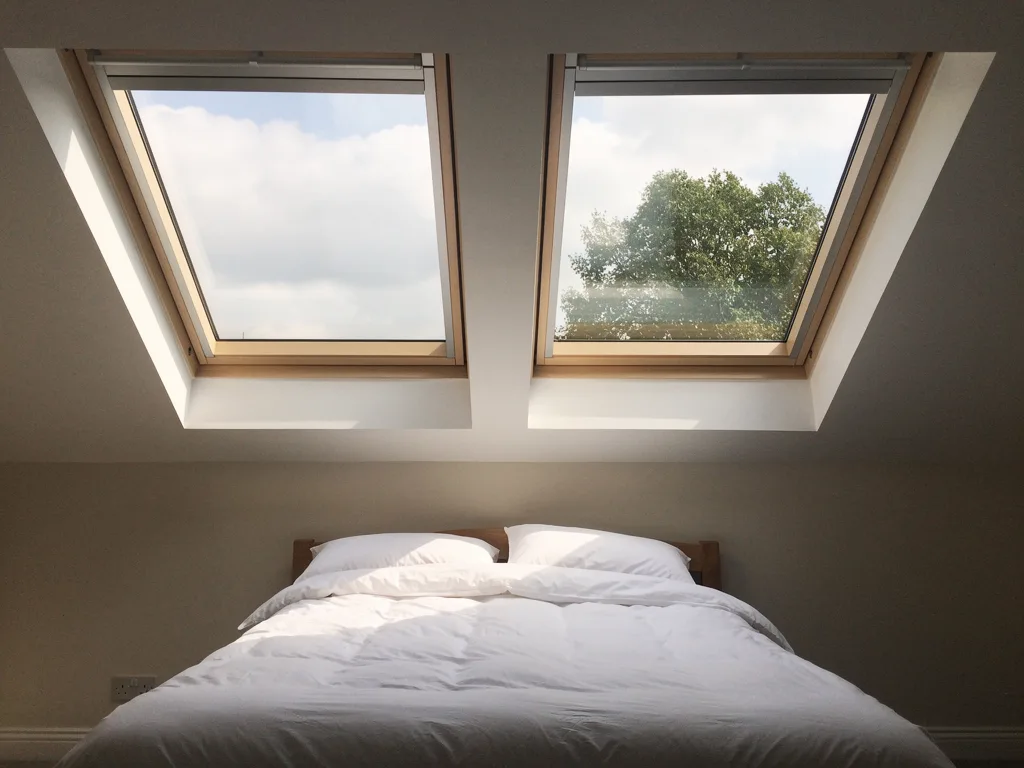
The trade-off sits in that same geometry. Because the sash turns through its own middle rather than lifting clear at one edge, a centre-pivot window open at any angle short of fully shut has part of the frame and the near half of the sash sitting across the centre of the opening, roughly where your eye would otherwise be looking straight up. Closed, none of this matters: the glass reads as a single continuous pane like any other roof window. It only becomes relevant with the window cracked open for ventilation on a warm night, when the middle of the view carries a line of frame that a top-hung window, fitted in the same spot, would not.
The top-hung sash: a hinge that stays out of the way
A top-hung window hinges along its top rail and lifts outward and up from there, so opening it swings the bottom edge of the sash away from the frame while the top edge barely moves. The moving part stays close to the top of the opening at every stage, from a few centimetres of ventilation gap to fully open, the opposite geometry to a centre-pivot window's rotation through the middle. That keeps the lower two-thirds or more of the aperture clear of moving sash at any opening angle, which matters most where the window sits low in the pitch, close to a desk, a bed head or a bath, and where a sash swinging into the middle of the frame would sit directly in the eyeline.
Because the hinge line is fixed at the top, a top-hung window also tends to suit positions lower in the roof, within easy reach of a hand rather than a pole, since there is no pivot point to reach past before the stay releases. It is also the type most often paired with a smaller top-hung vent above a larger fixed pane on a combination unit, and the shape many escape windows use, where a clear opening low in the frame matters more than a rotating sash; our guide to roof windows as a fire escape sets out the sizes that rule requires.
Where the handle sits, and why it is not just a detail
Ask a supplier where the handle sits on each type and the answer is consistent enough to plan a room around: a centre-pivot window is opened from a handle set into the top rail of the sash, so you reach up and slightly forward to release it, and the sash then turns past your hand as it rotates. A top-hung window is opened from a handle set into the bottom rail instead, so you reach down, closer to shoulder or chest height on a window fitted at a normal loft position, and the sash lifts away above the handle rather than turning past it.
That reversal matters most where the window sits at an awkward height, high above a stair void or low over a bath. A top-hung handle at the bottom of the sash is usually the easier one to reach without a pole on a window set low in the pitch, while a centre-pivot handle at the top suits a window fitted higher, where a pole or a permanent crank reaches the top rail more comfortably than it would the bottom. Our guide to setting the sightline for sitting and standing goes through handle and cill height together, since the two are usually decided at the same time as the window is planned into the room.
Centre-pivot and top-hung, side by side
Put next to each other, the differences are mostly about the sash's own movement rather than the size or style of frame around it.
| Feature | Centre-pivot | Top-hung |
|---|---|---|
| Hinge position | Through the frame's middle | Along the top rail |
| Handle position | Top rail of the sash | Bottom rail of the sash |
| Sash travel when open | Rotates through the opening | Stays near the top, lifts at the bottom |
| Typical reach | Pole or crank, high or low | Direct reach where fitted lower |
| Cleaning the outer pane | Rotates a full turn, faces into the room | Reached with a pole, or from outside if low |
| Common use | Standard loft opener, wide pitch range | Lower positions, escape and combination units |
None of this is fixed by a single maker, and not every range offers both hinge types in every size and finish, so our guide to roof window brands compared is worth reading alongside this one before a specific size is chosen.

Which keeps more sky in view, open or shut
Shut, the two types are close to identical from below: the same size of pane, held in the same depth of frame, whichever hinge is fitted. The everyday difference only appears once trickle ventilation or an open window is part of the picture. A top-hung window left ajar for the night, in a Peterborough loft conversion over Bretton, Orton or Werrington as much as anywhere else, keeps the lower half of the frame clear, so from a pillow the sky stays uninterrupted below the hinge line. A centre-pivot window left at the same angle puts part of its own sash across roughly the middle of that view, because the whole point of the mechanism is to turn rather than lift.
None of this shows up on a spec sheet, which is why every quote we give includes a sightline sketch: a drawn view from the exact spot in the room that matters, at the opening angle you would actually use, rather than a photograph of the window shut.
Cleaning the outer pane without leaving the room
A centre-pivot window's rotation is also its cleaning method: turned through a full half circle and held by a second, cleaning-position catch on the friction stay, the outer pane faces into the room, close enough to wipe from a chair or the floor rather than a ladder on the tiles outside. It is the reason the type became the standard loft opener long before it was chosen for anything to do with the view: a window two storeys up a steep slope has to be cleaned from somewhere, and turning the glass towards you solves the problem without scaffolding.
A top-hung window does not turn that way, because its hinge is fixed along the top rather than through the middle, so the outer pane is reached with an extendable pole and a squeegee head from inside, or, on a window fitted low enough in the pitch, from outside with a short ladder. Our answer on how the outer pane of a roof window is cleaned from inside goes through both methods in full, including the pole attachments each type takes.
Reach, restrictors and rooms where each type earns its place
A window fitted above a stair void, a landing or anywhere a fall is possible needs its opening controlled whether it is centre-pivot or top-hung, and both types take a restrictor stay that limits how far the sash travels before it can be released fully. Where the window sits well above normal reach, a permanent crank handle or a chain-operated opener does the daily work instead of a pole, and our guide to opening a roof window you cannot reach covers the options for both hinge types.
Locking points, laminated panes and the position of any ventilation flap are decided separately from the hinge type, and apply equally to a centre-pivot or a top-hung window; our answer on whether roof windows are secure sets those out in full.
What to check before you choose
The choice between the two rarely comes down to price alone, and a good specification will already have matched hinge type to where the window sits. Before signing off on a plan, it is worth checking:
- Height above the floor, since a centre-pivot handle at the top and a top-hung handle at the bottom suit different reach heights without a pole.
- What sits below the window, a desk, a bed head or a bath, since a top-hung sash stays clear of that space when open and a centre-pivot sash swings into the middle of it.
- How it will be cleaned, since a centre-pivot window's rotation is built in and a top-hung window relies on a pole, or, lower down, a ladder outside.
- Whether more than one window is planned for the same slope, since our guide to stacking roof windows for a taller piece of sky and our guide to roof window sizes for loft rooms both affect which hinge type suits the result.
- Whether a restrictor or a remote opener is needed, since both hinge types can take one, but it changes how the handle is used day to day.
Whichever type suits the room, it sits within the same roof window installation we plan and fit across Peterborough, lined and flashed to the roof covering it goes into.
What people ask when comparing the two
Can a top-hung window be turned around like a centre-pivot for cleaning?
No. A top-hung sash hinges along a fixed top rail, so it can only lift and swing from that line; it has no centre pivot to rotate through. The outer pane is reached with an extendable cleaning pole from inside, or from outside if the window is fitted low enough in the pitch to reach with a short ladder.
Does a centre-pivot window let in more ventilation than a top-hung one?
Not as a rule. The free area at a given opening angle depends on the sash size and the stay setting fitted to it, not on which hinge type is used. Both can be left on a restricted vent setting for background ventilation or opened fully for a quick change of air.
Can the two types be mixed on the same roof slope?
Yes. It is common to see a top-hung escape window set beside or below a larger centre-pivot window on the same slope, since the two do different jobs. Matching the frame finish and sightlines across both keeps the pair reading as one considered opening rather than two unrelated windows.
Which type suits a bathroom rooflight best?
Either can be specified for a bathroom; the more useful question is reach and steam. A window fitted low enough to reach directly often works well as top-hung, since the handle sits at the bottom rail within easy reach, while a higher window over a bath may suit a centre-pivot opened by pole, keeping the operating handle away from rising steam near the bath itself.
Keep reading
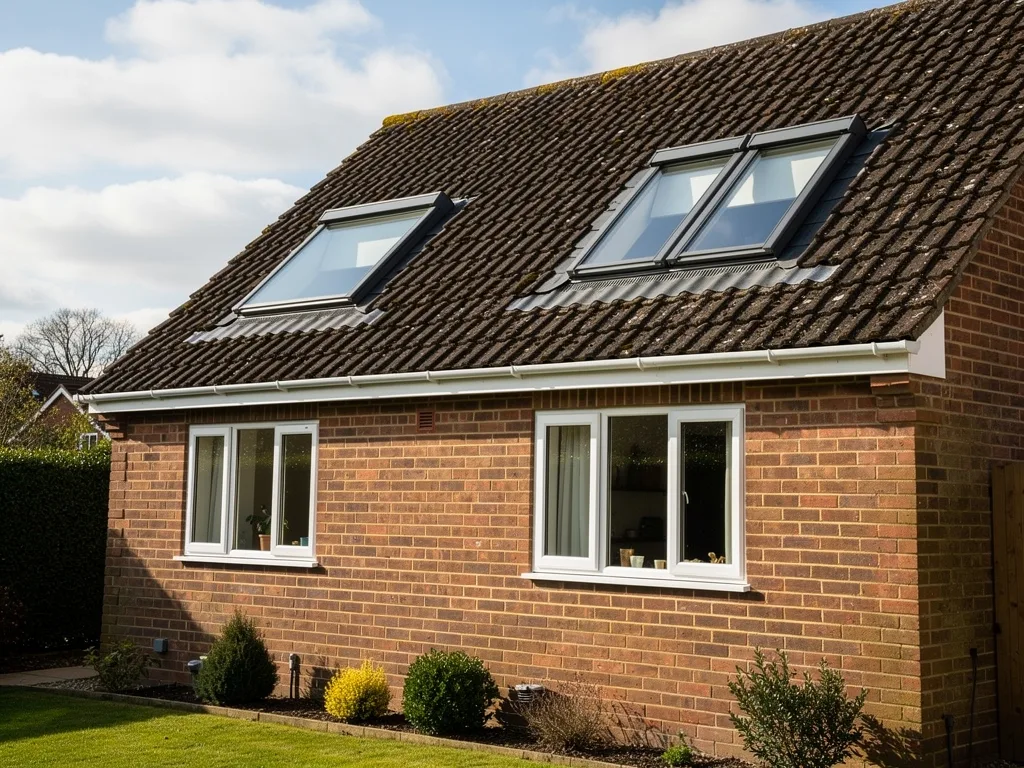 GuideLining a Roof Window So the Opening Widens Towards the RoomA splayed lining widens a roof window's opening towards the room, so you see more sky from where you sit.
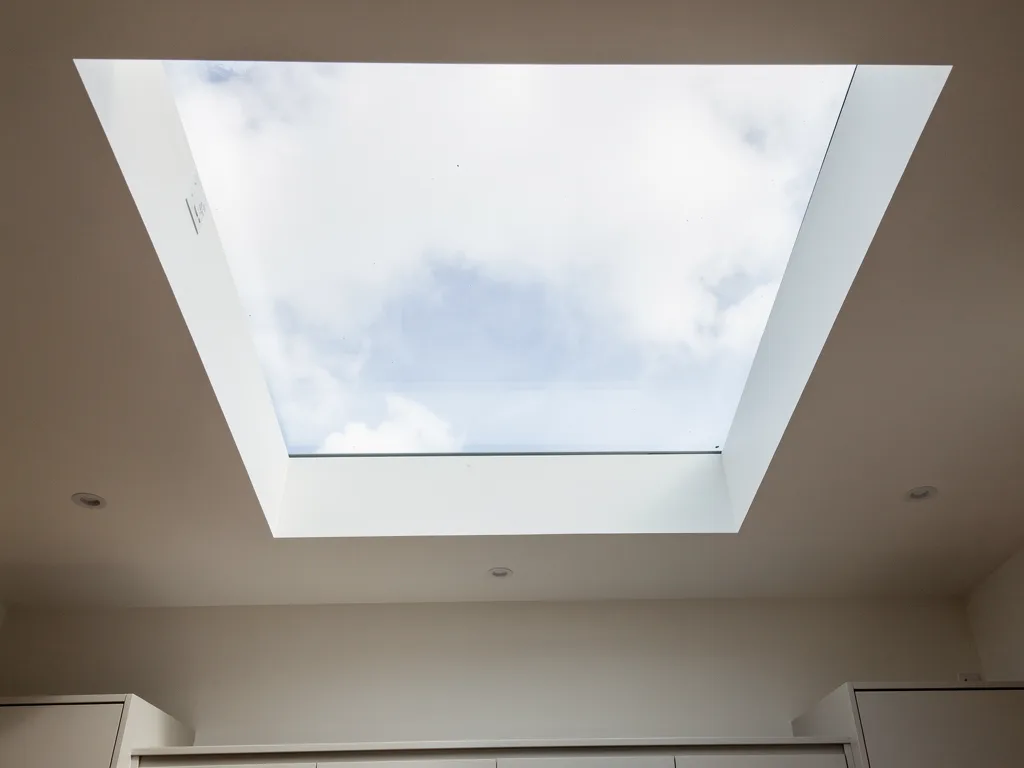 GuideA Roof Window in a Vaulted Ceiling: Lining Up the SkyHow a roof window is placed in a vaulted ceiling so the sky lines up with the room below.
 GuideReplacing an Old Roof Window in a Tiled RoofHow an old roof window is swapped in a tiled roof, and when the flashing has to be replaced.
Book a home visit
Tell us which room
- No obligation
- Sightline sketch included
- 10-year guarantee
Or call 01733 736163