Question · Energy efficient rooflights
Can Blinds Make a Rooflight Warmer?
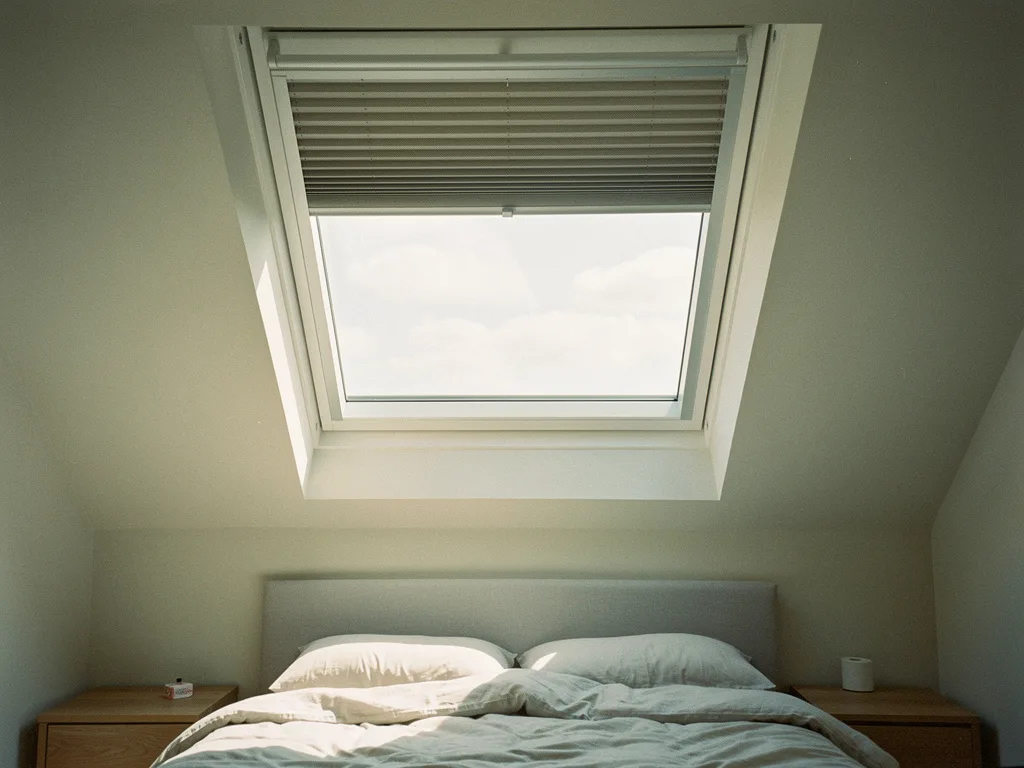
A blind's insulating effect comes from trapped air, not the fabric itself
Still air is a poor conductor of heat, which is the whole reason a sealed glazing unit uses a gap between panes rather than a single thick sheet of glass. A blind that forms a sealed pocket of air between the room and the glass is doing a smaller version of the same job: slowing the rate heat crosses from a warm room to a cold pane on a winter night.
That only works while the blind is actually closed and actually sealed at the edges. A fabric hanging loose in front of the glass, with gaps at the sides and a stack that does not sit tight to the frame, lets warm room air circulate freely behind it, which does very little for heat loss whatever the fabric looks like. Our guide to reading a rooflight U-value covers how the glazing itself is measured; a blind sits entirely outside that figure, since it is not part of the glazed unit and is only ever doing its job for part of the day.
Honeycomb blinds are built specifically to hold that air still
A honeycomb, or cellular, blind is made from a fabric folded into a row of hexagonal cells running the length of the blind rather than a single flat sheet. Each cell holds a pocket of air, and the row of cells together forms a continuous, still layer between the room and the glass, which is the feature a flat roller or a plain pleated fabric does not have.
| Blind type | How it traps air | Best winter fit | Fully open |
|---|---|---|---|
| Honeycomb (cellular) | Row of sealed cells along the fabric | Bedrooms, landings held cold overnight | Folds flat, thin stack |
| Pleated blackout | Tight fabric close to the glass | Bedrooms wanting dark and warmth together | Folds to a slim stack |
| Plain roller | Single sheet, no sealed pocket | Glare control, not winter heat | Rolls into a headbox |
| External awning | None, sits outside the glass | Summer heat, not winter loss | Retracts onto the roof |
Fitted with side channels that close off the gap either side of the cells, a honeycomb blind comes closer to a true sealed air layer than almost any other type. Fitted loose, on wire guides with an open gap down each edge, it still folds and looks the same but loses much of the point, since the air it was meant to hold still can simply move round the sides.
Blackout blinds do a version of the same job, if the fit is tight
A pleated blackout blind is chosen for darkness first, sleep in a bedroom or a landing used at odd hours, but the same tight fabric and close-fitting stack that blocks light also slows air movement behind it. The two jobs share a lot of the same detailing: a fabric that sits close to the glass edge to edge, and a bottom bar that closes down against the frame rather than resting a few centimetres proud of it.
Where a blackout blind falls short of a honeycomb one is in the pocket itself. A single flat pane of fabric, however tightly it sits, still leaves one continuous layer of air behind it rather than the cellular structure that divides that air into small, still pockets. It helps, and it helps more the more tightly it seals, but it is doing a simpler version of the same principle rather than a better one.
Where this actually helps, and where it does not
A blind's contribution sits alongside the glazing and the frame, not in place of them, so it is worth being clear about which part of the heat loss it can reach.
- Overnight heat loss through the glass: where a blind's air layer genuinely reduces the rate a room cools, for as long as the blind stays closed.
- The frame and the edge of the sealed unit: largely untouched by a blind, since those losses happen at the perimeter rather than across the pane; our guide to thermally broken frames and cold bridging covers that part of the picture.
- Daytime solar gain: a different job again, usually wanted rather than stopped in winter, and covered by orientation and glazing choice rather than a blind kept shut.
A rooflight built to a poor whole-unit U-value will still lose more heat overnight, blind closed or not, than one built to a current spec. Our comparison of two panes or three and our answer on whether skylights lose a lot of heat set out what the glazing itself is responsible for, before a blind is added on top of it.
A closed blind against cold glass can trap moisture too
The same sealed pocket of air that slows heat loss can also hold moisture against the glass rather than letting the room's own air movement clear it. On a cold night, water in room air condenses on the coldest surface it reaches, and a blind pulled tight against the pane can leave that surface colder and stiller than it would otherwise be, so a damp line at the bottom edge by morning is not unusual where a blind is left down night after night through the coldest months.
Lifting the blind for a short spell most mornings, or leaving a small gap where the design allows it, lets the room's air reach the glass again and is a simple way to keep the benefit of the air layer overnight without leaving the pane damp by day.
Is a cold-feeling rooflight a sign a blind alone is being asked to do too much
A room that feels cold directly under a rooflight, rather than generally cold, usually points to the glazing and frame spec first, since that is where the bulk of the heat loss actually happens. A blind can soften that on a specific night, but it will not correct a unit that was never built to a current U-value in the first place. Our answer on whether a skylight is cold to sit under in winter goes into that cold-downdraught feeling in full, and where a blind genuinely helps against where it is only ever masking a weaker spec underneath.
Fitting a blind so it earns its keep in winter, not just at night
A blind chosen for winter performance needs the same care over fit as one chosen for the view: side channels rather than open wire guides, a bottom bar that closes down properly against the frame, and a stack or headbox built into the reveal rather than left with gaps either side. None of that shows on a fabric sample, so it is worth asking specifically about how a given blind seals at the edges, not just what it looks like closed.
We work through glazing spec, frame and blind detailing together at survey, and draw a sightline sketch for every quote so the reasoning behind the spec is visible alongside the view it gives. See our energy efficient rooflights page for how glazing, frame and sizing are specified together, and our page on what affects the cost of a rooflight for how a blind and a glazing upgrade weigh against each other as separate decisions. We install to current Building Regulations and handle the Building Control notification where the work is notifiable, with a 10-year workmanship guarantee on the finished job.
Questions people also ask
Does a blind make as much difference as upgrading the glazing?
No. A blind's air layer only works while it is closed, and it does nothing for heat lost through the frame or the edge of the unit. A better whole-unit U-value works around the clock and reaches parts of the rooflight a blind never touches.
Do I need a honeycomb blind specifically, or will any blackout blind do?
A honeycomb blind's cellular structure divides the trapped air into small, still pockets, which is a more effective seal than a single flat fabric. A tight-fitting blackout blind still helps, just to a lesser degree, and a loose one on open wire guides barely helps at all.
Should I leave the blind down all winter to save heat?
Not without a break. A blind left closed night after night against cold glass can trap moisture as well as heat, so lifting it for a short spell most mornings keeps the benefit without leaving a damp line at the bottom edge.
Will a blind stop cold air pooling under the rooflight on a very cold night?
It reduces it, since a slower rate of heat loss through the glass means a smaller pocket of cold air forming below it. It will not remove the effect entirely on a poorly specified unit, which is where the glazing and frame spec matter more than anything fitted afterwards.
Book a home visit
Tell us which room
- No obligation
- Sightline sketch included
- 10-year guarantee
Or call 01733 736163