Guide · Energy efficient rooflights
Skylight Condensation: Causes and Cures
Condensation on a rooflight comes from room moisture meeting a cold surface. Here is what causes it, and the fixes that actually work.

What condensation on a rooflight actually is
Condensation is not a fault baked into the glass. It is warm, moist room air meeting a surface too cold to hold the water vapour it is carrying, and in most rooms the coldest surface at head height is the rooflight, whatever is fitted above it.
Warm air holds more moisture than cold air, so a warm room with a lot of water vapour in it, a bathroom straight after a shower, a kitchen mid-cook, is carrying far more than the same room on a dry afternoon. As that moist air rises and reaches the rooflight, it cools. Once it drops below its dew point, the temperature at which it can no longer hold the vapour it is carrying, the water comes out of the air and settles as droplets on whatever surface is coldest. On an old single-glazed unit that can be nearly the whole pane at once. On a modern rooflight it is usually a narrower band, and where that band sits tells you something useful about the spec above it.
Where the moisture in the room comes from
A rooflight only shows condensation when there is enough water vapour in the room to reach dew point against it, so the moisture load in the house matters as much as the glass does. Some sources are obvious and some are easy to miss:
- showers and baths, which put a large amount of water vapour into the air in a short burst;
- cooking without a lid on the pan or the extractor running;
- clothes dried on a rack indoors rather than outside or in a vented machine;
- a new-build or newly plastered room, where wet trades leave moisture in the walls and screed for months after the work is done;
- an aquarium, an indoor plant collection, or simply a house with more people in it than it was designed for.
None of that is unusual, and none of it needs fixing at the source before a rooflight can be specified sensibly. It does mean two homes with an identical rooflight can see different amounts of condensation, because the room behind the glass is doing different things with its air.

Three places condensation shows up, and what each one tells you
Not all misting on a rooflight is the same problem, and treating them alike leads to the wrong fix. The table below sets out where it appears and what that location is actually telling you.
| Where it appears | What is happening | What it means | What to do |
|---|---|---|---|
| Inside face of the glass | Room air meeting a cold pane | The glazing spec is under strain for this room | Look at the coating, gas fill and ventilation |
| Inside face of the frame | Room air meeting a cold frame | Usually normal on an older frame; a sign to check the break on a newer one | Check for a thermal break, warm-edge spacer |
| Between the two panes | Trapped moisture that never clears | The edge seal has failed | The sealed unit needs replacing, not cleaning |
The third row is the one worth knowing before it happens, because it is the easiest to mistake for a cleaning problem. Misting that sits inside the sealed unit itself will not wipe away, will not clear as the room warms, and will not respond to anything short of a new pane. Our answer on whether the argon inside rooflight glass slowly escapes covers how a seal fails and why the gas fill is rarely the real story.
Why the frame often mists before the glass does
It feels backwards the first time you see it: the glass stays clear while a bead of water runs along the frame beneath it, on a rooflight that is supposed to be the efficient one. The explanation sits in which part is now the coldest.
A modern pane, with a low-E coating and an insulating gas fill, holds a warmer inside surface than it used to. The frame carrying it, even a good one, still has weak points at corners, fixings and junctions where cold has a shorter path through. Once the glass stops being the coldest surface in the room, the frame takes over that role, and that is where the moisture goes first. Our answer on why condensation forms on the rooflight frame and not the glass works through the pattern in more detail, and why it usually points to the glass doing its job rather than failing at it.
Ventilation is the first cure, not an afterthought
Better glass lowers the temperature at which condensation starts, but it cannot remove moisture that has nowhere else to go. Clearing the air is often the cheapest and fastest change available, and it works alongside any glazing upgrade rather than replacing the need for one.
An extractor fan run during and for a while after a shower or a cooking session takes the worst of the moisture load out before it ever reaches the rooflight. A trickle vent left open, or a rooflight fitted with its own opening vent, lets a steady trickle of dry outside air displace the humid air sitting near the ceiling. A humidistat-controlled fan does the same job automatically, switching on once humidity crosses a set level rather than waiting to be remembered. On a room prone to a lot of moisture, an opening rooflight over the space itself gives the fastest route for warm, wet air to leave, since it sits at the highest point in the room, exactly where that air collects.

The glass and frame spec that keeps condensation away for good
Ventilation deals with the moisture; the rooflight's own build-up deals with how cold its surfaces get in the first place, and the two work together rather than as alternatives.
A low-emissivity coating and an argon gas fill between the panes raise the temperature of the inside glass surface, pushing its dew point further from anything a normal room reaches. Our guide to the invisible layers: low-E coatings and gas-filled glass covers how the two work. At the edge of the unit, a warm-edge spacer replaces the old plain aluminium bar, which used to carry cold straight to the glass edge and start misting there first; our guide to warm edge spacers: keeping the glass edge clear sets out the materials now used instead. In the frame itself, a thermal break stops an aluminium profile conducting cold straight through from outside to in, which is what keeps the frame's inside face close to room temperature rather than tracking the temperature outdoors; our guide to thermally broken frames and cold bridging explains where that break sits.
Put together, a rooflight with a low-E, argon-filled unit, a warm-edge spacer and a thermally broken frame will run its coldest surfaces several degrees warmer than an older equivalent at the same room temperature, and that margin is usually enough to keep an ordinarily ventilated room free of condensation altogether.
The opening around the glass matters as much as the glass itself
A well-specified rooflight dropped into a poorly insulated opening will still mist, because the cold path has simply moved from the glass to the reveal around it. The kerb or lining has to carry the roof's own insulation right up to the frame, without a gap at the joint.
Leave a strip of bare timber, an underfilled corner or a thin patch of insulation at the upstand, and that strip becomes the coldest surface nearby, often colder than the glass itself, which is exactly where mould tends to start rather than on the pane anyone is watching. Our guide to insulating around a new skylight sets out how the opening is detailed on both flat and pitched roofs so the reveal stays as warm as the glass it surrounds.
A deep, square reveal with a cold corner behaves differently to a splayed one lined and insulated properly, and it is worth having that detail checked at survey stage rather than assumed, particularly on an older loft conversion where the original insulation may stop short of the frame.
Peterborough's older rooflights carry the worst of it
Fletton brick terraces across the city often still carry the single-glazed rooflight that came with a loft conversion decades ago, cold to the touch and streaming with condensation on damp mornings, with a run of black mould in the reveal corner as the usual companion. Our guide to replacing single-glazed rooflights with modern glazing covers what changes, size for size, on a like-for-like swap.
The new-town townships, Bretton, Orton, Werrington and Hampton, added large numbers of flat-roofed extensions with roof windows and rooflights from the 1970s onward, many now carrying an early double-glazed unit with a plain aluminium spacer rather than a modern warm-edge one. Around Stamford and the Collyweston stone slate villages, an older cottage rooflight sitting under a low pitch can gather condensation from restricted ventilation as much as from the glass itself, so a slim conservation frame still needs the same low-E, warm-edge build-up underneath it as any other roof. The energy efficient rooflights hub sets the full spec picture out for whichever of these a home has.
When it is not condensation at all
Two other patterns get mistaken for a problem when they are not. Mist on the outside of the glass on a still, cold, clear morning means the outer pane has cooled below the dew point of the outside air overnight, and it clears on its own as the sun warms the surface; it is actually a sign the unit is holding heat in well, since a poorly insulating rooflight rarely cools that far below the room. Rain sheeting off the glass rather than beading on it, on a unit with a self-cleaning outer coating, can also look like a fault to an eye expecting droplets, when it is the coating working as intended.
What is never normal is misting that sits between the two panes and stays there through a warm afternoon. That is a failed edge seal letting moisture into the cavity, and no amount of ventilation or wiping will shift it, because the moisture is not in the room at all. The fix is a new sealed unit rather than a clean, and it is worth catching early, since a failed seal also loses whatever gas fill was doing the insulating work in that gap.
Getting the balance right for your room
Condensation on a rooflight is nearly always a combination of two things: how much moisture the room is putting into the air, and how cold the coldest surface of the rooflight gets in response. Fixing only one side of that equation, buying the best glass on the market into a poorly ventilated bathroom, or ventilating hard around an old single-glazed unit, gets you partway rather than all the way there.
On a home visit we look at the room, what it is used for and how it is currently ventilated, then set the glass, frame and opening as one specification rather than a list of parts. Every quote comes with a sightline sketch so you can see the view the chosen glass gives from where you actually sit, and the finished job carries our 10-year workmanship guarantee. What it costs depends on the size, the glazing specification and whether the opening is new or existing, which our page on what affects the cost of a rooflight sets out.
Condensation questions worth asking before you fit or replace
Will triple glazing solve condensation on its own?
Triple glazing raises the inside glass temperature further than double glazing does, so it helps, but it cannot outrun a room putting out far more moisture than it is ventilated for. A bathroom with no extractor and a rack of wet washing will still mist a triple-glazed unit eventually, just at a lower room humidity than it would a double-glazed one.
Is a small amount of condensation on a rooflight normal in winter?
A light film on the inside of the glass on the coldest mornings, in a room with ordinary moisture levels, is common and not a sign of a failing unit. Persistent condensation that does not clear through the day, or that appears on the frame in a warm, well-ventilated room, is worth having looked at rather than lived with.
Can I fix condensation by opening a window instead of changing the rooflight?
Opening a window or a trickle vent lowers the moisture load in the room and will reduce condensation on an existing rooflight straight away, which is worth trying before anything else. It will not raise the surface temperature of an old, poorly specified unit, so on the coldest nights a badly built-up rooflight will still mist before a well-specified one would.
What happens at a home visit for a condensation problem?
We look at the room, how it is used and ventilated, and the existing rooflight's glass, frame and opening, then set out what combination of ventilation and glazing spec actually fixes it for that room, backed by a sightline sketch showing the view the new glass will give. Book a home visit or message us on WhatsApp to arrange one.
Keep reading
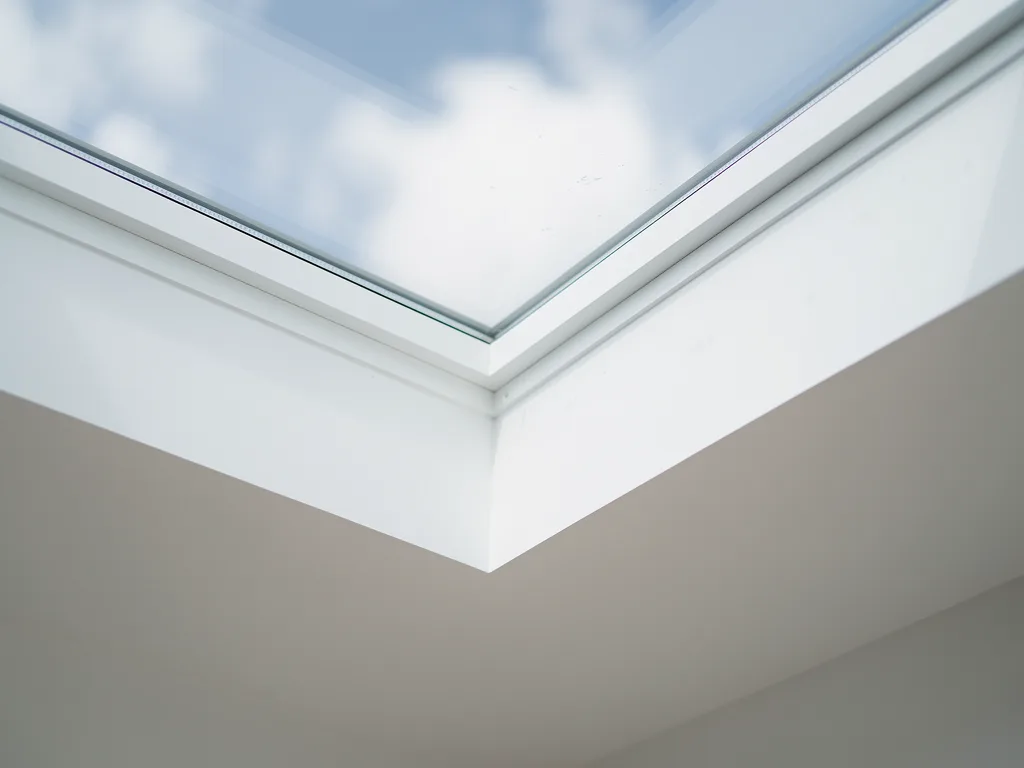 GuideThe Invisible Layers: Low-E Coatings and Gas-Filled GlassHow low-E coatings and argon fill keep a rooflight warm without dimming the clear sky you see from below.
 GuideWarm Edge Spacers: Keeping the Glass Edge ClearWhy the spacer between the panes decides whether the glass edge mists and how it changes the whole unit U-value.
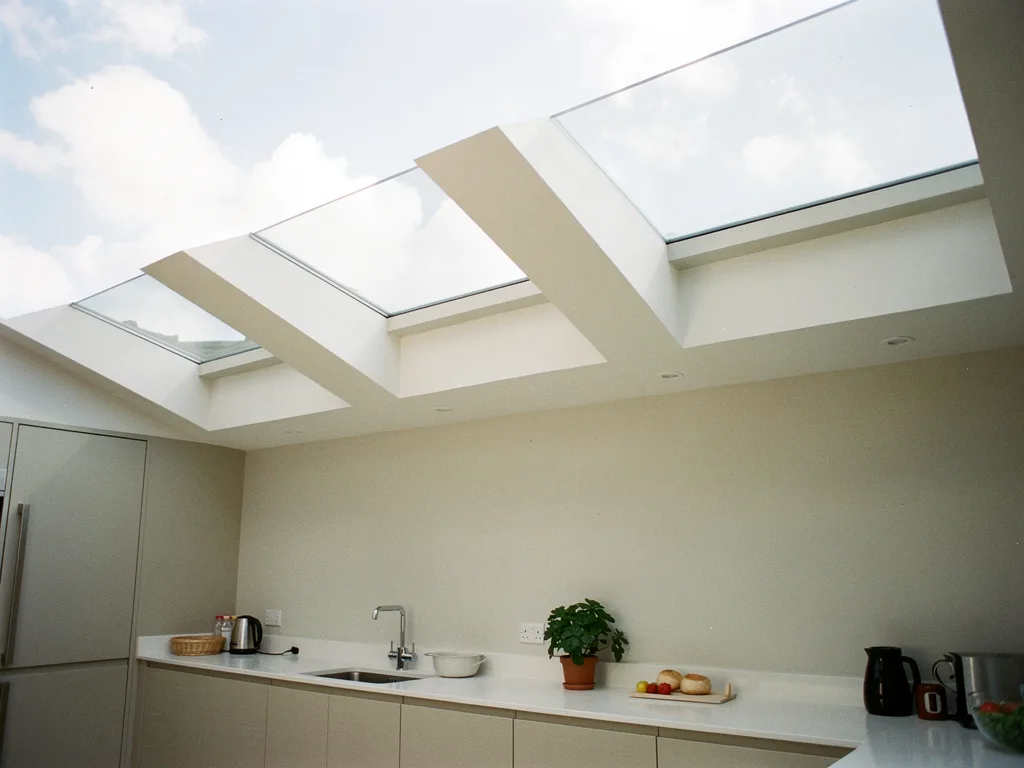 GuideBalancing Daylight and Heat Loss When SizingHow the size of a rooflight trades daylight and view against winter heat loss, worked through on two common Peterborough roofs.
Book a home visit
Tell us which room
- No obligation
- Sightline sketch included
- 10-year guarantee
Or call 01733 736163