Guide · Energy efficient rooflights
Replacing Single-Glazed Rooflights With Modern Glazing
One cold pane, one warm room. Here is what changes in the glass, the frame and the view when an old single-glazed rooflight is replaced.

The pane that never really warmed the room
A single-glazed rooflight has no cavity, no gas fill and no coating: one sheet of glass with cold air on one side and a warm room on the other. Whatever else is right about the house around it, that pane has been the coldest surface in the room since the day it was fitted.
Loft conversions across the older Fletton brick terraces of Peterborough often still carry the rooflight that came with the original job, sometimes forty years old, single-glazed and set in a thin timber or plain aluminium frame with no thermal break. Touch the glass on a January morning and it is barely warmer than the air outside. Condensation runs down it most winter nights, the frame swells and sticks in wet weather, and the sky through it has usually dulled with years of surface grime that a flat pane low over a bed or a landing rarely gets cleaned. None of that is a fault to fix piece by piece; it is a build-up that has reached the end of what it can do, and the whole unit, glass and frame together, is what needs replacing.
| What you notice | What is actually happening | What modern glazing changes |
|---|---|---|
| Cold glass, streaming with condensation | No cavity or coating to keep the inner pane close to room temperature | A sealed, gas-filled unit with a low-E coating holds the inner face warmer |
| A yellowed or hazy dome | UV breaking down the surface of ageing plastic | Toughened or laminated glass that does not discolour with age |
| A frame that swells, sticks or feels cold to the hand | Timber that has taken on moisture, or metal with no thermal break | A thermally broken or well-sealed modern frame stays close to room temperature |
The dome that time and UV have caught up with
A good many flat-roofed extensions built from the 1970s onward, including plenty across the new-town townships of Bretton, Orton and Werrington and the later development at Hampton, were finished with a moulded plastic dome rather than a flat glazed unit. It was quick to fit and cheap when new, and it has aged in a way flat glass never does.
Polycarbonate and acrylic domes yellow under UV exposure, so the sky above slowly loses its true colour and the room below dims year on year without anyone quite noticing the change happening. The surface scratches easily during cleaning, which scatters light rather than passing it clearly, and on some older domes the plastic itself has begun to craze or sag at the crown. None of this shows up as a sudden failure; it arrives gradually, until a homeowner looks up one day and realises the "skylight" has not shown a clear sky in years. Our answer on whether polycarbonate skylights are energy efficient sets the insulating figures against glass, and they tell only half the story: the other half is what the dome does to the view.
Swapping a dome for a flat, glazed rooflight in the same upstand is usually the single biggest change available on an older flat roof, in the room's temperature and in what it looks like from below. The kerb is very often already there and sound, so the job becomes a change of what sits on top of it rather than a rebuild of the opening.

What goes in its place
A modern rooflight is a stack of small decisions rather than one product, and each one earns its place: sealed double or triple glazing, a low-emissivity coating, argon or another inert gas in the cavity, a warm-edge spacer, and a frame built so the outer and inner faces do not share a single path for cold to travel along.
Two panes, well specified, take a rooflight from a single-glazed unit's poor performance to a whole-unit figure several times better; a third pane goes further again, at the cost of some extra weight on the frame and kerb. Inside the unit itself, a low-E coating and a gas fill do most of the quiet work, letting the glass keep heat in the room without darkening the sky above it; our guide to the invisible layers, low-E coatings and gas-filled glass explains how the two combine.
The frame matters as much as the glass it holds. An old aluminium frame with no thermal break carries cold straight from the outside face to the inside one, which is why some ageing double-glazed rooflights still feel cold to the touch even with two panes doing their job. Our guide to thermally broken frames and cold bridging explains where the break sits in a modern profile, and why it changes what the frame feels like on a cold morning rather than only what a data sheet says.
Same opening, or a bigger one
Replacing an old rooflight rarely means starting from a blank roof. The existing kerb, upstand or reveal is usually the starting point, and the first decision is whether the new unit keeps that same footprint or takes the chance to go bigger.
A like-for-like swap, matching the existing opening, is the simpler job: the roof structure around it is already proven to take a rooflight of that size, and the work is largely confined to the unit itself and the insulation immediately around it. Enlarging the opening brings the same questions as any new rooflight would: how the extra glazed area sits against Part L's efficiency limits and, on some rooms, Part O's overheating checks, and whether the roof structure spanning the new opening needs strengthening. That trade-off is worked through on the real roof at survey stage rather than settled by a rule of thumb.
Weight is worth raising early rather than late. A modern double-glazed unit is heavier than the single pane it replaces, and a triple-glazed one heavier again; on an old timber kerb or a roof structure sized decades ago for a much lighter dome, that is a structural question, not a glazing one. Our answer on whether triple glazed rooflights are heavier gives the figures a survey would use to check the existing structure against the new unit before anything is ordered.
What the survey has to settle before glass is ordered
Before a single-glazed rooflight or an old dome is measured for its replacement, a home visit checks a short list of things that decide what can be fitted and how.
- the condition of the existing kerb or upstand, and whether the timber underneath has taken on damp over the years;
- the fall across a flat roof around the opening, since a kerb sitting slightly proud of a poor fall collects standing water at the glass edge;
- whether the frame or kerb can carry the weight of the glazing being proposed, or needs strengthening first;
- how much insulation currently reaches the opening, and where the cold gap sits if it does not;
- and which way the roof faces, since that decides how much solar control the new glass should carry.
A flat roof with a poor fall, commonly built closer to level than the 1:80 minimum a well-detailed roof should carry, lets water sit against the base of an old kerb for hours after rain, and that is often the reason a kerb has softened by the time a survey reaches it. Where that is found, correcting the fall around the new upstand is worth doing at the same time as the glazing itself, rather than fitting new glass onto a base that will keep failing underneath it.
The work itself, once the new unit is chosen
On the day, the old glazing and frame come out first, exposing the kerb or reveal underneath for the first time in years. That is usually the point at which any hidden damp, soft timber or missing insulation becomes visible, and it is dealt with before the new frame goes anywhere near the opening.
Insulation is then carried up the sides of the kerb or reveal so it meets the frame with no cold bridge left at the joint, since a well-specified rooflight fitted onto a poorly insulated opening still reads as a cold spot in the room. Our guide to insulating around a new skylight covers how that detail is built up on both a flat kerb and a pitched reveal. The new frame is then fixed, sealed and flashed into the surrounding roof covering, the glazing unit is set into it, and the reveal or ceiling lining inside is made good so the join between old plaster and new frame disappears rather than showing as a line around the opening.
Where the roof covering itself is disturbed by the work, that covering is reinstated and lapped back over the new upstand as part of the same visit, so the roof is left weathertight around the new glass rather than handed back as two separate jobs stitched together.
Building Regulations apply to a replacement too
Swapping an old rooflight for a new one is not exempt from Building Regulations simply because an opening already exists there. Part L sets a limiting whole-unit U-value for replacement glazing in an existing home, the same figure that applies to a brand new opening, and a single-glazed or early double-glazed unit falls well short of it.
Our guide to what Part L of the Building Regulations asks of a rooflight sets the current limit out in full, and it is worth checking against before assuming any double-glazed replacement automatically clears the bar; some early double glazing sits closer to the old single-glazed figure than a homeowner expects. Replacing a rooflight is notifiable work, and we handle the Building Control notification as part of the job, so the paperwork exists when the house is sold rather than being chased up years later.
A replacement can also feed into a home's EPC rating, though it is one input among several rather than a rating on its own, and it usually carries less weight than the walls, roof insulation and boiler behind it.
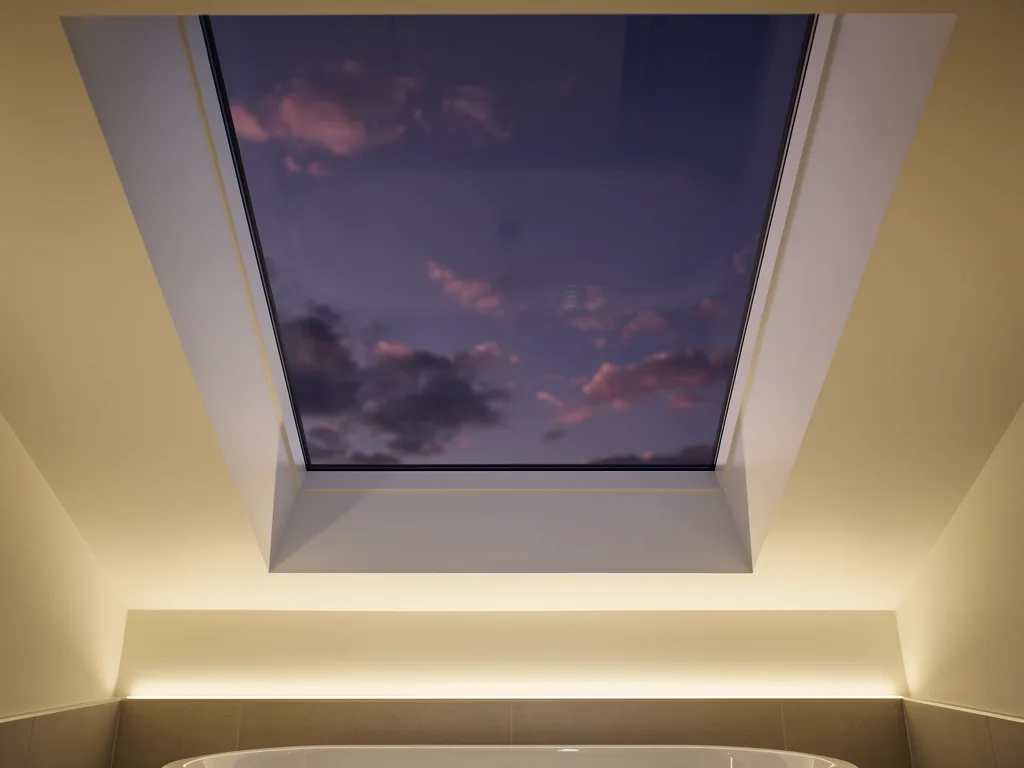
What actually changes, looking up
The efficiency figures are only half of why this swap gets done. The other half is what the room looks like afterwards, and that is usually the bigger change a homeowner notices first.
A slim, modern frame profile shows less bar and more sky than the thick timber or aluminium sections common on older rooflights, so the same opening can frame more open sky than it did before, without cutting a larger hole in the roof. A polycarbonate dome's slight distortion and yellow cast disappear entirely, replaced by flat, true glass that shows the sky its actual colour rather than a warmed, hazy version of it. Where the new glass carries a self-cleaning outer coating, daylight breaks down organic dirt on the surface and rain sheets it away, so the pale grime that built up on an old dome over years is far slower to return; our guide to self-cleaning glass for clarity and efficiency sets out where that coating earns its keep.
On a south-facing extension roof, an old single-glazed rooflight or dome often turned a room into a greenhouse by early afternoon, with no coating to slow the sun down. A specified solar control coating on the replacement cuts that heat gain while keeping the room bright rather than dim, and it is worth choosing alongside the U-value rather than as an afterthought. Every quote carries a sightline sketch so the view the new glass gives, from the bed, the sofa or the worktop below, is drawn and agreed before any glass is ordered, rather than discovered once the old unit is already out.
Questions before you commit to new glass
Does the frame have to change, or just the glass?
Where the existing frame is sound, dry and was built to take a sealed unit, a glass-only swap is sometimes possible, though most single-glazed rooflights were never built for a sealed double or triple unit in the first place, so the frame usually has to change with it. A home visit settles which applies to your rooflight before anything is priced.
Will the new rooflight look different from the outside?
A modern flat rooflight or a glazed unit in place of a dome generally sits lower and flatter on the roof than an old raised dome did, and the frame finish can be matched to the existing roofline in most cases. Where the roof sits in a conservation setting around Stamford or the Nene valley, a slimmer, flush frame profile is fitted to suit the stone or slate covering around it.
Can I go from a dome to a flat rooflight in the same opening?
Very often, yes, since the kerb underneath a dome is usually built to the same style of upstand a flat rooflight sits on, and the swap becomes a change of what sits on top rather than a rebuild of the opening below. The survey confirms the kerb's condition and dimensions before that is agreed.
Is triple glazing worth it on a replacement, or is double enough?
For most rooms, a well-specified double-glazed unit with a low-E coating and a warm-edge spacer already closes most of the gap left by old single glazing, and it is markedly lighter on an older kerb. Triple glazing earns its keep on a north-facing room, an exposed roof or where the heat loss figure has to go as low as possible. Whichever glass is chosen, book a home visit or message us on WhatsApp, and read what affects the cost of a rooflight before you do, alongside our wider energy efficient rooflights guide to the glass and frame choices behind it.
Keep reading
 GuideWarm Edge Spacers: Keeping the Glass Edge ClearWhy the spacer between the panes decides whether the glass edge mists and how it changes the whole unit U-value.
 GuideBalancing Daylight and Heat Loss When SizingHow the size of a rooflight trades daylight and view against winter heat loss, worked through on two common Peterborough roofs.
 GuideInsulating Around a New SkylightHow insulation is carried up to the frame around a new skylight, so the reveal stays warm and free of condensation.
Book a home visit
Tell us which room
- No obligation
- Sightline sketch included
- 10-year guarantee
Or call 01733 736163