Guide · VELUX windows
Replacing an Old VELUX in the Same Opening
The same opening, a new sash and frame, and glass built to a different standard than the window that came out. Here is what changes, and what does not.

What actually gets swapped, and what stays put
A straight swap means the same opening in the roof, the same timber kerb wherever it can be reused, and a new sash and frame going in where the old one came out, rather than a fresh hole being cut for a wider or taller window. It is one of the most common VELUX jobs we see on older Peterborough roofs: a window that has sat there since the loft was first converted, now letting in draughts around the seals or fogging between the panes, replaced by a current model sized to the same rough opening.
The distinction matters because it changes what the job actually involves. A new opening means new joists or trimmers, a wider flashing kit and a full disturbance of the roof covering and the ceiling below. A straight swap, done properly, disturbs a strip of tiles or slates around the existing kerb and a narrow band of plaster or lining inside the room, and leaves the rest of the roof and the rest of the ceiling exactly as they were before the ladder went up.
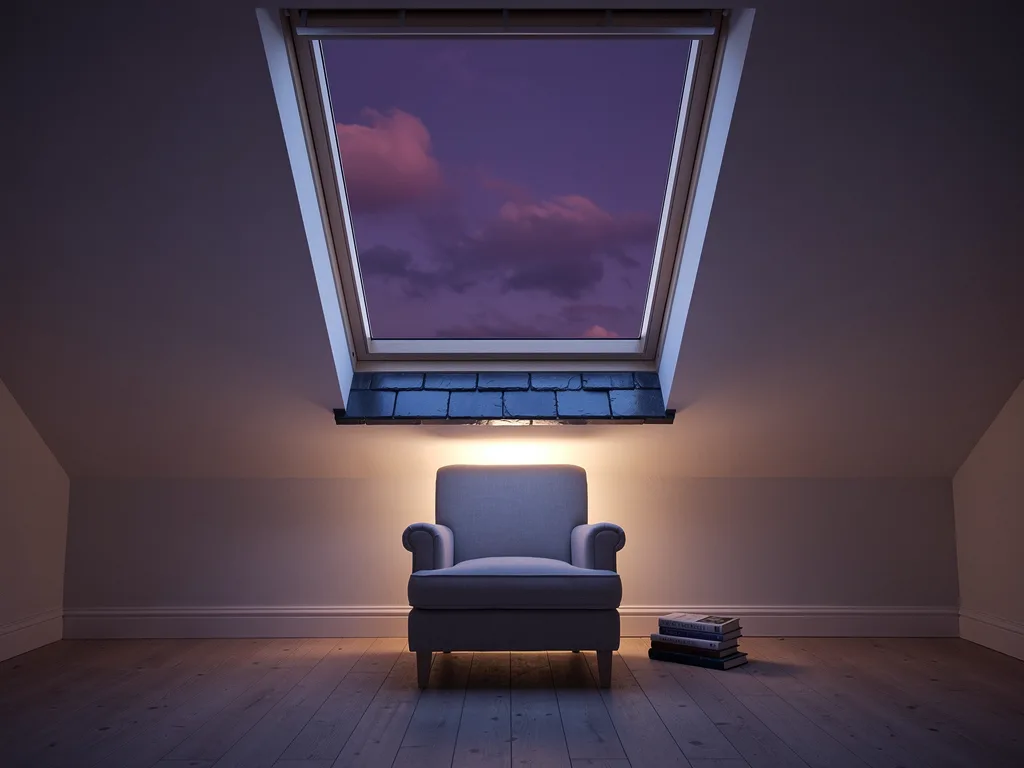
It also matters for the view from inside. Swapping like for like keeps the sightline exactly as it was: the same size of sky from the pillow, the sofa or the desk that the household chose the opening for in the first place, rather than a new negotiation over rafters and headroom. What changes is what sits inside that same rectangle of sky: clearer glass, a tighter seal and a frame built to a different standard than the one it replaces.
Reading the old window before anything is ordered
Every straight swap starts with the window that is already there, not with a catalogue. The size code stamped on the existing frame, together with the range it belongs to, tells us the rough opening it was built to, and that in turn tells us what a current VELUX needs to match it. Get the code wrong and a new frame can arrive a few millimetres out in either direction, which is a poor start to a job that is supposed to disturb as little as possible.
Our answer on where the size code sits on an existing VELUX window shows exactly where to look before we quote, and it is worth checking yourself if you can reach the frame safely, since a size code read from a photograph on the survey saves a second visit later. Alongside the code, the survey also notes the opening type already fitted, whether the sash turns on a centre pivot or is hinged along the top, since that detail carries forward into the replacement in almost every case.
What has moved on since the frame went in
A VELUX fitted in the 1990s or early 2000s and a current model share a family resemblance from the pavement, but the glass, the seals and the frame inside that resemblance have all changed. Older sashes commonly carry a simpler double-glazed unit with a basic gasket around the frame; a current sash carries an insulated frame construction alongside glazing built to today's thermal and safety standards, with a compression seal designed to hold its shape for longer under sun and temperature swings on an exposed roof.
None of that changes how much sky the window shows from below, since that is fixed by the size code rather than by what generation the glass belongs to. What it does change is how the glass behaves over the years that follow: less misting on the inner face on a cold morning, a tighter seal against draughts around the sash, and a view that stays clearer for longer before it needs cleaning.
Then and now, side by side
Put an older sash and a current one next to each other and most of the differences are hidden inside the frame rather than visible from the room, which is why a straight swap can look, from below, like nothing more than a cleaner pane of glass.
| Feature | Typical older VELUX | Current VELUX |
|---|---|---|
| Frame construction | Painted or varnished timber, basic gasket seal | Insulated frame with a compression seal |
| Glazing | Simple double glazing | Current thermal and safety glazing, with options up to triple |
| Ventilation | Often none built in | Flap built into the handle bar |
| Opening control | Manual handle only | Manual, or electric and solar options |
The row that surprises people most is ventilation. Plenty of older windows have no way to move air through the room without opening the whole sash, where a current one vents through a flap built into the handle bar, with the window still locked shut.
The flashing decides more than the sash does
The sash and frame are only half the job. Around them sits the flashing, the metal kit that carries rainwater from the roof covering over the top of the frame and away down the sides, and whether that flashing is reused or renewed decides how much of the surrounding tiles or slates get disturbed.
A flashing kit that is still sound, still sized to the opening and still compatible with a current frame can sometimes stay in place, with only the sash and inner frame changed over it. More often, on a window that has been in place for fifteen years or more, the flashing is renewed alongside the sash, since VELUX ties its current flashing ranges to its current frame depths, and a mismatch between an old kit and a new frame is exactly the kind of detail that causes trouble later rather than on the day. Our answer on whether a new VELUX fits an old VELUX flashing covers when the existing kit can stay, and our guide to which VELUX flashing suits your roof covering covers how the flashing itself is chosen for tiles, slates or a recessed fit.
Either way, the work happens in a narrow band around the existing opening rather than across the wider roof. Tiles or slates are lifted a course or two beyond the frame, the flashing is set or checked, and the surrounding covering is put back over it, which is why a straight swap on an ordinary pitched roof is a day's roof work rather than a job that runs a scaffold up for a week.

Inside the room while the work happens
Most of what changes inside the room on a straight swap is confined to a narrow band around the reveal, the timber-lined opening the sash sits inside, rather than the whole ceiling.
The old sash and its inner frame come out from inside the room in most cases, and the new frame goes back in the same way, so a good deal of the job is done from a step ladder inside rather than from the roof. Where the collar or lining kit around the reveal has also aged or moved, it is renewed alongside the sash rather than left to work loose again in a year or two; where it has not, it is left alone rather than stripped out unnecessarily. Our answer on how much of a VELUX replacement is done from inside the room sets out what to expect on the day itself.
When the exact size code is no longer made
VELUX's ranges move on over time, and a size code current when a window was first fitted twenty years ago is not always still in production. That does not rule out a straight swap; it means the survey looks for the closest current size to the existing rough opening rather than an identical code, and fits it with whatever small adjustment to the lining or the packing keeps the same opening doing the job.
In practice the gap is usually small. VELUX's size ranges are built around a set of standard widths and heights, and an opening cut to one of those standard sizes twenty years ago still sits close to a current size today. Our guide to VELUX window sizes and choosing the right one sets out how the codes map to rafter spacing, which is why most straight swaps land on a size within a few millimetres of the original rather than needing the opening itself widened.
Keeping the same opening action, or changing it
A window that opened on a centre pivot usually goes back in as a centre pivot, and one that was hinged along the top usually goes back in the same way, since the handle position, the room's layout around it and the flashing were all built around that original choice. Changing from one to the other in the same hole is possible, but it is a bigger decision than a straight swap and is worth raising early rather than assuming either type suits the opening equally well. Our guide to VELUX GGL or GPL, centre pivot or top hung covers what each opening type does to the room underneath it.
A straight swap is also the point where some households choose to move from a manual handle to electric or solar opening, since the frame is already coming out and going back in regardless. Our answer on whether a manual VELUX can be converted to electric covers fitting a solar-powered kit to an existing manual sash without changing the window itself.
Building Regulations on a straight swap
Replacing a roof window is work that current Building Regulations have a view on, chiefly around the thermal performance of the new glass and frame, and depending on the property and the work involved it can be notifiable to the local authority's Building Control team. We check that position for the specific job on the survey rather than assume it either way, and where notification is needed, we handle it as part of the work.
That sits alongside two other facts worth knowing before a straight swap is booked: we install to current Building Regulations as standard, and every quote, straight swap or fresh opening, comes with a 10-year workmanship guarantee on the fitting itself.
What the job looks like, roughly in order
No two roofs are identical, but a straight swap on an ordinary pitched roof tends to follow the same broad sequence from the survey through to the last tile going back.
- Survey: reading the existing size code, opening type and flashing condition, and checking the Building Regulations position for that address.
- Roof covering around the opening lifted a course or two beyond the frame.
- Old sash and inner frame removed, mostly worked from inside the room.
- New frame set into the existing kerb, or a new kerb section where the old one will not do.
- Flashing renewed or checked against the new frame depth.
- New sash, glazing and any blind fitted.
- Roof covering made good around the flashing, and the reveal inside made good where needed.
A straight swap on one window, on a roof that is otherwise sound, is ordinarily a single day's work rather than a job that runs across a week, since so little of it touches the wider roof. Where a household is replacing two or three windows on the same roof in one visit, the sequence repeats for each opening rather than running in parallel, since the roof covering can only be safely open over one window at a time.
Two questions worth settling before the old frame comes out
Can I keep the same blind when the window is replaced?
Sometimes, but not always. VELUX ties blind fittings to the sash range they were designed for, so a blind bought for an older sash does not always clip onto a current one without an adaptor, and in some cases a new blind is the simpler route. It is worth checking against the size code and range on the survey rather than assuming the old blind will move across unchanged. Our guide to VELUX blinds, blackout, duo and awning covers the current fittings by room.
Will the new window look the same from the street as the others already on the roof?
Cladding colours and general proportions carry across VELUX's ranges, so a current window fitted next to an older one on the same roof does not usually stand out as obviously new. Our answer on whether a new VELUX will match the ones already on my roof covers what to check where more than one window sits on the same slope.
Booking a straight swap
A straight swap is one of the more contained jobs we do: a familiar opening, a familiar sequence of steps, and a new window that answers for the draughts, the misting or the dated glass the old one had settled into. Book a home visit or message us on WhatsApp and we will read the existing size code, check the flashing and the opening type, and confirm the Building Regulations position before anything is ordered. Read more about the full VELUX window installation service in Peterborough, see what affects the cost of a rooflight, or find out about the sightline sketch and how we plan the view, which comes with every quote, straight swap included.
Keep reading
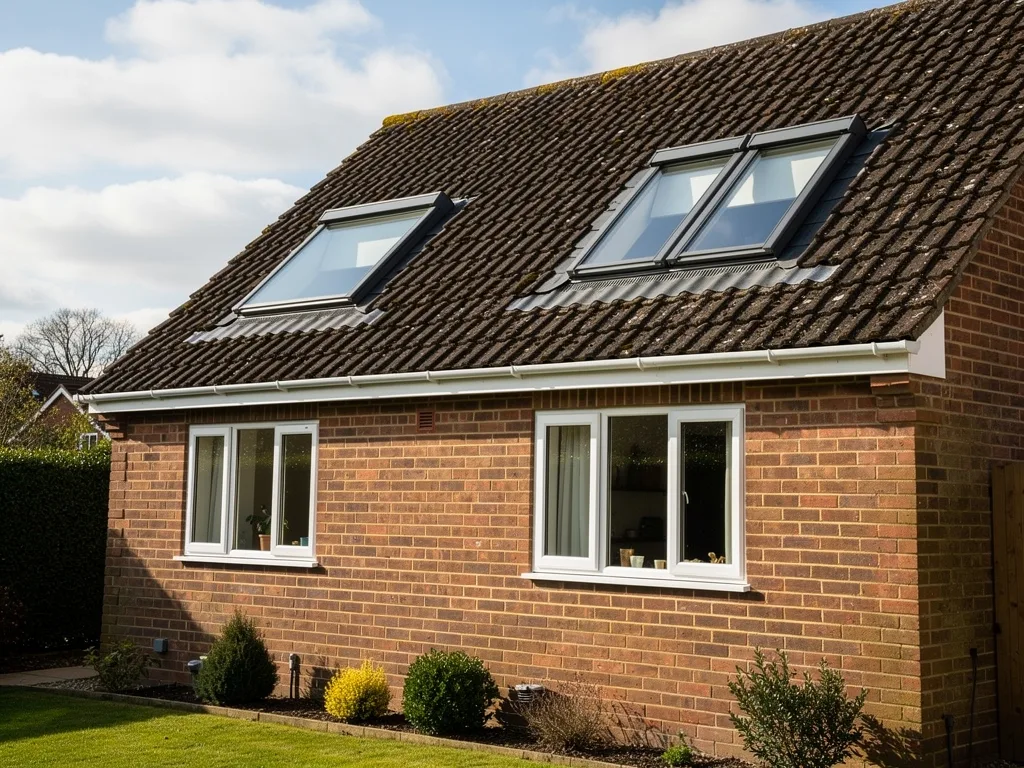 GuideVELUX Panoramic and Combination WindowsHow joining VELUX units under one flashing builds a wider run of sky than a single window gives.
 GuideVELUX Installation Collars and LiningsThe insulation collar, vapour collar and lining kits that finish a VELUX window from inside the room.
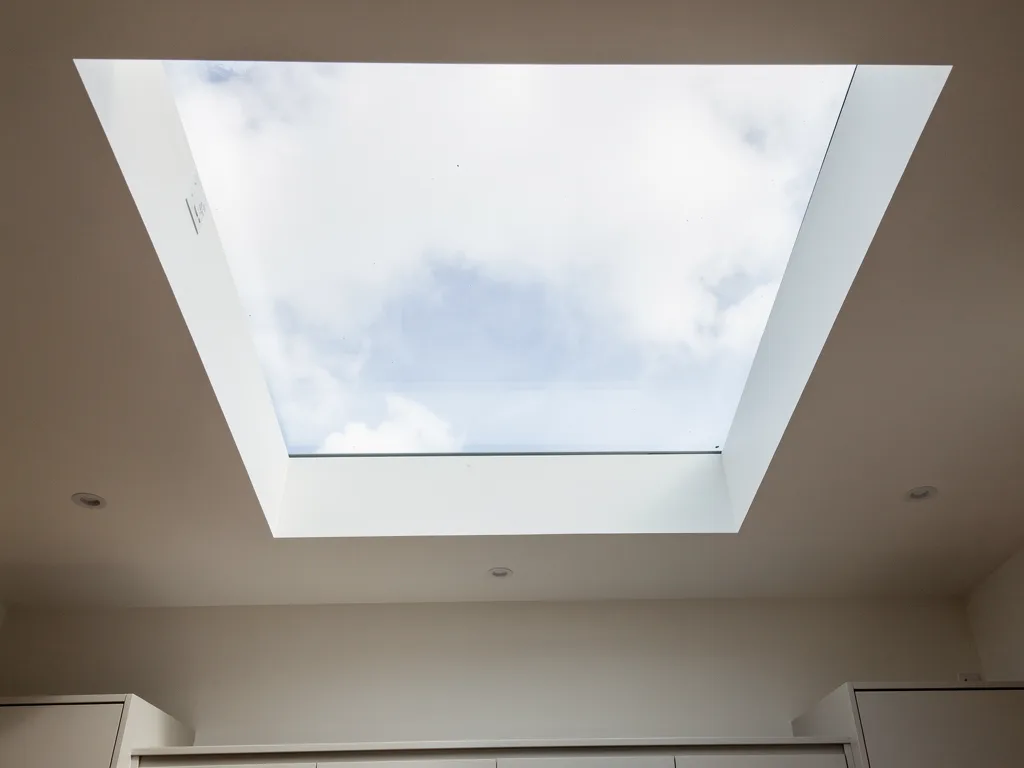 GuideVELUX Flat Roof Windows Against Other Flat RooflightsHow VELUX's boxed flat roof window compares with a made-to-measure flat rooflight, in size, frame, glass and view.
Book a home visit
Tell us which room
- No obligation
- Sightline sketch included
- 10-year guarantee
Or call 01733 736163