Guide · VELUX windows
VELUX Blinds: Blackout, Duo and Awning
Three VELUX blinds solve three different problems. Here is how each one sits against the glass when it is not in use, and which suits which room.
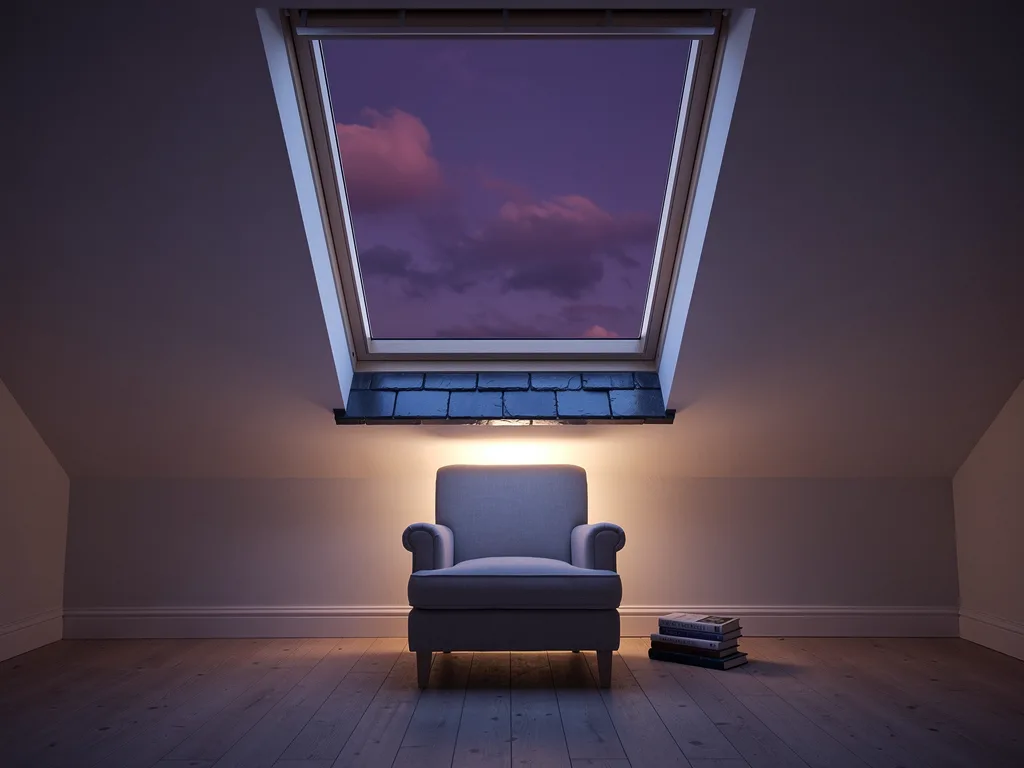
The blind is part of the view, not an accessory to it
A VELUX blind typically gets chosen last, after the window size, the opening type and the glazing are all settled, and that order of events is exactly why so many rooms end up with a blind that fights the view rather than sitting quietly inside it.
Every VELUX blind is made to the same size code as the window it sits in, so the fitting itself is straightforward once the code is confirmed. The part that actually needs thinking about is what the blind does to the sky when it is not needed: whether it stacks into a slim cassette tucked against the head of the frame, folds down into a fabric panel that never fully clears the glass, or sits outside the roof altogether where it never touches the room's sightline at all. Blackout, duo and awning blinds answer that question three different ways, and the right one depends far more on the room's actual use than on the fabric swatch.
Blackout blinds: full dark, and a bracket that lives at the head of the frame
A blackout blind runs on side channels set into the window's own frame, so light is blocked at the edges as well as across the fabric, which is what separates it from a plain roller panel that merely dims a room.
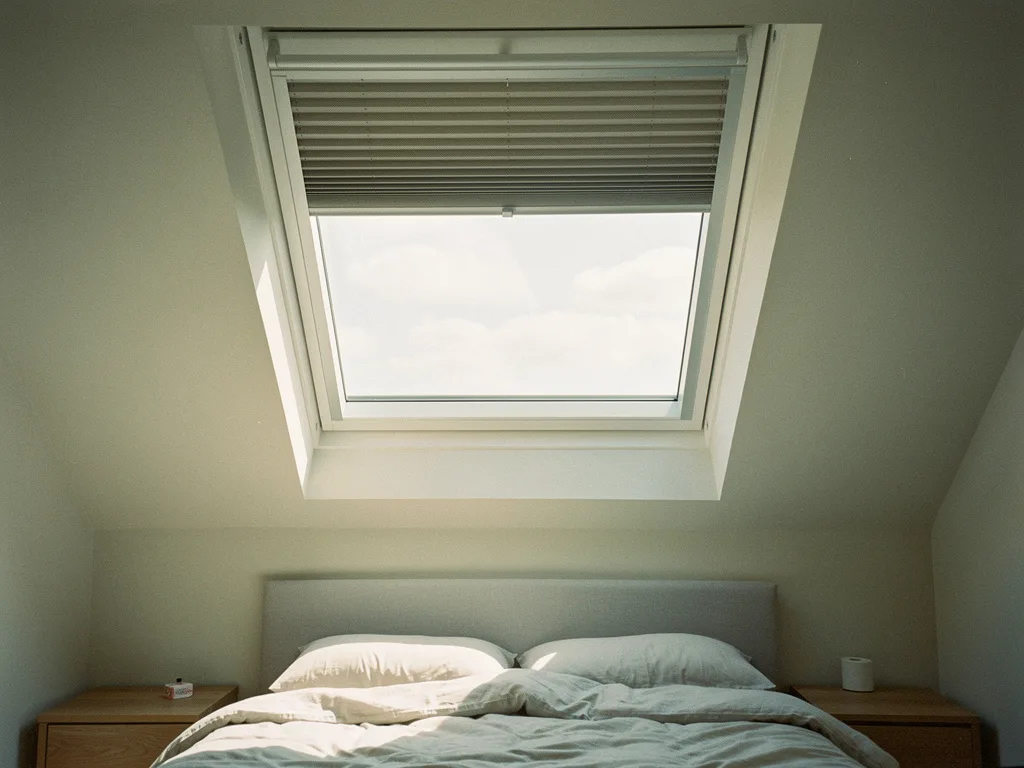
Pulled fully down, the fabric covers the glass edge to edge and the room goes properly dark, which is the reason this is the blind fitted in almost every bedroom and nursery on a VELUX job. Pulled up, the fabric gathers into a cassette that sits at the top of the frame, against the head of the opening rather than out over the reveal, so it reads as a slim bar along the top edge of the window rather than a curtain rail hanging into the room. From a bed set back from the window, that bar sits above the eyeline in most rooms; from directly underneath the window looking straight up, it is the one part of a blackout blind's build that can just catch the top of the sky, which is worth checking against the actual sill height and bed position rather than assumed away.
The side channels do more than block stray light at the edges. They also keep the fabric running true as the blind moves, so a blackout blind on a window used every day, morning and night, keeps its line rather than sagging into the glass over years of use. That is worth weighing against a duo blind's lighter running gear in a room where the blind is operated constantly rather than left in one position for weeks at a time.

Duo blinds: two fabrics, one mechanism, and a panel that never fully leaves the glass
A duo blind carries a sheer or light-filtering fabric and a blackout fabric on the same track, so one blind does the job that would otherwise need two separate units fitted to the same window.
Both fabrics run on the same side channels as a blackout blind, and either one can be pulled down on its own or the two can meet in the middle, which gives a working room three states rather than two: fully open, softened by the light fabric, or fully dark. Where a duo blind differs from a blackout in its effect on the view is that the light-filtering fabric is designed to sit permanently in the upper part of the window on a typical fit, screening the top of the glass while the lower pane stays clear, rather than clearing the glass completely when not in active use. That is a deliberate feature in a room that wants glare cut from directly overhead while keeping the view out at eye level, a kitchen extension roof or a landing being the two most common examples, but it does mean a duo blind is rarely a blind you forget is there in the way a fully retracted blackout can be.
- Bedroom used for sleep at set hours: blackout alone, full retraction wanted daily
- Bedroom used as an occasional guest room or home office too: duo, so daylight can be softened without full dark
- Kitchen extension roof over a table: duo, screening midday glare while the surrounding sky stays visible
- Landing or stairwell walked through rather than sat under: duo or a light-filtering blind alone, since full blackout is rarely needed there
Our guide to VELUX glazing options is worth reading alongside a duo blind decision, since a solar-control coating and a duo blind are solving overlapping problems, and specifying both without checking whether one already does most of the job is an easy way to overspend on comfort measures a good pane already covers.
Awning blinds: the one blind that never touches your sightline at all
An awning blind sits outside the roof, mounted over the glass rather than inside the room, and that single difference in position is what makes it the odd one out of the three.
Because the fabric and its guide rails sit on the outer face of the window, an awning blind has no cassette, bracket or fold to account for from inside at all: retracted, it disappears from the room's view entirely, and extended, it is seen from inside as a soft-lit fabric overhead rather than as anything mounted in the frame. That makes it the only one of the three blinds that genuinely never competes with the internal sightline a bedroom or a sofa is planned around. What it does instead is stop solar heat before it reaches the glass, which an internal blind, however dark the fabric, cannot do in the same way once the sun has already passed through the pane and warmed the room.
The trade-off is that an awning blind is weather-exposed in a way an internal blind never is, and it is generally chosen for a specific heat problem on a specific roof aspect rather than fitted as standard across every window in a house. Our answer on whether a VELUX makes a loft too hot in summer sets out when the heat problem is real enough to justify an external blind rather than relying on glazing and ventilation alone.
Setting the three against each other
Laid out together, the differences that matter for the view are less about the fabric and more about where each blind lives and what it does when it is not in use.
| Blind | Where it sits | When open | Main job |
|---|---|---|---|
| Blackout | Inside, on side channels | Slim cassette at the head | Full dark for sleep |
| Duo | Inside, two fabrics, one track | Light fabric can stay part-drawn | Softened light plus full dark |
| Awning | Outside, over the glass | Fully out of the room's view | Heat stopped before the glass |
None of the three is simply better than the others; each answers a different question, and a single house very often ends up with all three across different rooms rather than one blind chosen for the whole roof.
Fitting one to a window that is already in
Because every VELUX blind is ordered to the window's own size code, adding one after the roof window itself is already fitted is usually a straightforward retrofit rather than a job that touches the roof at all.
The bracket and side channels for an internal blind fix directly to the existing frame, working from inside the room, and no flashing or lining is disturbed in the process. An awning blind, because it mounts outside over the glass, does involve working on the roof face itself, though again without opening up the flashing that already keeps the window watertight. Where an existing VELUX is old enough that its size code is hard to read, our answer on where the size code sits on an existing VELUX window covers finding it before a blind is ordered against a guessed size.
A window being replaced rather than simply fitted with a first blind is a slightly different case: a current-generation window takes current-generation blinds, but an older frame kept as a like-for-like replacement can sometimes carry over an existing blind if the bracket profile matches. Our guide to replacing an old VELUX in the same opening covers what does and does not carry over on a swap, and it is worth checking before assuming a blind bought years ago will simply refit to a new sash.
Manual, electric or solar operation
All three blind types are available on a manual chain or crank, and blackout and duo blinds also come in electric and solar-powered versions built for VELUX's INTEGRA range of windows.
An electric or solar blind adds a small motor into the cassette itself rather than into the room, so the change in what you see from below is minimal, a slightly deeper cassette in most cases rather than anything visible when the blind is down. What changes is reach: a manual blind on a window set high on a steep slope, above where a hand or a pole can comfortably reach, is awkward to operate daily, whereas an electric or solar version is switched or app-controlled from the room without a pole at all. Our guide to VELUX INTEGRA and how electric and solar opening works explains the difference between the two power sources, and our answer on whether a VELUX INTEGRA needs an electrician covers the wiring an electric version needs against a solar one, which needs none.
Where a house already runs smart-home controls for lighting or heating, an electric blind can be brought into the same system rather than operated on its own remote. Our guide to VELUX ACTIVE and smart control covers linking blinds to rain and temperature sensors, closing automatically before a summer shower reaches an open roof window rather than after.
Blind, glass and reveal working as one decision
A blind chosen after everything else is settled tends to be sized correctly but planned in isolation, and the sightline it sits inside was often decided weeks earlier without it in mind at all.
Reveal depth changes how a folded or gathered blind reads from below just as much as it changes how the frame itself reads: a shallow, splayed reveal shows more of a blackout cassette or a duo blind's upper fabric from a reclined position than a deep, square-cut reveal does, because the sightline into a deep reveal is already angled away from the head of the frame before the blind is even considered. Our guide to how much of the frame you see from inside a VELUX covers reveal shape and depth on their own terms, and it is worth reading before a blind is chosen for a room where the eyeline from the bed or the sofa genuinely matters, since the two decisions land on the same few centimetres at the top of the window.
Condensation is the other place blind and glass interact more than most owners expect. A blind held fully closed overnight on a cold pane can trap surface moisture against the glass rather than letting it clear as the room warms, which shows up as a damp mark on the fabric's lower edge before it shows up anywhere else. That is a ventilation and heating pattern in the room, not a fault in the blind, and our answer on why a VELUX window gets condensation covers the actual cause and what changes it.
Blind questions worth settling before you order
Can a blackout blind and a duo blind both be fitted to the same window?
No, only one blind fits a given VELUX window's bracket and side channels at a time. Where a room genuinely wants both a sheer, light-filtering option and full dark, a duo blind is the way to get both from a single unit rather than trying to stack two separate blinds on one frame.
Does an awning blind block the view of the sky when it is open?
No. Retracted, it sits in a housing above the glass, outside the room entirely, so it has no effect on the sightline from a bed, a sofa or a desk below. It only changes what you see when it is actually extended, at which point the sky reads as softly lit fabric rather than open sky, by design, for exactly as long as the heat problem it is solving lasts.
Will a blind stop a roof window from being fully dark if the frame lets in edge light?
A properly fitted blackout blind runs in side channels set into the frame specifically to stop edge light, which is the main difference between it and a plain roller blind hung loose across the glass. A channel that has come loose or a blind ordered to the wrong size code is the usual cause where edge light still gets through, rather than a limit of the blackout system itself.
Can an existing manual blind be swapped for an electric one later?
On many INTEGRA-compatible windows, yes, since the bracket and channel positions are shared between manual and powered versions of the same blind family; the change is mostly the cassette and its wiring or solar unit rather than the window itself. Where the existing window predates INTEGRA, an upgrade may need the sash changed as part of the job, which is worth checking against the frame's own generation before ordering.
Getting the blind right on the day the window is chosen
The three blinds solve three different problems: full dark, softened light with dark held in reserve, and heat stopped before it ever reaches the glass, and a room can reasonably want any one of the three or, in a house of several rooflights, all three across different windows. What they share is that each is sized to the same code as the window, so getting the window and reveal right first is what makes the blind decision quick rather than the other way round. Book a home visit or message us on WhatsApp and we will talk through which blind suits each room while we are measuring the windows themselves, and bring back a sightline sketch that shows the fabric and the sky together from where you actually sit or lie. Read more about the full VELUX window installation service in Peterborough, see what affects the cost of a rooflight, or find out more about the sightline sketch and how we plan the view before your visit.
Keep reading
 GuideReplacing an Old VELUX in the Same OpeningWhat changes, and what stays the same, when an old VELUX is swapped for a current model in the same roof opening.
 GuideThe VELUX Conservation Range and Its Central BarThe VELUX conservation range's flush profile and fixed central bar, and what the bar does to your view of the sky.
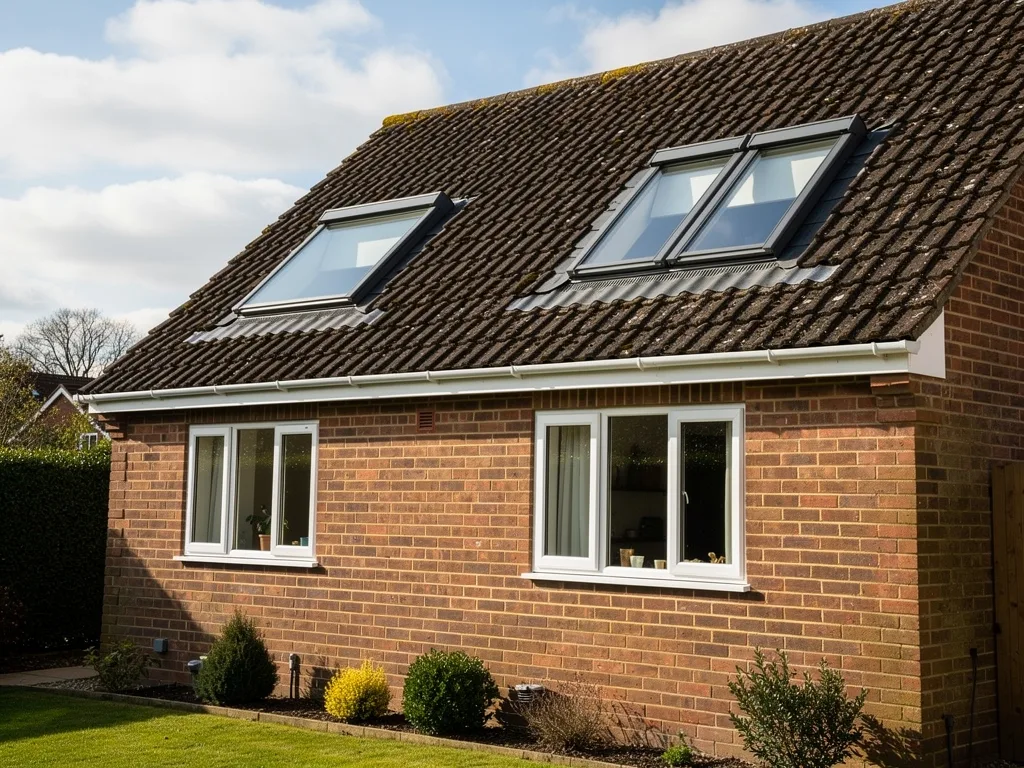 GuideVELUX Panoramic and Combination WindowsHow joining VELUX units under one flashing builds a wider run of sky than a single window gives.
Book a home visit
Tell us which room
- No obligation
- Sightline sketch included
- 10-year guarantee
Or call 01733 736163