Guide · VELUX windows
The VELUX Conservation Range and Its Central Bar
Conservation areas often call for a flush-fitting VELUX with a fixed central bar. Here is what that bar does to the view, and where it actually falls.
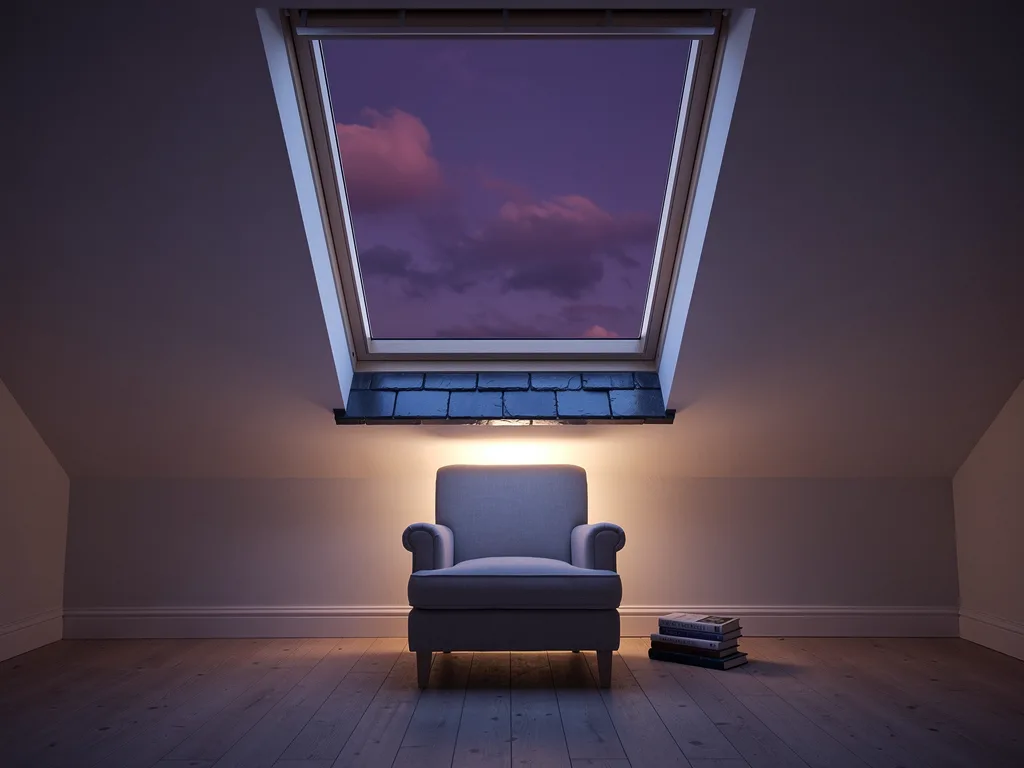
Why a conservation area asks for a different window
A conservation area rarely rules out a roof window outright, but it usually rules out the standard-profile version, and that is the gap VELUX's conservation range was built to close. Planning officers looking at a slate or stone roof are not objecting to daylight; they are objecting to a box that stands proud of the covering and reads as a modern addition against an older roofline.
The conservation range answers that objection with two changes: a frame that sits closer to the roof plane than the standard range, and glazing split by a central bar so the window reads as a pair of lights rather than one uninterrupted pane. Neither change is cosmetic trim bolted onto an ordinary window afterwards; both are built into the frame and the flashing kit from the start, which is why a conservation window is ordered as its own range rather than as an option ticked onto a standard one.
Flush fit: how the frame sits in the roof plane
The standard VELUX range sits on a kerb that lifts the frame slightly above the tiles or slates, giving a clean, slightly raised rectangle when you look at the roof from the ground. The conservation range trims that upstand down, so the frame sits lower and closer to the surrounding covering, with a slimmer flashing that follows the roof plane rather than stepping away from it.
From the ground, the difference reads as depth: a standard window casts a visible shadow line where the kerb lifts it clear of the tiles, while a flush-fitted conservation window sits almost level with the slates around it, closer in profile to a traditional cottage or dormer window than to a modern rooflight. On a Collyweston stone slate roof around Stamford, or on the limestone cottages through the Nene valley villages, that lower profile is often the detail a conservation officer is actually asking for, more than the bar itself.

The central bar, and what it does to the view
The bar is the range's other defining feature: a fixed glazing bar running across the middle of the sash, dividing what would otherwise be one pane of glass into two. Historically it echoes the meeting rail of a traditional sash window, and on the roof it gives the closed window the proportions planning departments associate with an older building rather than a modern one.
From inside the room, the bar sits in the glass itself, and unlike a glazing bar on a lantern or a large flat rooflight, it cannot be specified away on this range: order a conservation window and the bar comes with it. That matters to us more than it matters to most catalogues, because our whole approach starts from the view from the bed, the sofa or the desk, and a fixed bar in the middle of a window is exactly the kind of thing we plan around rather than discover once the roof is open.
Where the bar falls depends on where you actually look from
A bar running across the middle of the sash does not automatically sit across the middle of your view, because your eye is rarely level with the middle of the window. Lie on a pillow and look up through a window fitted high on a steep pitch, and the bar can sit well above your natural sightline, framing two clear sections of sky rather than cutting through the one you are looking at. Sit upright on a sofa facing a window fitted lower on a shallower roof, and the same bar can land close to eye height, splitting the sky you see into two narrower strips instead of one open one.
That is why the position on the roof, the reveal depth and the eye position in the room all belong in the same conversation as the bar, rather than the bar being treated as a fixed cost to accept regardless of layout. Raising or lowering the window within the space the roof structure allows, or adjusting the reveal so the opening reads slightly differently from the seat or the bed, can move the bar out of the exact line a reclining or seated eye follows, without changing the size of window ordered.
Conservation against the standard range, side by side
Set next to each other, the two ranges share far more than they differ on: the same glazing choices, largely the same size steps, and the same opening mechanisms are available across both. The differences that matter sit in profile, glass and planning fit.
| Feature | Conservation range | Standard range |
|---|---|---|
| Roof profile | Flush, low upstand | Raised kerb, visible shadow line |
| Glazing bar | Fixed central bar, two panes | Single uninterrupted pane |
| Typical use | Conservation areas, listed buildings, older stone and slate roofs | Everywhere planning has no objection to a raised profile |
| Size range | A narrower set of standard sizes | The full standard size range |
The narrower size range is worth flagging early rather than at the point of ordering. A conservation window is built to a smaller set of standard widths and heights than the full VELUX window sizes range, so a rafter spacing or a room that would otherwise take an unusual size on the standard range may need the opening adjusted, or a different size stepped up or down, once conservation is the range in play.

What travels with the conservation range, and what does not change
Away from the bar and the profile, a conservation window behaves like any other VELUX roof window. The full run of glazing options, from noise reduction to safety glass to a self-cleaning outer coating, applies equally, and neither the flush frame nor the bar changes how the glass itself performs.
Opening type follows the same logic as the standard range too: a conservation window is available as a centre-pivot or a top-hung sash on the same basis set out in our guide to GGL or GPL, centre-pivot or top-hung, and an electric or solar INTEGRA version removes the reach question here in exactly the way it does on a standard window; see our guide to INTEGRA electric and solar opening. Blinds are cut to fit around the fixed bar rather than across one uninterrupted pane, which is worth knowing before a blackout blind is chosen for a room where the bar itself already breaks up the closed view.
Fitting a conservation window: flashing, pitch and the reveal
Because the frame sits closer to the roof plane, the flashing kit that seals a conservation window to the surrounding covering is its own low-profile design, matched to slate, plain tile or interlocking tile in the same way our guide to which VELUX flashing suits your roof covering sets out for the standard range. On a stone slate roof, where the covering itself sits closer to the timber than a modern interlocking tile, getting that flush fit right at the flashing is what keeps the window reading as part of the roof rather than sitting slightly proud of it.
Pitch range and reveal work the same way as any VELUX installation from here. The collar and lining kit that finishes the window inside, covered in our guide to VELUX installation collars and linings, still decides how deep the reveal reads and how much sky a low eye position actually sees, regardless of whether the glass above it carries a bar or not. A deep reveal on a conservation window compounds the bar's effect on the view rather than replacing it, which is another reason both are worth settling together on the survey rather than in sequence.
Insulation thickness around the opening plays into the same reveal question, and it is worth raising before the frame is ordered rather than after. A roof that has had its loft insulation upgraded since the original opening was cut can leave a deeper gap between the plasterboard line and the underside of the rafters than the window was first fitted to suit, and a lining kit built for the current depth keeps the splay at an angle that opens the view rather than narrowing it further. On a stone slate roof, where battens and counter-battens can already sit thicker than under a modern interlocking tile, that reveal depth is worth measuring rather than assumed from a similar-looking job elsewhere.
A conservation window on a replacement job
A conservation-range window is not always a first-time opening cut into a roof. It can just as easily be an older window, sometimes not VELUX at all, being renewed in an opening a conservation officer has already accepted once, in an earlier planning consent tied to that address rather than to the roof in general. Where a bar and a flush profile were previously approved for that exact spot, a straight replacement in the same range and the same opening is the simplest route, in the way our guide to replacing an old VELUX in the same opening sets out for the standard range.
Where the existing window predates the current conservation range, the flashing, the exact bar position and the outer profile may all differ slightly from what is available new, so matching by eye from the ground is not the same as matching what the opening will actually take. That is a survey question rather than an assumption, and it is one we raise before a replacement window is ordered against an opening that was never built for it.
An older timber conservation window can also have settled slightly in its opening over the years, so a reveal that once sat square can have drifted a few millimetres out of true. That rarely shows from the ground, but it can shift exactly where the new bar falls against an eye position that was fine with the old window and would otherwise be caught out by the replacement. Checking the opening itself, not just the size on the old frame's data plate, is part of what a survey for a conservation replacement covers that a straightforward standard-range swap does not always need.
Questions people also ask
Does every conservation area require the bar, or only the flush profile?
It depends on the planning authority and the specific address, not on conservation areas as a category. Some ask for the flush profile alone; others ask for the bar as well. We check the position for your address before ordering rather than assuming one requirement covers every conservation area alike.
Can the central bar be taken out later if planning requirements change?
No. The bar is fixed into the sash as part of the range, not added afterwards as a strip that can be unclipped, so a conservation window keeps its bar for the life of the glass. Removing it would mean replacing the unit with a standard-range window instead.
Does the bar reduce how much sky the window shows overall?
The glazed area is set by the size code in the same way as the standard range, so the total area of glass is not reduced by the bar. What changes is how that glass reads from a given eye position: instead of one unbroken rectangle of sky, you see two sections either side of the bar, and where that split falls depends on the window's height on the roof and where you are sitting or lying when you look up.
Can a conservation window be specified with electric or solar opening?
Yes. INTEGRA electric and solar versions are available on the conservation range on the same basis as the standard one, so a bar and a flush profile do not rule out remote or automated opening where the room calls for it.
Getting the profile, the bar and the view right together
A conservation window is rarely a single decision. The flush profile answers what the roof needs to look like from outside; the bar comes with the range rather than as a separate choice; and where both of those sit against your own eye position, from the pillow, the sofa or the desk, is the part a catalogue page cannot show you. Book a home visit or message us on WhatsApp and we will check what your planning authority actually asks for at your address, and bring back a sightline sketch showing exactly where the bar and the reveal fall from where you sit or lie. Read more about our full VELUX window installation service in Peterborough, see what affects the cost of a rooflight, or find out more about the sightline sketch and how we plan the view before your visit.
Keep reading
 GuideWhich VELUX Flashing Suits Your Roof CoveringTiles, slate, plain tile and profiled sheet each need a different VELUX flashing, which changes the reveal you see from below.
 GuideReplacing an Old VELUX in the Same OpeningWhat changes, and what stays the same, when an old VELUX is swapped for a current model in the same roof opening.
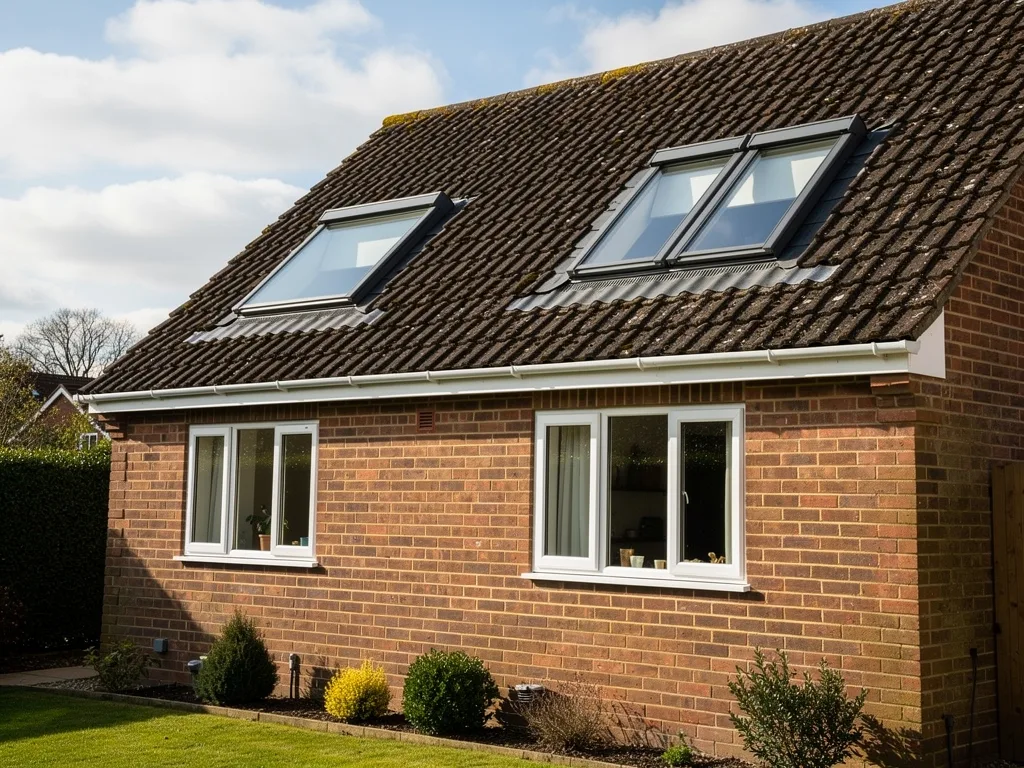 GuideVELUX Panoramic and Combination WindowsHow joining VELUX units under one flashing builds a wider run of sky than a single window gives.
Book a home visit
Tell us which room
- No obligation
- Sightline sketch included
- 10-year guarantee
Or call 01733 736163