Question
Can You Have a Skylight in a Room with a Low Ceiling?
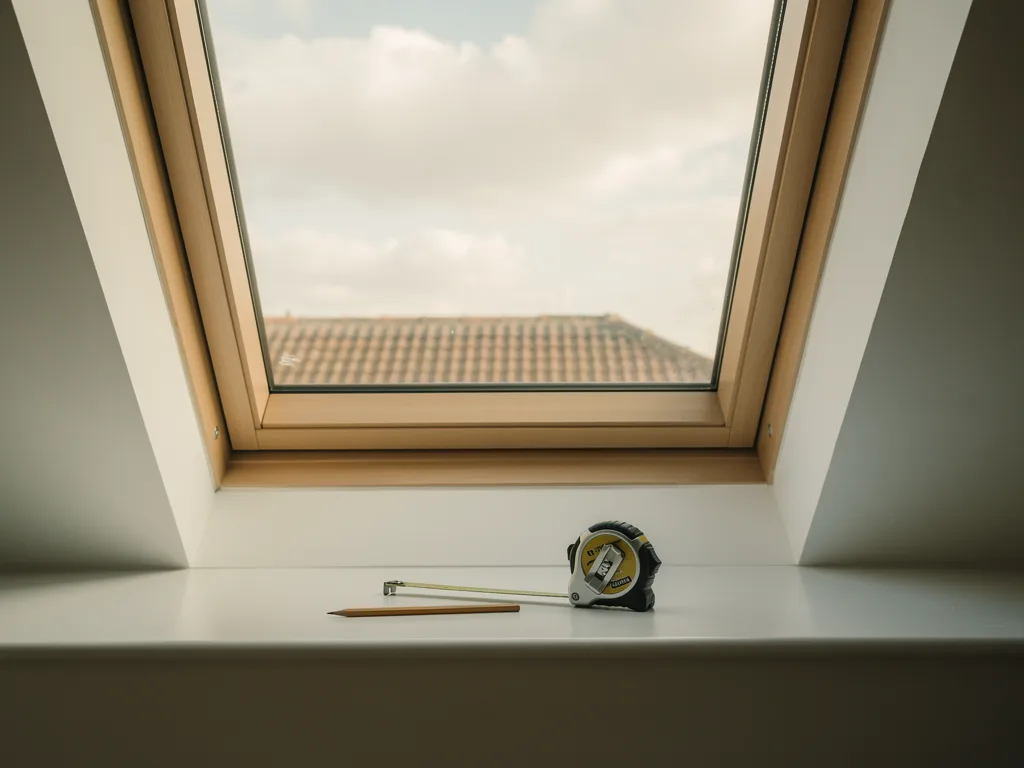
What actually changes when the ceiling is close
A rooflight is cut into the roof structure above an existing ceiling, not into the room's floor-to-ceiling height, so a low room does not lose any more height by having one fitted than a tall room does. What genuinely changes is the geometry of looking at it. Lie on a bed or sit on a sofa under a low ceiling and your eye sits closer to the glass than it would in a room with more height above you, and that closeness changes how much of the reveal, the frame and the sky you actually take in.
Being close is not automatically a problem. It can bring more sky into view at a wider angle than the same opening gives from further back. The risk runs the other way: because the eye is close, any depth in the reveal or any bulk in the frame reads more strongly in the sightline, so choices that would be a minor detail in a high-ceilinged loft become the choices that decide the view in a low one.
Reveal depth decides whether the sky widens or narrows
The reveal is the lined box between the plaster line of the ceiling and the underside of the glazing unit, and its depth is set by three things.
- Rafter or truss depth, which sets how far the glass sits above the ceiling line
- Insulation thickness within that structural depth, built to current Building Regulations
- Lining and plaster thickness, which finishes the reveal to a clean edge
None of those three change because the room below happens to have a low ceiling; a shallow roof void gives a shallow reveal whatever the ceiling height, and a deep one gives a deep reveal. What the low ceiling does is bring your eye closer to the bottom of that reveal, so its depth has more effect on what you see. A deep reveal viewed from close range works like looking down a short tunnel: the opening at the top may be generous, but the reveal walls crop the sky at the sides long before your eye would naturally stop looking. A shallow reveal, viewed from the same close position, lets the eye reach the glass with much less of that cropping.
A splayed reveal recovers width a deep one loses
Splaying the reveal, angling its sides outward as they come down from the glass to the ceiling, is the single change that does the most for a low room. A square reveal, with its sides straight up and down, frames a fixed rectangle of sky that does not grow no matter how close or far your eye sits. A splayed reveal widens as it comes down towards the room, so the opening at ceiling level is wider than the glass above it, and more sky reaches an eye that is sitting close underneath.
| Reveal shape | Effect on the sky you see | Best suited to |
|---|---|---|
| Square | Frames a fixed rectangle, unchanged by eye distance | Rooms where the reveal is already shallow |
| Splayed | Widens toward the room, recovering sky at eye level | Most low ceiling rooms, bedrooms especially |
| Deep, unsplayed | Narrows fastest, shows only what is directly overhead | Flat roofs with a tall upstand |
A splay does not change the size of the glass or the opening cut in the roof; it changes only the plastered box underneath it, which is why it is usually the simplest single decision for a low room. We set out the full range of shapes, and how much splay a given ceiling height can take before the reveal starts eating into wall space, in choosing a reveal shape.
Why some of Peterborough's low rooms already have an advantage
Not every low ceiling sits under a deep roof void. Peterborough's new-town townships, Bretton, Orton, Werrington and Hampton among them, include houses built with factory-made roof trusses rather than deep traditional rafters, and the loft space above a bedroom ceiling can be comparatively shallow as a result. A shallow truss depth means a shallow reveal is often possible without any extra work to compensate, which suits a low-ceilinged room better than a deep one would. In older Fletton brick terraces, where downstairs ceiling heights can also be modest, the roof void tends to be built in a more traditional depth, so reveal shape and any splay do more of the work instead.
Which of the two a given house has is one of the things we check on a survey rather than assume from the street, since previous loft work can mean a mix even within a row of similar houses.
Frame profile and any glazing bar carry more weight at close range
The same closeness that makes reveal shape matter also makes the frame itself more visible. A wide frame face or a deep upstand sits in the eyeline sooner from a low, close position than it would from further back, so the difference between a slim aluminium profile and a bulkier one shows up more clearly in a low room. Where a glazing bar cannot be avoided, its position matters more too: a bar set slightly off the centre of the sightline from the bed or the sofa can sit almost out of view, while one placed without checking that line can land exactly where the eye rests.
This is why we plan every job from the actual eye position in the room, not a general assumption about the roof, and set out the finished view as a sightline sketch before any glass goes in. In a low room, that sketch usually settles the reveal shape and frame choice long before the type of rooflight is decided.
When a different product suits the room better
Not every low, dark room needs a full rooflight to bring a view of the sky. A landing or an internal bathroom with very little roof above it, or a room where the loft space genuinely will not take a reveal of any usable depth, is often better served by a sun tunnel, which carries daylight down through a narrow reflective tube rather than needing a full lined reveal. Where the room does have a workable roof void, a roof window set into the pitch, with its reveal shaped for the ceiling height, usually gives the wider view a bedroom or living space benefits from. Bedrooms are worth planning around where the bed actually sits, not just the room as a whole; see placing a rooflight over the bed for a view of the sky for how eye position from the pillow changes the placement as well as the reveal.
Questions people also ask
Does adding a rooflight lower the ceiling height?
No. The opening is cut into the existing ceiling and the roof structure above it, and the reveal is lined within that same depth, so the room's ceiling height is unchanged either side of the new glass.
Is a sun tunnel better than a rooflight in a very low room?
It depends on the roof void above the room. Where there is genuinely very little depth to work with, a sun tunnel needs less structural reveal than a full rooflight and can still bring a good amount of daylight down. Where a reveal of a reasonable depth is possible, a rooflight gives an actual view of the sky that a tunnel's diffuser cannot.
Does a low ceiling limit the size of rooflight I can have?
Not directly. Glass size is set by the rafters or trusses either side of the opening and by what they can be trimmed or strengthened to carry, which is a structural question rather than a ceiling height one. A low ceiling changes how a given size looks from inside more than it limits what can be fitted.
Can an electric, opening rooflight still work in a low ceiling room?
Yes. The mechanism sits within the same reveal as a fixed unit and needs no extra headroom of its own; what changes with a low ceiling is only the reveal shape and frame choice around it, exactly as with a fixed rooflight.
Whatever the roof void above it, a low room does not rule a rooflight out. It simply moves the deciding choices from the type of glass to the reveal shape, the frame profile and where any bar falls in the sightline. For rooflight and skylight installation in Peterborough, we work all of that out on a home visit, with a sightline sketch drawn from where you actually sit or lie in the room before any of the roof is opened up. Related reading: frame profiles and sightlines, what is a skylight reveal?, does a rooflight frame block the view? and rooflights for Peterborough's new-town homes.
Book a home visit
Tell us which room
- No obligation
- Sightline sketch included
- 10-year guarantee
Or call 01733 736163