Question
Is it worth replacing old skylights?
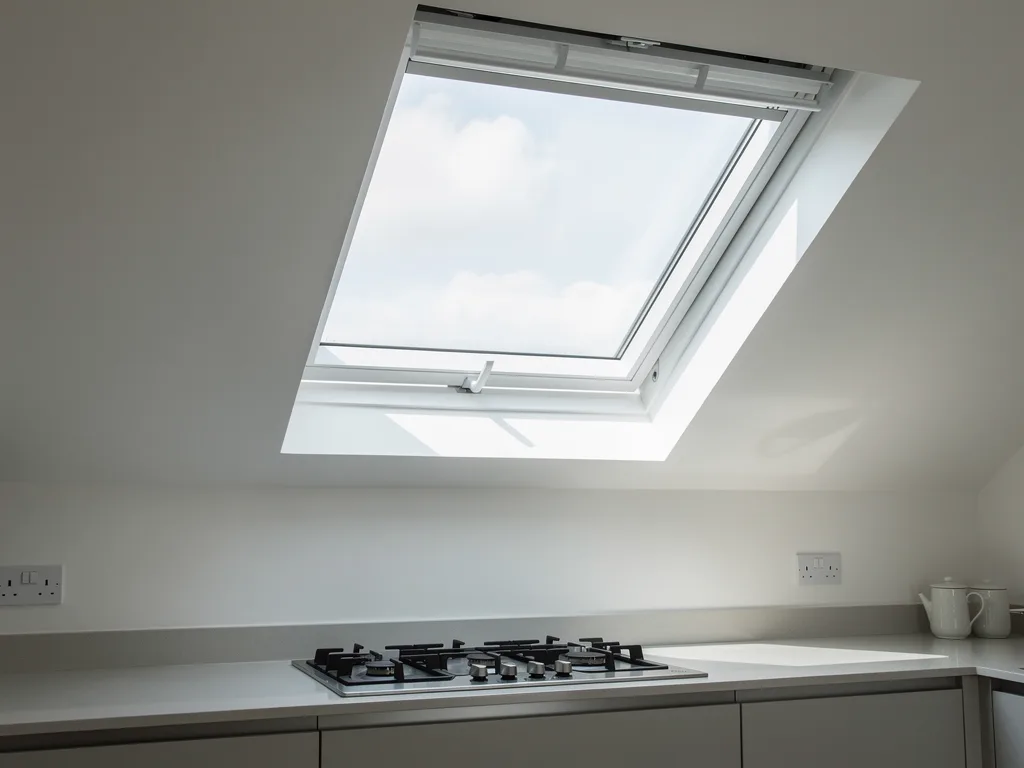
Warmth depends on the seal, not just the pane count
An older rooflight loses heat in two separate ways, and only one of them is about how many layers of glass it has. The seal around the edge of the sealed unit, and the gas fill trapped between the panes, do as much of the insulating work as the glass itself, and both weaken with age in a way that has nothing to do with cleaning or care.
A double-glazed unit fitted decades ago was usually sealed with an air gap rather than the argon fill used now, and the edge seal itself has a working life measured in decades rather than being permanent. Once that seal starts to give, the insulating gas leaks out slowly and the glass loses much of the benefit of being double glazed at all, even though nothing looks different from the room below. The frame tells its own story too: an older timber or aluminium frame without a thermal break carries cold straight through to the inside face, which is why the wall of a loft room can feel warm while the air right under the rooflight still feels noticeably colder.
None of this shows up as a dramatic draught most of the time. It shows up as a room that needs the heating on longer to feel comfortable, and as condensation on the inside face of the glass on cold mornings, because a cold inner pane is exactly where indoor moisture settles first. Our page on energy efficient rooflights sets out what a current unit does differently on glazing, gas fill and frame.
Condensation between the panes is the sign that settles the question
Misting on the inside face of the glass, the kind that clears once the room airs out, is normal and is not a reason to replace anything. Misting that sits between the two panes and never clears is a different fact altogether: it means the seal around that sealed unit has failed and the space between the glass has taken on outside moisture it was built to keep out.
Once that has happened, the fault is inside the glass unit itself, and no amount of cleaning the surfaces reaches it. It is also one of the few signs on this list that only has one answer, because a failed seal cannot be renewed on its own; the sealed unit, and usually the whole rooflight, has to be replaced. Our page on misted and failed rooflight replacement covers this specific case, and why a skylight looks dirty from inside walks through telling surface dirt, room condensation and a failed seal apart before assuming the worst.
A draught felt with a hand run around the frame edge is a softer version of the same story: the seal between frame and upstand, or the gasket around the opening pane, has hardened or shrunk with age. That one can sometimes be eased rather than replaced outright, but it is worth having looked at rather than left, since it tends to get slowly worse rather than better.
The view often improves more than the room's temperature does
Frame profiles have changed more than the eye expects over the years an older rooflight has been in place. A unit fitted some decades ago typically carries a deeper, wider frame and upstand than a current one of the same size, simply because the materials and manufacturing of the time needed more depth to do the same structural job.
That difference is not cosmetic. A wide frame edge sitting inside the same opening takes a real bite out of the rectangle of sky visible from the bed or the sofa below it, and a deep reveal narrows that view further before the eye even reaches the glass. Swapping the unit for a current profile in the same opening, with no change to the size of the hole in the roof, routinely opens up more sky than the room has had in years, which is the part of a replacement that a warmth or condensation argument alone will not tell you. Our pages on frame profiles and sightlines and on choosing a reveal shape set out how much difference this makes in practice.
Glazing bars follow the same pattern. Older lantern and larger flat rooflights were often built with a bar across the middle of the pane for structural reasons that a current single large sealed unit no longer needs. Where the opening allows it, a replacement can remove that bar from the sightline entirely rather than simply renewing it in place.
When the existing unit is worth leaving alone
None of this means every older skylight needs attention. A unit that is a few years old, sits without a draught, mists only on the inside face on a cold morning and clears within the hour, and shows a clean, dry gap between the panes, is doing its job. The only thing wrong with it in that case is dust or pollen sitting on the outer pane, which a clean resolves on its own.
The distinction that matters is between age and failure. Age on its own, a slightly dated frame colour or a profile that looks a little heavier than a current one, is a reason to consider a change if the view matters to you, not a reason you have to act. Failure, an interpane mist that never clears, a seal that has visibly gone, or a frame that has swollen or warped, is the case where waiting only means living with a worse room in the meantime. Our page on signs your skylights are due for replacement sets out the visible clues in full, so a survey rather than a guess from the ground below decides which case is in front of you.
| What you notice | What it usually means | Worth replacing |
|---|---|---|
| Mist that sits between the panes | The sealed unit has failed | Yes |
| A draught felt at the frame edge | An aged seal or gasket | Often |
| Dust or pollen on the outer pane | Surface dirt, not a fault | No, just clean it |
| A dated frame colour with no draught | Cosmetic ageing only | Only if the view matters to you |
A replacement resets several things at once
The case for swapping rather than living with a partial fault is that a single visit resets the whole opening, not just the part that has gone. Once the roof is open around an old unit, it is a small step to renew everything that sits in that opening together rather than one piece at a time.
- The glazed unit itself, with a current gas fill and coatings for clarity and warmth
- The frame and any glazing bar, in a current, slimmer profile
- The seal between frame and kerb or upstand, and the flashing that weathers the joint
- The reveal lining below the glass, re-lined and plastered where it has aged or cracked
That is also why a replacement is usually judged against what it resets rather than against the single symptom that prompted the call. Replacing old rooflights: a homeowner's guide covers what that visit involves from survey to making good, and how many years a new rooflight gives you sets out realistic lifespans for the frame, the glass unit and the seals, so the next version of this question does not come around for a long while.
None of this needs deciding from the ground. A short visit to look at the seal, the frame and the reveal together tells you which of these the rooflight in front of you actually needs, and whether that is worth booking now or worth leaving for another year. You can start that with a home visit for skylight and rooflight work in Peterborough.
Questions people also ask
Does a misted skylight always need the whole unit replaced?
Usually yes, because the fault sits inside the sealed glass unit rather than in the frame around it. In most cases the frame is old enough by then that renewing the whole rooflight together makes more sense than fitting a new glass unit into an old frame, but a survey confirms which applies to yours.
Will a new rooflight need Building Control sign-off even at the same size?
Often, yes. A like-for-like swap still has to meet current standards on glazing and insulation, so it is commonly notifiable even where nothing about the opening changes. Whether your replacement needs Building Control sets out when that applies and when it does not.
Can the frame profile improve without changing the size of the opening?
Yes. A current frame is generally slimmer than one fitted decades ago, so a new unit in the same hole in the roof usually opens up more sky than the old one gave, without any structural change to the opening itself.
Is a draught on its own a reason to replace the whole unit?
Not always. A draught at the frame edge sometimes comes down to a perished seal or gasket that can be renewed on its own, without replacing the whole rooflight, especially on a unit that is otherwise recent. Where the frame itself has aged or the glass has failed too, renewing the seal alone will not resolve the underlying problem.
Book a home visit
Tell us which room
- No obligation
- Sightline sketch included
- 10-year guarantee
Or call 01733 736163