Question
Do Rooflights Add Value to a House?
Floor area a loft never had before
The biggest jump in value rarely comes from the glass itself. It comes from the floor area a rooflight makes usable. A loft with no natural light and no ventilation is a storage space in the eyes of a valuer, whatever the head height. Add rooflights sized and placed to meet current Building Regulations for a habitable room, and that same floor area becomes a bedroom, a study or a playroom, which is what shows up on the floor plan a buyer studies before they even book a viewing.
The same logic applies lower down the house. A dark kitchen extension with a solid roof reads as a box. Bring in roof glazing over the units or the table, and the room reads as an extension worth having rather than a lean-to tolerated for the extra square metres. Where an existing opening is enlarged to make this work, the change affects rafters and joists as well as glass, which is worth planning before the roof is opened; see Upsizing a Rooflight Opening: What Is Involved.
What a viewing actually shows a buyer
Nobody touring a house reads a datasheet. They stand in a room and look up. That single moment, more than any brochure line, decides whether a rooflight reads as an asset. A frame edge sitting across the sky from the head of the bed, or a glazing bar dead centre in the eyeline from the sofa, is the sort of thing a buyer notices without being able to name why the room feels ordinary rather than lifted.
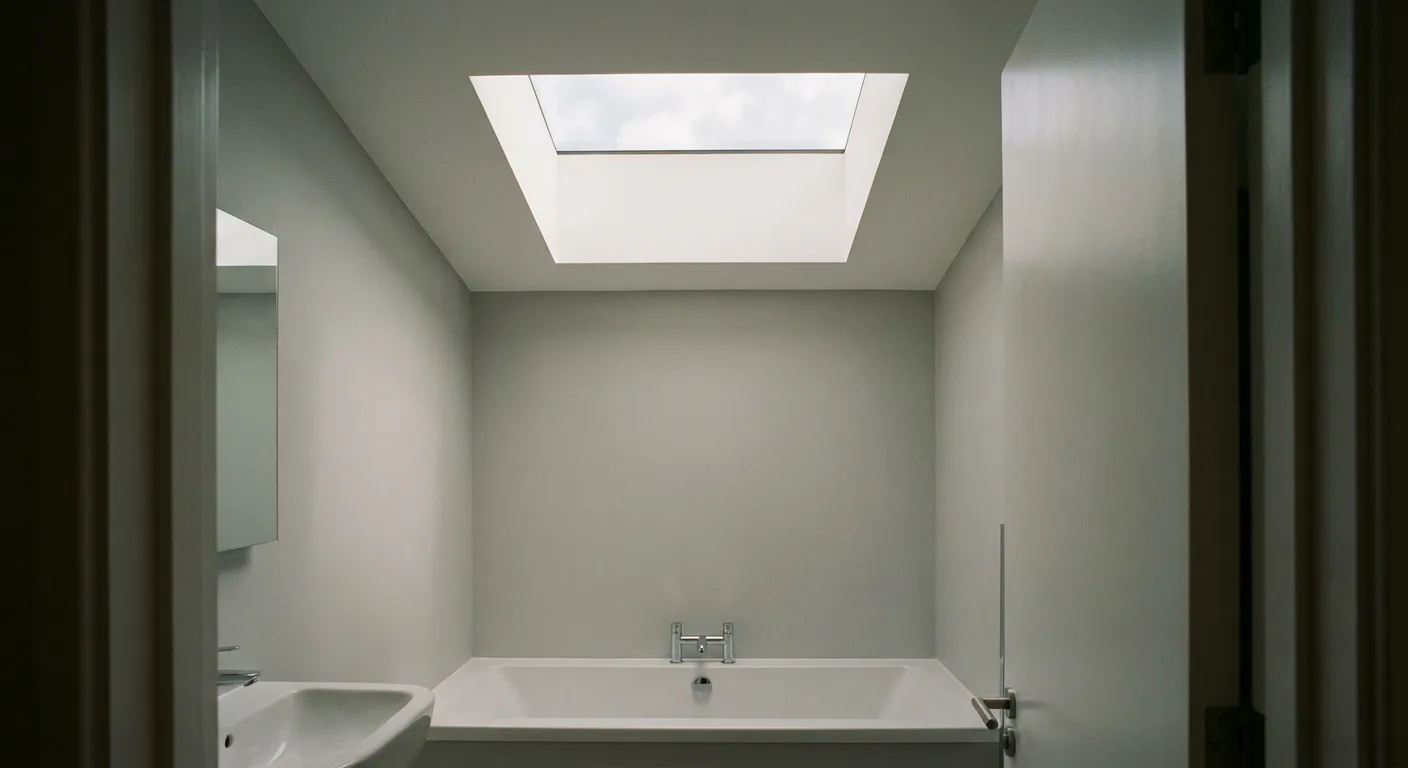
Get the placement and the frame profile right and the same glass does the opposite work: the sky reads as open, the ceiling reads as taller than it is, and a small room reads as more generous than its floor area suggests. That is worth planning at the point of installation rather than fixing later. See Placing a Rooflight Over the Bed for a View of the Sky and Frame Profiles and Sightlines: What You See Through a Rooflight for how the details behind that first impression are decided.
- A single, well-placed rooflight over the right spot in a small room
- A wide, low reveal that keeps the sky open rather than a letterbox
- A frame slim enough that the eye reads sky first, frame second
Each of those does more for how a room shows than simply fitting a larger pane. A bigger unit placed badly still leaves a bar or an edge in the wrong place; see Do skylights make rooms feel bigger? for how size and placement interact.
The rooflight that costs value instead of adding it
An old, misted or draughty rooflight works against the house rather than for it. Buyers and their surveyors both notice a grey, streaked pane, a stained plaster reveal below it, or a frame that has swollen and stuck. Any of those reads as a job waiting to be done, and a job waiting to be done tends to become a figure knocked off an offer rather than a feature added to one.
| What a viewer sees | What it suggests |
|---|---|
| Clear glass, tidy plaster reveal | A finished, cared-for room |
| Misted double glazing, grey haze | A unit near the end of its life |
| Staining or a soft patch on the ceiling below | A history of water finding its way in |
The visible clues are worth learning before a house goes on the market, not after an offer arrives with conditions attached. See Signs Your Skylights Are Due for Replacement and, on whether it is worth acting on them ahead of a sale, Is it worth replacing old skylights?. Glass that stays clear for years rather than months is mostly a specification question, covered in Keeping Rooflight Glass Clear for Years.
A paper trail that reassures a buyer's solicitor
A rooflight fitted as part of a loft conversion or an extension is structural work as far as Building Control is concerned, not a cosmetic upgrade. When the work is notifiable, that notification and the sign-off it produces become part of the paperwork a conveyancing solicitor asks for. Without it, a mortgage lender's solicitor can hold up a sale until the position is clarified, which does nothing for the price and can cost the seller the buyer altogether.
A rooflight installed to current Building Regulations, with the notification handled and a paper record to hand over, removes that friction rather than adding to it. What Building Control Checks on a New Rooflight sets out what that covers, and Permitted Development and Planning for Rooflights explains when planning permission rather than a Building Control notification is the relevant step.
Getting the balance right before you commit
None of this means every roof needs more glass. A rooflight added in the wrong place, or oversized for a small room, can tip a comfortable space into one that is hard to furnish, glary in summer or cold to sit under in winter. The gain in value comes from a rooflight that suits the room it sits in: the right number of units for the space, glazing chosen for the pitch and orientation, and a reveal shaped to open the sky rather than narrow it.
Read across a few of the guides above before deciding on a plan for a particular room, and treat the rooflight as one part of how the room will be used and shown, not as a fixture chosen on its own. A replacement or a new opening done with that in mind tends to be the one that still looks right, and still works, whenever the house next changes hands. For a general look at how existing units are brought up to date rather than replaced piecemeal, see Replacing Old Rooflights: A Homeowner's Guide, and for the full range of products this covers, Skylight and Rooflight Installation in Peterborough.
Questions people also ask
Does a loft conversion need a rooflight to count as habitable space?
A habitable room needs enough natural light and ventilation to meet current Building Regulations, and in a loft that almost always means roof glazing of some kind. Without it, the space can still be built, but it will not read, or be valued, as a bedroom or study.
Does a bigger rooflight always add more value than a smaller one?
Not on its own. A large unit placed so a frame or a bar sits in the eyeline from where people sit or lie can read worse than a smaller one placed well. Size matters less than placement, reveal shape and how much open sky the room actually shows.
Does the make of rooflight matter to a buyer?
A buyer viewing a house is very unlikely to know or ask which brand of glazing is fitted. What registers is how the room feels: bright, tall and open, or dim, boxy and glary. That comes down to placement, frame profile and glass condition, not the name on the unit.
Is it worth replacing a tired rooflight before putting a house on the market?
Where the glass has misted, the frame has swollen or there is staining below it, a viewer or a surveyor will notice. Weighed against the risk of a lower offer or a delayed sale, sorting it beforehand is usually the calmer route, and it leaves the room showing at its best from the first viewing.
Book a home visit
Tell us which room
- No obligation
- Sightline sketch included
- 10-year guarantee
Or call 01733 736163