Guide
Signs Your Skylights Are Due for Replacement
Misting that will not clear, a frame that has moved, or a sky duller than it used to be: how to read the signs before deciding whether a rooflight needs replacing or just a clean.
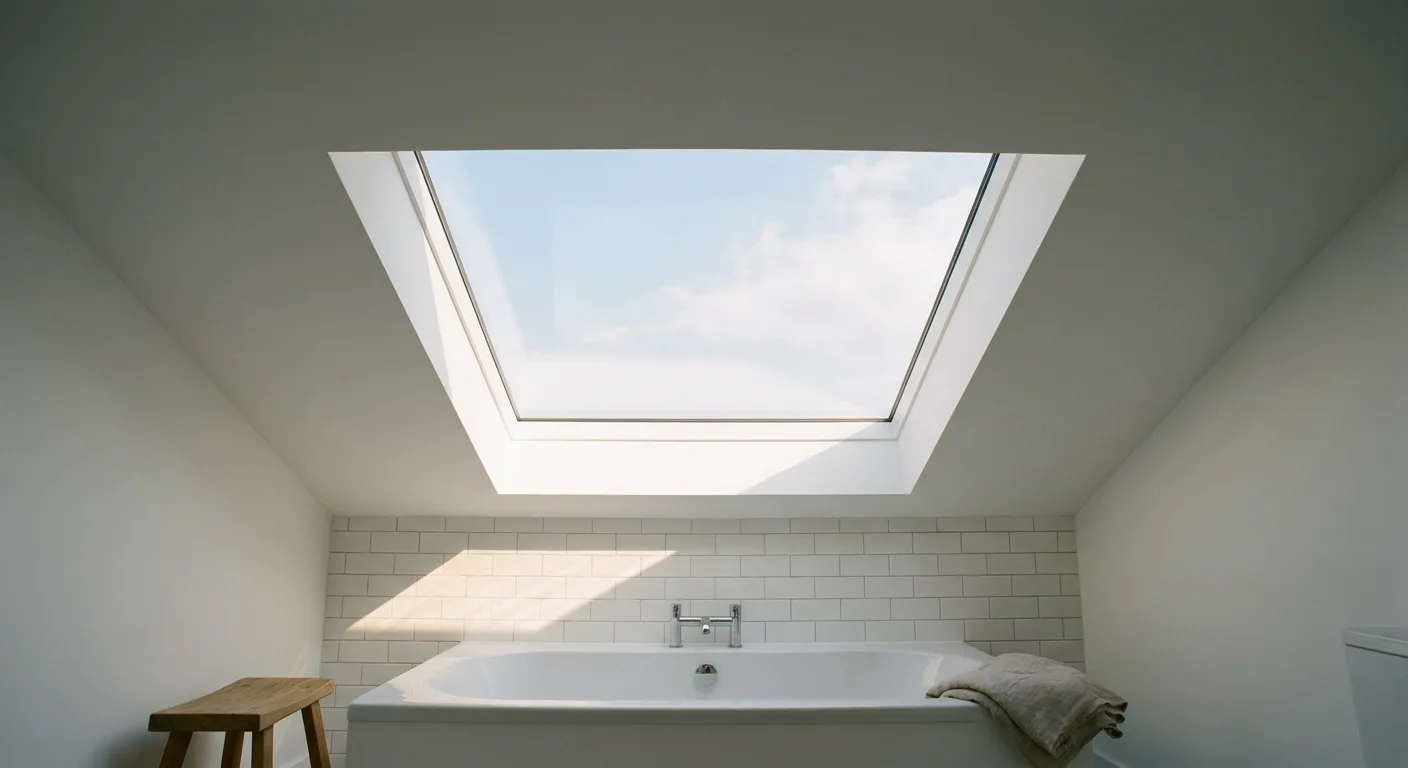
The clues that show up on the glass, not the frame
A homeowner usually notices a skylight is failing through the view, not the fittings: the sky looks flatter than it used to, the pane holds a haze that a cloth will not shift, or the room under it feels colder along one edge than the rest of the ceiling. Those small, everyday observations tend to be the first sign, well before anything looks obviously broken.
A rooflight is a simple stack of parts: glass, a seal, a frame and a lining down to the plaster. Any one of those can wear out long before the others, and the sign it leaves behind depends on which part has gone. Reading the sign correctly saves a homeowner from replacing a unit that only needed a clean, and from working around a frame that has genuinely reached the end of its working life.
Condensation that will not clear
Condensation on the room side of the glass, on a cold morning, is normal and has nothing to do with the unit's age: warm, moist air from a bathroom or kitchen meets cold glass and beads up, then clears once the room warms or a window is opened. Wipe it and it is gone until the next cold morning.
A different kind of condensation sits inside the unit, between the panes, where nothing can reach it with a cloth. Modern rooflights use a sealed double or triple unit: two or three panes with a gas-filled gap between them, held shut by an edge seal. Once that seal fails, the gas escapes and ordinary air, carrying moisture, takes its place. The result is a permanent misting or a faint grey ring that follows the shape of the frame, worse in cold weather and never quite gone in warm weather either.
This is the single clearest sign that a rooflight has reached the end of its life. A misted room-side pane is a five-minute job with a cloth. A misted gap between the panes cannot be cleaned, sealed or dried out; the unit has to be renewed, because the fogging will spread and the insulating value of the gas fill has already gone.
- Room-side condensation: clears with airing, changes with the season, both sides of the glass reachable by hand.
- Between-the-panes condensation: a fixed haze or ring, worst in one corner first, never fully clears.
- A pane that has gone from clear to milky over a few years, with no change in how the room is heated or ventilated, points the same way.
Our guide to keeping rooflight glass clear goes into what keeps a seal working for longer, and what shortens its life. Where a unit has already fogged, our misted and failed rooflight replacement service covers exactly this fault.
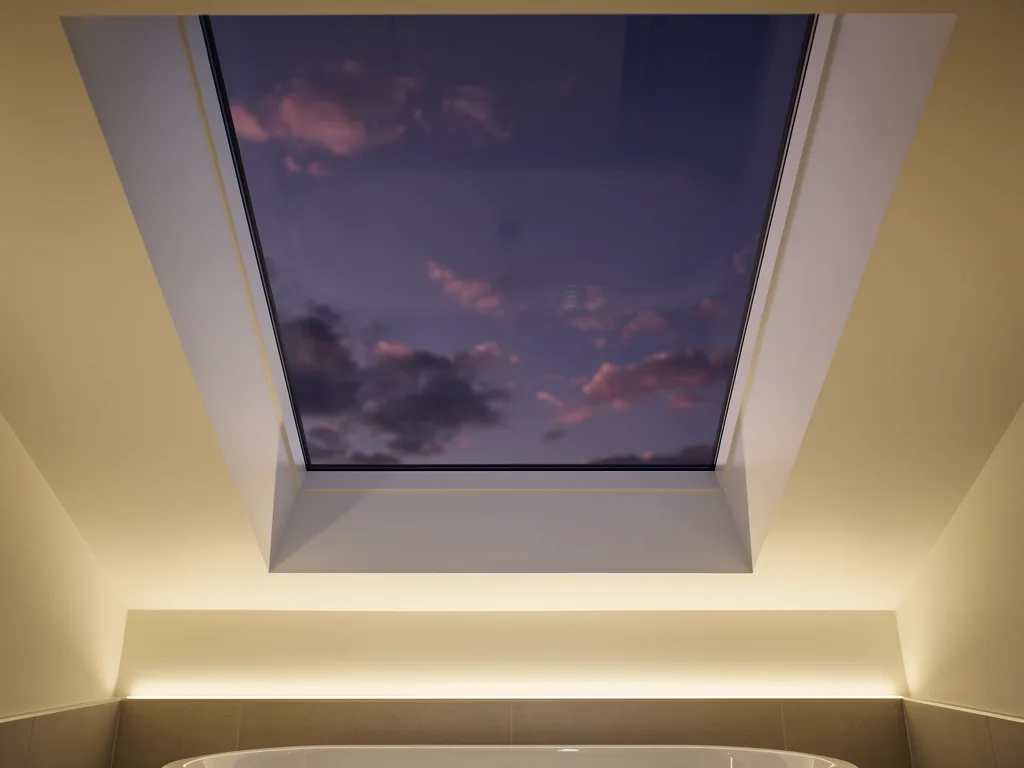
Draughts, cold edges and a frame that has moved
Put a hand near the inside edge of an old rooflight on a windy day and the air movement often tells you more than the eye does. A frame that once sat flush can swell, shrink or twist over the years as it takes sun, rain and frost season after season, and once it has moved even slightly the seal between frame and glass, or frame and roof covering, stops doing its job.
Timber frames are the most likely to move. Years of expansion and contraction can leave a top-hung casement sitting slightly proud of its opening, so it never closes quite square again; paint that once sealed the joints cracks along the same lines every year and needs building up again each spring. Aluminium and uPVC frames move less, but their weak point is usually the corner joints and the gaskets around the glass, which harden and shrink with age rather than warp.
Signs worth checking for, working around the frame rather than just the glass:
- A cold line felt by hand along the inside edge of the frame, especially the side that faces the prevailing weather.
- Paint that lifts or cracks in the same place every year, rather than as a one-off mark.
- A vent flap or opening casement that used to shut with one push and now needs to be forced, or that has started to bind on one corner.
- Daylight visible at a corner where frame meets the lining below, on a unit that is more than a couple of decades old.
None of these are dramatic on their own, and a single sticking hinge does not mean the whole unit needs to go. Taken together, though, they describe a frame that has done its job for its full working life and is now the weak point rather than the glass.
Sound and movement that were not there before
Sound changes as a rooflight ages, and it is worth listening to as much as looking. A well-sealed unit in good condition takes rain fairly quietly, the odd patter rather than a drum. Once seals shrink and gaskets go hard, the same rain sets the glass or the frame vibrating slightly against its opening, and the sound carries into the room below as a rattle or a louder drumming than the homeowner remembers from the same weather a few winters earlier.
Glazing bars on an older lantern or larger flat rooflight can also flex more than they should, particularly on wider spans where the bar was sized to an older, thinner standard of glass. A visible bow along a bar, or a bar that has come slightly loose from its fixing at one end, is a structural sign rather than a cosmetic one, and it is worth having looked at rather than waited out.
On older polycarbonate flat rooflights, a common late-life sign is a network of fine surface cracks, sometimes called crazing, across the dome or sheet. It starts at the edges, where UV exposure is worst, and spreads inward over several seasons. It does not usually mean sudden failure, but it does mean the material has become brittle, and a unit in that state is close to needing renewal on safety grounds alone.
Reading the reveal and the ceiling below
The reveal, the lined and plastered opening between the ceiling and the glass, often shows the first evidence of a rooflight problem before the unit itself looks any different. Because the reveal sits below the glazing and any flashing, it catches whatever the unit above no longer keeps out.
| What you see | Where | What it usually means |
|---|---|---|
| A brown or yellow stain, slowly spreading | Ceiling or top of the reveal | Water is tracking past the flashing or a seal above |
| Fine black spotting in a corner | Reveal corners, especially north-facing rooms | Persistent damp air condensing and not drying out |
| Paint or plaster lifting in a strip | Along one edge of the reveal | Moisture has been getting behind the surface for some time |
| A widening gap at the plaster line | Where lining meets frame | The frame or the surrounding structure has moved |
None of these are proof on their own that the rooflight itself has failed; a blocked gutter or a slipped tile nearby can cause the same staining. But a stain that reappears in the same place after redecorating, or a gap that has visibly widened over a year or two, points at the unit and its flashing rather than at general roof maintenance. Our guide on making good inside after a rooflight is replaced covers what a fresh reveal looks like once a renewal has put this right.
Telling age from a job that just needs cleaning
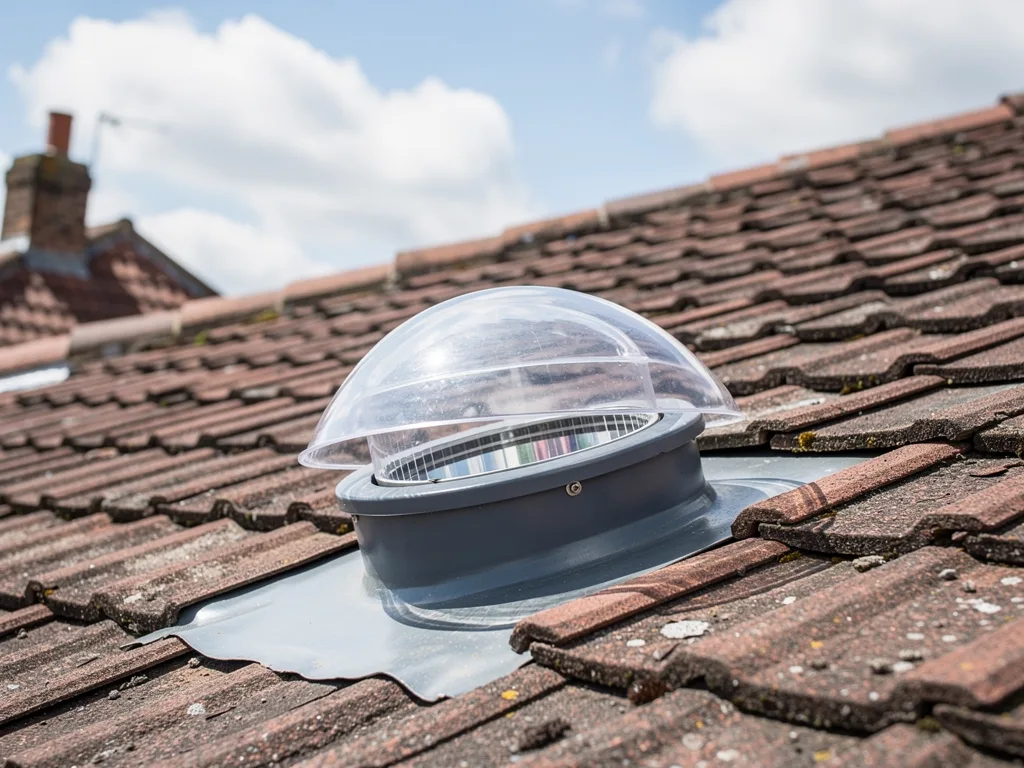
Not every dull-looking rooflight is failing. Pollen in late spring, general dust, and a build-up of grime from nearby trees can all leave an outer pane looking greyer than it should, especially on a shallow pitch where rain does not wash it as effectively as on a steep roof. A straightforward clean of the outer pane, done safely and without standing directly on the glass, often restores the view completely.
The way to tell the two apart is simple: clean the accessible surfaces of the glass, inside and out, and see what is left. If the haze wipes away and the sky comes back sharp, the unit is sound and the sign was surface dirt. If a grey or misty patch remains after cleaning, especially one that follows the frame line rather than sitting randomly across the pane, it is inside the sealed unit, and no amount of cleaning will move it.
Some rooflights carry a self-cleaning outer coating, most useful on a low-pitched roof where rain alone does not shed dirt well. That coating breaks down surface grime in sunlight and lets rain sheet it away, but the coating itself thins with years of weathering, particularly under the everyday grit and pollution any UK roof collects. A pane that used to stay visibly cleaner than the glass around it, and no longer does, has likely reached the point where the coating has worn through rather than where the whole unit has failed. It is a sign worth noting, but on its own it is not a reason to renew the glass.
What a survey checks before we recommend replacing anything
A homeowner rarely needs to make this call alone. When we are asked to look at a rooflight that might be due for renewal, the survey works through the unit methodically rather than judging it by a single symptom:
- The glass itself: checked from both sides for the fixed haze that marks a failed seal, and for any crazing or clouding in older polycarbonate.
- The frame: checked for square, for movement at the corners, and for any softening in timber sections.
- The seals and gaskets: checked by hand for hardness and shrinkage, and for any visible gap where they should be continuous.
- The flashing and the reveal below: checked for staining, movement or a widening gap that suggests water is getting past the weathering.
Where a unit is still sound, the honest answer is to leave it and deal only with the smaller issue in front of us, whether that is a stiff hinge or a reveal that needs redecorating. Where the survey finds a failed seal, a moved frame or brittle glazing, replacing the unit is the straightforward route, and it comes with a sightline sketch showing what the new opening will look like from where the room is actually used, plus our 10-year workmanship guarantee on the finished job.
What a new rooflight gives you that the old one cannot
Renewing an old rooflight is rarely just a like-for-like swap of the same glass in the same frame. It is usually the first chance in decades to reconsider the frame profile and the reveal shape, because the opening is exposed anyway during the work. A slim modern frame in the same opening can hand back sky that an older, chunkier frame has been quietly cutting off the sightline from the bed or the sofa for years, and current sealed units carry coatings and gas fills that were not available when the original was fitted.
Where the existing opening is on the small side, renewal is also the point at which to ask whether upsizing makes sense, since the roof is already open and the structural work is already happening. Our guide on upsizing a rooflight opening sets out what that involves for rafters, joists and Building Control, and our wider homeowner's guide to replacing old rooflights covers the whole process from survey to making good. If frame width and bar placement are the main worry rather than the seal itself, our page on frame profiles and sightlines explains how much sky different frame depths actually give back.
Peterborough's mix of housing makes this worth thinking about property by property. In the new-town lofts of Bretton, Orton and Werrington, roofs are often trussed and the original rooflight may have been sized to fit between trusses rather than to the best view from the room; a renewal is a chance to check whether that constraint still applies. In the Fletton brick terraces closer to the city centre, older flat rooflights on rear extensions are frequently the ones showing frame movement first, simply because they were fitted earliest. Around Stamford and the stone villages, any renewal on a conservation-sensitive roof needs a slimmer, flush-fitting profile from the outset, which our page on every type of rooflight and skylight compared sets out alongside the other options.
A renewal is also notifiable work under the Building Regulations in most cases, and we handle that notification to Building Control as part of the job, alongside installing to current regulations throughout. Our guide on what Building Control checks on a new rooflight explains what that covers.
What to do if you are not sure yet
If nothing on this page matches what you are seeing, the simplest next step is a clean of the accessible glass and a look at the reveal below over the following few weeks, rather than an immediate decision either way. A stain that fades after redecorating, or a haze that wipes away completely, tells its own story. A mark that comes back, or a gap that widens, is worth a proper look before the next winter puts more weather through it.
Where you would rather have someone experienced check it in person, book a home visit and we will look at the glass, the frame and the reveal together, and set out plainly whether the unit needs renewing or simply needs attention. We cover Peterborough and 30 miles around, and every visit that leads to a quote includes a sightline sketch of the finished view.
Common questions about ageing rooflights
Is a misted pane always a sign the whole unit needs replacing?
Only if the mist sits between the panes rather than on a room-side surface. Surface condensation clears with a wipe and better ventilation; a haze trapped inside the sealed unit will not clear at all, whatever is tried on the room side, and that is what points to renewal.
Can I tell how old my rooflight is from the glass alone?
Not precisely, but the glass gives useful clues. A pane that has stayed clear and unmisted for many years, with a frame that still closes square, is likely to have plenty of working life left regardless of its exact age. Fixed haze, brittle or crazed material, or a frame that has visibly moved point the other way, whatever the actual installation date turns out to be.
Does a noisier rooflight in the rain mean it is failing?
A change in sound is worth noting rather than ignoring, especially if it has crept in gradually over a few winters. It usually means a seal or gasket has hardened and shrunk, letting the glass or frame move slightly more than it should. On its own it rarely means urgent action, but it is a reasonable prompt to have the unit looked at alongside any other signs.
Will renewing one rooflight disturb the others nearby?
Each unit is fitted and weathered independently, so renewing one does not usually require any work on the others in the same roof. Where two units sit close together, or share the same run of flashing, we will say so at survey stage and plan the work so the roof is only opened once for that section.
Keep reading
 GuideWhat Building Control Checks on a New RooflightThe parts of the Building Regulations a new rooflight has to satisfy, from structure and heat loss to safety glass and notification.
 GuideRooflight Permitted Development and Planning PermissionA plain guide to when a new rooflight is permitted development, and when Peterborough City Council needs a planning application first.
 GuideSkylight Orientation: North, South, East and West-Facing RooflightsHow north, south, east and west-facing slopes change the light, glare and view through a rooflight.
Book a home visit
Tell us which room
- No obligation
- Sightline sketch included
- 10-year guarantee
Or call 01733 736163