Guide
Placing a Rooflight Over the Bed for a View of the Sky
Lying down changes the sightline: place the glass right and the sky fills the view from the pillow; place it wrong and you are looking at a frame edge or a glazing bar every morning.
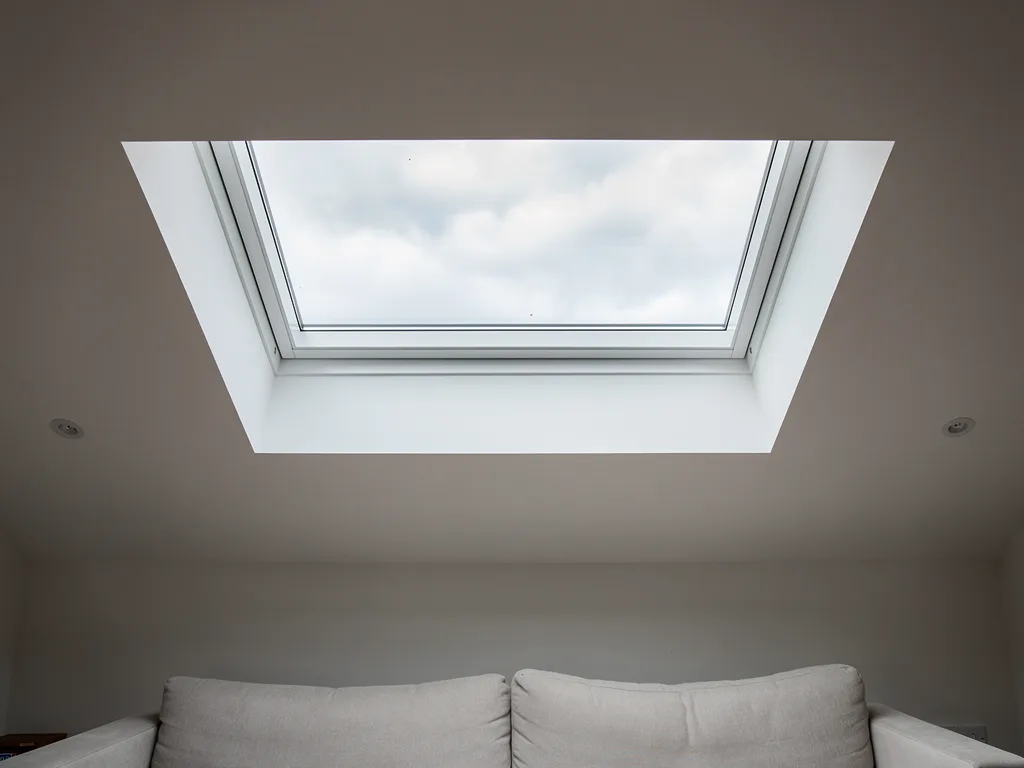
The eye that matters is lying down, not standing up
Every other room in the house gets planned for someone upright: a kitchen worktop, a hallway, a desk. A bedroom rooflight has to work for someone flat on their back with their head on a pillow, and that single fact changes the geometry of the whole job. From that position the eye sits low, close to the mattress, and it looks almost straight up rather than out and across. A rooflight that would sit comfortably over a landing or a kitchen table can land in completely the wrong place over a bed, because the cone of sky it shows is measured from an eye height of perhaps four hundred millimetres above the mattress, not the metre and a half of someone standing in the room.
That low eye height is also close to the wall at the head of the bed, so anything within a few hundred millimetres of that wall is either invisible, because the ceiling or the top of the reveal hides it, or dominant, because it fills the whole view. Get the setback wrong by a small amount and the difference between seeing open sky and seeing a strip of plastered reveal is stark. This is why a bedroom rooflight is planned from the pillow outward, not from the roof timbers inward.
Fix the head of the bed before you fix the glass
The starting point is not the rooflight at all. It is the wall the bed will stand against, because that wall sets the eye position the glass has to serve. In a loft bedroom under a pitched roof, the head of the bed is usually pushed against the low knee wall where the slope begins, since that is often the only run of wall tall enough to take a headboard. In Peterborough's new-town streets, in Bretton, Orton, Werrington and Hampton, that knee wall sits inside a trussed roof, and the truss spacing decides where an opening can go, so the bed wall and the rooflight need to be agreed together rather than the bed being pushed into whatever gap is left afterwards.
Where the room already exists and the bed is fixed by a radiator, a door swing or a low eaves cupboard, the rooflight is placed to answer that position. Where the loft or extension is being planned from scratch, it works the other way round: decide where the pillow will sit, then let that decide the roof opening. Either way, the two decisions belong together, not one after the other.
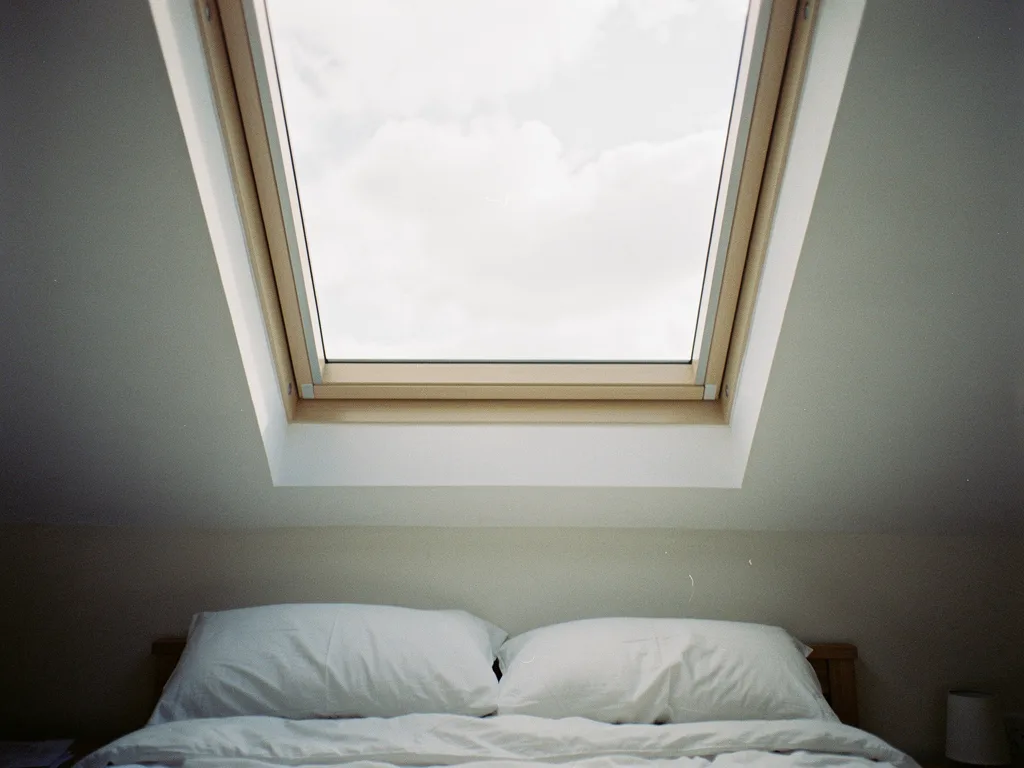
How far forward of the pillow the glass should start
Once the head wall is fixed, the next question is the gap between that wall and the near edge of the rooflight. Too close, and the ceiling above the pillow stays solid while the sky only appears once you are sitting up, which is not the view someone usually pictures when they ask for a rooflight over the bed. Too far, and the near edge of the opening sits above the feet rather than the head, and the view from the pillow shows mostly plain ceiling with the sky some way off.
A useful way to check this before the roof is opened is to lie on the actual mattress, or a board at mattress height, and mark on the ceiling exactly where the eye is looking when the head is on the pillow. That mark, not the centre of the room or the middle of a rafter bay, is the point the opening is set out from. It costs nothing to check and it is the single measurement that most affects whether the finished room feels right from the bed.
Keeping the frame edge out of the eyeline
A frame has thickness, and thickness takes up sky. From a low eye position lying flat, the near frame edge and the upstand below it sit at a shallow angle to the eye, which makes them look wider than they would from standing height in the same room. This is the detail that decides whether the ceiling reads as glass edge to edge or as glass with a visible surround.
A slim sightline profile keeps that surround narrow, and setting the opening a little further from the head wall than feels natural on paper often keeps the near frame out of the direct line of sight altogether, so the first thing the eye meets on waking is sky rather than aluminium or timber. The trade off is a slightly later start to the view as the eyes open, against a frame edge sitting in full view from the moment they do. For a bedroom, the first is usually the better trade.
Our own guide to frame profiles and sightlines sets out how face width and upstand height compare across the main rooflight types, which is worth reading alongside this page if the choice of unit is still open.
One pane over the bed, or a bar down the middle
Some openings are wide enough that a single sheet of glass is not practical, and a bar has to go somewhere. Over a bed, that somewhere matters more than in most rooms, because the eye is fixed in one place for hours at a time rather than moving around as it does in a kitchen or a hallway. A bar set dead centre over a double bed sits between the two sleepers, which sounds tidy on a drawing but often lands directly in the sightline of whoever's head is on that side of the pillow.
Where a bar cannot be avoided, offsetting it toward the foot of the bed, past the point either pillow looks straight up to, keeps both sleepers' direct view clear even though the bar is still there lower down the opening. Where the opening allows it, a single unbroken pane removes the question entirely, and our guide to glazing bars and the view goes through when each option is realistic for a given width.
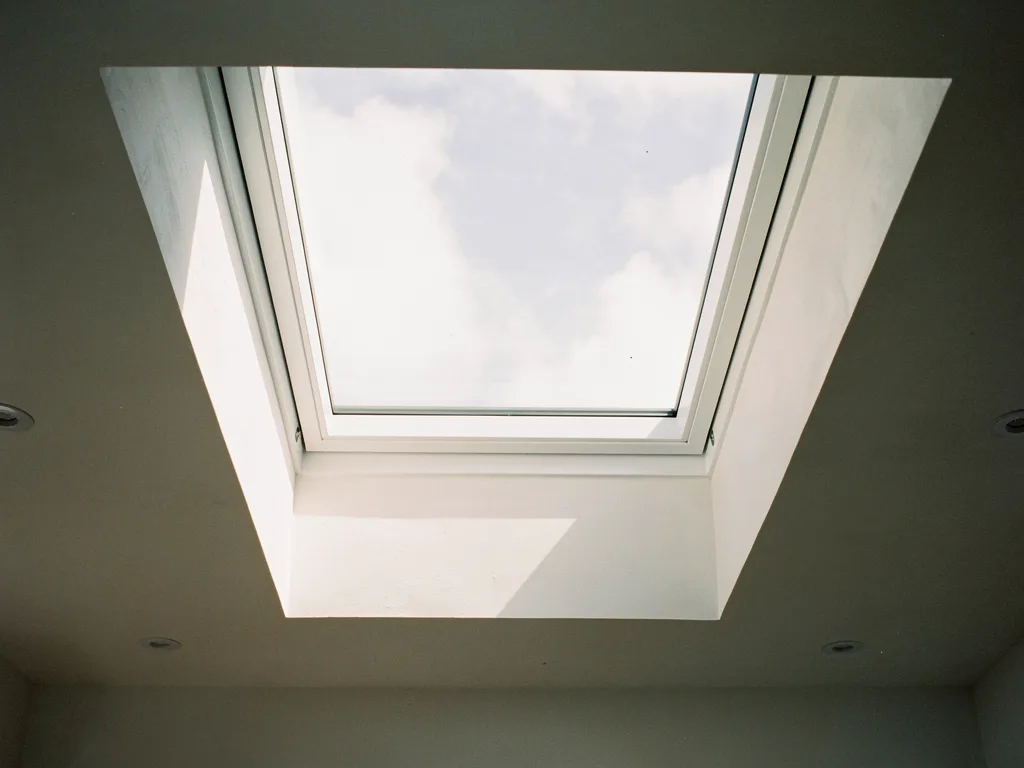
The reveal shape decides how much sky reaches the pillow
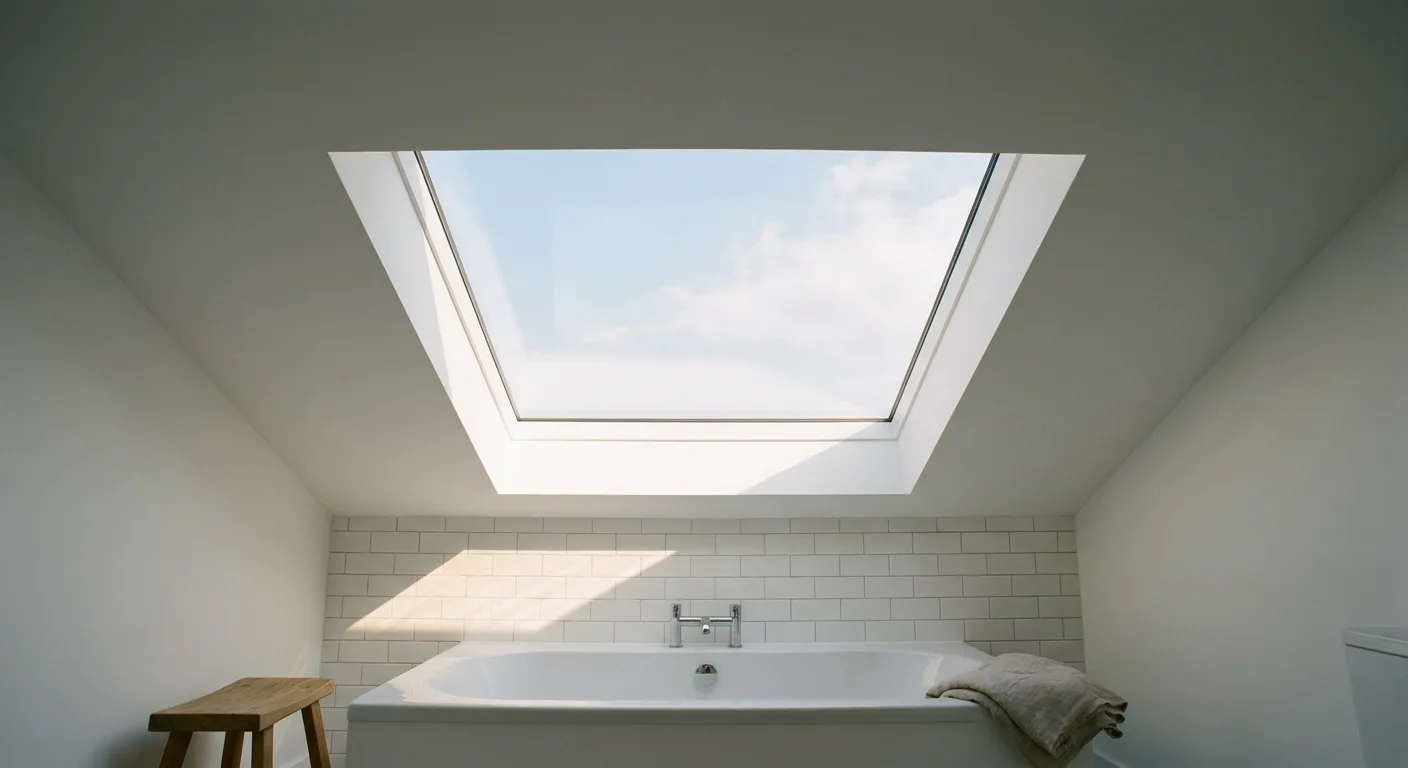
The glass is only half the story. Between the underside of the roof and the plastered ceiling below sits the reveal, and its depth and shape decide how much of the sky the glass lets in actually reaches an eye lying flat on the pillow. A deep, square reveal on a thick roof build up can crop the view sharply, turning a generous rooflight into what looks, from the bed, like a narrow slot of sky.
A splayed reveal opens the same opening out toward the room, so the eye picks up sky at a shallower angle than the glass itself would allow with square sides. Over a bed, where the eye rarely moves far from one low position, that widening effect is worth more than it would be in a room people mostly stand up in. Our guide to choosing a reveal shape covers splayed, square and deep reveals in full, and what a skylight reveal is explains the term itself for anyone new to it.
Which way the roof slope faces changes what wakes you
Placement is not only about the frame and the reveal. The direction the roof slope faces changes the sky itself. A rooflight facing east catches the first light of the day directly, which some people want over a bed and others find too much, especially in summer when sunrise is early. A north facing slope gives a steadier, cooler light with no direct sun at all, which suits a room used for daytime sleeping as much as for the night. Peterborough's flat horizon to the east and north means an east or north facing rooflight over a bed can show a genuinely open stretch of sky with nothing on the skyline to interrupt it, which is not something every town can offer.
Our guide to orientation for north, south, east and west facing rooflights goes through the practical differences in more depth, and the question of whether you can see the stars through a rooflight is answered separately, since it comes up often once people start picturing the view from the pillow at night.
What the eye actually sees, position by position
The view above a bed is not one fixed thing. It changes through the evening and morning as the body moves from lying flat to sitting up to standing beside the bed, and each stage asks something slightly different of the placement.
| Position in bed | Where the eye sits | What decides the view |
|---|---|---|
| Lying flat on the pillow | Close to mattress height | The narrow patch of sky directly overhead, and any frame edge or bar within it |
| Propped on two pillows | A shallow angle off flat | A wider slice of sky toward the foot of the bed |
| Sitting up to read | Close to seated height | Most of the rooflight, and the reveal shape framing it |
| Standing beside the bed | Full standing height | The full glazed area, least sensitive to exact placement |
Planning for the first row on that table, the position held for longest, is what separates a rooflight that feels right from the pillow from one that only looks right on the drawing.
Checks worth making before the roof is opened
A short list of practical points, gathered on site rather than assumed from a plan, avoids most of the disappointment that comes from a rooflight landing in the wrong spot over a bed.
- Where the bed head will actually stand, allowing for a radiator, a door swing or a sloped ceiling that limits headroom
- The distance from that wall to where the pillow sits, measured on the real mattress rather than guessed
- The rafter or truss spacing the roof structure allows, which can shift the opening a little either way
- How close the opening can sit to the ridge without the roof needing extra support, covered in our guide to permitted development and planning for rooflights
- Whether the room is ever likely to take a different bed layout, in a spare room or a child's room that will be rearranged over the years
That last point matters more over a bed than in most rooms. A rooflight is a fixed feature of the roof, while furniture moves. Where the bed position is genuinely uncertain, a wider or slightly offset opening can serve more than one likely layout, though it will always suit one position better than the others.
Blinds decide what greets you first each morning
A rooflight over a bed spends far more of its life covered than open. A blackout blind is the practical choice for most bedrooms, since it controls both glare and the very early light of a Fenland summer morning, but the blind itself is part of what the eye sees on waking, before it is drawn back. A pleated blind that sits close to the glass keeps the reveal looking clean when it is open, rather than bunching at one end of a track.
Our guide to skylight blinds that keep the view compares blackout, pleated and awning options and how each behaves once the rooflight is planned specifically for a bed rather than a general room.
Planning it properly, for this exact bed
All of the above comes together in the survey for the job. Rather than measuring the room in isolation, we measure from the bed itself, or from where the bed will stand once the loft or extension is finished, and mark the eye position the opening is set out from. That is the basis of the sightline sketch we provide with every quote: a drawing of the view from the pillow, showing where the frame edges and any bar will fall and how much open sky is left between them, so the position is agreed on paper before the roof is cut rather than discovered afterwards from the mattress.
The sightline sketch page explains how that drawing is put together, and our Peterborough rooflight and skylight installation homepage covers the full range of glass we fit across bedrooms, lofts and extensions in the city and the villages around it.
Questions about placing glass above a bed
Should the rooflight sit directly above the pillow, or further down the bed?
Directly above the pillow gives the most sky from a flat, lying position, but it also puts any frame edge or bar closest to the eye. Setting the near edge slightly forward of the pillow, toward the middle of the bed, often gives a cleaner first view on waking while still showing plenty of sky once the head lifts from the pillow.
Can the bed be moved later without the rooflight ending up in the wrong place?
To a point. A rooflight planned with a little width either side of the expected pillow position, or set slightly wider than the minimum, tends to cope better with a bed being shifted along the same wall than one planned tightly for a single exact position.
Does glass above the bed make the room too bright to sleep in?
Not with the right blind. A close fitting blackout blind blocks light as fully as a curtain over a normal window, and it can be closed and opened from the bed on most electric rooflights, so brightness is controlled rather than fixed.
What if the ceiling above the bed is already low and sloped?
A low sloped ceiling is exactly where a splayed reveal earns its keep, since it opens the view out from a position where the glass itself sits close overhead. It is also where getting the reveal depth right matters most, because there is little room to correct it once the plaster is finished.
Keep reading
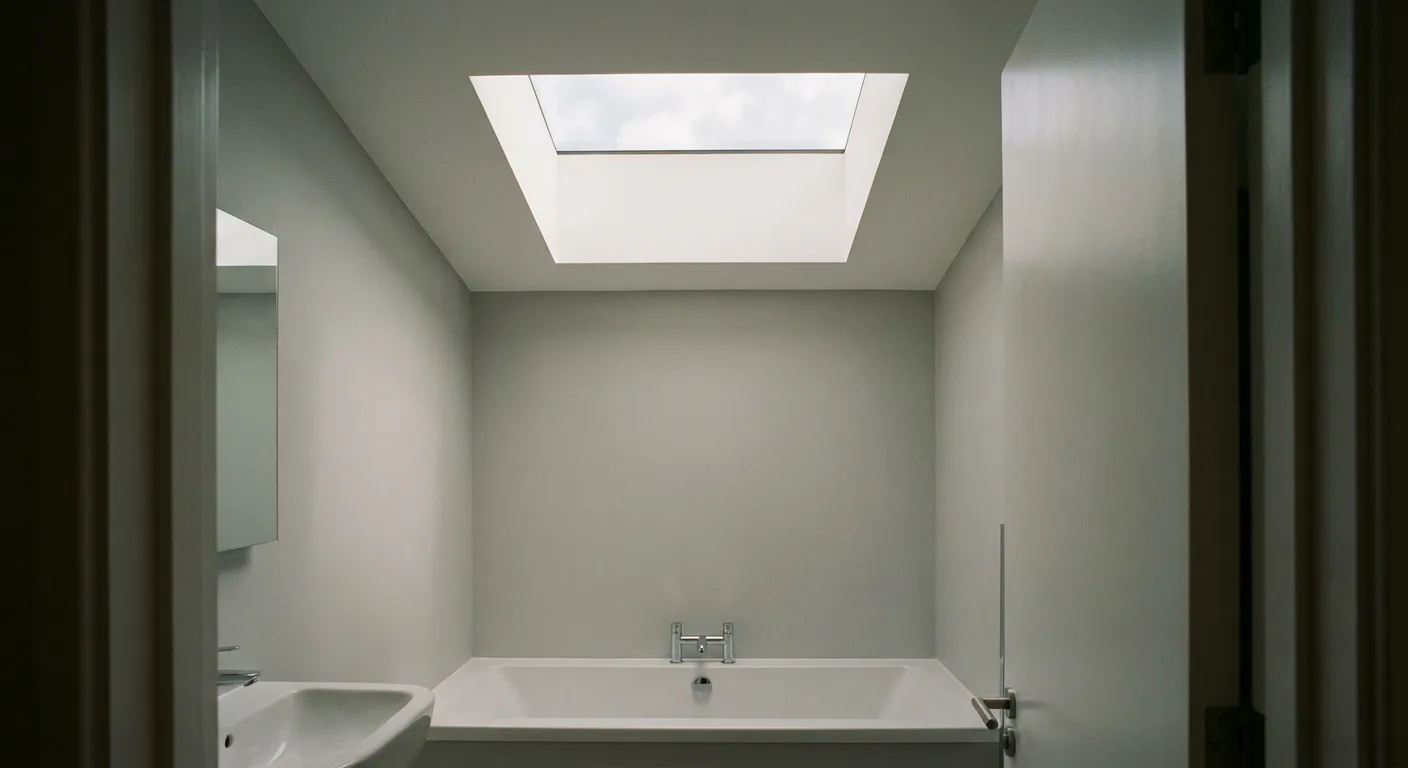 GuideEvery Type of Rooflight and Skylight ComparedA plain walk through every rooflight and skylight type, judged by the view each one gives as well as the light.
 GuideReplacing Old Rooflights: A Homeowner's GuideWhat replacing a tired rooflight involves, and the chance to fit a slimmer frame and a clearer view than before.
 GuideSigns Your Skylights Are Due for ReplacementThe clues that show a skylight has reached the end of its life, from trapped condensation to a frame that no longer sits square.
Book a home visit
Tell us which room
- No obligation
- Sightline sketch included
- 10-year guarantee
Or call 01733 736163