Question
Why does my skylight look dirty from inside?
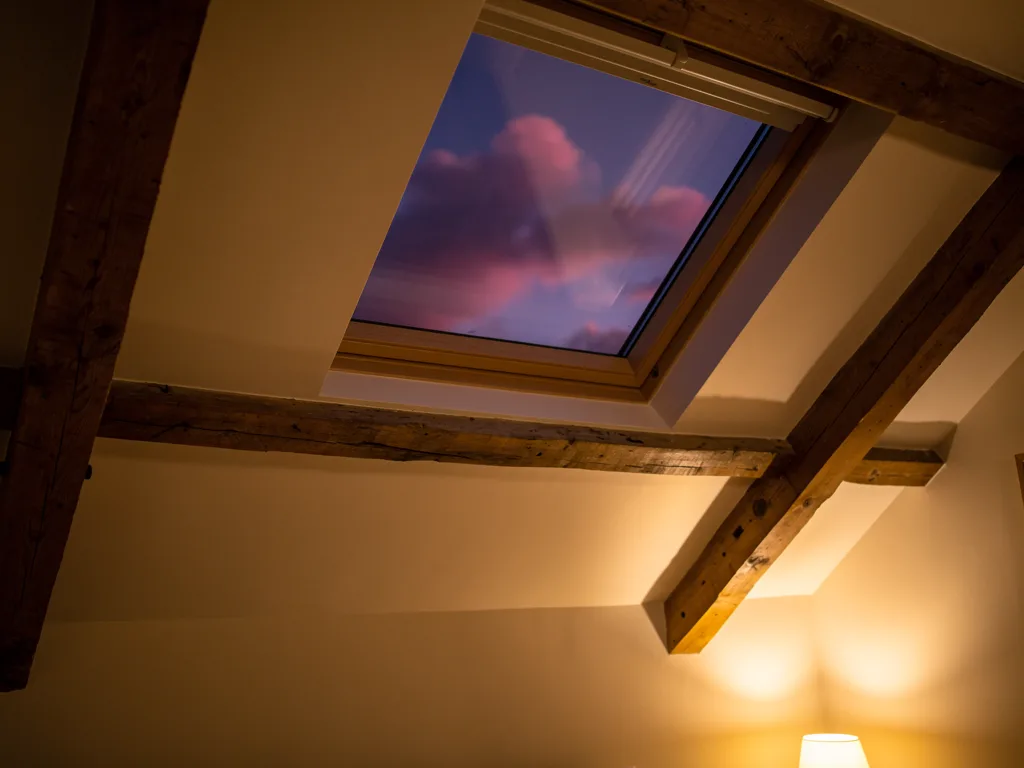
Three different problems can look the same from a pillow or a sofa
Looked at from underneath, in the flat light most rooms are lit with, dust, condensation and a failed seal can all read as the same grey smear across an otherwise clear pane, even though only one of the three is anything to worry about. The view is what gives the game away here, more than any single cause: a mark that changes through the day, or comes and goes with the weather, is doing something very different from a mark that just sits there.
Working out which is which does not need a ladder or a torch. It needs a few minutes standing under the glass at different times, and knowing what each of the three actually looks like from where you are.
Dust and pollen: a film that shifts with the angle you view it from
Dust settling on the inner face of the glass is the least interesting of the three answers, and also the most common. It builds slowly, is worst directly under a loft hatch or in a room that is rarely ventilated, and it behaves in one telling way: it looks far worse side-on than it does looking straight up.
- Stand directly under the glass and look straight up: a dusty pane often reads as almost clear.
- Step to one side of the room and look at the same glass at an angle: the same film can suddenly look thick and grey.
- Run a finger along the inside edge of the frame, where it is easiest to reach: dust there matches dust on the glass.
A soft cloth or a duster on an extension pole clears it in a minute, and it does not come back quickly unless the room sits under a busy road or a building site. On a Fletton brick terrace with a small loft hatch and little airflow above the ceiling, dust from insulation and old timber can settle on a rooflight faster than in a newer, better sealed loft space, which is one reason this is the answer more often in an older roof than a new one.
Condensation on the inner face: it comes and goes with the room, not the glass
Condensation sits on the room side of the glass, and unlike dust it is genuinely damp to the touch, which is the fastest way to tell the two apart without any special test. It forms when warm, moist air from a shower, a kettle or simply a room full of people meets a pane that is colder than the air around it, and it gives up its moisture right there on the surface.
The pattern over a day is the tell. Condensation is often heaviest first thing in the morning, especially in a bathroom or a kitchen extension, and it thins out or vanishes once the room warms up and the air is moving again. A rooflight above a shower or close to a hob sits nearest the two rooms that put the most moisture into the air, so it is usually the first pane in the house to mist over and the first to clear once a fan has been running for a while.
A deep or poorly lined reveal makes this worse, because the plastered opening around the glass becomes its own cold surface close to the pane, and moisture can sit on the lining as readily as on the glass itself. Our guide to keeping rooflight glass clear for years goes into what shortens or extends how often this happens, room by room.
A haze between the panes: the one mark that never lifts
Between the two or three sheets of glass in a sealed unit sits a gap, usually filled with argon and closed off by a spacer bar and an edge seal, and once that seal lets go, whatever moisture gets into the gap has nowhere to go. That is the third answer, and it is the only one of the three that a cloth will never fix.
From below it starts small: a faint cloudy patch, often in one corner first, that does not respond to cleaning, does not dry out on a warm day and tends to spread slowly over weeks or months rather than appearing overnight. Wiping the inside of the glass does nothing, because the mark is sealed on the far side of the pane you can reach. Our answer on how many years a new rooflight will give you explains why the seal is usually the first part of a rooflight to reach the end of its working life, well before the frame or the glass itself.
| Sign | Feels like | Changes through the day |
|---|---|---|
| Dust film | Dry, powdery | Worse side-on, clears when wiped |
| Condensation | Damp to the touch | Heaviest at dawn, clears as the room warms |
| Failed seal | Dry on the surface, mark stays put | Never clears, slowly spreads |
A two-minute check from where you sit or lie
The question can usually be settled without leaving the room. Look at the glass straight on from directly underneath, rather than from the doorway or the edge of the bed, since a shallow viewing angle exaggerates ordinary dust into something that looks far worse than it is. Then note whether the mark is damp or dry, and whether it is on the room side of the glass or seems to sit inside the pane itself, in that faint corner-first way a failed unit tends to show.
Time of day helps too. A pane that looks clear at lunchtime and hazy again the next cold morning is behaving like condensation. A pane that looks the same at nine in the morning as it did the week before, however the weather has changed, points toward the seal rather than the room.
Why some rooflights show this sooner than others
Placement decides a good deal of how often any of these three show up. A rooflight above a bathroom or a kitchen extension is doing the most work against room moisture and will mist before a landing window ever does. A rooflight on a shallow pitch or a flat roof in a new-town extension across Bretton, Orton or Werrington collects settled dust and standing dew differently to a steep pitched roof window on an older terrace, simply because less of the glass sheds itself clean in the rain.
None of that changes which of the three answers applies in a given room, but it does explain why a bathroom rooflight might mist weekly while one over a landing barely ever does, and why a flat unit needs a different specification to a pitched one if the view is going to stay clear. Our guide to every type of rooflight and skylight compared covers that difference in full.
What to do once you know which one it is
Dust and condensation are both things you can act on today. A soft cloth deals with the first, and running an extractor fan for longer after a shower, or opening a trickle vent through the colder months, deals with a good deal of the second. Neither is a fault in the rooflight itself.
A haze that sits between the panes is different, and no amount of cleaning or ventilation will shift it. Our guide to signs your skylights are due for replacement sets out the other clues worth checking alongside it, and is it worth replacing old skylights weighs up the decision without any scare stories attached. Where a unit has genuinely failed, our misted and failed rooflight replacement service swaps the sealed glass, and the frame too where it needs it, to current Building Regulations, with Building Control notified where the work requires it.
Whatever the cause turns out to be, every quote across our rooflight and skylight installation service in Peterborough comes with a sightline sketch showing the view a new unit would actually give you, and every installation carries a 10-year workmanship guarantee on the fitting. Book a home visit if you would rather have a pane looked at than guess from below.
Questions people also ask
Can I tell dust from a failed seal without touching the glass?
Usually, yes. Dust looks far worse when you view the pane at an angle than it does looking straight up, and it sits evenly across the glass. A failed seal tends to start as a small patch, often in one corner, that looks the same from every angle and does not fade or thicken with the light.
Does a misted skylight mean the frame has failed too?
Not usually. A haze between the panes is a problem with the sealed glass unit specifically, and the frame around it can go on being perfectly sound. It is still worth having both looked at together at survey stage, since whatever let water reach the seal in the first place is worth understanding before a new unit goes in.
Will a new self-cleaning coating stop this happening again?
A self-cleaning outer coating cuts down the dirt that builds up on the outside of the glass, which is a different face to the one causing an inside haze. It has no bearing on internal condensation, which comes from room moisture, or on a seal failure, which is a fault inside the unit itself.
How quickly does a failed seal get worse?
There is no fixed timescale, but the pattern is usually one of slow, one-way spread rather than sudden change: a small corner patch that grows over weeks or months and never reverses. Once it is visible, the unit has already reached the point where the panes need replacing rather than cleaning.
Book a home visit
Tell us which room
- No obligation
- Sightline sketch included
- 10-year guarantee
Or call 01733 736163