Question
Will fitting a rooflight make a mess inside?
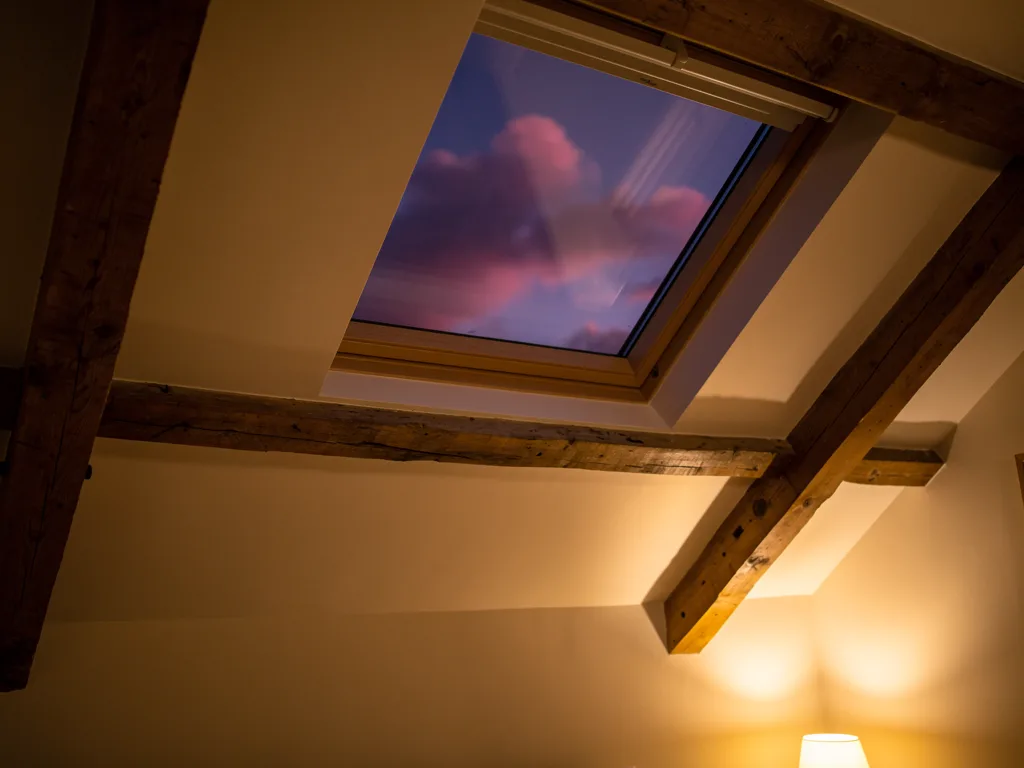
Where the mess actually starts
Almost all of the dust from a rooflight job comes from three places: cutting through the ceiling finish to open the ceiling void, trimming the reveal lining once the frame is in, and any making good to the plaster around the new opening. None of that involves the roof covering itself, which is why a job that sounds like it disturbs the whole house usually only touches one room.
Plasterboard and old lath-and-plaster both produce a fine dust when cut, and that dust travels further than the cut itself if the room is not sealed off first. Timber cut for new joists or trimmers around an enlarged opening produces coarser sawdust and shavings, which stay closer to the cut and are easier to sweep or vacuum as the job goes. The two are handled differently for exactly that reason.
What happens before anything is cut
The room is sheeted first, floor, any fitted furniture that cannot be moved out, and the doorway through to the rest of the house. A doorway sealed with a sheet and tape stops dust drifting onto a landing or into a hallway while the ceiling is open, which matters more in an occupied home than it would on a site with nobody living in it day to day.
- Dust sheets over the floor and any furniture left in the room
- A sealed doorway between the work room and the rest of the house
- Extraction or a vacuum running at the cut itself where the job allows it
- Tiles and timber lowered or bagged rather than dropped through the room
Where the loft above is being converted or is already boarded, the same sheeting extends up there too, since debris falling into a loft space can work its way down through gaps around pipes and cables if it is left loose. What happens on rooflight installation day sets out the order these steps happen in across a typical job, from arrival to the final sweep.
Working from outside changes how much comes into the room
Wherever access allows it, cutting the roof covering and lifting tiles or slates happens from outside on a ladder, tower or scaffold, not from inside the room. That keeps the outer work, and most of its debris, away from the ceiling below entirely until the opening is ready to receive the frame. Whether a job needs scaffolding depends on the roof's pitch and height, but the principle is the same either way: the roof covering comes off from above, and the room below only sees the finishing work.
Some pitched roof windows can be fitted with most of the work done from inside the loft or room, and which jobs allow that depends on the unit and the roof structure. Even then, the sequence stays the same: sheet the room, cut the smallest opening the job allows, and keep debris contained as it is produced rather than clearing it up afterwards.
Where the debris goes as the job runs
Tiles, slates and old timber taken off the roof go straight into a skip or a van rather than through the house, since there is no reason to carry them past finished rooms when outside access already exists. Inside, offcuts of plasterboard, lining timber and old sealant are bagged as they are produced instead of left in a pile until the end of the day. A job that runs over more than one day is left sheeted and tidy overnight, not part-finished with materials scattered through the room.
| Where it comes from | What it produces | Where it goes |
|---|---|---|
| Roof covering, from outside | Tiles, slate, old flashing | Skip or van, not through the house |
| Ceiling and reveal, from inside | Plaster or plasterboard dust | Vacuumed or swept as the cut is made |
| Timber trimming | Sawdust and offcuts | Swept up and bagged through the day |
| Making good | Plaster scrapings, dust | Cleared before the final sweep |
Enlarging an opening produces more dust, not more mess
Where an old opening is being widened, perhaps to fit a larger single pane instead of a divided one, more of the ceiling and reveal is disturbed and there is more cutting to do. Upsizing a rooflight opening covers what that involves structurally, but for the room itself it mostly means the sheeted area is larger and the job takes a little longer, not that the mess spreads further than a smaller job would. The same sheeting, bagging and vacuuming apply, just across a wider stretch of ceiling.
What is cleaned and made good before we leave
The reveal, the lined and plastered opening between the ceiling and the glass, is finished to a state ready for decorating, not left rough with dust in the corners. Making good inside after a rooflight is replaced goes through what that finish includes, from a plastered reveal to a check that skirting, coving or any fitted units nearby have not picked up dust during the cut. Sheets come up last, once the cutting and plastering are both done, so dust settled on them during the day does not get walked back into the room.
A quote should say plainly what protection and clean-up are included, and what a skylight quote should include sets out the other things worth checking for at the same time, from access to Building Control.
What this looks like across different Peterborough homes
A Fletton-brick terrace with a lath-and-plaster ceiling produces a different dust to a new-town home in Bretton, Orton or Werrington with a plasterboard ceiling on a trussed roof: the older lath tends to crumble in larger pieces that vacuum up easily, while plasterboard produces a finer dust that needs the doorway properly sealed. Neither is a bigger job for the house around it, since the same sheeting and containment apply whichever ceiling is behind the glass. On stone cottages around Stamford, where a slim conservation-style unit usually replaces or fits into an existing opening, the disturbance is often smaller still, since the reveal is already formed and less new cutting is needed.
Questions people also ask
Do you need to move furniture out of the room?
Not usually. Furniture that can be moved clear of the work area is sheeted in place, and only larger pieces that sit directly under the opening need to be shifted elsewhere in the room for the day.
Will dust reach other rooms in the house?
The doorway to the work room is sealed before cutting starts, which is the main barrier against dust reaching a landing or hallway. On a job that runs across more than one day, that seal stays in place overnight as well.
Is a flat roof rooflight less messy than a pitched roof window?
The two disturb different things rather than one being cleaner. A flat roof job usually means less reveal to plaster but more work on the covering itself, while a pitched roof window disturbs more of the ceiling around it. Either way, the room below is sheeted the same way.
Do you take the rubbish away with you?
Yes. Tiles, old timber and offcuts are taken away as part of the job rather than left for the homeowner to dispose of, and the last task before we leave is clearing sheets and giving the room a final sweep.
Book a home visit
Tell us which room
- No obligation
- Sightline sketch included
- 10-year guarantee
Or call 01733 736163