Question
Does a Rooflight Need a Party Wall Agreement?
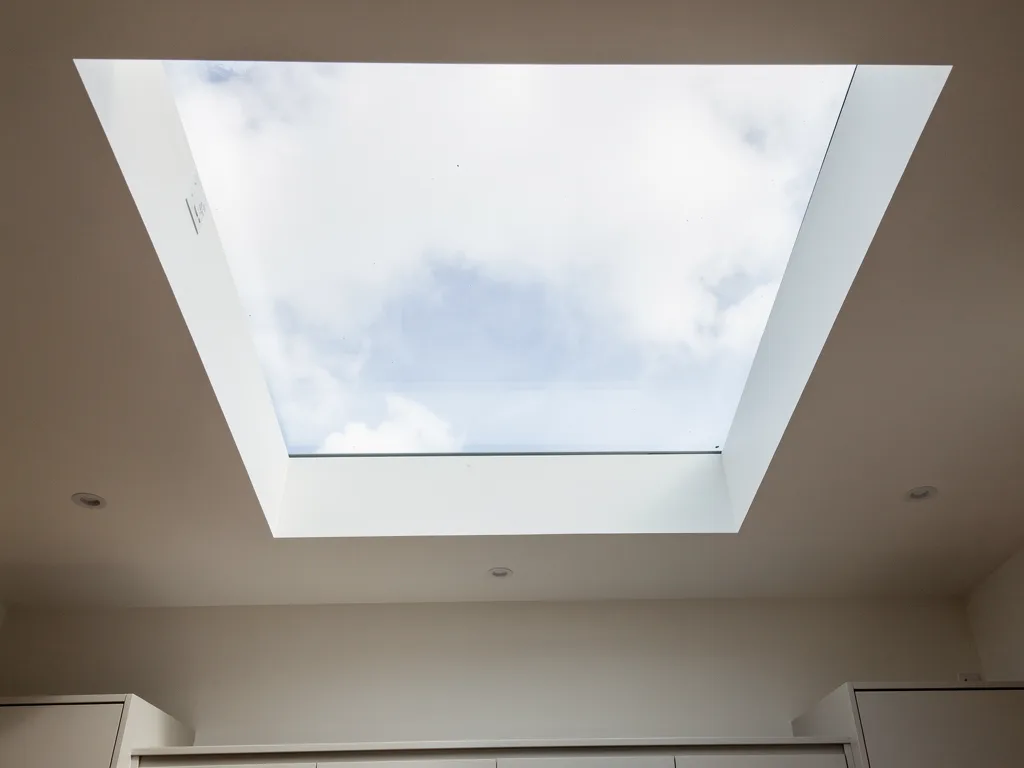
What the Party Wall Act actually covers
The Party Wall etc. Act 1996 is not a general rule about working near a neighbour. It covers three specific situations: building a new wall astride or up to the boundary line, carrying out work to an existing party wall or party structure, and excavating within set distances of a neighbouring building's foundations. Fit a rooflight into the middle of your own roof slope and none of the three usually applies, because the glass, kerb and lining sit entirely within your own roof timbers.
Where the Act does bite is on the word "structure". A party wall is not only the wall between two houses at ground level. It can include a parapet that rises above a shared roofline, a chimney breast built into the join between two properties, or a floor and ceiling separating flats. If any part of the physical work touches or loads one of those, the rooflight itself may still be clear, but the wider job might not be.
Where a rooflight sits in relation to a party wall
Picture a mid-terrace house of Fletton brick with a rooflight going into a rear-slope loft conversion. The opening is cut between the rafters, well clear of the brick spine wall shared with next door. The trimmers around the opening bear on timbers either side, not on the party wall, and the glazing itself never touches the boundary. That is the ordinary case, and it needs no party wall notice for the rooflight alone.
The picture changes when the roof structure itself depends on the shared wall. Some older terraces carry a purlin or ridge beam that rests, at one end, on the party wall or on a chimney breast tied into it. New-town semis in townships such as Bretton, Orton and Werrington more often have a timber truss roof that spans from outer wall to outer wall, with no load on the party wall at all. A survey of the actual roof, not an assumption based on house type, is what settles it.
When work near a rooflight can bring the Act into play
- A steel or timber beam is cut into, or rests on, the party wall to open up a loft room, even though the rooflight sits well away from it.
- A parapet wall shared with the neighbouring property is raised, underpinned or has a flashing detail cut into it as part of the same job.
- A flat roof over a rear extension is built up to, or over, the boundary line, and the rooflight is one part of a larger roof that touches next door's wall.
- Excavation for new foundations under an extension falls within 3 metres of the neighbour's footings, or 6 metres where the dig goes deeper than theirs.
None of these four turn on the glass itself. They turn on what else the loft conversion or extension is doing at the same time, which is why the rooflight and the party wall question have to be looked at as two separate parts of the same job.
Serving notice, and what a party wall award covers
Where the Act does apply, the process runs on fixed timescales rather than a case by case negotiation. A notice for work to an existing party structure needs two months before work starts; a notice for a new wall on the line of junction, or for nearby excavation, needs one month. The neighbour has 14 days to consent in writing, and if they do not respond or they dissent, both sides appoint a surveyor, or agree one surveyor between them, who draws up a party wall award setting out how and when the work can go ahead.
An award is not a planning permission and it is not a Building Control sign-off. It sits alongside both, and it exists to protect the structure of both properties and record the condition of the shared wall before work starts, so any later dispute about cracking or settlement has something to point to.
What to check before installation day
Three checks settle most cases quickly. First, look at where the rooflight opening actually falls against the roof timbers, not against the boundary line on a plan. Second, ask whether any beam, trimmer or parapet work elsewhere in the same job touches the shared structure. Third, if either answer is uncertain, get it looked at before the roof is opened rather than after, because a party wall notice served late holds up a job far more than one served in good time.
A stone cottage around Stamford, sharing a party wall of Collyweston stone slate on both roof slopes, is a different case again from a Fletton brick terrace or a new-town semi, and each is worth its own look rather than a general rule applied by house type. Rooflights for Peterborough's New-Town Homes covers what the shallower, trussed roofs common in Bretton, Orton and Werrington mean for a rooflight job, and Upsizing a Rooflight Opening: What Is Involved sets out when enlarging an opening starts to touch structure that a party wall notice would need to cover.
Where this sits alongside planning and Building Control
A party wall agreement, planning permission and Building Control approval are three separate matters, and a rooflight job can need any combination of them depending on the house and the work involved. Permitted Development and Planning for Rooflights covers when planning is needed at all, and What Building Control Checks on a New Rooflight and Does Replacing a Skylight Need Building Control? cover the structural and safety side that Building Control looks at regardless of the boundary. We install to current Building Regulations and handle the Building Control notification where the work is notifiable, but a party wall notice, where one is needed, is served by the homeowner on the neighbour, and it is worth raising it early rather than at survey stage.
Every Clearview Skylights quote for Peterborough and the surrounding 30 miles comes with a sightline sketch, and What Should a Skylight Quote Include? sets out what else a clear quote should name, from access to making good. What Happens on Rooflight Installation Day and Making Good Inside After a Rooflight Is Replaced cover the practical end of the job once any approvals are in place. If you would rather talk it through first, book a home visit or message us on WhatsApp.
Questions people also ask
Do I need to tell my neighbour before fitting a skylight?
Not as a legal requirement, if the rooflight sits entirely within your own roof timbers and touches no shared wall. It is still good practice to mention the work, since scaffolding, access and noise on the day are easier with some notice, even where no formal party wall notice applies.
Does a loft conversion beam always need a party wall notice?
Only if the beam bears on, or is cut into, the party wall itself. Many loft conversions use steels that span between the outer walls with no load on the shared wall, in which case no notice is needed for that beam.
Is a mid-terrace rooflight different from an end-of-terrace one?
An end-of-terrace or semi-detached house has one party wall rather than two, and the roof structure often ties into it differently, so the survey looks at the actual timbers rather than assuming the same answer as the house next door.
What happens if my neighbour objects to a party wall notice?
If they dissent, or do not reply within 14 days, a surveyor, or one surveyor agreed between both households, draws up a party wall award. That sets out how and when the work can proceed and records the condition of the shared wall beforehand.
Book a home visit
Tell us which room
- No obligation
- Sightline sketch included
- 10-year guarantee
Or call 01733 736163