Question · Misted and failed rooflight replacement
How Do I Measure a Misted Rooflight for Replacement?
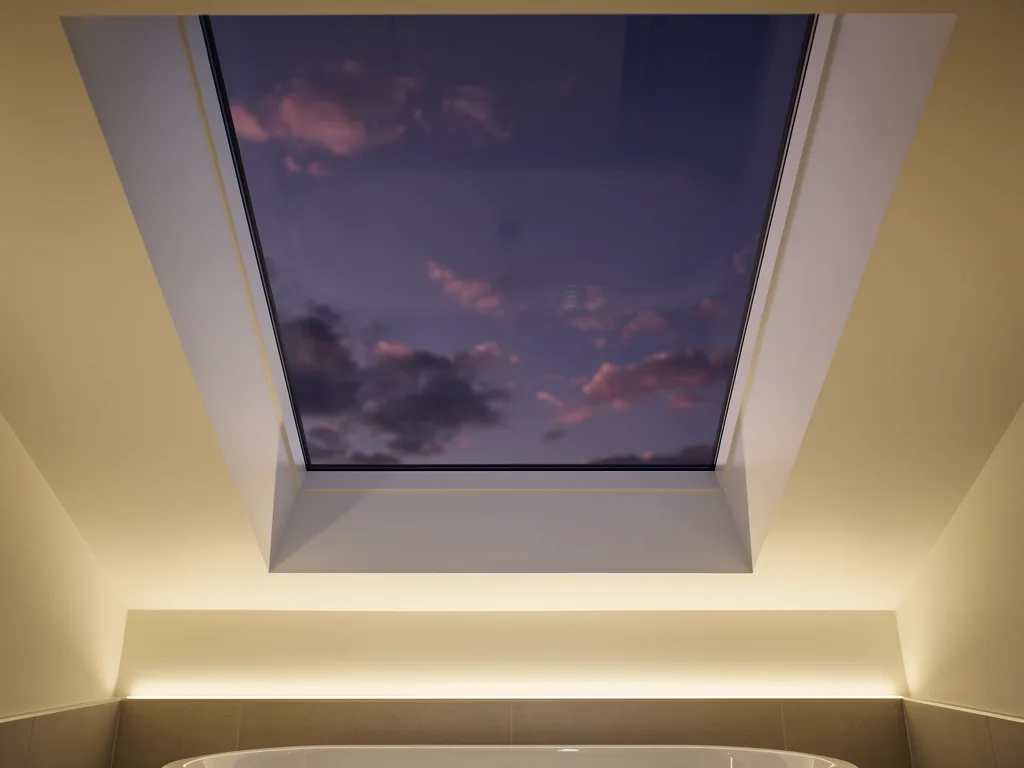
The four numbers a replacement order is built on
A rooflight is ordered to the kerb or frame it sits in, not to a generic size off a shelf, so the external width and length across the upstand or frame come first. From there we need the glass build, how many panes, roughly how thick and whether either is laminated, because that decides weight and how the new unit is handled going in. The internal reveal, the depth of plaster or lining between the ceiling and the underside of the glass, decides how much sky the room actually sees once the new pane is in. Last is the pitch: flat rooflights need a minimum fall to shed water, and a roof window's pitch affects how the flashing sits, so both get checked against the roof itself rather than guessed.
- External kerb or frame size, width and length
- Glass build: pane count, rough thickness, laminated or toughened
- Internal reveal depth and shape, square or splayed
- Roof pitch or fall, and how the flashing or kerb currently sits
Why a tape measure from a ladder only gets you so far
Most of a misted unit's problem sits between two panes you cannot get a tape into. What you can measure from a ladder or a loft hatch, the visible frame and the room-side reveal, tells you roughly what size the current rooflight is, but not what the glass build actually is or whether the frame itself has moved. A frame that has swelled, twisted slightly or dropped a millimetre on one corner will not show on a tape measure the way it shows once someone checks it is still square. That is the gap between a rough number and an order number, and it is why a misted or failed rooflight replacement starts with a visit rather than a phone call.
Access matters as much as the numbers. A flat rooflight on a single-storey extension roof is one thing to measure safely; a roof window set high over a stairwell, or a lantern over a kitchen with no safe way onto that section of roof, is another. Where the unit sits well above head height or over a fragile roof finish, the safe way to get an accurate figure is from inside, checking the reveal and frame, and from a ladder or scaffold outside where the roof allows it, never by leaning out of a neighbouring window.
What misting hides from the numbers
A sealed unit that has failed usually has moisture or a milky film sitting inside the cavity between the panes, and that film can make the glass look thicker or thinner than it is, and can hide a laminated inner pane behind haze. How a rooflight unit fails covers why that moisture gets in and stays; for measuring, the practical point is that guessing the glass build from the outside, through a misted pane, is unreliable. The edge of the unit, under the bead or the gasket, often carries a manufacturer's marking that confirms pane count and spacing, and that is checked rather than assumed.
| What you can see | What it can hide |
|---|---|
| A hazy or milky pane | Whether the inner face is toughened or laminated |
| A frame that looks the same size as before | A corner that has dropped or twisted slightly out of square |
| A kerb that looks level | A fall that has settled below the 1:80 minimum for a flat rooflight |
Kerb, frame or glass only
Not every misted rooflight needs the same numbers taken. Where the frame and kerb are sound and only the sealed unit has failed, the measurement that matters most is the glass rebate, the exact pocket the pane sits in, so the new unit is cut to fit without disturbing the frame. Where the frame itself has moved, weathered or is the wrong profile for the view you want, the whole rooflight is measured and replaced as one, which is a different order and a different day's work. Replacing the glass unit or the whole rooflight explains how that decision gets made; when a failed frame means full replacement sets out the signs that push it toward the second option.
If you want a slimmer frame than the one misting now, that changes the numbers again, because a slim replacement frame needs the kerb or opening checked to confirm it will still take the new profile without extra building work. Choosing slimmer frames when you replace covers what is realistic within an existing opening.
Measuring for the view, not just the hole in the roof
Every quote we give comes with a sightline sketch, a drawing of what you will see from the bed, the sofa or the sink once the new unit is in, and that drawing needs its own measurements: the eye position in the room, the height of the reveal above it, and how far the frame or any glazing bar sits from that line of sight. A reveal that is deep and square will crop more sky than a shallow, splayed one of the same external size, so the internal shape gets recorded alongside the numbers that go to the glass supplier. The sightline sketch sets out how that drawing is built from the same visit.
What happens once the numbers are confirmed
Once the kerb or frame size, the glass build, the reveal and the pitch are all checked against the roof itself, the order goes to the glass or unit supplier against those confirmed figures, not the rough ones from a ladder. How quickly a failed rooflight can be replaced covers what happens between that order and the fitting visit. Where the work involves changing the glass build or the frame itself, we handle the Building Control notification where it applies, and we install to current Building Regulations either way, with a 10-year workmanship guarantee on the finished job.
Book a home visit and we will take every measurement the order needs, check the frame and the fall, and talk through the sightline sketch before anything is ordered.
Questions people also ask
Can I send you photos and measurements instead of a visit?
Photos help us see what we are dealing with before we arrive, but the glass build, the frame's true condition and the fall of a flat roof need checking in person before an order is placed. A visit also lets us take the reveal measurements the sightline sketch depends on.
Do you need to go up on the roof to measure a misted unit?
Often the frame and reveal can be checked from inside, with an external check of the kerb and glass edge from a ladder where the roof allows safe access. A steep pitch or a fragile covering changes how that check is done, never whether it is done safely.
Will the replacement be the exact same size as the misted unit?
Usually yes, since the new unit is built to the existing kerb or frame opening. The only time the size changes is where you choose a slimmer frame or a different reveal shape, both of which are agreed before the order goes in.
What if the frame has moved since the rooflight was first fitted?
That is exactly what the site visit checks for. A frame that has dropped, twisted or weathered out of true is measured against what it needs to be now, not against the numbers from when it was first installed.
Book a home visit
Tell us which room
- No obligation
- Sightline sketch included
- 10-year guarantee
Or call 01733 736163